
‘Dark Beauty and Almost Spectral Luminosity’ — the Art of Harry Clarke
An artist whose haunting work was itself haunted — by the death of one icon, by the exile of another, and by the knowledge of his own mortality.
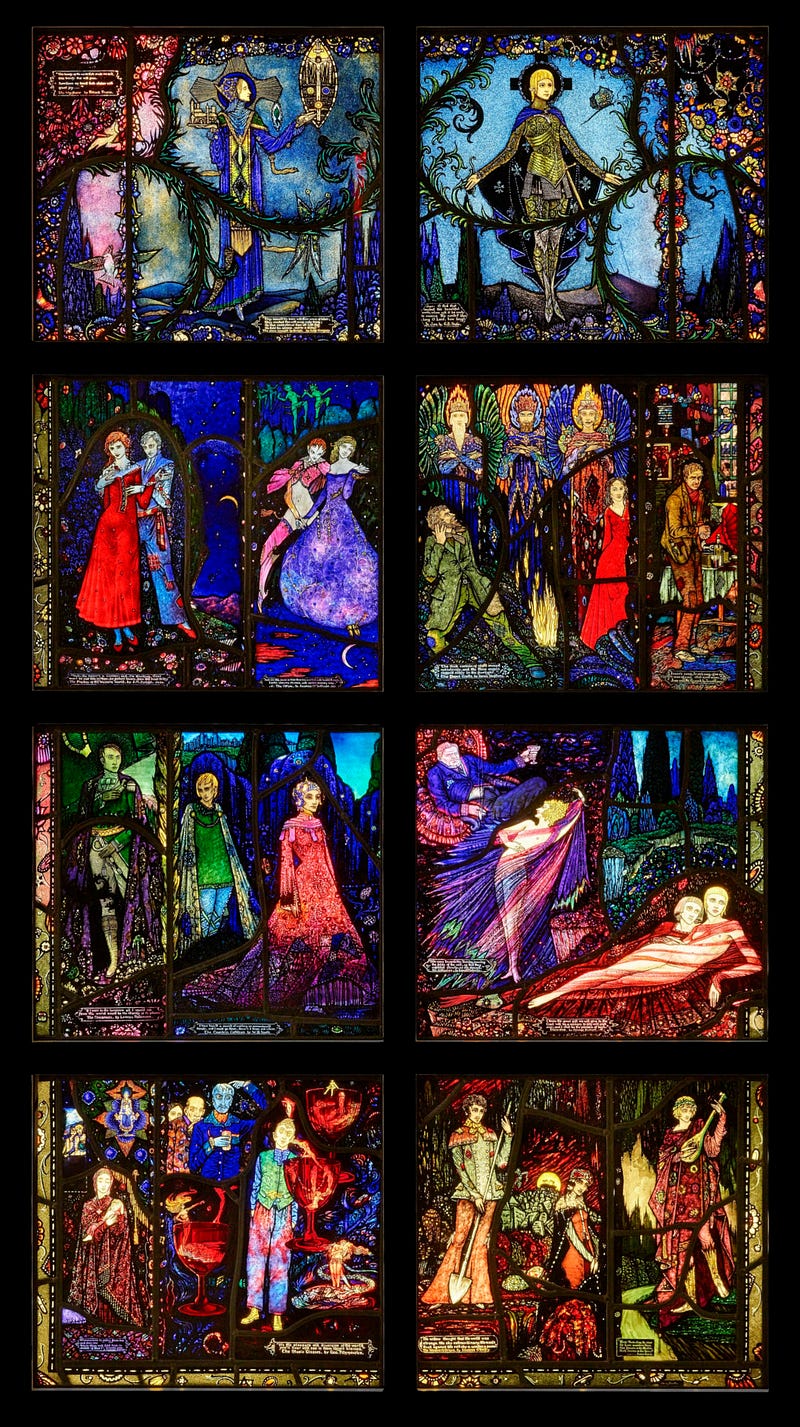
The Geneva Window (1930) was originally commissioned to be installed at the International Labour Court in Geneva at the behest of the Irish government, but was ultimately turned down on grounds of indecency. Figures from Ireland’s literary past are depicted in brilliant deep blues, vibrant reds, and a virtuosic cavalcade of detail. It’s a daring piece of work where history and fiction overlap: mistresses cavort in transparent gowns; naked imps lead willing women into sexual acts, alcohol is ever-present. The large stained glass work now hangs in the Wolfsonian Museum in Miami.
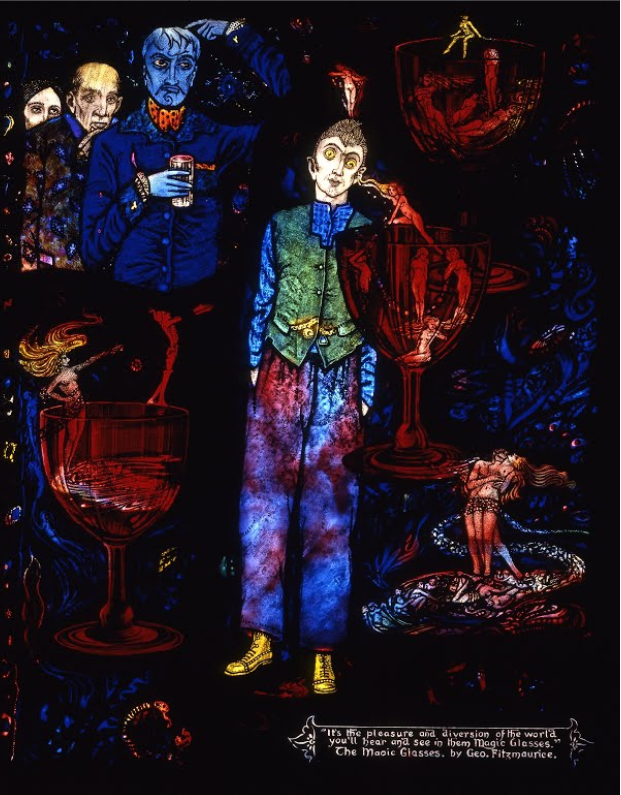
Amongst the eight dazzling panels, hidden in a corner as if in hope that no-one would notice their presence, are three figures: a ghostly character from the 1922 horror film Nosferatu; behind him, the gaunt wide eyes of Oscar Wilde, barely visible above the shoulder; and at the front, an addled Dracula-like figure, skin as discoloured as the absinthe in his hand. This third figure is the Irish artist Harry Clarke, and this window is considered his final masterpiece.
Simultaneously lauded by the writer George William Russell (aka ‘Æ’ or A.E.) as “one of the strangest geniuses of his time” who “might have incarnated here from the dark side of the moon,” and denounced as “grotesque” and “degenerate” by critics, Harry Clarke is a figure of contradictions. Despite being one of Ireland’s pre-eminent artists of the late Victorian period into the early twentieth-century — with his extravagant and bold works strewn across the country’s churches, galleries, and bookstores — his name is little heard across seas, even in neighbouring England. As an artist of the Art Nouveau movement, Clarke’s work is often likened to, and perhaps eclipsed by, the man who inspired him: Aubrey Beardsley. However, whilst Harry Clarke’s deeply engrossing and vibrant work captures a gestural boldness that would become the hallmark of 1910s and ’20s style, his oeuvre remains, to many, an undiscovered treasure trove of decadent, hedonistic brilliance.
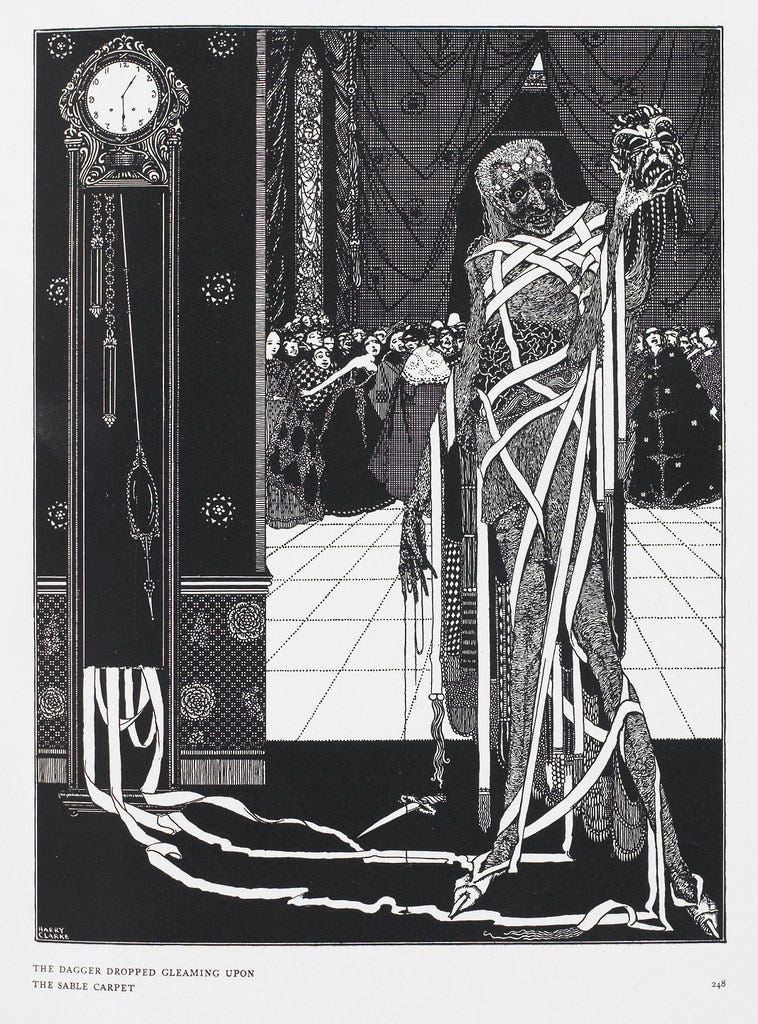
My own introduction to Harry Clarke came via Tales of Mystery and Imagination — an enormous collection of stories from the gothic master, Edgar Allen Poe. Throughout the tome, Harry Clarke’s illustrations perfectly capture the desolate macabre of Poe’s stories. The illustrations are long, sweeping explorations of darkness. Tall, gaunt, protagonists stride through enormous empty halls. Vast expanses of black empty abyss contrast against richly detailed fabrics that wrap and trawl from long, bony limbs. Details so beautifully inscribed that in order to see all of the hidden beauty of each illustration, the reader is beckoned to lean in just a little too closely, threatening to be dragged into Poe’s dark mind.
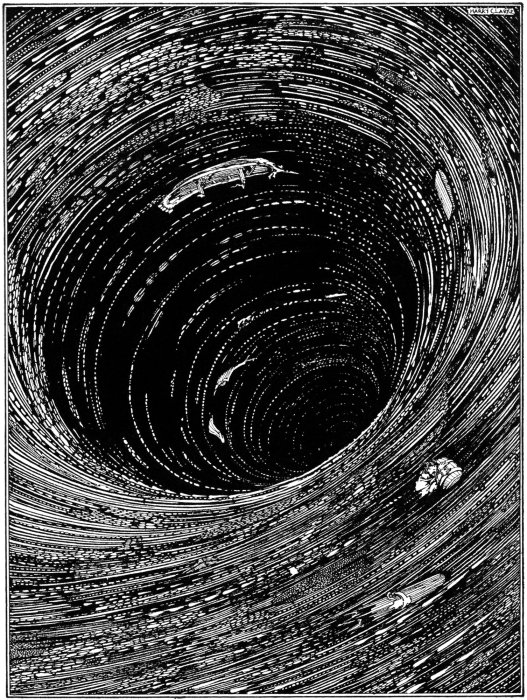
Clarke’s gothic gestures are a perfect — the perfect — accompaniment to Poe’s narratives. His bold, unflinching black lines foretelling the shadow play of animator Lotte Reiniger, or the enchanting otherworldliness of Danish illustrator Kay Nielson. Look at the ghoulish deviousness of the undead cadaver in The Dagger Dropped Gleaming Upon the Sable Carpet, or the visceral otherworldly terror he manages to conjure from the force of the ocean in A Descent into the Maelström…
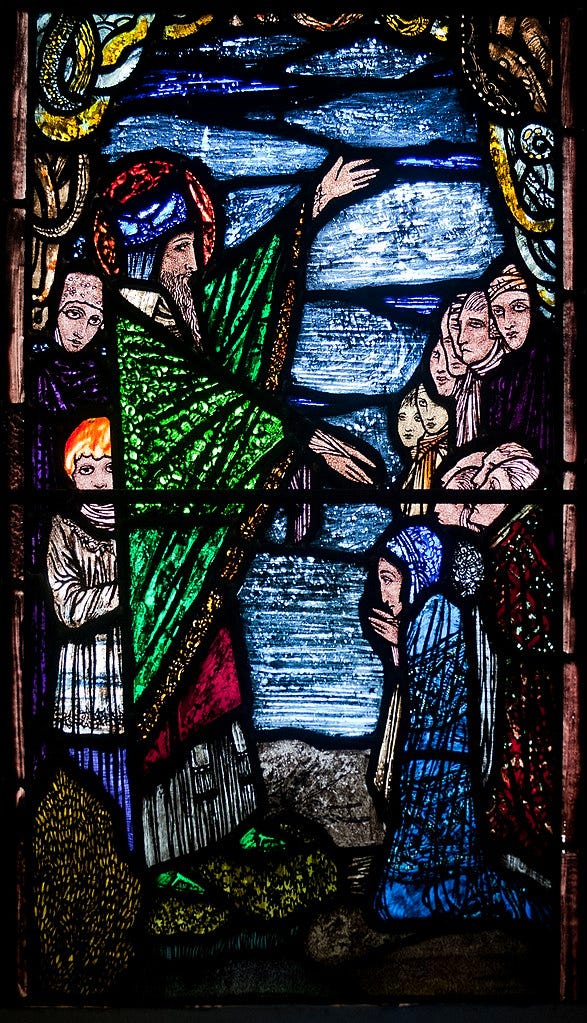
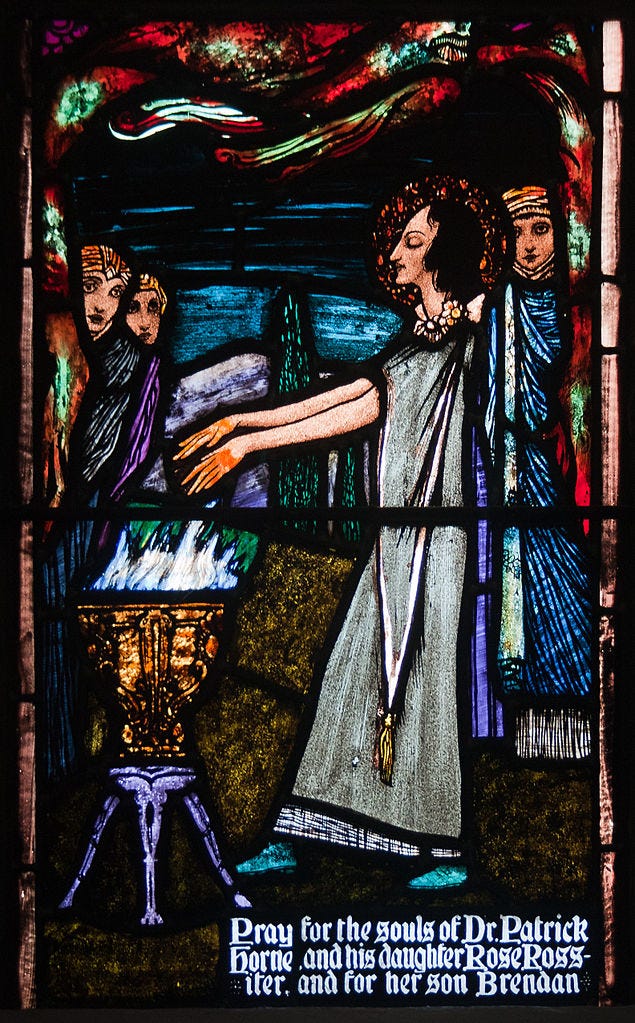
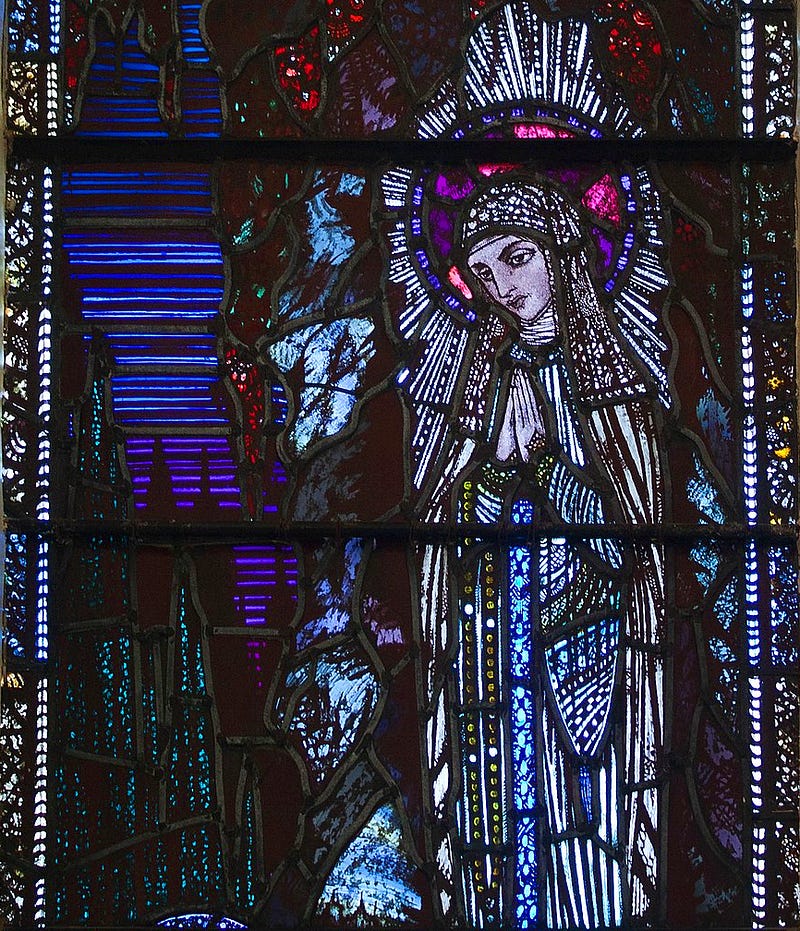
In his native Ireland, it is perhaps his glasswork that Harry Clarke is best known. His rich kaleidoscopic depictions of Christian saints and Celtic deities adorn churches across Ireland. Like his book illustrations, Clarke’s stained glass windows retain the bold, strident outlines that cut through the window like a scythe — here black ink swapped for thick black lead. Unlike his ink illustrations, Clarke’s glasswork is absolutely bursting with colour that one contemporary critic described as “imbued with the glow of controlled fire”. Deep, rich reds, ambers, emeralds, and especially blues — Clarke considered deep, dark blue to be his signature — dazzle the eye, and one can’t help but fruitlessly try to take in all the rich detail.
Amongst Clarke’s works lie messages. Secret clues to the inner life of the artist. These clues tell a story of repression, of a man grappling with the sexual and social constraints of his day, and a man morbidly obsessed with his own mortality.
The Face in the Glass
If you see enough of Harry Clarke’s artwork, you might feel an uneasy familiar presence. As if you are hallucinating the same face appearing in the pages of his illustrations, or etched into his church windows — Harry Clarke’s face. The artist loved to use his own likeness for reference in his artwork — no doubt both for his own amusement, a nod and a wink to his audience, and perhaps a means to establish himself within the grand narrative of self-portraiture in art history.
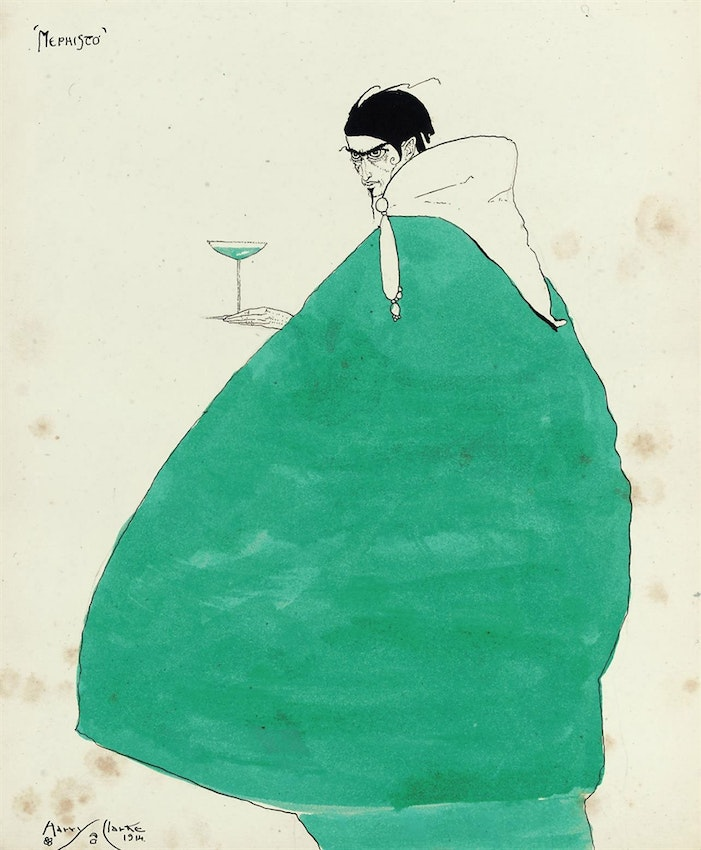
However, there is a very purposeful theme to these self-depictions. As Kelly Sullivan (2016) expertly shows in her study of Clarke’s self-portraits, the artist repeatedly placed his face on characters undergoing extreme isolation, torture, and mutilation, or elsewhere depicts himself as the evil-doer, the creature of the abyss who has materialised to exact suffering on mortals. Whether in Clarke’s 1914 depiction of himself as the demonic Mephisto, draped in a sickening absinthe-green cloak or, again a decade later, in his illustrated volume of Goethe’s Faust, published 1925, where he appears as Faust, the suffering and tortured soul upon whom Mephisto exudes his influence.
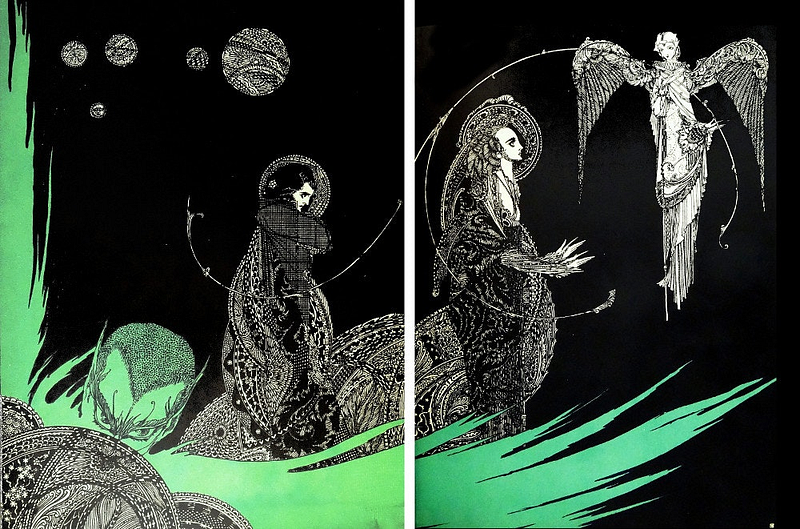
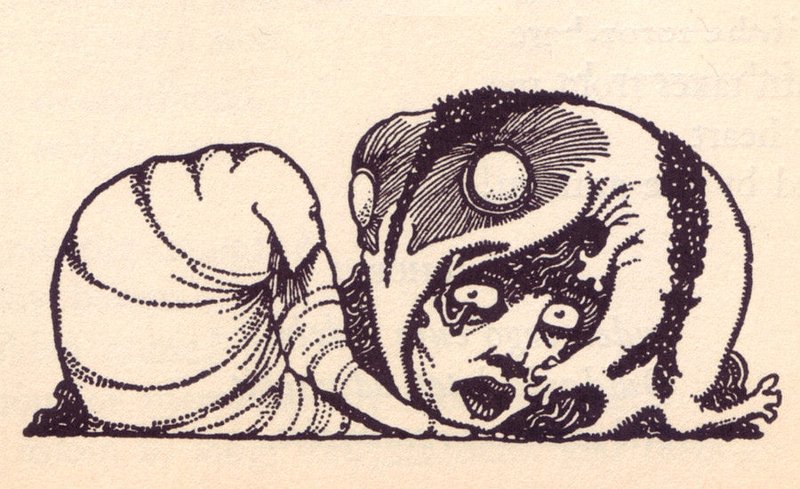
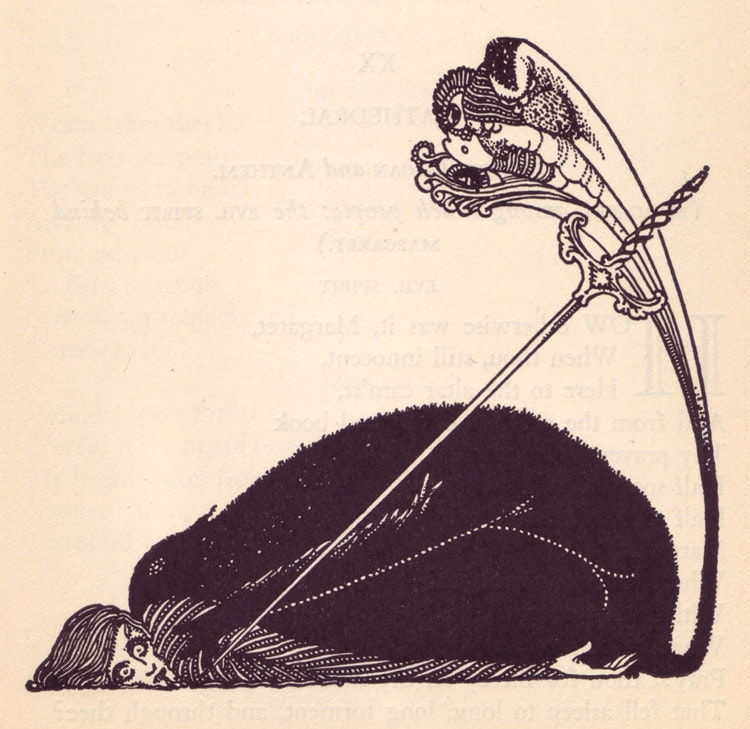
Elsewhere, Clarke’s face is shown in miniature as haunted souls, pierced by otherworldly beings, or half-decomposed heads, staring out at the reader as they are subsumed by the flora and fauna of the underworld. These self-presentations illustrate a man wracked by a demonic understanding of his own self, a man obsessed with death, torture, and solitude.
But if these self-portraits give us clues to how Harry Clarke saw himself, why does he appear in such pitiable circumstances? Given the circumstances of his life, two options present themselves: an obsessive awareness of his own mortality, and — perhaps — an allusion to a secret life as a queer man.
“I had to laugh at my creations or I would have become morbid”
In order to sketch out the macabre understory of Harry Clarke’s life, it is useful to turn to one of his biggest influences. Clarke was deeply inspired by perhaps the most influential figure of the Art Nouveau and decadent era, the English illustrator Aubrey Beardsley (1872–1898). In his extremely short but prolific career, Beardsley had conjured a style of illustration that drew from the sweeping gestures and flat perspectives of Japanese ukiyo-e woodblock masters, in particular the glamorous and gestural kabuki portraits of Utagawa Kunisada. The at-once graceful and architectural value of Kunisada’s figures are found in Beardsley's style, where blocks of black and white coincide with purposeful line work to depict florid, decadent, and sometimes outright erotic scenes.
Clarke’s life was undoubtedly caught in the slipstream of Beardsley’s own tragically short career and it’s certain that Beardsley’s synthesis of sensuality and morbidity resonated with the young Irish artist. Clarke was born in 1889 — only 17 years after Beardsley’s own birth and yet only 9 years before his death in 1898 from tuberculosis that had developed early in life. Harry Clarke and his brother Walter had suffered from ill health, from a young age. His mother had passed away when the boys were young. As a result, the knowledge of mortality was a daily fact in the Clarke household, and remained so into the artist’s adulthood.
However there is a more salient connection between Clarke and Beardsley. In 1929 Harry Clarke was diagnosed with tuberculosis at the age of 39. Exacerbated from the day-to-day handling of the toxic lead lining of stained glass windows, Harry Clarke was faced with the very urgent reality that he was dying from the very same illness that had killed Aubrey Beardsley at such a young age.
“His death was said to have been accelerated by the acid etching fumes he inhaled, and by the frenzied pace he worked at in his last years when he knew the end was near. He felt pressured to race against time to complete dozens of major commissions.” (Kennedy, 2002)
Looking at Harry Clarke’s self portraits in light of this news, especially those later works in which he knew he was working on borrowed time, it’s easy to see how the artist’s work crosses the threshold from extravagantly gothic to darkly introspective.
“The beauty of the world hath made me sad”
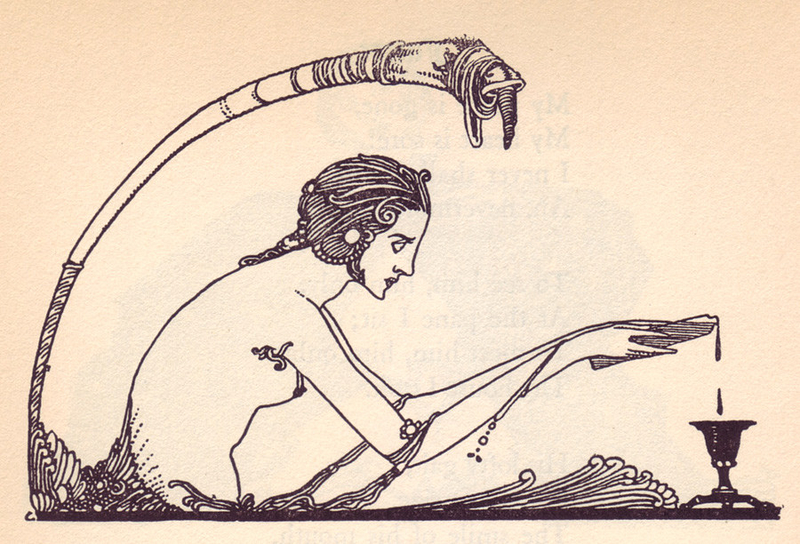
Secrecy pervades Clarke’s artwork. It seems no coincidence that his choice of commissions — demonstrating some of his most successful illustrations — focus on isolated and lonely figures, forced into spaces of darkness and occult practices. His ink work depicts deals with the devil behind closed doors, arcane mansions cut off from the light of society, lovers cavorting in secret.
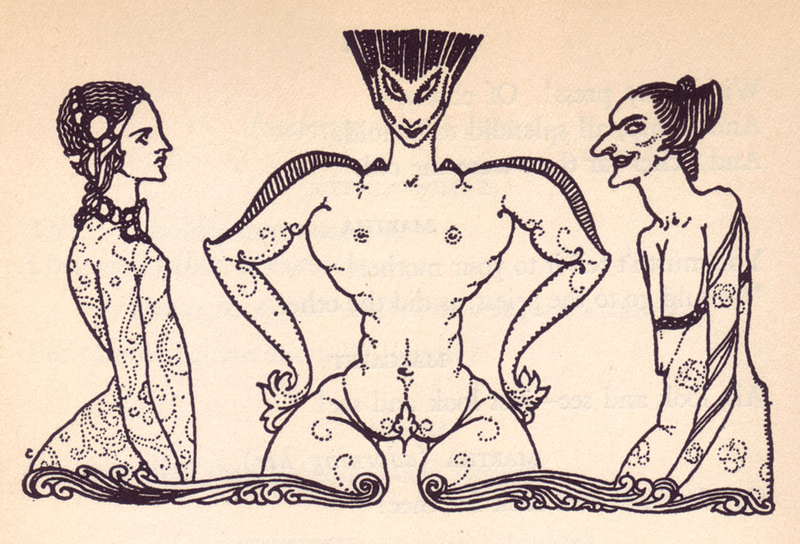
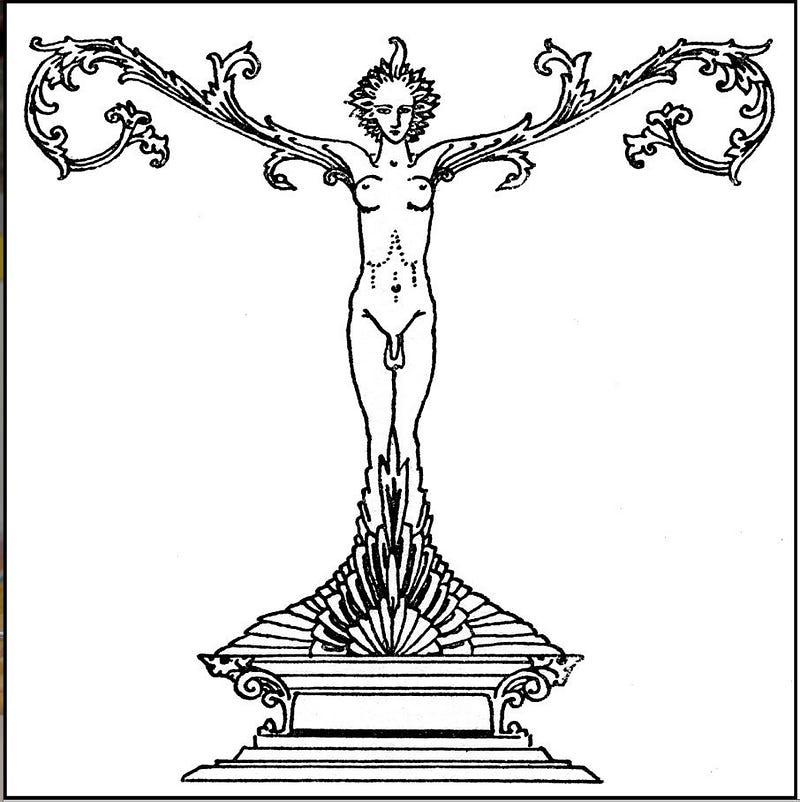
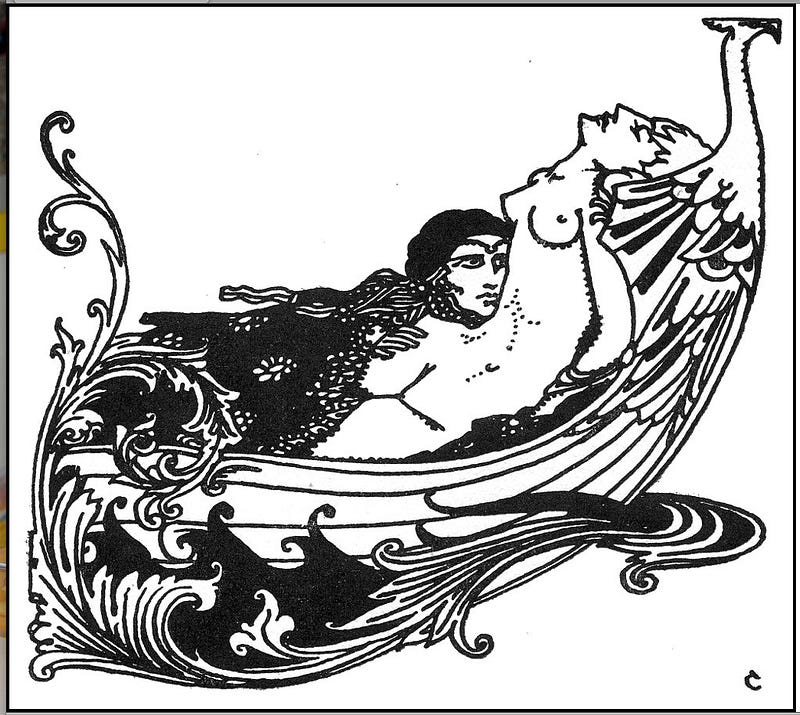
Although Harry Clarke has been documented as a straight man — he married fellow art student Margaret Crilley in 1914 — his artworks perform a type of decadent and languid queerness that drips from every illustration. From the fluid and reaching phallic flora that branch across his borders, to the explicitly sexual poses and demeanours of his characters. In particular, Clarke’s portrayal of the human body is consistently androgynous.
“Harry Clarke’s illustration work for Swinburne’s Faustine is a good example that indicates his admiration of raw sexuality, particularly accentuating on sex, death, and vivid imagery engrossed in the world of grotesque […] wherein its only male biology that affirms the reader that the figure might be a male even though his outer garment looks very much like a gown, with the ornate feathers and decorations that make him look feminine.” (Joshi, 2021)
Clarke’s work by any modern standards is a deeply queer practice. Which brings to question whether Clarke’s alleged heterosexuality was as clear cut as the small remnants of biography suggest, or whether — like his heroes Oscar Wilde and Aubrey Beardsley — Clarke was a queer man living a life of performative straightness to avoid the censorious nature of his day.
If it is true that Clarke was a homosexual, then his need to hide his true self would have been greatly informed by his profession. Most of Clarke’s commission work and livelihood stemmed from commissions from the clergy. His breath-taking stained glass windows of Saints and biblical scenes were in great demand by the churches of Ireland — superseding his book illustrations at least during his own lifetime. To be found out as a gay man in 1910’s Ireland would have meant ruin.
If this is the case, Harry Clarke’s own self-understanding would have been shaped by the fate of Oscar Wilde. Wilde’s meteoric rise to fame in British aristocracy had been brought to a crashing halt by the obscenity trials of 1895 that would unearth his secret life and homosexual affairs — leading to two years of hard labour in prison and a life in exile in France. Wilde’s trial brought scrutiny not only to his own life, but the lives of the community of artists surrounding him. The author made little effort to hide the wildly hedonistic lifestyle that inspired his decadent works such as The Picture of Dorian Gray, in which he depicts the homosexual communities that he and Aubrey Beardsley both mingled with. Despite the fact that homosexuality was incredibly common in day-to-day Victorian life, the official rhetoric from the law courts was clear and Wilde’s exile was a warning call to all so-called ‘sodomites’ across the British Isles — you are not normal here. Harry Clarke would have grown up in the wake of Wilde’s exile — a fellow Irishman and figure of the aesthetic movement, demonised and judged by the performative repression of his own fastidious age.
The impact this had on Clarke is suggested in an oil painting of1913, De Profundis (Oscar Wilde) is a reaction to the letter of the same name that Oscar Wilde sent to his male lover from prison (published posthumously in 1905). The painting depicts a gallery of looming, faceless figures — dwarfing the viewer as a jury of demonic headless faces stare back accusingly. It’s a deeply paranoid, tormented, and unsettled piece — all emotions that a reclusive and ailing queer man in the early 19th Century would experience daily.
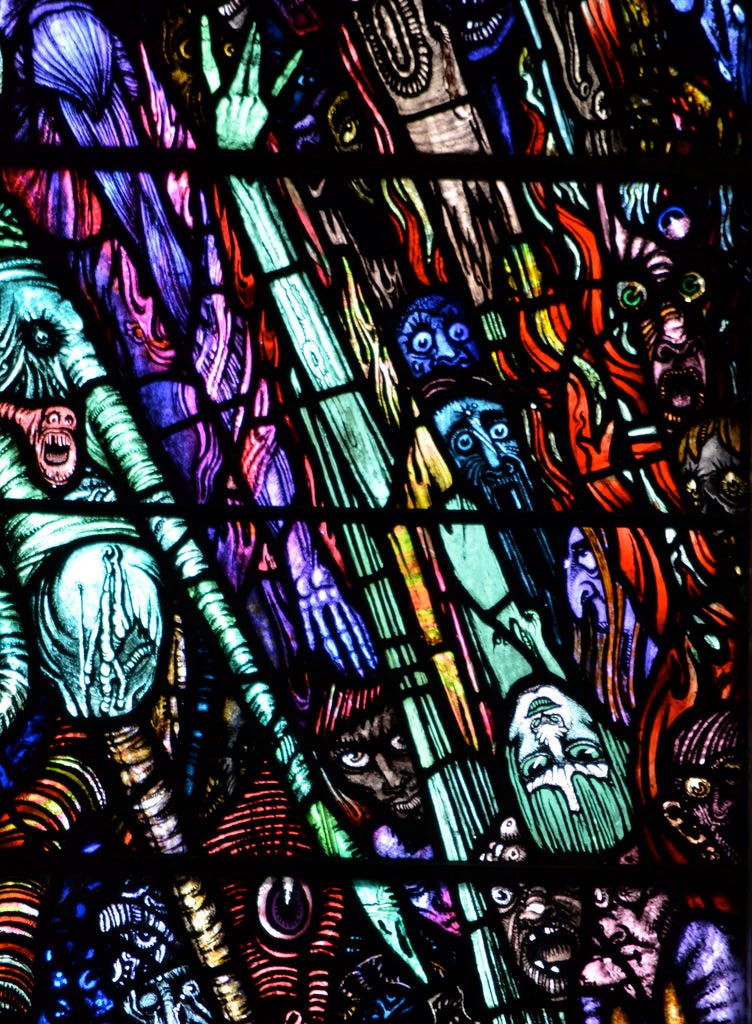
Like Wilde’s Dorian Gray, Huysmans’ À Rebours, or Schiele’s male nudes, Clarke’s artwork is replete with a sensuality forced into hiding and demonised. It’s not hard to believe that Clarke’s obsession with the grotesque, and his depictions of himself as monstrous, misshapen, and decomposing, are direct reflections of how he believed he would be judged by society. One salient example of Clarke’s own self-projection is a late stained glass work, Last Judgment, completed in 1931 and installed at St. Patricks Church, Newport:
“In the Last Judgment’s lower right corner, we see Clarke himself — portrayed upside down in a sickly green — descending to hell amongst the tortured souls and grotesque creatures he so often envisioned.” (Sullivan, 2014)
“A nation famed as a Catholic stronghold was to be represented as bizarre almost viciously evil people steeped in sex and drunkenness and, yes, sin.”
Such were the words of William Thomas Cosgrave — president of the Executive Council of the Irish Free State — upon the unveiling of the Geneva Window, Clarke’s final masterpiece, as well as one of his final self-portraits. The figure etched into the glass — ghoulish sallow skin, slicked down bedraggled hair, overlooked by an icon in exile — is a figure of conflict. A man in full recognition of his achievement as to place himself amongst his literary heroes and states-people, and yet a man so aware of his own monstrousness amongst society to depict himself amongst other monsters. An isolated hallucination, fading back into the background of his own magnum opus.
* All images are used with permission or presented here for educational purposes under fair usage policy.
References and Further Reading:
[1] Alien Spaceship, Hammer Horror? The Pulsating Visions of Harry Clarke by Philip Hoare, The Guardian, 2019
[2] Irish Artists: The Duality of Harry Clarke by Gandharva Joshi, Babylon Radio, 2021
[3] Harry Clarke’s Looking Glass by Kelly Sullivan, The Public Domain Review, 2016
[4] The Explosive and Enigmatic Stained Glass of Harry Clarke by Micheal Duggan, Catholic Herald, 2018
[5] Harry Clarke (1889–1931) by R. B. Russell, in The Green Book: Writings on Irish Gothic, Supernatural and Fantastic Literature, 2021


