
Dangerous Consequences of Facial Recognition Technology
Can we still have privacy in public?
Disclosure
The following introduction references existing technology and future advances in facial recognition. This scenario is fictional but should be considered technology possible.
The Story Begins
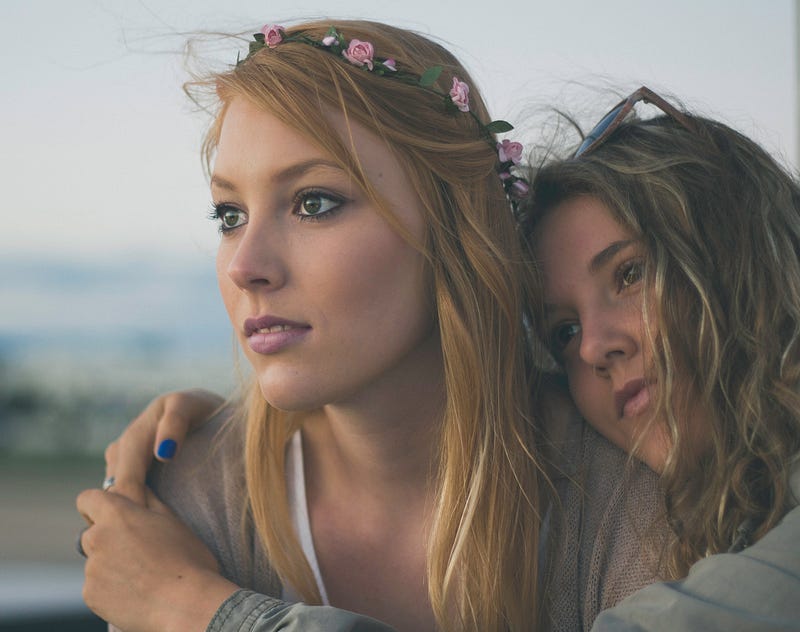
On a warm south Texas fall afternoon, Chloe and Olivia left school for home. They caught bus #632 at the corner in front of the bank across the street from RHS. They’d only ride a mile, initially. Chloe wanted to stop off at the Big Box SuperStore on the way. She had been at the store the previous Saturday when one of the salesladies told her about the new line of fall sweaters due to arrive Wednesday. They’d be stocked on the shelves and hangers by Thursday afternoon. She was dying to see what Big Box had.
They left campus as soon as they could. School let out at 4:00 pm. The bus would be at their stop by 4:08. They didn’t want to miss the bus because the next one wouldn’t arrive until nearly 4:30. Catching their preferred bus would get them to Big Box by 4:12, a four-minute-mile ride. Although they both were on the track team and conceivably could run the distance in about the same amount of time as riding the bus, why be all hot and sweaty when they got there.
Chloe and Olivia walked through the main doors a little after 4:20 pm. They often came to Big Box. After all, the store had most anything a person could want. Stuff wasn’t fancy, but then it wasn’t expensive either. Chloe could generally afford what she wanted as long as it wasn’t too close to the end of the month. For Olivia, it was always too close to the end of the month. Olivia usually shopped at Goodwill across the street from Big Box.
Big Brother Is Watching
As soon as they walked through the doors, BBFR recognized them. BBFR is an abbreviation for Big Box Facial Recognition. The loss prevention staff just called it Big Brother. Big Brother is the first line of shoplifting defense in the arsenal of anti-theft devices employed by Big Box. Every person entering the store, any store in the Big Box empire, is photographed at the doors. BBFR’s algorithms determine if this customer has been in a Big Box or any of its affiliates before. A new customer is assigned a new account. The customer is assigned an 8-digit hexadecimal number, and their visit to the store is logged. If it’s a return customer, their visit is recorded.
Chloe is known to Big Brother as 3d9619a0, and Olivia is known as cd7cc365. Eight digit places of hex numbers will store 4.29 billion unique customers. So far, Big Box has used only a fraction of that number. Certainly not anywhere close to 7.57 billion numbers needed for the entire world population, but Big Box is optimistic about eventually needing a ninth digit.
From the store management’s point of view, there are two cool things about Facial Recognition (FR). The first is that things like sunglasses, facial hair, and makeup are mostly irrelevant to the Big Brother algorithm. FR uses permanent facial features of the shape of eyes and distance between the eyes, size, and shape of the nose, and length of the jawline. Facial data points, known as nodal points, create a three-dimensional facial construction. Such constructions even use skin texture.
The second cool thing about FR is the general public doesn’t know it’s in use, and the company, depending on the store location, has no legal obligation to inform anyone. (Wernick, 2019)
Two years earlier, when the girls were 16, Olivia had been window shopping and accidentally dropped some L’Oreal Paris True Match Super-Blendable Blush, retail price $7.97, into her bag. She swore up and down she didn’t mean to and hadn’t noticed it falling into her purse. But unfortunately for her, Ms. Rose, a plainclothes store detective, observed the incident. It was Ms. Rose who confronted her and detained her outside the store.
Given the relatively low price of the item taken, the police were not called. Olivia was photographed, her parents were contacted, and she received a “Notification of Restriction from Property (NRP).” This notice essentially says stay away from all Big Box stores and their affiliates forever. If she showed up on a Big Box property, she could be arrested for criminal trespassing.
Initially, Olivia heeded the no-trespass notice. But as time went on, Olivia started coming back to the store, usually with Chloe.
Upon BBFR installation at the store, Olivia’s past transgression was uploaded into the system. Anytime Olivia came into Big Box, an alert was sent to loss-prevention. However, because Olivia was still considered a juvenile and no theft issues arose, loss prevention viewed her presence as something to be monitored but not acted on unless there was a problem. Also, profit from a sale was still profit, and management bonuses are dependent on profit. Olivia’s grace period would end today.
When Olivia entered the store, an alert was sent immediately to the loss prevention team on their store smartphones. Big Brother started a real-time camera track on cd7cc365, as it had every other time she had come into the store. Conrad was working on the camera monitoring that day. Conrad would monitor the cameras that were watching the store and high-risk customers. Though Big Brother would alert the loss prevention team of identified risks, Conrad was particularly adept at identifying shady behavior.
There was no need for Conrad to radio Ms. Rose of cd7cc365’s location. Ms. Rose already had that information on her handheld store device. She had a map of the store, and a small photo identified Olivia’s place. At the moment, there was only one thumbnail picture on her screen.
Various times of the year, particularly beginning Black Friday, multiple pictures tended to show up on the loss prevention team’s devices. At these times, those risks with NRPs would be met just inside the doors. Big Box staff reminded them they were unwelcome and should take their business elsewhere.
Ms. Rose would be the eyes on the sales floor, looking for the telltale signs of dishonest behavior. Good thieves, rather, thieves that are good at stealing, know the cameras are there and can disguise their actions enough that the overhead cameras can’t see the concealment. Good thieves can also block concealment from loss prevention officers on the floor, but it is impossible to conceal theft from both cameras and floor staff simultaneously.
Olivia and Chloe made their way to the women’s clothing department, unaware their actions were observed in duality. Together, the girls eagerly went through the fall sweaters. Although both girls happily went through the collection of sweaters, it was Chloe that was shopping. Olivia was there to offer advice.
They had gone through the Time and Tru sweaters priced $9.99 to $18.99. Cloe had found a couple that could do for her, but the sweater she wanted was a Calvin Klein Cowlneck Knit Sweater priced $39.99. The $25 she had would amply cover any of the Time and Trus, but not the Calvin Klein. Chloe would not have money for the CK until after the first of the new month. What should she do?
As the girls exited the store, Ms. Rose walked up to them, saying to Chloe, “Miss, may I see your receipt for the sweater in your bag?”
Research For This Article
In researching this article, I found many commercial vendors offering facial recognition products. Here is what several have to say about their services.
Paravision — “Paravision’s algorithms excel across a range of challenging scenarios including cooperative and non-cooperative faces, light and angle variability, blur and pixelation, occlusions, and diversity across phenotype, age, and gender.”
FaceFirst — “FaceFirst notifies your loss prevention team when known criminals, stalkers or disgruntled former employees enter the workplace…”
Cognitec — “Face recognition technology can detect people’s faces in live video streams or video footage and store anonymous information for each appearance of a person in front of a camera. Analysis of this information over time allows the software to compute people count… and to detect frequent visitors and crowds.”
Would Or Do Stores Use Technology Like This?
Yes, of course, they would and do. The largest retailer in the world, Walmart, has experimented with facial recognition (Roberts, 2015). Walmart also uses the Everseen system at some store locations to detect unscanned items placed into shopping bags (BBC News, 2019).
China is a world leader in facial recognition technology and regularly reminds its citizens that such equipment will make it almost impossible to evade the authorities.” — BBC News, April 13, 2018
What Might We Expect For A Worst Case Scenario Of Surveillance Cameras?
Probably the most widely known user of FR technology is the Chinese government. The news media reports extensive use of FR. There was a recent report of a fugitive identified out of the crowd of 60,000 concert goers (BBC News, April 13, 2018). Another story tells of Chinese police officers wearing unique FR enhance glasses. “The glasses are connected to an internal database of suspects, meaning officers can quickly scan crowds while looking for fugitives.” (BBC News, Feb. 7, 2018)
BBC correspondent John Sudworth partnered with the Chinese police to experiment. His photograph and identifying information were entered into the national database as a person of interest. He left police headquarters with the intent of walking to an unknown destination. He was apprehended 7 minutes later at a bus station by five policemen (Lui, 2017).
An estimated 170 million CCTV cameras are in use in China, and at the end of 2021, there will be an additional 400 million cameras added to the system. (Lui, 2017)
How does the use of technology affect our 4th amendment rights?
There is a difference between government use of FR and private use of FR.
The consequences of infringement of civil liberties by the government are clearly outlined in our laws.
The 4th amendment states, “The right of the people to be secure in their persons, houses, papers, and effects, against unreasonable searches and seizures, shall not be violated, and no Warrants shall issue, but upon probable cause, supported by Oath or affirmation, and particularly describing the place to be searched, and the persons or things to be seized.” — National Constitution Center
Use of FR by private individuals, companies we choose to do business with, and private lawful use by others is not so clearly defined.
“‘Facial recognition really doesn’t have a place in society,’ said Evan Greer, deputy director of Fight for the Future. ‘It’s deeply invasive, and from our perspective, the potential harm to society and human liberties far outweigh the potential benefits.’ “ — (Yamanouchi, 2019)
Summary
The year 1984 was 35 years ago. However, I see 1984 (Orwell, 1949 ) as clearly possible in America’s future.
Citations:
BBC News, Feb. 7, 2018, Chinese police spot suspects with surveillance sunglasses
BBC News, April 13, 2018, Chinese man caught by facial recognition at pop concert
BBC News, June 21, 2019, Walmart uses AI cameras to spot thieves
Lui, Joyce, Dec. 10, 2017, In Your Face: China’s all-seeing state, BBC News
National Constitution Center, 4th Amendment — Search and Seizure
Orwell, George, 1984, Secker & Warburg Publishers, 1949
Roberts, Jeff John, Nov. 9, 2015, Walmart’s Use of Sci-fi Tech To Spot Shoplifters Raises Privacy Questions, Fortune.com
Warnick, Alan S., July 02, 2019, Biometric Information — Permanent Personally Identifiable Information Risk, American Bar Association
Yamanouchi, Kelly, Sept. 18, 2019, As Delta Air Lines Expands Face Recognition, Criticism Grows, The Atlanta Journal-Constitution
© 2019 Randle B. Moore All Rights Reserved
Please click this [LINK] if you have enjoyed reading this story and would like to have my stories delivered to your email inbox when I publish.
Medium is a beautiful site for innovative and exciting stories. Paying $5 for a monthly subscription or $50 for an annual subscription entitles you to read all articles. Use this [LINK] to join. Your membership fee supports writers of Medium.
If you found this story informative, you may also find these stories fascinating.