
Four Fascinating Facts about How Men and Women Have Evolved to Work Together
Eusociality has defined our sex drives, masculine and feminine truly are interchangeable, men and women make the ultimate life-saving duo, and more
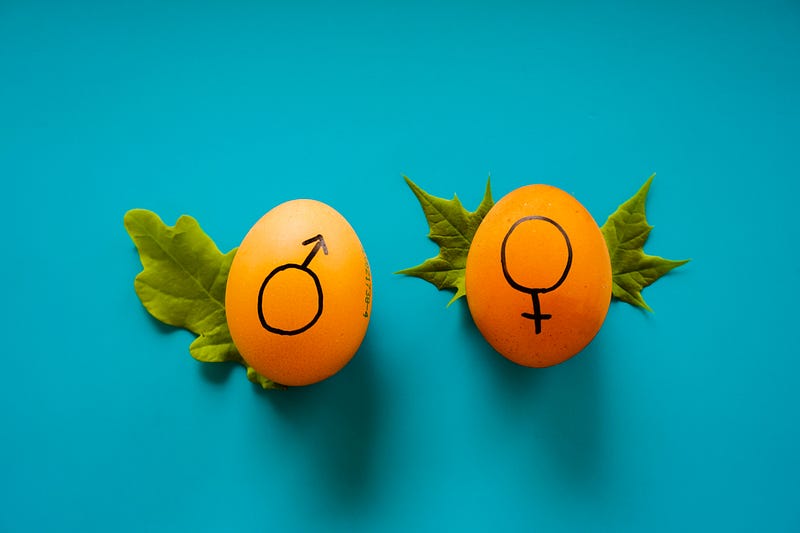
Men and women have evolved tools that make them the ultimate team even when they don’t want to work with each other. Here are four ways men and women have evolved to work for each other.
The combination of men and women together makes the ultimate life-saving duo
When it comes to danger and throwing yourself in front of it to save lives, it is mainly men who do this, both in the emergency services and through bystander interventions.
For example, the majority of emergency service roles that require dangerous actions to save lives are filled with men, and in bystander interventions, 90 percent of those interventions are made by men — despite the fact that in 1 in 5 of those interventions, the one doing the intervening dies.
However, when it comes to what are classed as moral interventions, women come out very much on top. Moral interventions are things like offering shelter to those in need and demanding that violence be stopped, also, things such as donating blood and organs and giving to charity.
For example, 70 percent of women report giving to charity whereas typically only 60 percent of men do, also, over two-thirds of blood donors are women, and 53 percent of organ donors are; on top of that, there is evidence that shows that women are more likely to donate kidneys along with other body organs to non-relatives than men are.
Evidence also shows that women are more likely to offer both homeless people and refugees shelter, and they are also more likely to offer aid to a person in need regardless of their affiliation. For example, in war women are more likely to be willing to help people in need regardless of which side they are on.
So, if you are in a burning building or being attacked or just generally in need of being rescued, the evidence says that your best chance of being saved is if a man is around. But if you are a refugee and you are looking for shelter, or if you require blood or an organ, or if you are an enemy soldier on the cusp of death, or if you’re about to get your head kicked in and you need someone to tell the would-be attackers to back off, the evidence seems to say you’re best off looking for help from a woman.
However, it should be noted that when it comes to the world of individuals anybody can be anything. Especially in a world of eight billion. That means it could be a woman running into the burning building to save you, and a man making that moral intervention.
But the evidence does seem to show men have evolved to be more one way and women another. In terms of why this is, nobody knows for certain, but it is believed that because women can only have one child a year, but men can impregnate many women in a year, when it comes to throwing yourself in the way of danger, women’s lives have simply been too important to do it i.e. both men and women have evolved to never risk the lives of women unless absolutely necessary.
On the flipside, due to men typically having to face down danger they have — on average — become more disconnected from empathy and more connected to anger. They still typically feel just as much empathy, but the greater disconnection from it means they typically are not as astute at picking up when a more moral type of intervention is needed as women are — who have evolved a closer relationship with empathy due their historical role as the primary caregiver.
So, because men are typically more capable of throwing themselves in front of danger, and because women’s lives are on a per person basis less expendable than men’s due to reproduction differences, when there is danger, it is men that most often do the risking of their lives. However, due to the tools men have evolved to do this, they tend to not be as astute to more moral type interventions. Women on the other hand, due to the way they have evolved, have become acutely astute.
In combination, that means men and women have evolved to be the ultimate life-saving team. Put men and women together and they will save more lives than either ever could hope to alone.
Note: thanks to the technological revolution of the last couple of centuries, we have created a world where, firstly, men are more able to connect to empathy — making them become increasingly better at identifying the need for moral interventions — and women are more able and capable of risking their lives by throwing themselves into the face of danger to save lives — which increasing numbers of women are doing.
Eusociality gave men their high dopamine orgasm-driven sex drives and women their oxytocin bonding fuelled ones
Eusociality is where a species agrees to work for each other rather than just with each other. Humans are the only eusocial species on Earth. One of the leading factors behind eusociality in humans is how our sex drives have evolved to drive us to form sexual connections.
Basically, at some point 6 to 10 million years back, the males and females of our ancestors started working for each other to create the optimal world for babymaking. So the males would do the protecting and providing, and the females would focus on the child-rearing and raising.
Inevitably the males and females who did this would be more successful than the ones who did not. That’s because men and women make one hell of a team when it comes to creating the perfect environment for raising children.
In terms of what kept the males and females together, something made them bond to a level other primates do not. This bonding was born through women forming predominantly oxytocin-driven sex drives and men forming predominantly dopamine ones.
Over time, that meant the most successful men were the ones most driven by dopamine sex drives and the most successful women were the ones most driven by oxytocin fuelled ones. This inevitably meant that the female sex drive became ever more fuelled by oxytocin and the male sex drive became ever more fuelled by dopamine. This pushed men and women evermore together.
Or rather, as these couples became ever more successful, the male sex drive became ever more “I want lots of orgasms” driven, and the female sex drive became ever more “if you want that, give me a connection and prove you will stick around” driven, which pushed us ever more together into a eusocial species.
So, if you have ever felt men are all about sex and women about connections, it’s because for true sexual connections to be born, one has to be heavily driven by sex, and the other has to be heavily driven by connections. At least that is what the evidence says.
Women are more prone to screaming when in danger — which is why men are less prone to screaming when in danger
Ever wondered why so many women are prone to squeamish behaviour when watching horror films or while riding rollercoasters, whereas men are much less so? Ever wondered why so many women scream at the sight of insects, especially spiders, men much less so.
Ever wondered why, women, when they are in distress are often so much more visible with that distress than men are? Inevitably, there is an element of social conditioning in this behaviour but there is also something else going on.
Once we became eusocial i.e. we began working for each other, women began losing ever more of their defensive capabilities. Men on the other hand began to get ever better at providing defensive capability.
This meant men became ever more focused on protecting women and women became ever more in need of being protected. This led women inevitably to become very reliant upon men for their protection.
One of the ways women have evolved to alert men that they need protecting is by screaming and showing distress. So, women evolved to scream and show very visible signs of distress as a means to alert men and bring them running so that they could protect them from whatever danger was causing the distress.
Inevitably, that means that men did not evolve to do this because it would be pointless. If a man screamed to show distress, nobody would come because it was his job to face the threat. This is why men typically show anger in times of distress, because that anger would protect them by readying them to face the threat.
So, if you’ve ever wondered why things like fear, anxiety, and depression in men can so often show as anger whereas in women they more often show as fear, anxiety and depression, and if you have ever wondered why women so often suppress anger. Instinctual evolution is the reason. Women have evolved to alert people to danger, hence, the need to show fear and anxiety very vividly, but suppress anger, men have evolved to face down the danger, hence, the need to portray fear and anxiety as anger.
Note: understanding the way people show and express emotions is extremely important if we are to help both men and women become better able at handling their emotions. We don’t know enough about how women express their emotions which is why so many are struggling with their mental health, we understand even less about how men do. Both these realities need to change.
Both masculine traits and feminine traits are equally as imperative and are truly not per se gender-specific
When catastrophes occur, the evidence has shown that, no matter the culture, men and women spontaneously fall into very specific types of roles — especially in regard to leadership-type roles. When life-saving action is required, typically men take the lead, and the men who take the lead typically show a lack of empathy and a lack of concern for the opinions of others — skills that have been proven to be the most beneficial in this type of situation.
However, when life-saving action is not required and there is a need to boost group morale, typically women take the lead, and the women who take the lead typically tend to be highly sensitive to people’s moods and use that ability in an effort to be accepted by the entire group and thus boost morale.
That means both men and women are built to be leaders, not one or the other, both. Not just that, but who takes the lead is designed to be interchangeable based upon what is required for the environment that we are in. That means we are designed to have a revolving leadership rather than a singular one, and both male and female leadership is equally imperative to the functioning of society. And, both men and women are capable of both styles of leadership.
Yep, it has been shown countless times that in environments where groups of men with no hierarchal structure have to operate alone, typically when a leader with what is seen as a more masculine style skillset is required, the man who is strongest in this area will take the role. However, when a leader with what is seen as a more feminine skillset is required, a different man will step up and assume the role, the one who has the most of these skillsets.
The same happens in similar environments where there are only women, the woman with the most what we call masculine style skillsets will take the lead in an environment that requires them, and the woman with the most what we call feminine style skill sets will take the lead in an environment that requires them.
That means rather than roles being assigned by gender, we instinctually know the best skillsets for each environment and allow the person who has those skills to take charge. That means even if it’s a woman in a room full of men who has the most of what may be termed masculine skillsets needed for the job, we will let her take the role.
But typically, it is men who bring the masculine traits and women who bring the feminine ones and together those traits give us a far superior chance of surviving than having just one or the other.
That means the masculine added to the feminine is very much the yin added to the yang, regardless of which gender is bringing the traits i.e. there is a reason we have evolved masculinity and femininity, combined, they kick ass.
The best thing about it all, due to the technological revolution of the last two hundred years, all of us now have the freedom to embrace whatever skill sets we have most — regardless of our sex.
That’s all from me, thanks for reading! If you enjoyed this post, you may also enjoy the following:
Six Interesting Theories About Sexual Desire and Relationships That You Probably Didn’t Know
52 Fascinating Facts About Sex That You Probably Didn’t Know
35 Things That Men and Women Experience Differently From Each Other
To learn more about me see this link, to support me click the link below:


