
Recycling or Repurposing
Cutting Bottles and Saving Planets at the Same Time
Now I’m really doing my part for the environment
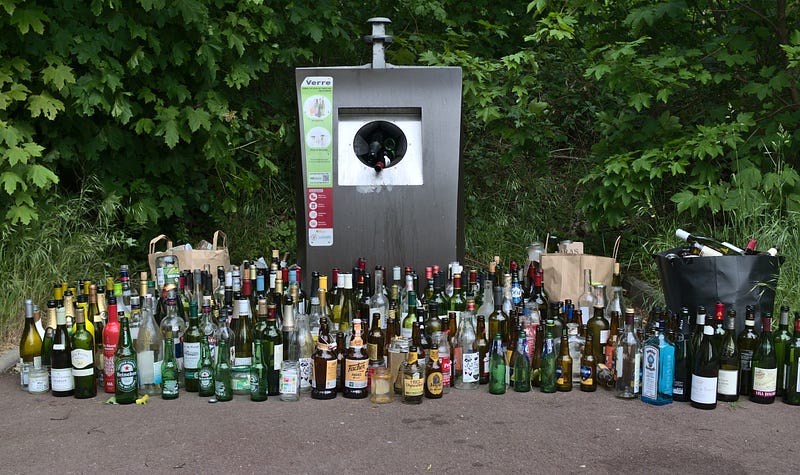
I think by now, most of us have gotten the message about the impact that our problematic habits as consumers are having on the Earth.
“If everyone on earth consumed the way we do, we’d need three earths”, et cetera…
We know this and I think most of us want to do our bit to save the only place where we can live (for now).
J.R. Flaherty🌱helps us become a bit more aware of the trajectory and travels around the world of a plastic bottle we throw away:
And yet, for every time we say no to a plastic straw at the bar to save the turtles, there are 100 more of these things that end up in the garbage, never to decompose for 500 years.
We continue to fight the good fight when, despite the fact that you’ve told the bartender or server “no straw”, your drink still arrives with one and when you remind them, they take it out and put it in the garbage.
What to do?
In my travels, it’s become clear to me that there are significant parts of the world that have not received this message. Or they have gotten it and people have not heeded it. Or, more likely, they have gotten it and are not in a position to heed it.
Where I am from, recycling is for the most part, part of the culture now. We even know that a lot of what we put in the bins is not eligible to be recycled, but in they go anyway. Still, people have gotten used to separating their consumer waste at home and then taking it out back. Paper, plastic, glass, organic waste, everything else. A separate bin for each. It gets picked up by someone else once or twice a week, tax dollars at work, job done.
Does this actually solve the problem? To some extent, perhaps. It makes us feel good about taking responsibility for our waste. I guess that’s worth something. But it also does two other things: 1) It keeps us consuming and 2) It puts the onus on the consumer to deal with packaging waste and takes it off the producer to develop a better alternative.
No matter how many beach cleanups you participate in, the stuff just keeps coming ashore.
It’s better than nothing I suppose. Or do we really have the wrong end of the stick on this?
Philip Ogley shares his solution to this conundrum here:
But what happens when you live in a place that doesn’t have much in the way of a viable recycling programme? How do you deal with the waste of what you inevitably still buy?
I’ll give you an example local to me that will illustrate a practical solution.
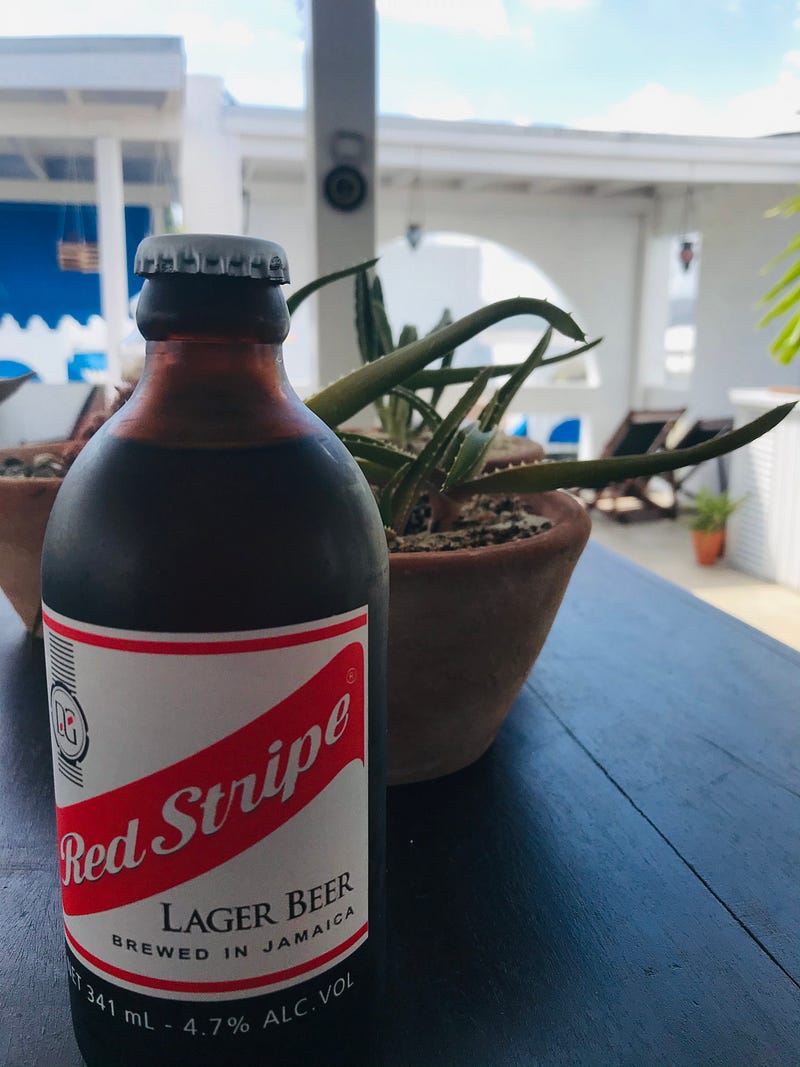
Red Stripe Breweries on Spanish Town Road in Kingston, Jamaica ran up against a little problem a few months ago. They produce their beer in the type of short stubby brown bottles that were common in North America until the 1980s. But they were running out of them and Jamaicans were beginning to panic about the lack of supply on the store shelves. The truth is that most of the bottles, used once, were ending up in the garbage. No surprise there. Ingeniously, the powers that be at Desnoes and Geddes — the company that produces the stuff (naturally now owned by Heineken) came up with a solution. 20 Jamaican dollars (13 US cents) for every bottle that came back. Imagine that. Problem solved. No more Red Stripe shortage.
It can be done in places like this.
This made me take a closer look at the waste we produce at home, which I would say amounts to a regular sized bag of trash each week.
What do we do with the rest, in a place where recycling bins and collection don’t exist?
Paper. It gets set on fire in the grill to get the coals going, at least a few times a week. I am glad that it doesn’t go into the garbage, but two things bother me about this. The first is that I am sure that burning anything, even organic material like paper, is not good for air quality. Burning compressed charcoal to cook my jerk chicken probably isn’t either. The second is that I never seem to get to the end of the paper supply. It continues to accumulate week after week. What should this tell me?
Plastic. The only thing I can do in this case is consciously buy less of it. But every time I go to Price Smart (the Costco equivalent in the Caribbean and Central America), the amount of everything that is packaged in plastic and that I observe in my and other people’s carts truly boggles the mind. Maybe it’s my trips to Price Smart that I need to eliminate. But no matter where you go, everything is in plastic. A bunch of bananas at any supermarket are required to go in a plastic bag when they are weighed and priced. Obviously, that plastic bag will need to be reused at least once more.
Glass bottles and jars. Here is where the concept of repurposing comes in and why we decided to buy a glass cutter. Actually, this is the third one we’ve bought. The other two were complex pieces of technology whereas this one is so simple, even I can use it. This one is on a metal base, on which is a set of rollers, an adjustable guide, and a glass scorer.
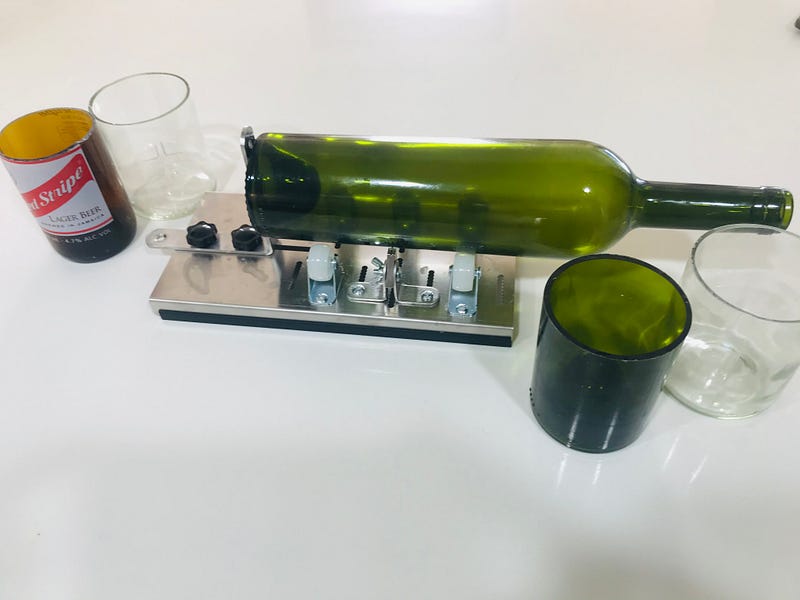
Only one revolution of the bottle on the scorer, or you will create different paths for the hot and cold water you alternately pour over the score. This is where you get in trouble and get frustrated but like a lot of things in life, you learn by trial and error.
It takes a while and a bit of elbow grease to get the hang of it and at first more bottles will separate poorly than will turn out great. But with a bit of time and patience, eventually any empty wine or liquor bottle can become a drinking glass, a vase, a container for a cactus, spare change, pens or clothespins, or it can become a candle — that you can also make yourself with and order of soy wax, wicks and various essential oils for smells.
Once again, make.your.own.stuff.
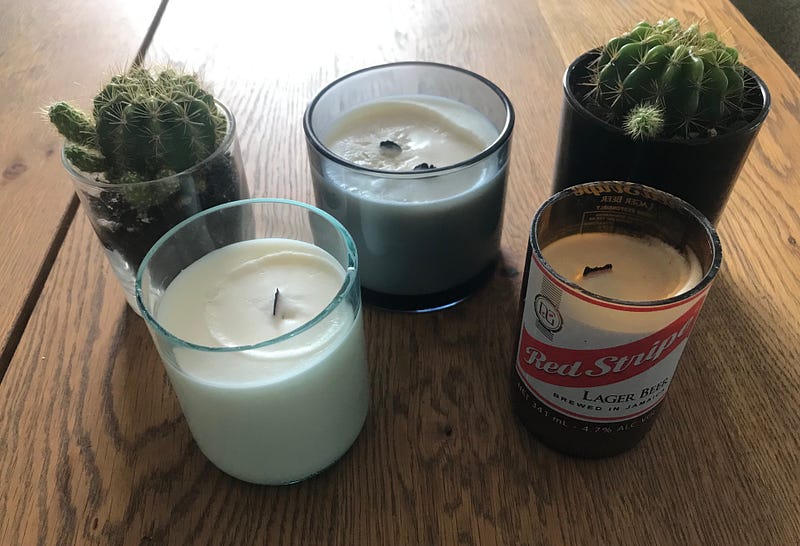
Does doing this make any difference? I don’t know, but taking something that would have been tossed aside as used and therefore now worthless and been transported to the landfill, into something useful…and dare I say beautiful…in its simplicity is probably, maybe, possibly, hopefully more a part of the solution than the problem.
If we all take individual actions of some kind and carry with us the question of “how can I make this better right now” as a guiding principle, then how can we go wrong?
And who among us wouldn’t like to receive a hand made candle in a glass jar?
Do you want to figure out how to make some of your own stuff at home? Here are a few ideas:
I really do hope that you like what you have just read. If you want unlimited access to thousands of writers, consider a subscription to Medium. It will set you back $5 a month and if you use this link, then I get a slice of that and it will go towards buying more soy wax.


