
Recycling and Consumerism
Why I Don’t Recycle My Waste — I Burn it!
One of the biggest scams of the past twenty years is recycling.
Read on.
The accepted principle goes that Recycling Helps The Planet. Well actually, it doesn’t.
For example, it can take up to 70% of the energy used to make a new glass bottle in order to produce a recycled one. Then there’s the transportation and labour costs.
Same with paper and cardboard. In fact, recycling certain types of printed packaging is a waste of time in terms of environmental protection. You may as well burn it.
Which is what I do.
Let’s take a personal example.
I live rurally where there is no recycling collection. I have to take it to the recycling depot, 10 km away. Once there, it’s then collected and carted off to a depot in Lisieux 30 kilometers away.
I therefore use the paper to light my wood burner in the evenings to heat my house. Recycling my paper, in this case, wouldn’t protect the planet to any degree.
I do recycle bottles and cans and any plastic I accumulate. Although sometimes I burn that as well, as some of it can’t be recycled and would end up in landfill. Or incinerated.
Recycling Has Created The Problem
It could be argued that the widespread availability of recycling options, certainly in Western Europe, has worsened the situation.
People now think — almost subconsciously — that it’s OK to buy plastic packaging, cartons, bottles, and tins. Because they can be recycled. And by making that trip to the recycling unit, you are protecting the planet.
But imagine for a minute if you didn’t have all this waste in the first place. You were more careful what you bought in your weekly shop. Meaning you wouldn’t have all this junk to recycle.
THAT would be saving the planet!
But it’s never construed like that in the media or in the clever advertising campaigns of the food and drink companies.
I recently saw a clever bit of advertising on a bottle of water. It said, in green letters:
100% Recyclable
At a fleeting glance, you might assume the bottle is 100% made from recycled plastic. But it isn’t. It just tells you— as if you didn’t already know — that this bottle can be recycled.
But by the time you’ve got it home, it’s too late.
A similar trick is used by food companies when they label their products 100% fat-free, even though it’s full of sugar.
Recycling Units or General Trash
Recycling should be regarded as the last option once all other options have been discarded. Unfortunately, recycling is now considered just another means of waste disposal.
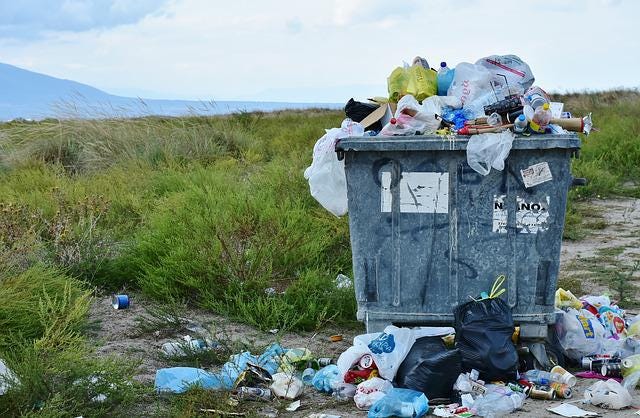
Where I live, the recycling units are now treated as general rubbish bins in which everything goes: Bottles, nappies, metal, clothes. And I regularly question how much is actually recycled. Are people sorting through this?
I doubt it. And my best bet is that most of it is incinerated. Which is better than landfills as at least energy can be generated from it.
I’m very much in favour of recycling. But how about adopting a recycle wisely approach. Instead of using recycling bins as trash cans.
Or simply, buy less crap.
Thanks for reading this non-recyclable piece.