Cultural Appropriation Debate: Gwen Stefani, Japan-Lovers, and the Threat of AI
Japan-savvy people spread inaccurate information as if it’s their country
If you’ve been following the news about Japan, you may have noticed that 2023 started with a bit of a controversy surrounding Gwen Stefani’s recent comments. During an interview, she claimed to have had an aha moment and realized, ‘My God, I’m Japanese.’
No, You’re Not Japanese. But…
This statement caused quite a stir online. Having a father who worked for a Japanese company doesn’t make her Japanese. She’s white, having no connections to minorities in the US. Her love for Japan doesn’t necessarily justify her fragrance collection named Harajuku Lovers. I wouldn't thank her for contributing to better visibility of Japan, at least.
However, putting aside the perspective of cultural appropriation angle, I found her childish remarks…guilty, but cute, only for a little. I can relate to her sentiment to some extent, to be honest.
I’m 100% Japanese, living my whole life in Japan, but my love for American culture is a bit insane level after acquiring a degree from an American college and working for a US company for a long time.
My Gwen Stefani Phase
In my teenage, when a fortune teller told me one of my distant ancestors was a native American, I almost believed it. It was my Gwen Stefani moment. Holy s***! I knew it!
Of course, I don’t dare say I’m American. I haven’t experienced the real-life struggles and difficulties Japanese American people face.
Gwen Stefani’s comments were inappropriate. There’s no doubt about it. However, I also believe one’s love for other countries and cultures shouldn’t be scrutinized so harshly, even though celebrities need to be aware of their privilege and the impact of their words.
More Harmful Acts by ‘Japan Lovers’
What makes me more annoyed is people from the Western world who are proud of themselves as Japan-savvy and instill wrong information in fellow Japan-lovers.
Unfortunately, I encounter such cases frequently since I run a Japan-focused publication on Medium. And those who do the unfair policing are usually white (and men, in most cases). Their high self-esteem is impressive, indeed.
Their pride goes a long way, often underestimating the love of other Japanologists such as anime fans. For instance, they claim that it’s not acceptable to put sugar in matcha. Well, if you do that at a traditional tea ceremony, other guests will gasp, but…is that so problematic and worth one-upping on social media? I like both decent matcha and matcha lattes, though I know the basics of tea ceremonies.
Take masks. They try to educate fellow ‘foreigners’ to put masks on everywhere in Japan. However, some Japanese people—including myself— welcome maskless tourists, as they can be a catalyst and help break the strong sense of peer pressure.
ChatGPT Makes It Even Worse
Yet to my surprise, so many people feel comfortable teaching about Japanese culture and customs after living in Japan only for a couple of years. Or even worse, they write with AI assistance, not stepping into Japan at all. And they do faulty policing on behalf of Japanese people.
They never say, “You should ask Japanese people.” They can give a lofty lecture pretty confidently, not acknowledging they’re spreading inaccurate information about Japan, the country they don’t belong to.
The combination of these prideful people and AI writing tools is a nightmare. Many writers believe ChatGPT is a game-changer, but believe me, information about Japan accumulated at ChatGPT is hot garbage.
It can’t tell even the name of the current Prime Minister of Japan, as of Feb. 3, 2023. It answers Yoshihide Suga—but no, it has been Fumio Kishida since 2021. Thus, if you write about Japan with ChatGPT, your content is not timely at all, aside from its questionable accuracy.
Your Imaginary Japan Needs Fact-Checking
These individuals may think they’re the evangelists to save Japan with their English skills and a strong sense of justice. Lamenting Japanese people’s poor English proficiency is their common characteristic too, which puts me in ‘watch your own language’ mode.
Every time these people preach ‘Japanese people don’t eat or drink on the street or train,’ I find it a little off and stifling. They love squeaky-clean Japan in their imagination and try to regulate the behavior of others. But the reason we can keep this country clean isn’t that we don’t eat on the street. We just know where we should throw trash.
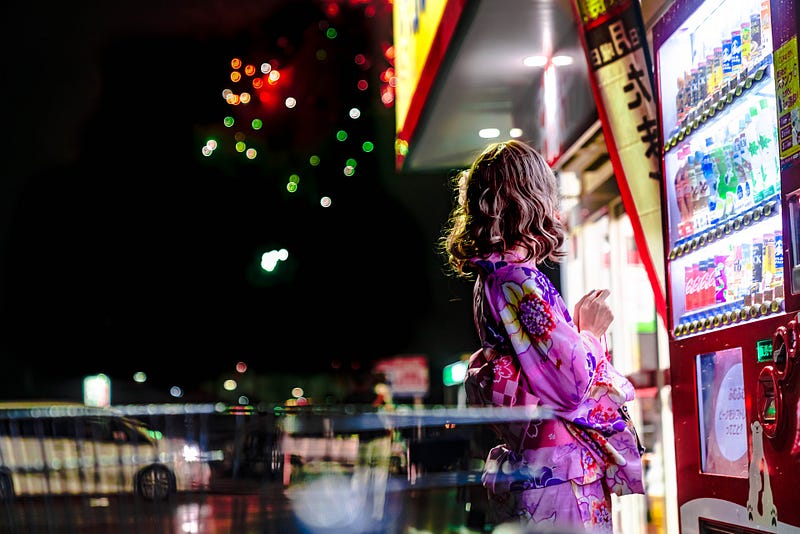
As a lifelong resident, I always feel like groaning, “Just let me have a coffee on the go. What’s the point of these vending machines on the street?”
In general, what Japan-savvy people know is only a little about the areas they have lived in. And they are unaware of the differences in customs between Tokyo and Osaka, Hokkaido and Okinawa. If they publish their stories as fiction, it’s fine. But when they throw such pieces in a journalistic tone… I avert my face.
Be a Fan and Know Your Limitations
If you truly love Japan, and if it’s not your country, you should be extremely careful before telling people what you know. You should draw a line between your knowledge and opinions. Your standpoint is as a guest, not Japanese. You may want to talk and write more about what you love, not what you can lecture.
Maybe you’re still in the Gwen Stefani phase if you still feel the urge to educate people instead of Japanese people. But before damaging your reputation, I recommend thorough research and keeping in mind that you should say, “I’m not sure if I’m 100% correct. You should ask Japanese people,” at the end of your lecture.
Japonica welcomes any articles related to Japan. As long as it’s accurate, I’m happy to publish your content even if you haven’t visited Japan yet.
Follow Yuko if you enjoyed this article. She’s now working on her first novel set in Japan.
You can also subscribe from the referral link, which Medium uses a portion from followers for author support without any additional cost. Mediumの購読はこちらからどうぞ。