avatarRuchi

Free AI web copilot to create summaries, insights and extended knowledge, download it at here

1917

Abstract

nt questions. Make sure your intentions and words match up. Be curious to unearth the situation, but never be judgmental to tag a person to the issue.</p><figure id="cc74"><img src="https://cdn-images-1.readmedium.com/v2/resize:fit:800/1*n-sh88bebi2Yy9XCQW54lA.jpeg"><figcaption>Inclusion, visual by Information Artist</figcaption></figure><ul><li><b>Responding productively</b></li></ul><p id="0ae5">When people respond, listen with an open mind, keeping your biases, and judgment outside the door. Imagine when you’ve given people an opportunity to open up and then immediately respond with strong emotion, the psychological safety evaporates. A productive response is always appreciative, and respectful, and offers a path forward.</p><p id="2ff8">Usually, in situations of incidents or critical failures, teams with no psychological safety fight like blind rats running here and there, blaming everyone their way. But the goal is not to fight or compete on who was right or wrong, the goal is to identify the contributing factors to prevent the system from future failures.</p><figure id="b9ff"><img src="https://cdn-images-1.readmedium.com/v2/resize:fit:800/0*0xcgK8rwq7xQr2Og"><figcaption>Psychological Safety, visual by Information Artist</figcaption></figure><p id="4dd5">Psychological safety isn’t about always being nice. It is about giving candid feedback, openly admitting mistakes and learning from each other. It is a belief that expressing one’s honest self won’t get one punished or discriminated against.</p><figure id="d779"><img src="https://cdn-images-1.readmedium.com/v2/resize:fit:800/0*DiFv9LRCu-PCRKsa.jpg"><figcaption>The image is taken from Adam Grant’s tweet on Psychological Safety</figcaption></figure><p id="9ec2">💭 <b>Thoughts for reflection:</b></p><p id="683b">💬What steps do you take to create psychological safety in your team/organization?</p><p id="f484">💬When you think of psyc

Options

hological fear/intimidation, who is the first person that comes to your mind? And Why?</p><p id="c740">💬What behaviours in your team detract from safety?</p><p id="a07d">Thank you for reading and clapping! If you’d like to go the extra mile to <a href="https://bio.link/informationartist"><b>support</b></a><b> </b>my writing, please consider <a href="https://www.buymeacoffee.com/InformationArtist"><b>buying me a coffee</b></a> or <a href="https://medium.com/@ruchira.parchur/membership"><b>joining Medium using my referral link</b></a>.</p><div id="9eef" class="link-block"> <a href="https://readmedium.com/stop-sucking-your-meeting-silences-9892c615d523"> <div> <div> <h2>Stop sucking your meeting silences</h2> <div><h3>The loudest voices rarely represent the majority. Do not mistake silence for disengagement. It is a sign of deep…</h3></div> <div><p>medium.com</p></div> </div> <div> <div style="background-image: url(https://miro.readmedium.com/v2/resize:fit:320/1*BUAwJnG5jDRv_ZYj9Ngchg.png)"></div> </div> </div> </a> </div><div id="547b" class="link-block"> <a href="https://readmedium.com/how-we-started-an-agile-community-of-practice-643acdf272d5"> <div> <div> <h2>How we started an Agile Community of Practice</h2> <div><h3>All experiments are learning experiences, even when they don’t go as planned. For us, this Agile community was one such…</h3></div> <div><p>medium.com</p></div> </div> <div> <div style="background-image: url(https://miro.readmedium.com/v2/resize:fit:320/1*fieJ_7FPgKaOfzd-7WApQQ.png)"></div> </div> </div> </a> </div></article></body>

Psychological Safety

Creating Psychological Safety at Work

Your guide to making ‘work’ a safe place to be

The best question for testing an organization’s psychological safety is, “WHAT HAPPENS WHEN PEOPLE MAKE MISTAKES?”
Creating Psychological Safety at Work by Ruchira Parchur

As Amy Edmondson says, the teams and organizations in which people believe that their voices are heard, outperform their counterparts.

When people believe they can speak up at work, the learning, innovation and performance of their organizations are greater. The lack of psychological safety can make us fear not only our bosses but also our peers.

In Amy’s Book, The Fearless Organisation, she recommends the below three measures which I have elaborated on with my thoughts,

  • Setting the stage

Shift the blame from the person to the problem. The shared goal isn’t someone’s incompetence, but the collective competence of a team. Consider this as an opportunity to re-frame and re-contract the team goals. Our experiences and beliefs affect our perception of the situation more than our understanding of the current reality.
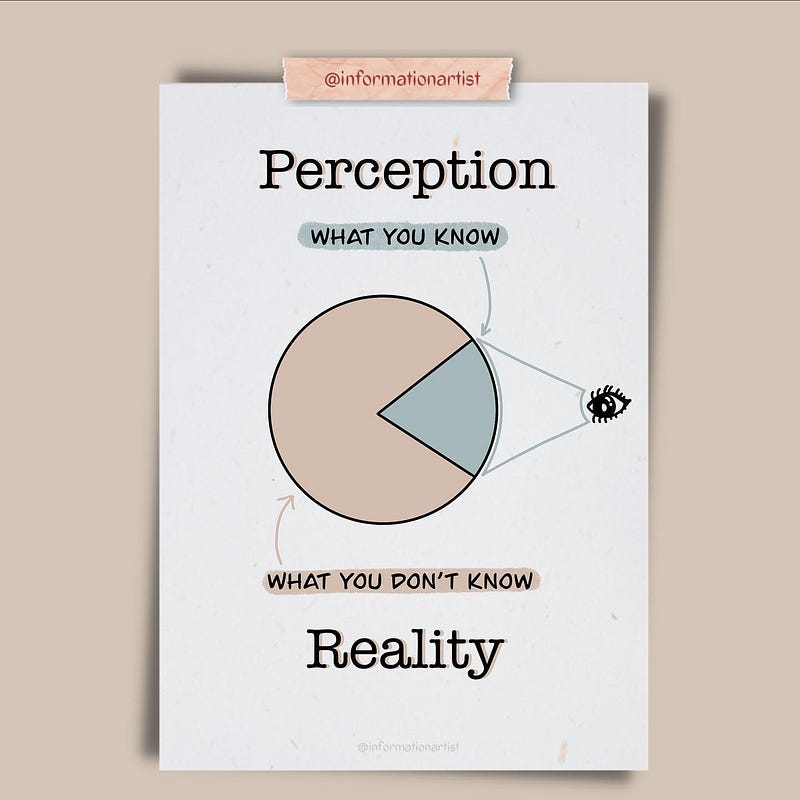
Perception vs Reality, visual by Information Artist
  • Inviting participation

A generic message does appear specifically to anyone. When solving problems, generic matters lose engagement, specificity brings people together. To invite participation, ask specific and relevant questions. Make sure your intentions and words match up. Be curious to unearth the situation, but never be judgmental to tag a person to the issue.
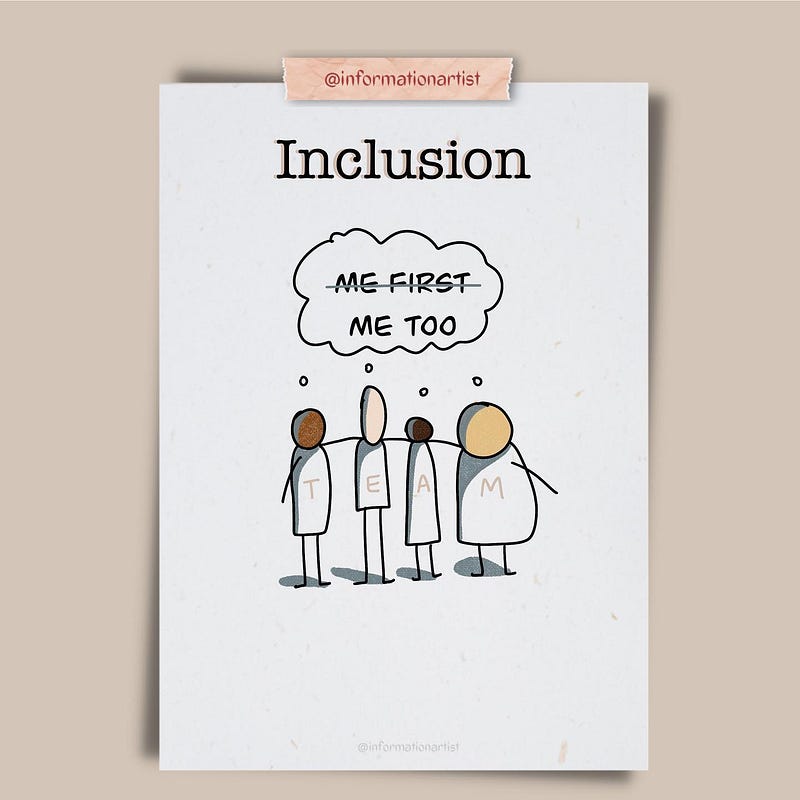
Inclusion, visual by Information Artist
  • Responding productively

When people respond, listen with an open mind, keeping your biases, and judgment outside the door. Imagine when you’ve given people an opportunity to open up and then immediately respond with strong emotion, the psychological safety evaporates. A productive response is always appreciative, and respectful, and offers a path forward.

Usually, in situations of incidents or critical failures, teams with no psychological safety fight like blind rats running here and there, blaming everyone their way. But the goal is not to fight or compete on who was right or wrong, the goal is to identify the contributing factors to prevent the system from future failures.
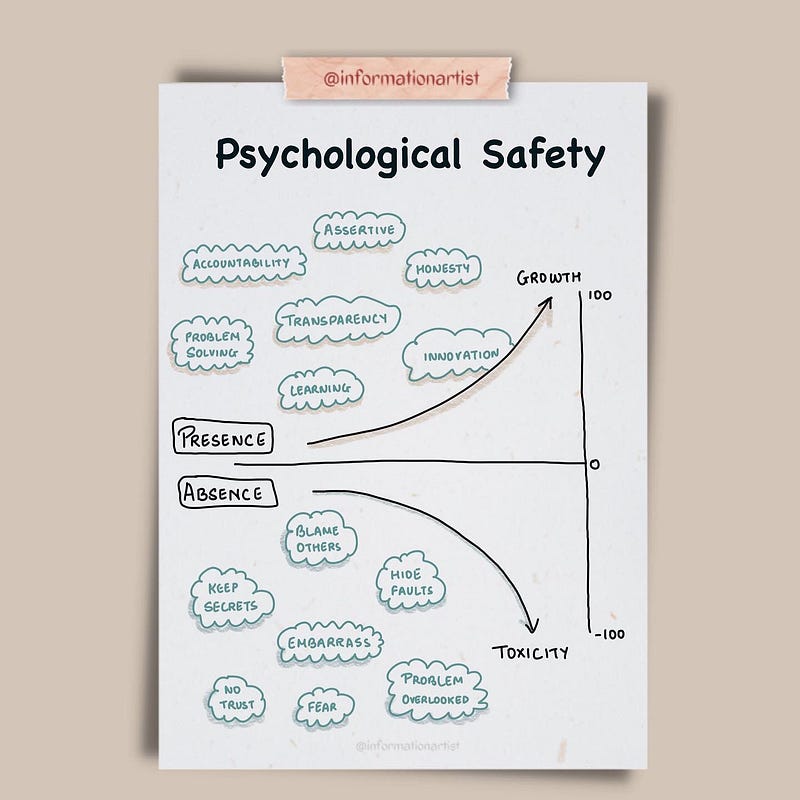
Psychological Safety, visual by Information Artist

Psychological safety isn’t about always being nice. It is about giving candid feedback, openly admitting mistakes and learning from each other. It is a belief that expressing one’s honest self won’t get one punished or discriminated against.
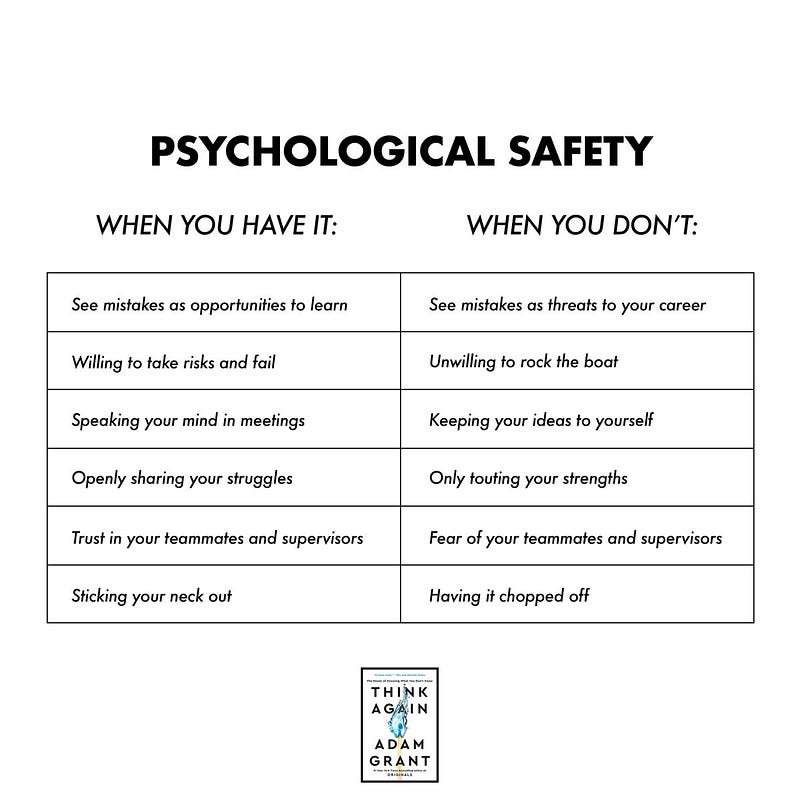
The image is taken from Adam Grant’s tweet on Psychological Safety

💭 Thoughts for reflection:

💬What steps do you take to create psychological safety in your team/organization?

💬When you think of psychological fear/intimidation, who is the first person that comes to your mind? And Why?

💬What behaviours in your team detract from safety?

Thank you for reading and clapping! If you’d like to go the extra mile to support my writing, please consider buying me a coffee or joining Medium using my referral link.

Management And Leadership
Management
Agile
Coaching
Leadership
Recommended from ReadMedium