
PANDEMIC STORIES
Covid Hasn’t Infected My Body, But It Has Infected My Mind
What it’s like to live the state with America’s lowest vaccination rate when you have a high-risk factor
I used to wonder if I’d be the last mask-wearing person in America. Now I know that I am. Or, at least, it seems that way.
Throughout the pandemic, I’ve lived in Alabama, the state that’s tied with Wyoming for having the lowest rate of residents fully vaccinated against Covid-19. It also ranks high on lists of mask-averse states.
Those two realities make life a minefield if you have asthma, as I do, a condition that can interact precariously with respiratory diseases like Covid. I’ve survived two crashes that totaled the car, but I’ve never feared for my life as I did during my first asthma attack, when it seemed that my lungs — without warning — had stopped working.
Another fact of life here adds the risks: Alabamians are exceptionally sociable.
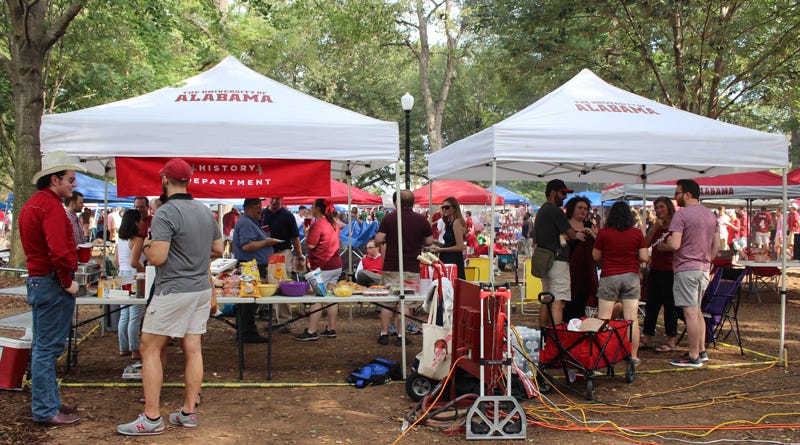
The University of Alabama has been called the nation’s top party school, but the truth is: The entire state is a party state compared with other places I’ve lived. During Mardi Gras, the city of Mobile closes businesses, government agencies, and — perhaps most astonishingly — schools on Fat Monday and Fat Tuesday. The thinking seems to be: Why would you want the kids to sit in class when they could be out partying for two days?
In New England, where I went to college, old-timers respect the idea expressed in Robert Frost’s “Mending Wall”: “Good fences make good neighbors.” In New York, where I was an editor of Glamour, social events extend the workday: book launch parties, readings by authors, deal-making lunches at Michelin-starred restaurants.
Not so in fun-loving Alabama. A new episode of “Yellowstone” is airing? Have the gang over for a watch party. Your Twist of Pink oleanders have turned your garden into a showpiece? This calls for a barbecue. Football season is two weeks old and you haven’t had a tailgate party? For shame.
Normally, I love my neighbors’ extroversion. When you’re a writer who spends the day in self-imposed quarantine, it’s cheering to know that — after you’ve finished a draft and need to hear a voice other than Siri’s — there’s always someone glad to chat over my white picket fence.
But circumstances have been far from normal since March 13, 2020, the president declared that the rapid spread of the coronavirus had become a national emergency.

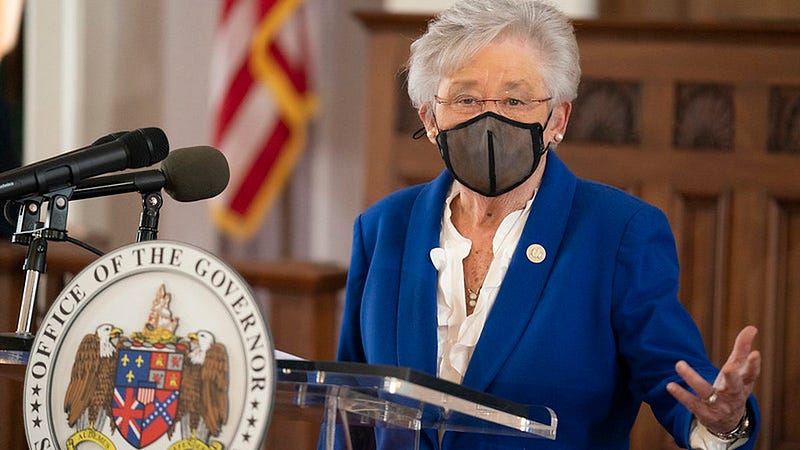
Six days later, Alabama Gov. Kay Ivey imposed limits on residents’ activities similar to those taking effect around the U.S. The new rules:
- banned gatherings of 25 or more people
- closed preschools and day care centers
- prohibited serving food or drinks on the premises of bars and restaurants
- required the delay of all elective dental or medical procedures
- ruled out most visits to hospital and nursing home patients
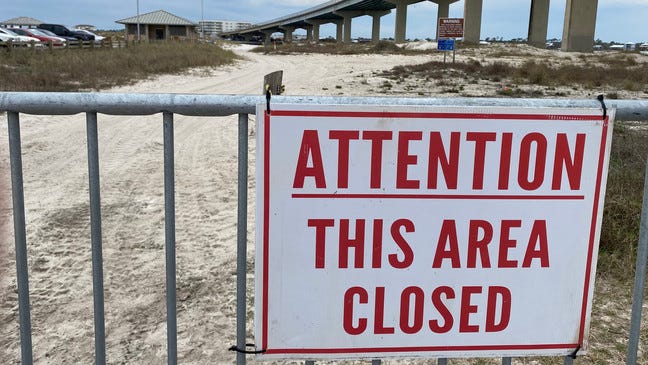
The governor also closed all public and private beaches in Alabama as spring break was underway in Gulf Shores and surrounding towns, which account for about 30 percent of the state’s travel revenue. These restrictions struck many residents as draconian, and in some ways, they were. The mayor of Orange Beach said later that during the closures the area had taken its biggest financial hit since the BP Oil Spill of 2010.
But in my quieter coastal town 30 miles away — known as “Mayberry on the Bay” — I marveled at how lucky we were compared with the rest of the world.
My neighbors and I could move about at will, as long as we didn’t want to go to a temporarily shuttered barbecue place or one of the suspended Friday night line dances at the Lucky Horseshoe bar up the road. Statewide mask mandates remained largely unenforced after Gov. Ivey suggested that instead of giving tickets to violators, the police hand out and encourage people to wear masks.
Back in my old haunts in New York, the governor told people to stay home when not doing essential activities such as shopping and walking the dog. Manhattanites like my former magazine colleagues chafed against apartments so small that, the newspapers reported, they were borrowing dogs to justify going outside.
Over in the U.K., the authorities imposed harsher rules on residents, including my extended family in England and Scotland. During “full national lockdowns,” you couldn’t leave home without a “reasonable excuse.” Most social gatherings were banned. “Household mixing rules” prevented people who didn’t live together from meeting.
Next to all of it, my life seemed idyllic, at least in the earliest days of the disease, when people expected the crisis to end as reliably as a flu season.
I live on a beach the state briefly closed, but one that has a beautiful always-open walking trail running beside it. It has a butterfly garden, live oaks aflutter with Spanish moss, and a canine watering station with a faucet the right height for thirsty beagles and Goldendoodles. My neighbors come out with their dogs to watch the gaudy sunsets over Mobile Bay, and throughout the pandemic, I’ve joined them on the trail, bringing beef-and-cheese–flavored Snausages that lead to overjoyed leaps and tail-wagging by the recipients.
The real toll of the pandemic began to emerge after my state had lifted its strictest rules, in the late summer and fall of 2020, in the hope of returning to what had passed for “normal.”
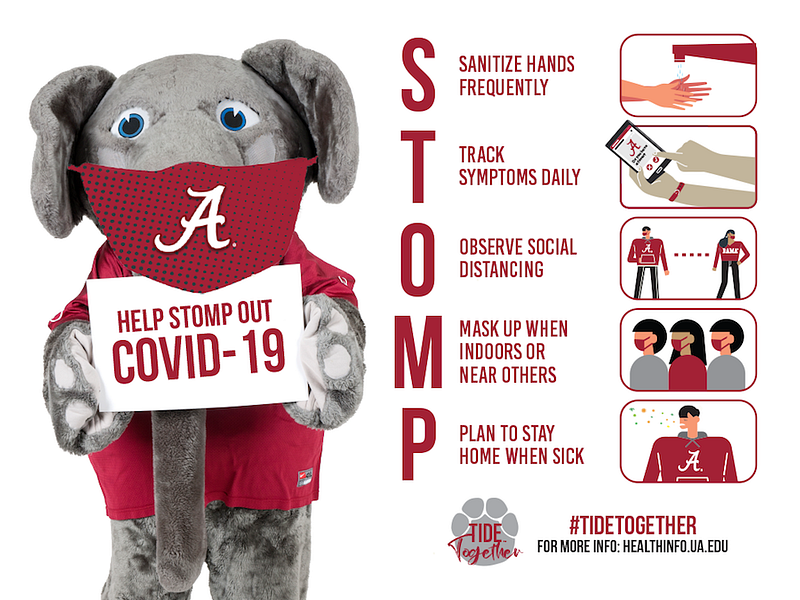
Up in Tuscaloosa, the University of Alabama began its march toward another national football championship with a few differences from earlier years. It played its first game of the pandemic with tailgating on hold, the stadium crowd limited to 20% of its more than 100,000 seats, and its elephant mascot “Big Al” wearing a mask and practicing “social distancing.”
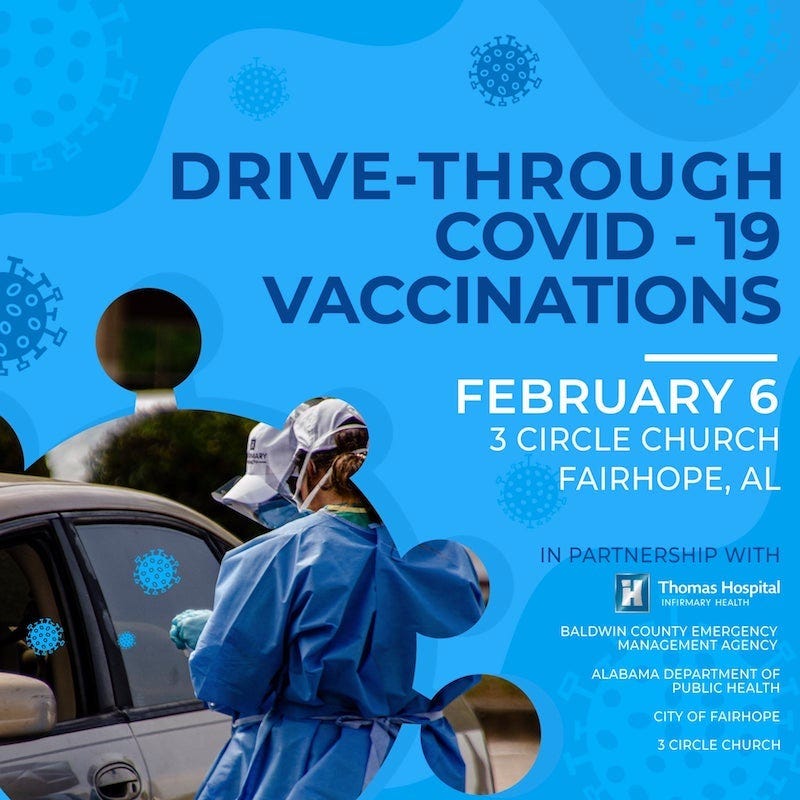
But the first Covid vaccines wouldn’t appear until December, and in my town, social events slipped into the lowest gear I’d seen without a hurricane warning in effect. Activities I loved fell away: weekly drinks with a women’s group, monthly neighborhood cocktail parties, regular at-home dinners-for-eight sponsored by my church, a friend’s musical evenings for fans of Celtic fiddle tunes. A local theater cancelled a season of plays I went to faithfully.
Absent a vaccine, people were afraid to resume their usual industrial-strength socializing.
In order to have a social life, people said, you needed to create a “bubble” of a small group of friends you trusted not to give you a disease that had filled to capacity the intensive care unit at our community hospital.
This task was clearly simpler for married couples who had socialized with one or two others for years than for those of us who were single and whose friends didn’t all know one another. But three things made it easier to navigate the pandemic.
One was that — as soon as Gov. Ivey announced the state Covid restrictions — a friend suggested that several of us keep in touch with check-in calls or texts each morning. These were more than fun: They added structure to days bereft of some of the social activities we’d enjoyed pre-pandemic.
A second helpful step was that I kept working as a writer and editor. In the first month of the pandemic I lost much of my freelance income when a publication — fearful of the financial effects of a little-known disease — decided to keep in house some of the work I’d been doing. But it kept assigning a portion of it, and that — combined with other work I picked up elsewhere — made for a welcome continuity throughout the disruptions of Covid. Some of it involved reviewing books, which kept my mind engaged when other parts of my life idled.
The third rewarding step was that another journalist and I started a monthly short-story discussion group on Zoom for former co-workers around the country. Arranging a meeting time for writers in four time zones — some of whom had day jobs — was complex, but it had vast benefits. At a time when airline travel rules made it hard to predict when we’d easily be able to visit our old friends and colleagues, our Zoom meetings gave some of us a way to keep in touch. It helped others make friends when the pandemic had preempted some opportunities for doing that face to face.
In my case a challenge remains now that the state restrictions have ended. Just over half of all Alabamians are fully vaccinated. If few wore masks when the state mandated it in theory if not in fact, nobody does it now. You can go for days without seeing a mask in the busiest parts of my town.
Yet Covid remains a threat, especially for those of us with conditions that put them at higher risk for complications from the disease. People keep saying, “You don’t have to worry — it’s just like having a bad cold now.” I’m not convinced. Nearly every week I hear about someone in my town or elsewhere who is suffering greatly or has died from it.
So I’ve kept up my guard. For much of the pandemic, I avoided airports, large parties, crowded restaurants, and similarly risky spots, and I still try to do it. I see friends in small groups and eat out at places with widely spaced tables or the outdoor seating that’s easy to find on the palmy Gulf Coast. Often I’m the only person wearing a mask in the checkout line at the library or supermarket.
Has it been worth it? Yes, if it’s kept me alive or out of the hospital. But I don’t know that my approach to Covid has had anything to do with that. I may have been lucky. A world-class doctor I spoke to about this agreed. “Some people have strong immune systems,” she said. “You may be one of them.”
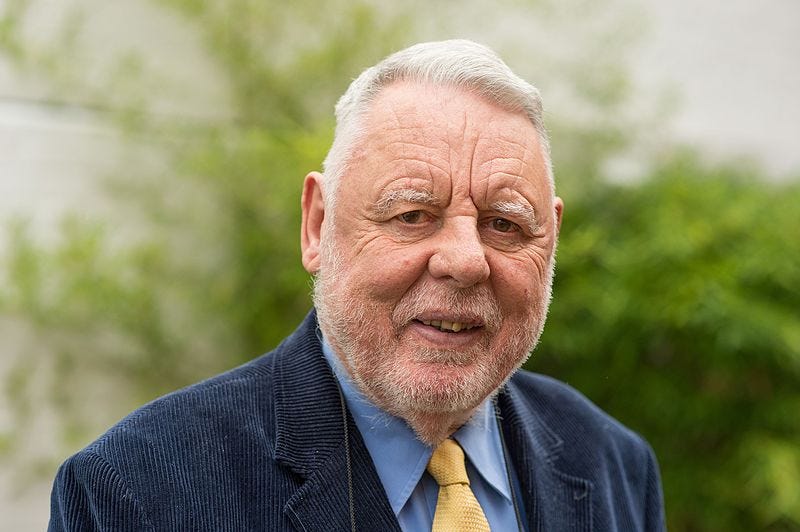
And if Covid hasn’t infected my body, it has infected my mind. In some ways I’m still a hostage to it. As a book critic, I’ve reviewed a lot of books about hostage-takings worldwide, and some of their lessons have bobbed to the surface during the pandemic.
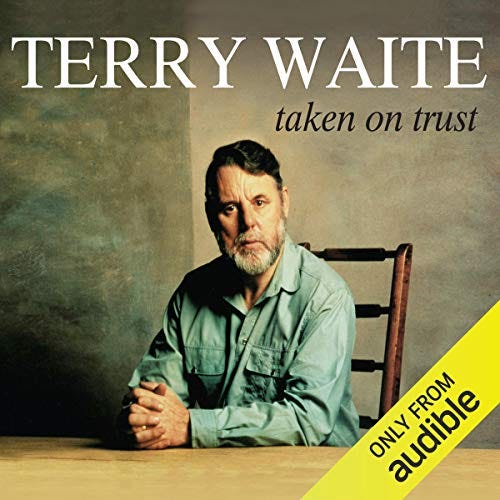
The most memorable such book I’ve read was Taken on Trust, by Terry Waite, who spent five years in captivity being abducted in Beirut in 1987 while on a mission to try to free hostages there as an emissary of the Archbishop of Canterbury. Waite said in his book that as a prisoner he tried to follow three rules: no regrets, no sentimentality, no self-pity. All three have proved sturdy guidelines for crises I’ve faced since reading it.
Waite offered another helpful observation in an interview with the BBC in 2021 that marked the 30th anniversary of his release from captivity:
“I was chained to the wall for 23 hours and 50 minutes a day, I slept on the floor, I didn’t have any books or papers, I was in a room where shutters were put in front of the window so no natural light came in and of course there was no companionship so it was a fairly austere existence — a little bit worse than lockdown.”
Waite told the BBC that in his dark cell, a glimmer of light came through a shutter in his cell.
“Gradually that light illuminated that room,” he said, “and I used to say to myself, ‘don’t give up, remember light is stronger than darkness’ and somehow I was able to maintain hope in that situation.”
Jan Harayda is an award-winning critic journalist in Alabama who has been the book editor of Ohio’s largest newspaper and a vice president of the National Book Critics Circle. She has written for many major print and online media including the New York Times, the Wall Street Journal, the Washington Post, Newsweek, and Salon. On Medium she writes the Pop Culture Shorts column that appears every Monday, Wednesday, and Friday on FanFare.
If you’d like to read all my articles without hitting the dreaded paywall, please join Medium with my referral link.
You might like some of my other stories:


