
Are We All Wrong About The First Line Of ‘Pride and Prejudice’?
It’s the most famous opener in English literature, but a celebrated critic suggests that a lot of us misread it
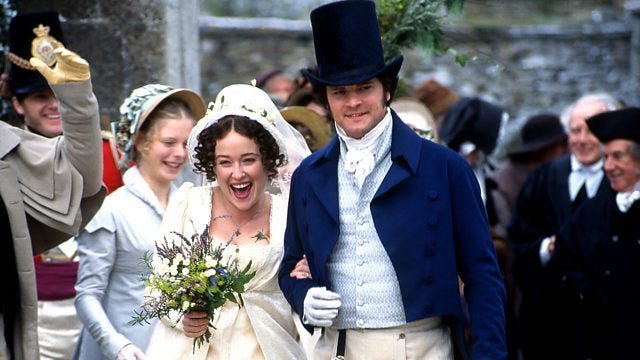
An easy way to rebut self-declared adverb-haters like Stephen King is to quote the first line of Pride and Prejudice: “It is a truth universally acknowledged, that a single man in possession of a good fortune, must be in want of a wife.”
Ask how Jane Austen could have improved the line by deleting the adverb universally, and you’ll get no answer, because she couldn’t have. For centuries, scholars and ordinary readers alike have agreed that the line is perfect.
That’s not to say that its admirers know what the line means. It’s the most famous first line in an English novel, but it’s also one of the most misunderstood.
Casual readers often make the mistake of taking the line literally. Critics and scholars don’t. Their standard view is that the line is ironic: It means the opposite of what it says. A well-off single man is not seeking a wife, but in his neighbors’ eyes, he “must” or has to be seeking one, because they need him to be.
That view makes sense: Austen goes on to say that by the time a single man moves into a neighborhood, that “truth” is “well fixed” in the minds of its families. In other words, it’s fixed in their minds, not necessarily in others’. Austen is talking about a subjective rather than objective truth.
My interpretation largely jibes with that of the critics and scholars. Lately, however, I’ve come across an intriguing view that differs slightly from theirs. In her essay “Where the Stress Falls,” the critic Susan Sontag argued that Austen is speaking “sarcastically.”
Irony involves a difference between what’s said and what’s meant. Sarcasm is a form of irony intended to mock or criticize a person, an idea, or something else.
Whether you view Austen’s line as “ironic” or “sarcastic” depends on whether you see it as a comment on or critique of her provincial society.
My reading of Austen’s work — which has included her novels, letters, and juvenilia like her entertaining The History of England by a Partial, Prejudiced & Ignorant Historian — suggests that you can argue the case either way.
That’s what makes Pride and Prejudice, or any other novel, a classic: Each time you read it, you find something new in it. What you see may not be what others see, and if someone thinks you’re wrong — or you think someone else is — you may both be right.
@janiceharayda is an award-winning critic and journalist whose work has appeared in many major print and online media. She is a former vice president of the National Book Critics Circle. On Medium she writes the weekly Pop Culture Shorts column on Mondays, Wednesdays, and Fridays on FanFare.
You might like some of my other stories about books and writing:


