
Could Most Of Medium’s Userbase Really Be Fake Accounts Run By One Person?
Elon Musk, Facebook, and the Medium-sized con

How Many Fake Identities Can One Person Monetize Through Medium?
“We’ll keep an eye on it.”
Con artists of all sizes face crackdowns on social media and blogging platforms like Facebook, Twitter, and Medium. The US Senate — alongside a detailed report by Facebook (offsite) — described the purge as focusing on “coordinated inauthentic behavior” that is no longer simply political in nature. Con artists instead now use the culturally accepted practice of pseudonyms for primarily commercial benefit.
The commercial benefit, it turns out, is exactly why con artists continue to thrive. By contributing monetary value to the companies they exploit, their cons suddenly become more valuable to a platform than the people that platform vowed to protect.
Coordinated inauthentic behavior
When a platform like Facebook removes these kinds of accounts, they do so to remove “coordinated inauthentic behavior.”
Though hardcore political audiences will quickly identify the Russian-sourced accounts, pages, and groups that Facebook/Meta purged, the US Senate Intelligence Committee’s Report from 2019 (offsite) revealed that a “majority of the accounts found in this study were engaged in commercial behavior rather than political troublemaking.”
To understand how this problem affects writers on Medium, I spoke with Medium’s Help Desk and CEO — the latter in a public comment thread — inquiring what actions Medium is able (and willing) to take to protect women, minorities, and marginalized groups from con artists violating the integrity of their platform’s userbase.
Medium’s answers exposed that the majority of their userbase could be made up not by real people, but by just a few individuals with the resources to maintain the appearance of authentic interactions from an infinite number of accounts.
How bad is the problem?
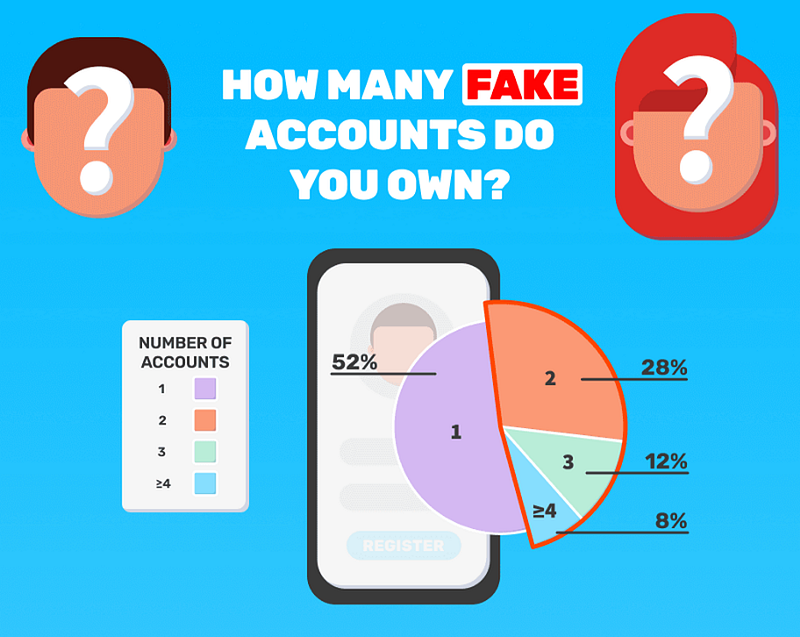
Bots, of course, are banned as spam. But so long as the user has the time to maintain unique engagement across each account, those con artists can (and likely will) avoid being moderated.
Stacked next to each other, their articles mention incompatible biographical details to ensure the facts don’t expose the author’s true identity. In the comments for each fake identity’s articles, the pseudonyms talk to each other with the same strategy. They disagree with each other, say thanks for the new information, and suggest each other as a new author they should check out.
As for what they post? They speak in dog whistles. They study the rules, guidelines, and culture of the place they’re infiltrating. They study the legal rulings (and whether there have been any) so that if push ever truly does come to shove, a successful con artist caught in red-handed abuse can defend themselves with all the victimized fury that saves them whenever their back is finally up against the wall.
Indeed, the Medium Help Desk response to my inquiry suggested that even when directed toward a Medium-based con artist with a long history of violence against women, Medium will not intervene to stop such a con artist unless legally required to do so.
In a public conversation about the Help Desk’s response, I asked Medium’s CEO Tony Stubblebine whether he shared their position. He rejected my paraphrase of his Help Desk’s response as his own, but he was not willing to articulate what actions his team will take to protect the integrity and safety of its authentic members from ongoing or future con artists.
Instead, Stubblebine responded that while they will keep an eye on it, he otherwise believes Medium already handles this problem “on balance.”
Is the problem too big to crack?
Stubblebine’s response upsets me, but aside from any ethical desire to protect vulnerable people from abusers, why should he or his help desk feel pressured to intervene?
Most platforms in these situations, like Medium, take no observable meaningful action to protect its users. Why should they when the very con that empowers each con artist also empowers each platform?
Not that long ago, the infamous dating website for cheaters Ashley Madison got caught red-handed (Gizmodo). Men went there thinking it hosted an abundance of women just as eager to cheat on their spouses.
Except their userbase was riddled with fake accounts posing as women. Once the fog was cleared away, one person described Ashley Madison as “a science fictional future where every woman on Earth is dead, and some Dilbert-like engineer has replaced them with badly-designed robots.”
More alarming, those people the cheaters thought were real women were often actually employees coordinating inauthentic behavior to boost the perception of the platform’s popularity. Their users were paying for a cheating fantasy, and Ashley Madison was happy to cheat them.
When words fail, try science
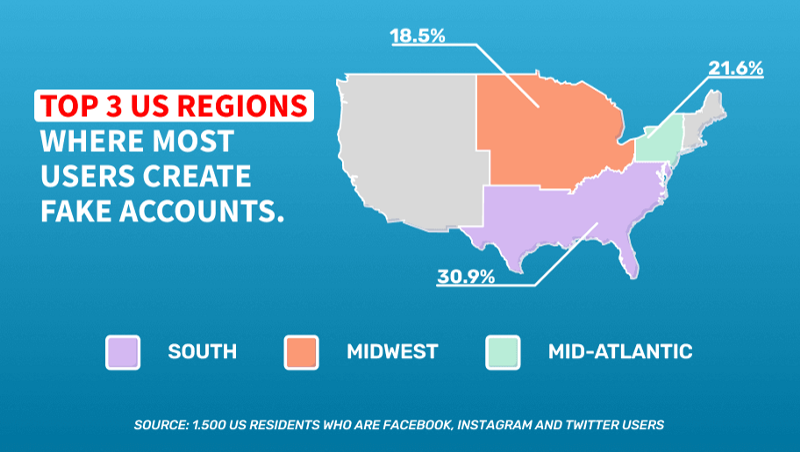
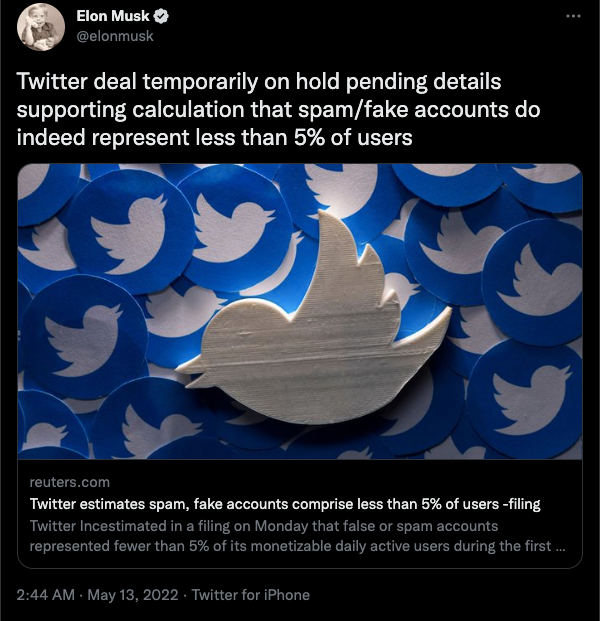
Inspired by the dangerous implications of Elon Musk taking over Twitter, a recent survey covered how widespread a problem con artists present for most major platforms. Indeed, Elon Musk himself initially put the deal on hold until Twitter could confirm how much of its userbase was fake.
Once researchers got down to the facts, a survey of over 1,500 social media users revealed that most major platforms face the same problem that Ashley Madison faced.
While 80.9% of respondents maintain their authentic gender, a disturbing percentage of the remaining people alter their identified gender with the specific intention to deceive others. And that’s after eliminating the problem of a company’s own employees perpetuating the fraud.
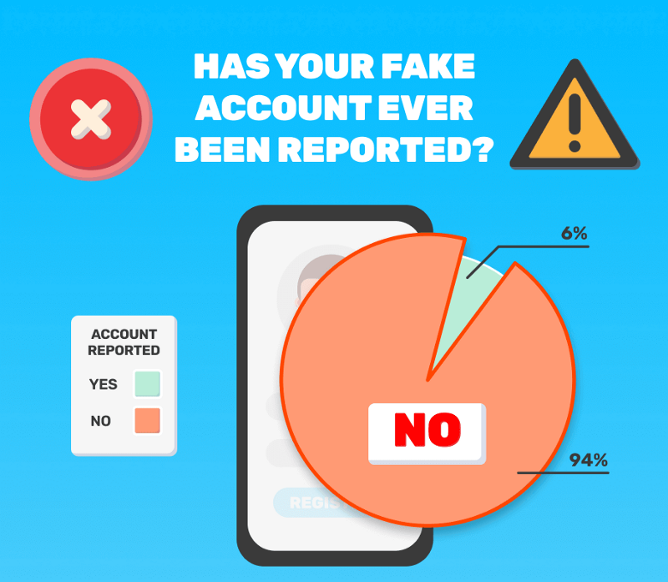
Worse, according to the study, most people running fake accounts completely get away with it. Over 94% of the people running fake accounts said they’ve never been reported.
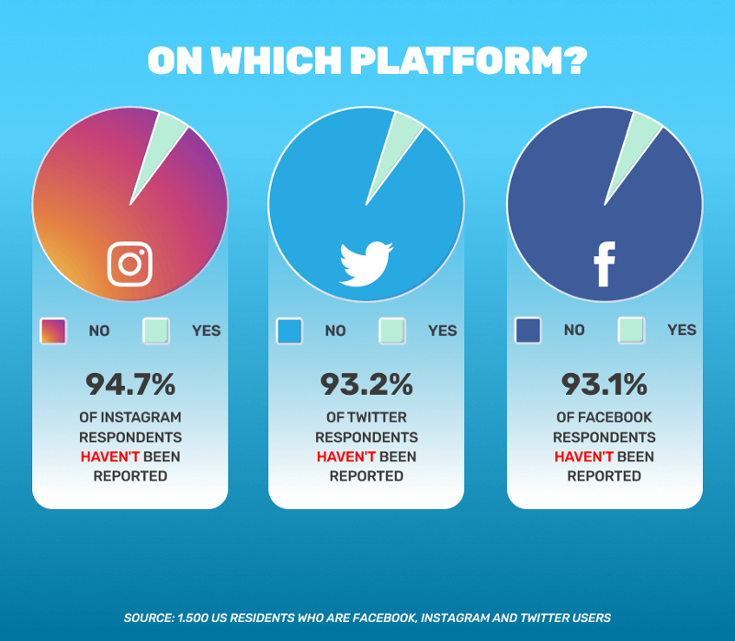
But are they really so hard to report?
The issue, however, might not be that the accounts aren’t being reported. It’s that the platforms simply choose not to intervene. They can’t. Each platform’s well-being has become inexorably tied to that of each con artist’s.
Because a con artist isn’t a bot. It’s a person. Bot accounts contribute little value to a social media platform’s business model, but fake users that seem authentic are like printing money.
Will Duffield, a policy analyst at the Cato Institute (a Washington, DC think tank) said, “Regardless of the name on the account, if they’re watching and being served relevant ads, then from a platform standpoint, it’s not really trouble.”
A fraudulent user’s activity — whether from a single authentic or infinite number of fake identities — shows up in a monthly user’s stats, delivering metrics the platform can then quantify and monetize.
They need to do something now
I recently reported for Xtra Magazine on how a potential merger in publishing would further marginalize LGBTQ2S+ authors across the English-speaking world. Thanks to Stephen King’s testimony and much else, the DOJ blocked the merger.
For some, it’s a moment of cautious optimism, but I can’t shake my enhanced awareness for the dangers faced by LGBTQ2S+ writers. Overcome one danger, and we simply face another.
This one just so happens to make its home on Medium. Denying the danger these con artists present would mean denying the very power of Medium as a platform.
The only way it ends
In my view, the response from Medium’s Help Desk suggests that unless the company faces bad PR from resisting a legal order to intervene, they have no monetary incentive to do so.
Con artists of all sizes — whether they be abusive and violent — can thrive on Medium so long as they color within the lines that have empowered abusers and marginalized queer people throughout history.
Without a monetary incentive, the solution will instead test each company’s resolve to protect its most vulnerable users from its most dangerous and deceptive.
Ines Ferreira, a social media researcher, pointed out the obvious consequences to a company letting con artists use their platform to thrive (GoodWordNews). Even if a fake account brings short-term monetary value to a company, allowing the practice ultimately devalues the credibility of their platform.
“At some point,” Ferreira said, “there’s going to be more fake users than real users, so they need to do something about this now.”
Additional reading
Medium
- Fakers are Gonna Fake…Even on Medium by Carmellita
- Medium is Swamped With Fake Accounts by Patrick Duane
- The Real Question Is: Why Did It Take Medium so Long to Purge Itself of Spam Accounts? by Jennifer Geer
- This is How You Find Out That a Medium Follower Is Fake by Casimiro Designer
Offsite
- 19.42% of active Twitter accounts are fake or spam: Analysis (What’s New In Publishing)
- Social media platforms leave 95% of reported fake accounts up, study finds (Ars Technica)
- A Third of US Social Media Users Creating Fake Accounts (Good World News)


