

Continuo
Just in time for the weekend: music and board games!
Today’s New York Times Spelling Bee letters:
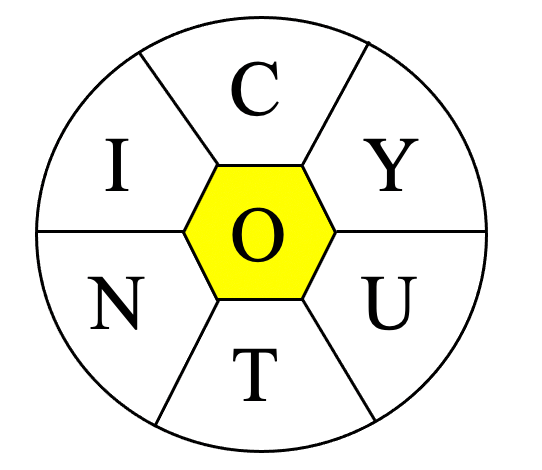
C, I, N, T, U, Y, and center O (all words must include O)
Merriam-Webster says…
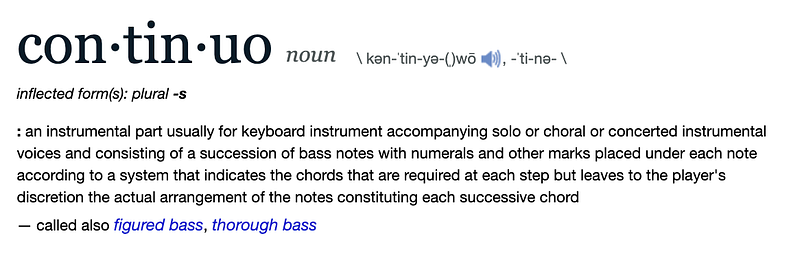
Silly little dictionary! Don’t you know that continuo can’t possibly be a word if the New York Times says it ain’t?
For further fascinating facts, check out the Spelling Bee Master.
What’s your favorite dord* from today’s puzzle?
My Two Cents
I love board games! My favorite as a kid was Monopoly… until I was introduced to Risk as a teenager one summer when I traveled to the United States. (I grew up in Venezuela.) I wasn’t invited to play ––the kids doing so were a clique and I wasn’t part of it–– but I was allowed to watch, and thus fascination and curiosity were born. Unfortunately, it took until university for me to actually play a game. It was always hard to find other enthusiasts. Years later, when I moved to the States, I bought my very own Risk, the 2005 “bookcase” anniversary edition that commemorated the original Parker Brothers 1959 release. (As an aside, the original game, called The Conquest of the World, was invented by French film director Albert Lamorisse.)
In that first American edition, the soldiers were simple wooden cubes in six different colors, with additional elongated pieces representing ten soldiers. It was only in the 1990s that the plastic infantry, cavalry, and artillery figures were introduced. As I mentioned, my set is the anniversary edition that shows the Parker Bros. logo. (Risk is currently sold by Hasbro.)
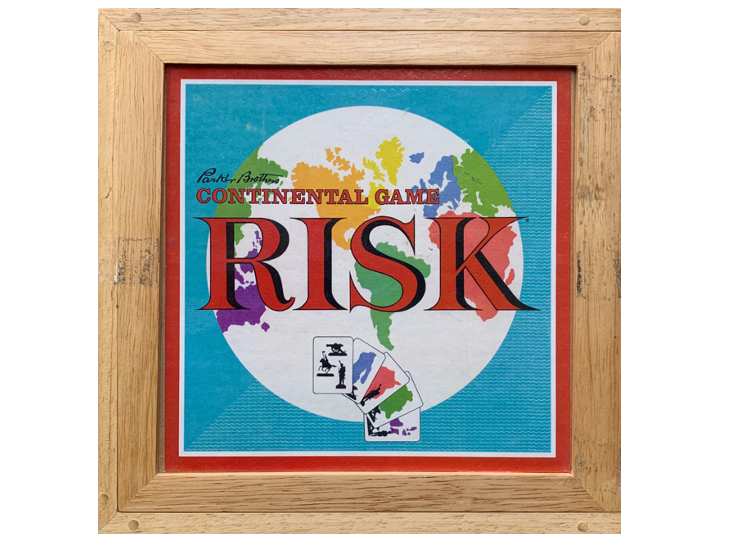
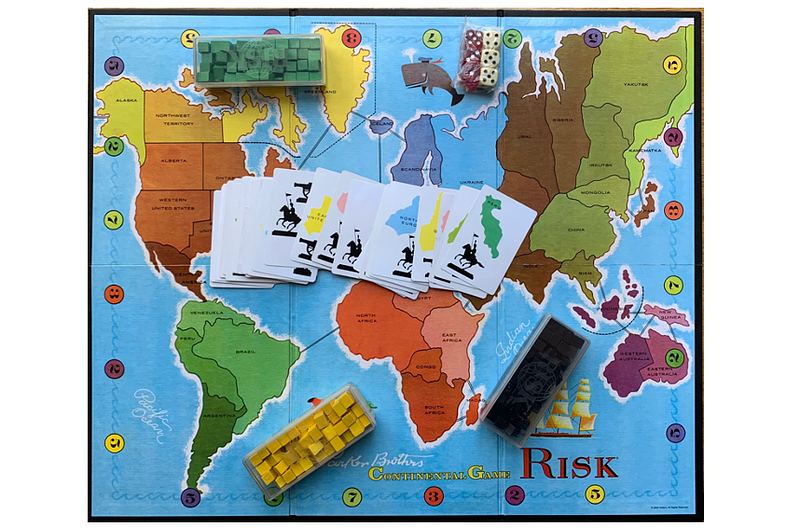
The dice are in their bag because I obsess about not losing them.
I’ve played other popular games, like Civilization, and also RPGs, like Dungeons & Dragons, but I keep returning to Risk whenever I get a craving for wasting an entire afternoon rolling some dice and moving pieces around a board.
What’s your favorite board game? And why am I talking about board games today? Read on to find out.
lowercase c
Our daily dord*, continuo, is also known as basso continuo., which literally means “continuous bass”. As in the musical instrument, not the fish. The definition for continuo provided by the Merriam-Webster was a bit difficult for me to parse. And although I am capable of playing the sax very badly, my musical theory knowledge is lacking in many areas. Plus, at 62 words, the dictionary’s entry is long, and there isn’t even a comma or semicolon to help you gather your thoughts or your breath:
an instrumental part usually for keyboard instrument accompanying solo or choral or concerted instrumental voices and consisting of a succession of bass notes with numerals and other marks placed under each note according to a system that indicates the chords that are required at each step but leaves to the player’s discretion the actual arrangement of the notes constituting each successive chord
Whew! Just reading it makes me dizzy.
Stephen Johnson’s explanation in the BBC Music Magazine simplifies it a lot: “A basso continuo is, in 17th- and 18th- century music, the bass line and keyboard part that provide a harmonic framework for a piece of music.” In other words, the bass line and succession of chords (chord progression) give the music its harmonic structure. Harmony is the combination of different musical pitches heard at once (as in chords), that is, “the structure, relation, and progression of sets of simultaneously sounding pitches”. This contrasts with melody, which is a linear succession of musical tones that we hear as one single entity.
The musicians playing the basso continuo are known collectively as the continuo group. The composition of their sounds is left at their will, or sometimes at the discretion of the conductor if there are many instrumentalists playing together. This was typical of baroque period of classical music, which lasted from around 1600 to 1750.
The musical notation of the continuo is known as the figured bass, or thoroughbass, and consists of numbers and symbols that indicate intervals, chords, and non-chord tones that the instrumentalist in relation to the bass line (continuo) that these numbers and symbols appear above or below.
This is a Melody from the opening of Henry Purcell’s “Thy Hand, Belinda”. The lower staff shows the figured bass.
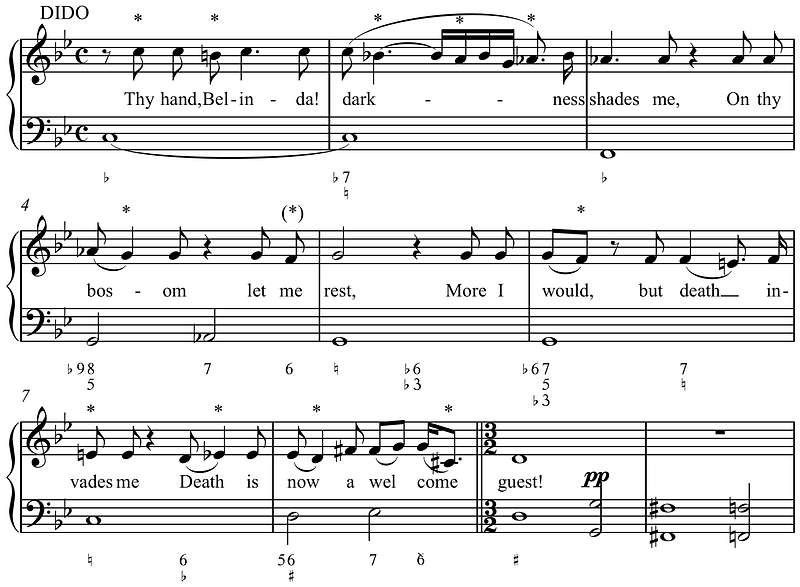
You can listen to the melody by itself here, and then compare how it sounds with the continuo here.
As Stephen Johnson explains about the Baroque era:
In performance, the bass line would be provided, or at least reinforced, by low instruments such as cello, bassoon or violone. But more important for the ensemble would be the addition of an instrument that could play full harmonies: organ, lute, guitar or harpsichord. Normally this player wouldn’t have a part written out in full: he’d pay from a bass line, above which were ‘figures’, indicating dissonances or unexpected harmonic turns. The fact that the actual notes weren’t fixed meant that this continuo player could adapt the flow of the chords to fit ornamentations or other improvised elements introduced by the melody instruments. This ‘continuo’ player would also be the one who defined the beat. Even at the end of the 18th century, Haydn was still providing this function at the keyboard in performances of his symphonies.
Elam Rotem of Early Music Sources does a good job of explaining the origin of basso continuo and how it works. (If you want to skip to the part where music is played, go to the 6:10 mark.)
Uppercase C
I found two Continuos with a capital C, one of which is also related to music. It’s jazz double bassist Avishai Cohen’s 2006 album. You can listen to it here.
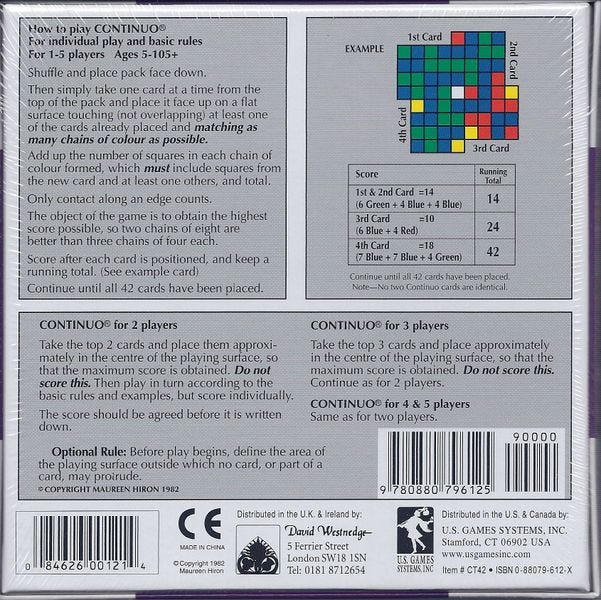
Continuo is also the name of a strategy card game created by British game designer and bridge player Maureen Hiron in the early 1980s. The game consists of 42 cards, or tiles, each one subdivided into a grid of 16 square with different color combinations. during your turn, you try to match your card with another on the table so that they creates as many chains of color as possible. The squares on the tiles have to touch horizontally or vertically, and only connected squares with at least one square on each of the adjacent tiles count. You can read the abbreviated official rules here:
In the example below, you can see two strands of six squares, one red and one green, formed between two adjacent vertical tiles.
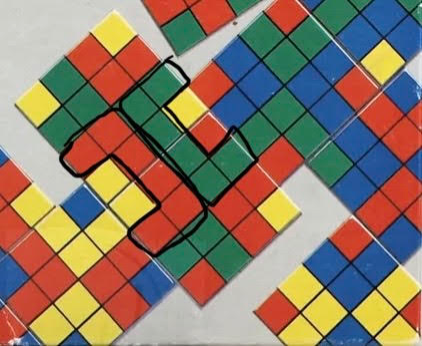
There are also four smaller strings of three squares, two red and two green, on the corners. However, none of them count as points because they were not formed by connecting the tiles. However, inside the outlined red figure on the left, there are two yellow squares that are a product of connecting both tiles, and those also count as points.
In 1995, Continuo won the Mensa Select games award. There was even a World Championship of Continuo, although the list of winners seems limited to the years 1997–2016. Matthew Cordell won the event six times between those years, including four consecutive times between 2005 and 2008.
That’s it for today. I tried to keep it short and sweet with music and games to help usher in the weekend. And if you feel like playing a board game this weekend, try to find a vintage version of Continuo, invite some friends over, and put on some Bach while you play. That way you can tell them they’re in the middle of a double continuo. Your friends will just wave a dismissive hand at you, however… because the editors of the Spelling Bee decided that continuo is a dord*.
You can check out my previous entry on another dord* here:
*What the heck is a dord, you ask? Here’s the answer: