
Congrats, you secured a job interview! Now what?
If you do one thing right, make it this.
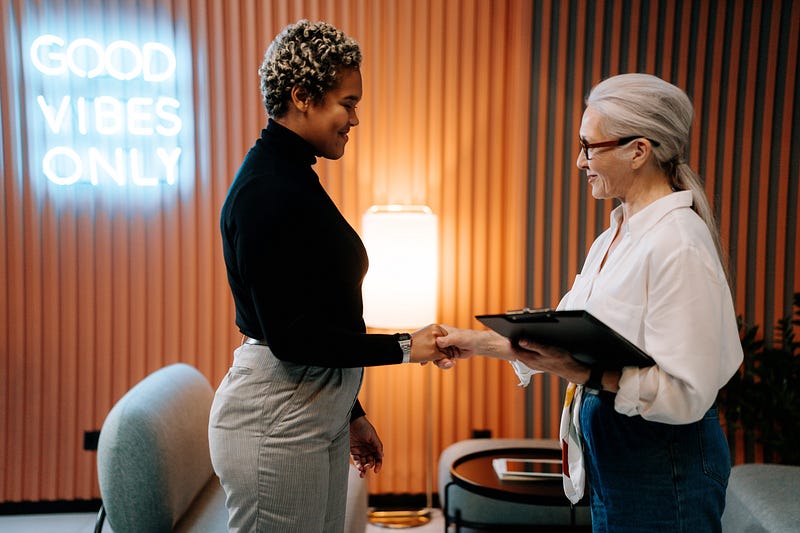
Job interviews are kind of like dating, except instead of spending a couple of years before committing, you get three dates or so.
Even worse as a candidate, it can feel as if you’re throwing yourself at an employer like you’re a contestant on The Bachelor.
Given the implications, the job hunt is kind of twisted when you think about it.
As a recruiter I get it, interviews are intimidating, especially for those who haven’t been on many and are out of practice, or are in a place of career desperation.
So if you are someone who lacks confidence in their interviewing skills, has struggled to land a job, or becomes so nervous that it’s outwardly noticeable, what’s the best thing you can do to achieve the right outcome for you?
How recruiters find the right hire
To answer this question, it’s best to start by understanding what a recruiter is looking for in a candidate.
As a recruiter, my job is to find the right candidate for the position in question. In the matter of a half-hour, I need to determine if a candidate is the right fit for the job and vice versa.
The right fits go on to the next step in the interview process. The unfit receive a rejection email a few days later.
This may sound harsh, but as a candidate there’s one thing you must remember: recruiters want to hire, not reject. Our performance and success depend on it.
So how do I determine who’s the right fit in such a short amount of time?
Let me start by saying what’s not a determining factor: how cool, calm, and collected or ball of nerves you are.
I’ve had to reject plenty of candidates who appeared confident during their interview, and I’ve moved forward with many obviously nervous but qualified candidates.
Therein lies the key ingredient, are you qualified to do the job? A nervous but qualified candidate trumps a confident but misaligned candidate every day of the week.
I say this to give you peace when preparing for your next interview. That said, what’s the one thing you can do as a candidate to give yourself the best chance possible in an interview?
Be as honest and authentic as possible
During a recent company Zoom happy-hour event, we played a PG version of Never Have I Ever.
The following question was posed: never have I ever lied during a job interview.
Keep in mind the event included entry-level recruitment coordinators, all the way through senior leadership within talent acquisition.
Out of the 40 participants, 3 didn’t take a drink; meaning over 90% of my colleagues (including myself) have lied during a job interview.
My employer’s example is not an outlier. Psychologist Ron Friedman has studied this phenomenon and found that 81% of candidates lie during their job interviews.
I’ll say that again: 81%!
Worse yet, his research suggests that candidates lie because by not doing so, they feel that they’re less likely to land the job.
This begs the question, could lying during a job interview be the exact reason why you’re struggling to find the right career fit?
Speaking from personal experience, the answer is: most likely.
In one of my past roles, during the interview I lied about my interest in business development versus recruitment.
I’m a recruiter at heart and generally dislike business development tasks. But given that the role I was interviewing for was weighted towards business development, I said it was the function I enjoyed more.
Bad decision.
I quickly became a ball of anxiety, so much so that I started seeing a therapist. One thing led to another, and the result was an ADHD diagnosis and a renewed effort to find another new job.
Taking my example as a lesson, lying to get a job may lead you into a role that promotes nothing but heartache and career dissatisfaction.
And this is why being honest and authentic is the best thing you can do during a job interview.
By answering a recruiter’s questions honestly, everything from your past experience to what you seek in an employer, you allow the recruiter to expertly move you forward or graciously turn you away.
I say graciously because if the recruiter realizes you’re not the right fit for the role, then the role isn’t the right fit for you; meaning you can move on to finding a position that will be the right all-around.
Sometimes the best email you can receive reads: Thank you for your time and interest, but unfortunately…
Alternatively, if you are honest and authentic during an interview and you’re moved forward in the process, you can rest assured knowing that you and the employer may be the right match for each other.
As corny as the saying may be, there’s a reason why honesty is the best policy. When you’re speed dating with employers and your career satisfaction is on the line, this is as important of a mantra as ever.
In summary
When job hunting it may feel like the employer is out to get you and is going to nitpick every one of your flaws during an interview.
In reality, they just want to make sure they’re finding the best person possible to fill their employment vacancy.
Help the employer with this by being as honest and authentic as you can possibly be. Your forthrightness will only benefit you in the long run as you search for the right career fit.
Go ahead, tell them that you only have three years of management experience when they desire five.
Unapologetically state that weekend hours aren’t doable for you at this time.
Let them know that you don’t have that specific certification but have been interested in obtaining it.
If you receive a rejection letter, no biggie, move on in your search.
If you are moved forward in the interview process, have confidence that it could be a match made in heaven.
Either way, you can lie your way into career despair, or you can have a shot at finding career happiness through honest means.
By taking the latter approach, here’s hoping your new employer will offer you the same honest courtesy in return. More on that notion in a later story.
New to Medium? Support the author (that’s me) and get unlimited access to all writers on Medium by signing up here.
Connect with me on LinkedIn and Twitter.
To read more, subscribe or check out the following: