avatarErika Burkhalter

Free AI web copilot to create summaries, insights and extended knowledge, download it at here

3322

Abstract

aphy to a new level.</p><p id="5271">But, my dad, he was a Photoshop maestro.</p><p id="d279">With Photoshop, my dad created Shangri-La photos, images of places and people which could only exist in the imagination.</p><p id="e696">He added a monkey to a photo of me doing a backbend in front of the Taj Mahal.</p><figure id="27e4"><img src="https://cdn-images-1.readmedium.com/v2/resize:fit:800/1*iJ7Emj-Uk5LF9dWpbUHdbg.jpeg"><figcaption>The monkey was NOT really there! Photo by my dad.</figcaption></figure><p id="965c">He tinkered with impossible colors — making them possible.</p><p id="b381">He placed an Indian woman, in a sari, on a mountainside in Tibet with a llama from Peru.</p><p id="8546">When I was ten years-old, my father gave up selling his photographs at art shows along the east coast to dedicate himself fully to being a professor, a scientist who would one day become a leader in artificial intelligence. I never fully understood his decision.</p><p id="e1c0">But he loved camera equipment to his dying day.</p><p id="8c0b">And, he took such delight in the intelligence of the Photoshop program and in the control he had over the final photo product.</p><p id="a10c">I wonder, sometimes, what would have happened if Lightroom and Photoshop had existed back when I was a kid? Would those art shows on boardwalks and in old red churches have existed? Would the photos that my father took during that time be as special to me now?</p><p id="ad6f">There was an earthiness, a truthfulness, to those old film photos that I don’t think we come close to capturing now, in the digital age. And the rawness of those photos is achingly beautiful.</p><p id="8c5c" type="7">But there is also an entirely different beauty to being able to enhance what the lens captures. Sometimes the actual photo does not do the the moment which you remember justice.</p><p id="f600">My husband and I spent the summer solstice in Norway last summer. I was up every night for the midnight hours on the deck of the <a href="https://www.hurtigruten.com/">Hurtigruten</a>, the local ferry/postal/cruise boat we were on, capturing images of the “pinkening,” the mystical moments when the sun was neither rising not setting. The photos turned out beautifully but needed a little dehazing in Lightroom to truly capture the colors we were seeing with our eyes.</p><p id="c146">Now, I can look at those images and really feel what it was like to be bathed in a sea of pink light at midnight above the arctic circle.</p><p id="8b94">There was also a moment when our train from Flam to Oslo stopped at a surging waterfall in the mountains. Piped in music filled our ears when everybody got off of the train to admire the lacy spray frothing over the granite cliffs. But what most people never saw was the woman in the red dress doing an expressionistic dance, up high, just to the right of the waterfall.</p><p id="8a49">Struck by the moment, I captured her image. To make her just a bit more visible in the final photo, I amped up the red of her dress just a bit. I rather liked the final product.</p><figure id="f22a"><img src="https://cdn-images-1.readmedium.com/v2/resize:fit:800/1*sEsSyaCQsvALfTqGo5bjdg.jpeg"><figcaption>The Lady in Red, Myrdal⁩, ⁨Sogn og Fjordane⁩, ⁨Norway⁩. Photo © Erika Burkhalter.</figcaption></figure><p id="1008

Options

">I also had a lot of fun creating somewhat fantastical colors of the Oslo train station at around 11 p.m. on a summer night, when the sun was just setting and the light was magical.</p><figure id="3246"><img src="https://cdn-images-1.readmedium.com/v2/resize:fit:800/1*L5b2cnyUz-x8SejGEJR-VA.jpeg"><figcaption>Psychedelic Oslo. Photo ©Erika Burkhalter.</figcaption></figure><p id="b510">So, I think that there is beauty in both forms.</p><p id="c20f">I hear that there is a resurgence of film photography happening.</p><p id="89d9">I do find this intriguing.</p><p id="9563">But then, I remember coming home from vacation, expecting to get one or two good shots on a roll of twenty-four or thirty-six frames.</p><p id="329b">And I also remember the price of developing that film.</p><p id="0371">So, for now, I think that I will stick with digital.</p><figure id="b803"><img src="https://cdn-images-1.readmedium.com/v2/resize:fit:800/1*bnSVjYXihe3H2XKR_aGt9A.jpeg"><figcaption>Me and my dad.</figcaption></figure><p id="6a7e"><a href="undefined">Erika Burkhalter</a> 2020</p><p id="1a34">Erika Burkhalter is a yogi, cat-mom, photographer, and lover of travel and nature, spreading her amazement for Mother Earth’s glories, one photo, poem or story at a time. (MS Neuropsychology, MA Yoga Studies).</p><p id="82ee">I hope that you enjoyed these musings on photography and life. You might also like:</p><p id="7745">A poem, based on the “Lady in Red” photo:</p><div id="d16e" class="link-block"> <a href="https://readmedium.com/hiraeth-691847406aa4"> <div> <div> <h2>Hiraeth</h2> <div><h3>A memory</h3></div> <div><p>medium.com</p></div> </div> <div> <div style="background-image: url(https://miro.readmedium.com/v2/resize:fit:320/1*SLtltdE-N-mGFS01OHW05g.jpeg)"></div> </div> </div> </a> </div><p id="b726">A photo-story of the world of the very small:</p><div id="815a" class="link-block"> <a href="https://readmedium.com/macrocosm-in-the-microcosm-43715a408a3c"> <div> <div> <h2>Macrocosm in the Microcosm</h2> <div><h3>Experimenting with an external macro lens on the new iPhone 11 Pro</h3></div> <div><p>medium.com</p></div> </div> <div> <div style="background-image: url(https://miro.readmedium.com/v2/resize:fit:320/1*fcyrsWm_7g2CLAKaZtRtKA.jpeg)"></div> </div> </div> </a> </div><p id="9d88">A moment when time stood still:</p><div id="1266" class="link-block"> <a href="https://readmedium.com/like-a-splinter-of-light-df0057ced866"> <div> <div> <h2>Like a Splinter of Light</h2> <div><h3>Lessons from the birds</h3></div> <div><p>medium.com</p></div> </div> <div> <div style="background-image: url(https://miro.readmedium.com/v2/resize:fit:320/1*Cgubx2s8TCSYleT39cvk_g.jpeg)"></div> </div> </div> </a> </div><p id="e85e">Story and photos ©Erika Burkhalter. All rights reserved.</p></article></body>

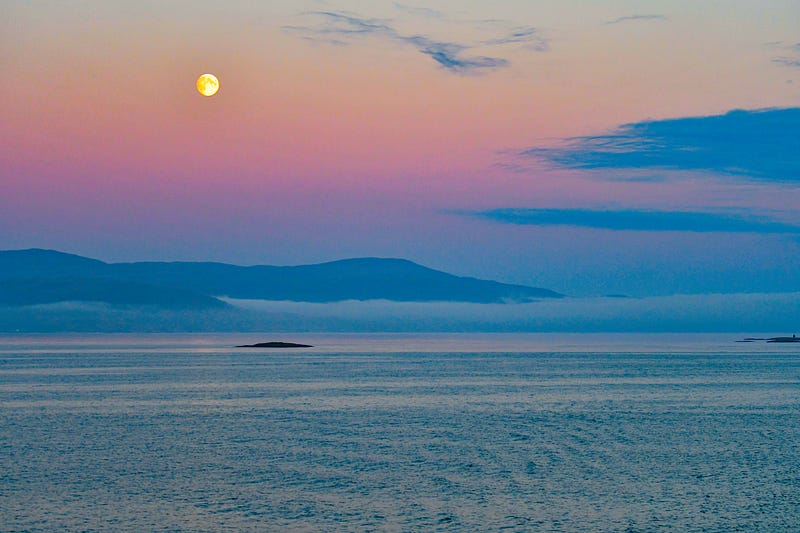
Summer Solstice aboard the Hurtigruten, near the Lofoten Islands, Norway. Photo ©Erika Burkhalter.

Composition

The rawness of a moment

Photo composition used to be about how you oriented your lens. It was basically all done before the photo was ever even taken.

Today, most composition occurs post moment-of-the-photo. Yes, we want to be sure that the angle is correct and that we get the “gist” of the final product. But, for me anyways, a lot of the “art” of composition comes later, when I can see it on a screen and move the viewer around until “the picture” emerges.

I love taking photographs.

I also love editing photos.

But I have a lot of respect for people, like my father, who were “old-school” photographers — the kind who had to set up the exposure and the focal point and the speed of the shutter by hand every time they took a photo.
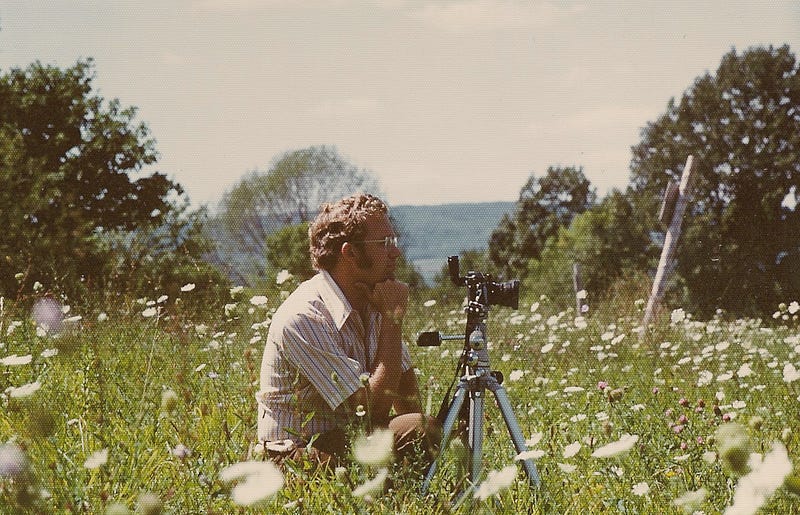
My dad, Dr. John L. Pollock, photographer extraordinaire.

I spent hours, as a kid, with my dad in his darkroom. Bathed in red light, perched on the yellowing vinyl-padded seat of the old 1960’s convertible step-ladder/stool pushed up against the counter holding the chemical baths for the photos, I would watch him make magic. He would do a test of the exposure on inch-wide strips of photo paper (you didn’t want to waste a whole sheet on a test).

He would also tinker with filters, making the sky a little bluer, or the grass a little greener. And he could control the outlay of the final photo a bit by enlarging the projection and moving the paper around underneath it until he had found the exact section of the image which he wished to expose.

But what you could never do, in those days, was to add clarity, eliminate shadows, or add luminance to only a certain shade of pink. What you had shot was, basically, what you had.

There is such a beauty and elegance to this process, which, if done well, captured an instant in time. And that moment was truly expressive in its rawness.

But, I will say that shortly before my father, the consummate photographer, died, he told me that the one thing he wished he had done more of was Photoshop.

I have a decent handle on Lightroom. But I haven’t yet accepted the Photoshop challenge. It’s daunting! It takes photography to a new level.

But, my dad, he was a Photoshop maestro.

With Photoshop, my dad created Shangri-La photos, images of places and people which could only exist in the imagination.

He added a monkey to a photo of me doing a backbend in front of the Taj Mahal.
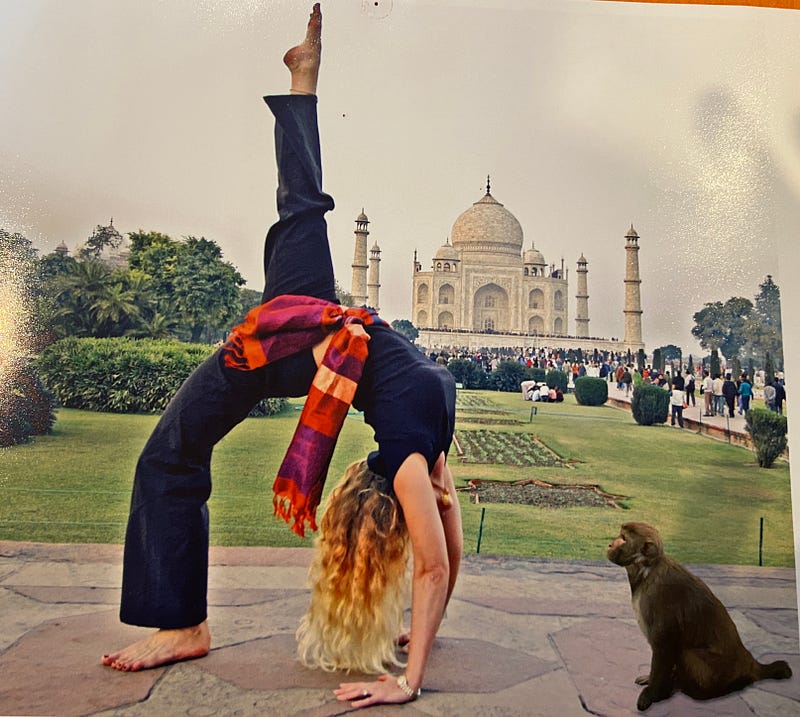
The monkey was NOT really there! Photo by my dad.

He tinkered with impossible colors — making them possible.

He placed an Indian woman, in a sari, on a mountainside in Tibet with a llama from Peru.

When I was ten years-old, my father gave up selling his photographs at art shows along the east coast to dedicate himself fully to being a professor, a scientist who would one day become a leader in artificial intelligence. I never fully understood his decision.

But he loved camera equipment to his dying day.

And, he took such delight in the intelligence of the Photoshop program and in the control he had over the final photo product.

I wonder, sometimes, what would have happened if Lightroom and Photoshop had existed back when I was a kid? Would those art shows on boardwalks and in old red churches have existed? Would the photos that my father took during that time be as special to me now?

There was an earthiness, a truthfulness, to those old film photos that I don’t think we come close to capturing now, in the digital age. And the rawness of those photos is achingly beautiful.

But there is also an entirely different beauty to being able to enhance what the lens captures. Sometimes the actual photo does not do the the moment which you remember justice.

My husband and I spent the summer solstice in Norway last summer. I was up every night for the midnight hours on the deck of the Hurtigruten, the local ferry/postal/cruise boat we were on, capturing images of the “pinkening,” the mystical moments when the sun was neither rising not setting. The photos turned out beautifully but needed a little dehazing in Lightroom to truly capture the colors we were seeing with our eyes.

Now, I can look at those images and really feel what it was like to be bathed in a sea of pink light at midnight above the arctic circle.

There was also a moment when our train from Flam to Oslo stopped at a surging waterfall in the mountains. Piped in music filled our ears when everybody got off of the train to admire the lacy spray frothing over the granite cliffs. But what most people never saw was the woman in the red dress doing an expressionistic dance, up high, just to the right of the waterfall.

Struck by the moment, I captured her image. To make her just a bit more visible in the final photo, I amped up the red of her dress just a bit. I rather liked the final product.
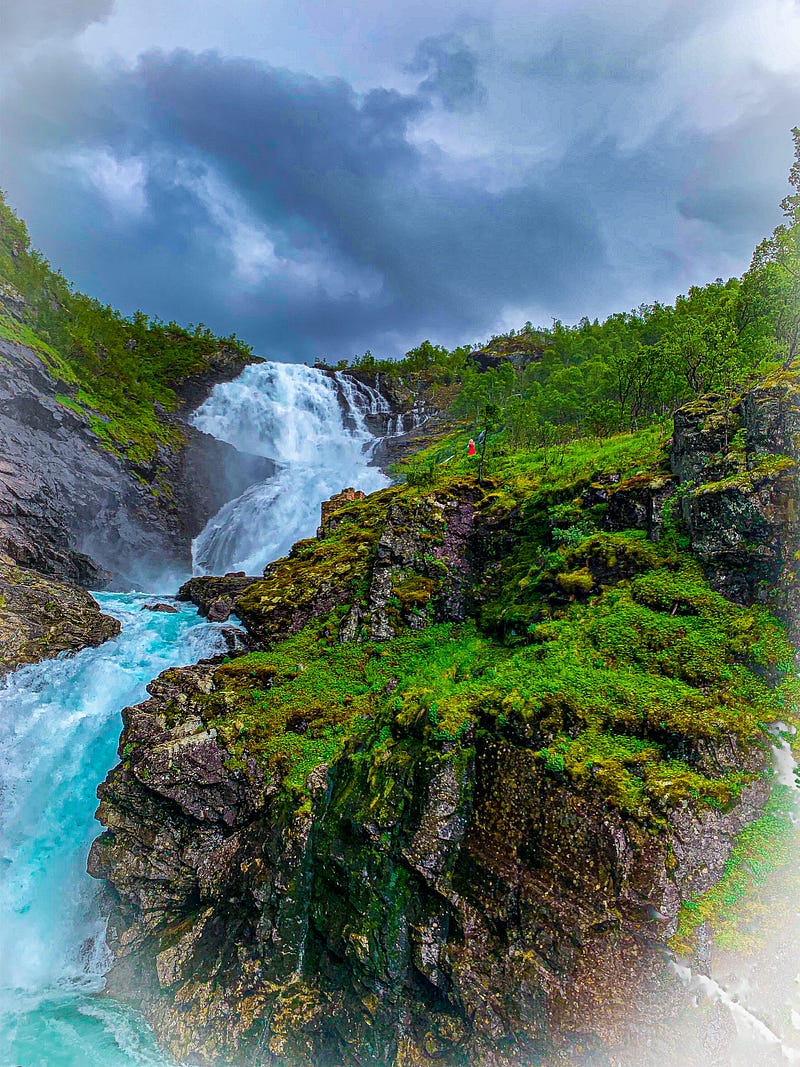
The Lady in Red, Myrdal⁩, ⁨Sogn og Fjordane⁩, ⁨Norway⁩. Photo © Erika Burkhalter.

I also had a lot of fun creating somewhat fantastical colors of the Oslo train station at around 11 p.m. on a summer night, when the sun was just setting and the light was magical.
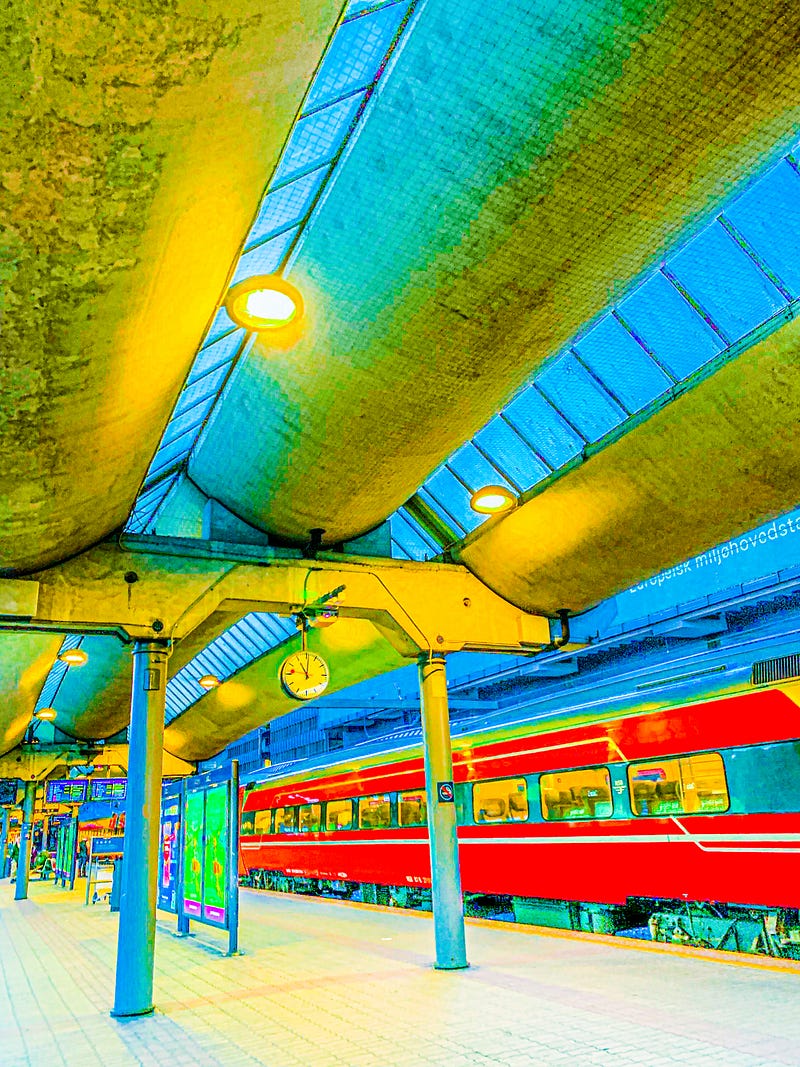
Psychedelic Oslo. Photo ©Erika Burkhalter.

So, I think that there is beauty in both forms.

I hear that there is a resurgence of film photography happening.

I do find this intriguing.

But then, I remember coming home from vacation, expecting to get one or two good shots on a roll of twenty-four or thirty-six frames.

And I also remember the price of developing that film.

So, for now, I think that I will stick with digital.
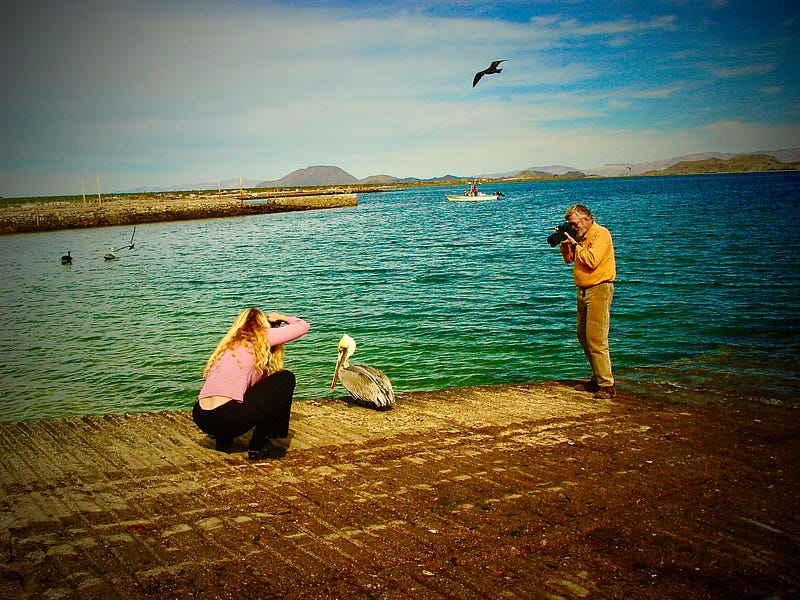
Me and my dad.

Erika Burkhalter 2020

Erika Burkhalter is a yogi, cat-mom, photographer, and lover of travel and nature, spreading her amazement for Mother Earth’s glories, one photo, poem or story at a time. (MS Neuropsychology, MA Yoga Studies).

I hope that you enjoyed these musings on photography and life. You might also like:

A poem, based on the “Lady in Red” photo:

A photo-story of the world of the very small:

A moment when time stood still:

Story and photos ©Erika Burkhalter. All rights reserved.

Photography
Short Story
Travel
Photography Tips
Fathers
Recommended from ReadMedium