
Claro
Sometimes a cigar… isn’t just a cigar, but a rejected word
Today’s New York Times Spelling Bee letters:
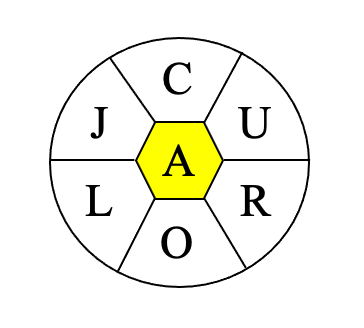
C, J, L, O, R, U, and center A (all words must include A).
Merriam-Webster says…
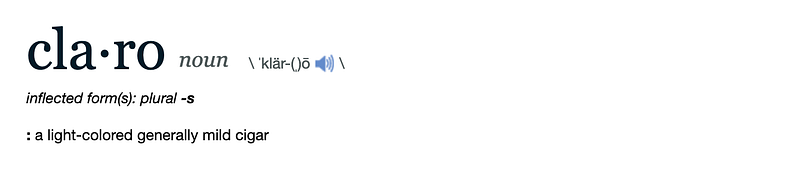
Silly little dictionary! Don’t you know that claro can’t possibly be a word if the New York Times says it ain’t?
For further fascinating facts, check out the Spelling Bee Master.
What’s your favorite dord* from today’s puzzle?
My Two Cents
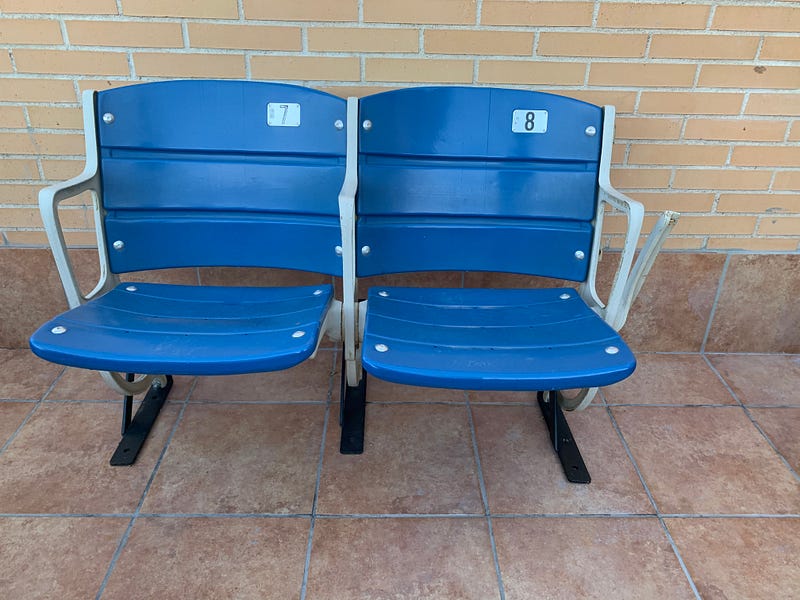
I could tell you that, as I write this article on a beautiful balmy evening, I’m sitting in my Shea Stadium seats on my terrace in Madrid, Spain, sipping single malt Scotch and puffing on a savory cigar as the sky glows red to orange to yellow with the setting sun.
I could tell you that… but I’d be lying.
Not that I haven’t done it before; I’m just not doing it right now as I write today’s column. But the setup is just about right, clichéd as it may sound for a writer. And as a wise writer friend once told me: “Avoid clichés like the plague”.
What’s the point of being a writer anyway if you can’t fill your life with good ol’ fashioned debauchery and vice like tobacco, alcohol, and baseball?
Here’s a third of that, my Shea Stadium seats brought all the way from New York in three suitcases and reassembled in Madrid:
I started smoking thanks to my father. Yes, that sentence is what every member of the American Cancer Association fears the most (maybe even more than an actual cigar), but let me give you some context.
My dad never smoked cigarettes. Well, briefly when he dated my mom, but she hated them, so he switched to cigars and pipes. Still, when I was a kid, I was given the typical information about the dangers of tobacco that most kids were told in grade school. By the 1970s the association between cigarette smoking and lung cancer was quite clear.
Much less clear (to the point of oblivion) were the actual dangers of pipe and cigar smoking. The landmark 1964 Surgeon General’s report on smoking and health cited ample statistical differences on health and mortality between cigarette smokers and those who favored pipes and cigars. However, that was largely ignored by the antis who lumped everything into the devil word called “tobacco”. I’m not going to rant too much on that issue; you can read my previous rant here.
My brother and I actually waged an “anti-smoking campaign” against my dad, even going as far as to create posters and place them around our apartment. Not that it made an iota of a difference. As my father is fond of saying: “He smokes cigars for 120 years… lives a long life.”
Cut to 21-year-old me on summer vacation at a beach resort with family and friends. A few of us are playing cards, and I decided to borrow a stogie from my dad to play my card shark role to the tee. Now, my dad smoked quality, hand-rolled cigars made in Venezuela, where we lived at the time. The owner of the cigar factory was a Cuban refugee, so he knew what he was doing.
To keep things short, the cigar blew me away (bad pun not intended). Cigars are not supposed to be inhaled like cigarettes. The point is savoring the smoke in your mouth, with all the nuances that come from a cigar crafted from only natural, aged leaves. Unlike cigarettes, no external chemicals are added to cigars.
I was hooked, although not in an addictive way. I’ve been smoking cigars ever since, and I added pipes and pipe tobacco to my repertoire when I moved to the U.S. several years later. Still, I don’t smoke indoors and I can go weeks without smoking. It’s something I do to relax, to unwind; a form of meditation, if you will.
And it never hurts to have a good whiskey join me when I do it.
I’m blowing smoke up your… lexicography skills
When I moved to the States in the 1990s, the cigar boom was in high gear. I had a subscription to Cigar Aficionado, a humidor, all the stogie-related paraphernalia like lighters and cutters, and even some books about cigars.
This is one of them, which I still keep on my bookshelf.
If the bunny looks familiar, you’re guessing right. This was published by Playboy. And I can honestly say I bought this Playboy for the articles.
Among the useful, information-filled pages is this one, which brings us to our word of the day. Claro. (Second entry on the right.)
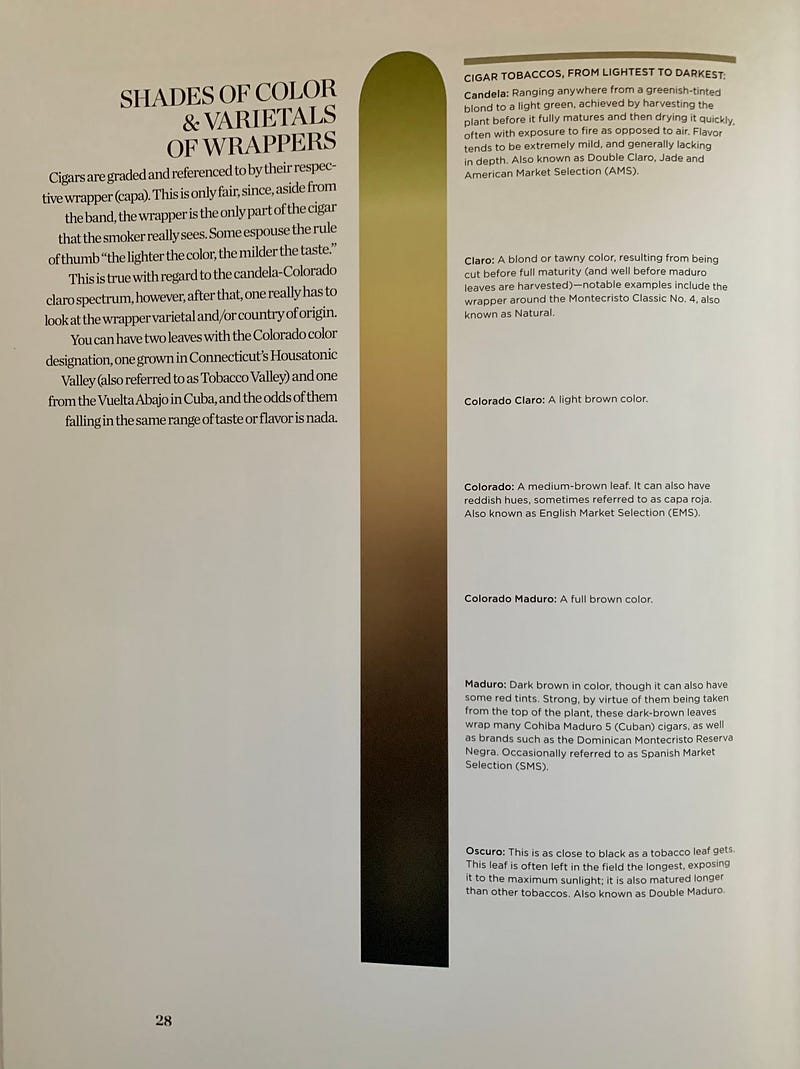
As a Spanish speaker, I don’t need the dictionary’s help with the etymology of claro. It comes from the Spanish word meaning “light”, originally from the Latin clarus.
Now, the candela (first entry in the right column) and the claro used to be very popular way back when, but as cigar smokers got more sophisticated they favored darker shades of wrappers that would give their smoking experience more depth and nuance.
To clarify, we’re talking about the wrapper only. And there’s some debate about how much of the cigar flavor the wrapper is responsible for. Trust me, it’s a good chunk of it. I’ve done the experiment of smoking the same cigar with and without a wrapper, and you can tell the difference.
I don’t have any claro cigars in my humidor at this moment, but I took a photo of three cigars with different wrapper shades so you can see the difference.
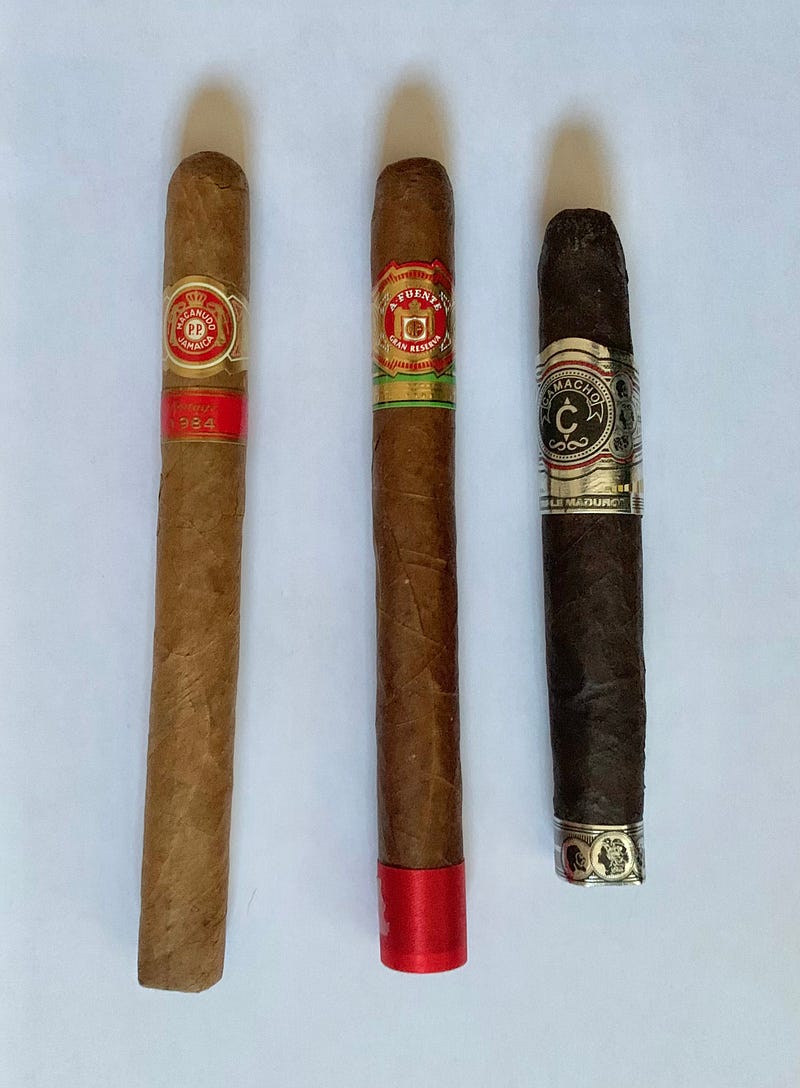
I would hazard a guess that, from left to right, the wrappers are colorado, colorado maduro, and maduro. However, they could also be claro-colorado, colorado, and oscuro. The whole shades thing is subject to interpretation.
Speaking of which, here’s an interesting tidbit. Cigar companies prefer to hire women to pack boxes because women tend to be better than men at distinguishing differences between shades of color. And cigar companies like their boxes filled with cigars that match. Even when the same type of wrapper is used, there are always slight variations in the hues.
Watch your language!
The word claro is both a true cognate and a false friend with the English word clear. (Cognates are words that share a language origin, while false friends are cognates that have different meanings.) Now, this doesn’t happen that often, at least not between English and Spanish.
First of all, both the English clear and the Spanish claro have the same Latin origin: clarus. So that makes them cognates.
As I mentioned before, claro in Spanish means light as in fair-colored or faded. The English word clear is not used in that sense. So that’s how they are false friends, because they don’t mean the same thing. But another meaning of claro is “of course” or “clear” (when referring to understanding something). So, in that sense clear and claro are true cognates because they have both the same origin and the same meaning.
Hmmm… the vicissitudes of language.
In any case, despite the fact that claro is an important word in the cigar industry — or perhaps because of that fact — the editors of the Spelling Bee decided that this word is a dord.*
You can check out my previous entry on another dord* here:
*What the heck is a dord, you ask? Here’s the answer: