China’s Final Warning: Putin’s New Strategy in Ukrainian Conflict
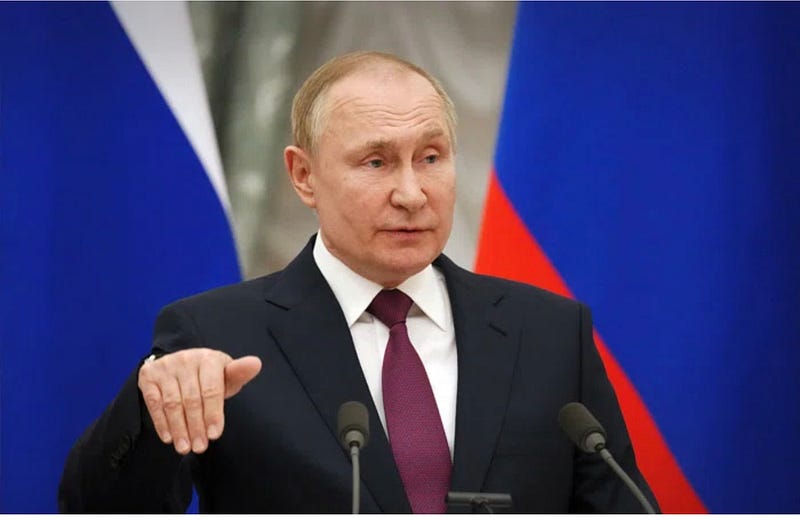
The recent Russian missile attacks on Kyiv and other regions of Ukraine have started a new, horrific and devastating chapter in Russia’s war against that country. Rockets and kamikaze drones (supplied to the Russian military by Iran) destroyed infrastructure in major Ukrainian cities and caused many civilian casualties.
These strikes – and obviously those that may follow – are entirely in line with the vindictiveness and indifference to civilian suffering with which Ukrainian people have become familiar over the past months under Russian attack. At the same time, it is beneficial to consider the larger effects of the most recent strikes. The attacks, according to Vladimir Putin, are retaliation for the “terrorist” conduct that damaged the Kerch bridge, one of his prestige projects and a vital logistical link for the Russian military. It is notable that Putin has used the taboo word in political language, notwithstanding the absurdity of his pretended anger coming from a man whose armies have terrorized Ukraine for the majority of this year.
Putin said that the explosion on the Crimean bridge “is a terrorist act aimed at destroying Russia’s civilian critical infrastructure. It is also obvious that the organizers and perpetrators of the terrorist attack are Ukrainian special services.” He called the missile strikes on Ukrainian cities a Russian response to the actions of the Ukrainian authorities.
His statements contained an absolutely clear internal message: To emphasize to his “party of war” that he is one of them, that he has wasted no time in beginning a vengeful act in response to this alleged “terrorist” incident. If it appears to be an escalation in light of the recent nomination of general Sergei Surovikin (nicknamed the “Butcher of Syria”) as a new military commander, that’s exactly what the hardliners need and want right now. According to the Guardian, Putin is indicating that he is disregarding any signs of dwindling support for the war among the general populace in the wake of his decision to mobilize. And that he is paying closer attention to those who have publicly criticized the army’s subpar performance and asked for a stronger, (even) more brutal offensive strategy.
There is also a message for the numerous nations beyond the Euro-Atlantic region that have refrained from denouncing Russia’s aggression war. Putin is hoping that people who don’t have the time to go past the “terrorist” moniker would complacently convince themselves that there are, in fact, evil people on both sides and that it’s okay to stay neutral.
Perhaps the label “terrorist” will replace the absurdly applied “Nazi” designation to Ukraine’s government in his “justification” for the 2022 invasion as part of a new Putinist propaganda campaign. (Remember that many people equate terrorism with non-state groups, and that is how Putin invites the world to view Ukraine in his pseudo-historical rants.)
Of course, there is a lot more about the reasons for the most recent strikes that the Kremlin is keeping quiet. It has been a particularly catastrophic few weeks for the Russian armed forces in Ukraine, even before the Kerch bridge disaster. As a result of their repeated failures to accomplish their goals on the ground, Putin was already compelled to change the emphasis of his attack in a modest manner.
The lack of military force, as often happens in such cases, is compensated by an excess of aggressive rhetoric. China’s historical experience in its conflict with the United States over Taiwan in the 1950s and 1960s is the best example of such a hybrid war of slogans and declarations. The famous allegorical idiom “China’s final warning”, which appeared in those years, has been the motto of all of Putin’s political moves over the last four weeks. The “final warning” strategy will allow the Russian leader, in his view, to maintain the necessary level of escalation without resorting to an offensive on the frontline, for which his army does not have the resources. Mobilization, annexation of Ukrainian territory, rocket attacks, executive order introducing martial law, and at the same time calls for negotiations are in his logic the most successful steps to prevent a political and military disaster.
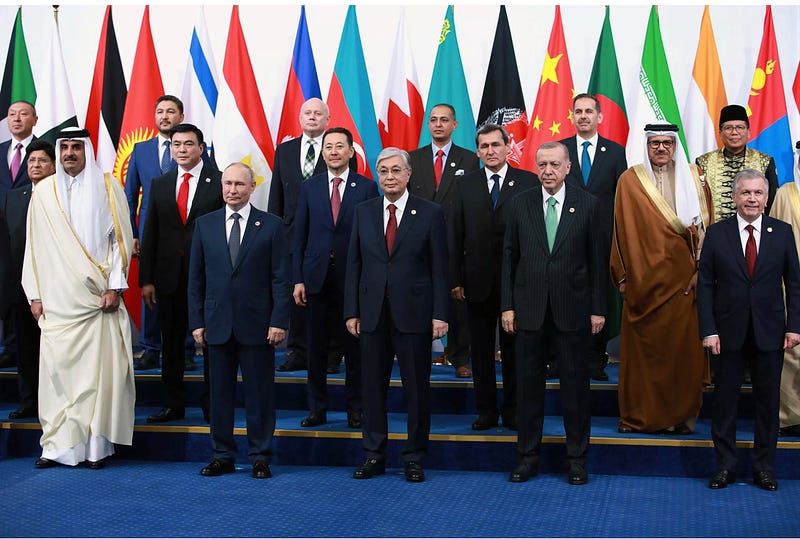
On October 13, in conclusion of his working visit to Kazakhstan, the Russian president answered journalists’ questions. Speaking of the possibility of Turkey, India and China’s participation in a peace settlement in Ukraine, the president only cynically shifted the responsibility to his Ukrainian colleagues:
India and China always talk about the importance of dialogue and peaceful resolution. We are aware of their stance. They are our close allies and partners, and we respect their position.
But we are also aware of Kiev’s position — they kept saying they wanted talks, and even sort of asked for them, but have now passed an official decision that bans such talks. Well, what is there to discuss?
As you may be aware, speaking at the Kremlin when announcing the decision on the constituent entities of the Russian Federation, I said we are open. We have always said that we are open. We reached certain agreements in Istanbul, after all. These agreements were almost initialled. But as soon as our troops withdrew from Kiev, the Kiev authorities lost any interest in the talks. That is all there is to it.
If they ever get ready for this, we will welcome it. At that point, the mediation efforts of all the stakeholders may come in handy.
The desire to shift responsibility to others is the first sign of political weakness. It does not matter who ends up at fault — the failed generals, the “Kiev terrorist regime,” China, India, or your best friend, Turkish President Recep Tayyip Erdogan. The more of them you have, the better. But on the other hand, this inevitably means that the conflict will spill over, involving more and more interested parties. Given the role of Iran (which itself has been under western sanctions for many decades), supplying hundreds of combat drones to Russia, we should all think about the danger of worst-case scenarios. The difference between the situation in the 1950s and 1960s and today is that there was no hot phase of the conflict then and the “last Chinese warnings” just remained meaningless declarations. They were not of great concern to the United States and its allies. Today there is a real war going on. Putin is launching brutal missile attacks on Ukrainian territory with impunity, while inviting the Ukrainian side to negotiate surrender. The major nations beyond the Euro-Atlantic region closely monitor the conflict and try to influence the warring parties in pursuit of their own and carefully concealed interests. When a leader’s political weakness is masked by aggression, the scale of escalation in such circumstances can become completely unpredictable.
Thank you for reading. If you want to get unlimited access to everything on Medium then click here to become a member. You will directly support my writing signing up through my link.