
Childhood Traumas — Emotionally Unavailable Parents
Simply having parents does not equal a good childhood.
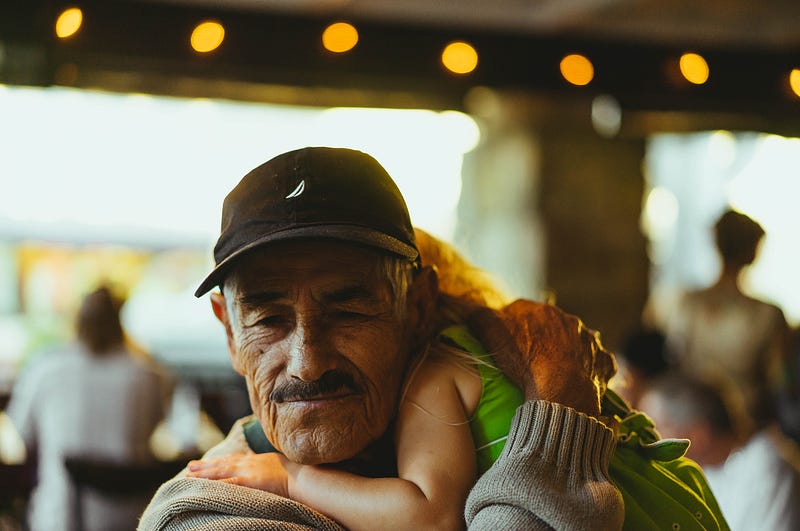
I’m not trying to sound ungrateful because I am aware of the sacrifices and hard work my parents did to keep a roof over my head, food in my stomach, and clothes on my body.
However, as humans, our goal isn’t just to exist. We also have the desire to evolve and improve.
To do that, we must point out the areas in which we have failed and learn how to do better next time.
If we want to grow and thrive, we must take a hard and honest look at ourselves to see where we’ve fallen short.
This is not easy, especially for people (and parents) who are emotionally immature and unaccountable.
There are those of us who want to bring about generational change.
When we decide it’s time for us to have children, we’re going to do our best to make a difference by looking back at our childhoods, seeing where our parents fell short and where we fall short, to teach our little ones better.
After all, isn’t the point to leave the next generation better off than we were?
Many of us grow up with emotionally unavailable and immature parents. The truth is, they had parents who were just as emotionally immature, if not worse. However, this is not an excuse.
One of the wonderful aspects of our time is the desire to improve mentally and emotionally, guard our mental health and wellness, and improve our conflict resolution skills.
I hope writing this inspires someone to start or continue on their journey of growth and healing.
It’s not easy, but the results are worth it.
I’ve never felt more like myself. I’ve never felt more at peace with myself and my life.
I'm grateful to have gone on this journey because my life and mind have been transformed.
But I digress —
Having emotionally immature parents is another childhood trauma that will create chaos in your life.
For me, it resulted in hyper-independence and an avoidant/disorganized attachment style.
I became afraid of people. Of letting anyone too close because the ones who were supposed to be my rock (my parents) weren’t.
Ironically, because I craved connection desperately (I didn’t get it from my parents), I sought what I thought were deep emotional connections and played this pull-and-push game. Hence, disorganized attachment.
In a previous blog, I wrote about similar childhood traumas, and a reader commented, ‘I raised myself. I am my own mother.’
After reading her reply, I sat on my couch with my computer for a long time and realized, in a way, I raised myself as well.
Most of what I know about emotional maturity, regulating my emotions, loss, grief, love, understanding, compassion, humility, acceptance, forgiveness, and the list goes on and on; I taught myself.
It hurt to realize this because it made me see all I wished I had gotten emotionally from my parents but didn’t.
It reminded me of the loneliness I felt as a teenager because I longed to be able to talk to my parents. I longed to be heard and understood by them. But it didn’t happen.
Not until much later, when I was an adult. When I felt it didn’t count because I no longer felt I needed it.
I learned how to provide it to myself and found others willing to be there for me.
Fortunately, my mother has gone on her own journey of growth and healing, and our relationship has dramatically improved.
I will forever be grateful for this because I’m finally starting to feel that bond I sought when I was younger.
The next step to healing, and perhaps the most difficult, which may take a lifetime, is forgiving.
I’m still unsure whether I have forgiven my parents, even though my relationship with my mother has improved.
I realize they didn’t know better, but that doesn’t erase the pain. The emotional neglect I felt at the time.
The disregard for my pre-teen and teenage troubles.
Now that I’m an adult, I understand much of what happens as a teenager isn’t life-shattering, but at the time, it feels this way because it’s all you have.
Your friends and school life are all you focus on because there’s nothing else — if you’re blessed.
Unfortunately, children, pre-teens, and teens (and anyone) in other parts of the world, even here in the United States, go through horrendous nightmares — that’s a conversation for another blog.
But like I said, as a teenager, if you’re blessed, your troubles are all about school life and friends.
Comparison is not going to make those troubles feel any less important.
This is your reality, and being shown how someone else has it worse isn’t going to change it.
Having these troubles neglected by your parents is very painful. It makes you feel like you’re not a priority and your needs are unimportant. And if your parents don’t care, why would anyone else?
This is what I grew up to believe — and why I never told my parents much. Only the good news because I figured that’s all they wanted to hear.
It’s one of the main reasons I became an overachiever and a people pleaser.
I felt they didn’t have time for anything that felt inconvenient. A lot of the time, I felt I was an inconvenience. So I tried to be as far away as possible (emotionally and mentally) to protect myself.
Not long ago, I came across a reel on Instagram where a child of immigrant parents (I am an immigrant myself with immigrant parents) spoke about how you’re most likely to develop.
She said, ‘you’re going to grow up to be agreeable, a people pleaser, lack boundaries and self-respect because it’s the only way you will get approval from your parents.’
This hit home because that’s precisely who I became as a teenager and remained this way into my early twenties.
I’m sure many of us still struggle with people-pleasing, agreeableness, lack of boundaries, and self-respect.
Knowing where and how we learned to be this way allows us the opportunity to correct it.
I’m still going through an excavating process.
I’m figuring out where I started to develop all my avoidant habits. As I find where each of these pain points started, I go through a grieving process.
I hurt for the person I was who got hurt because she opened her heart to people that didn’t know how to handle it properly.
I hurt because I wasn’t taught to have a voice and speak up against those who caused me pain, and instead just accepted it thinking that’s what I was supposed to do.
I grieve because the girl I was was so innocent, and all she wanted was to be loved, but she was betrayed. She didn’t deserve any of it. She was just a child looking to feel like she mattered.
The beautiful thing about grief is that it’s a process. It has an end.
Once you’ve grieved through the pains of the past, you begin to heal.
Once you heal, the pain is much less than it used to be. You are free to make different choices and do better.
Tell me, what lessons have you learned from grief?


