
Gaming PCs
Check Out These Crazy Custom Built Gaming PCs
Some people can be really creative when designing their own personal computers.
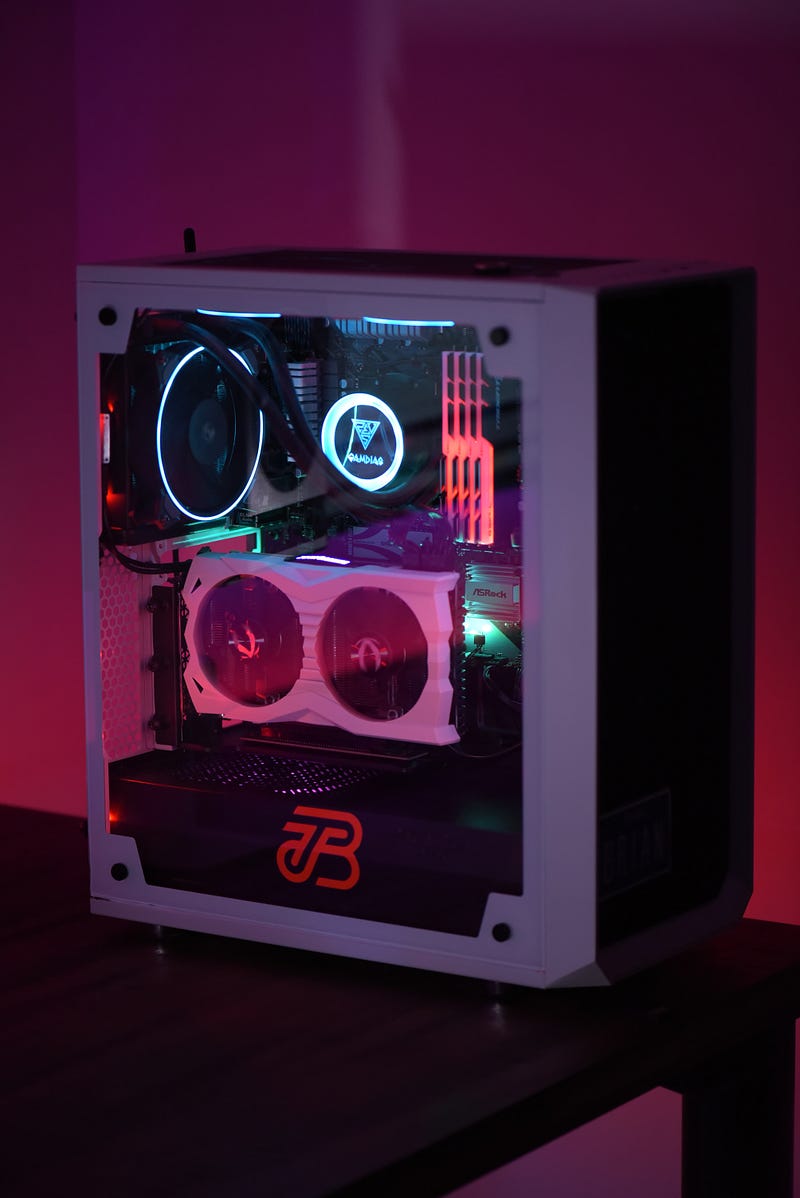
Recently, I came across a very interesting custom gaming PC that got me thinking about the wackiest custom PCs I’ve seen in the past. I’d like to introduce a few of the favorites I’ve come across.
What Is a Custom PC?
A custom PC, also known as a DIY PC or self-built PC, is a computer that is built by an individual or a professional rather than being pre-built by a manufacturer. Custom PCs are designed to meet specific needs and requirements and are typically assembled from individual components purchased separately.
The process of building a custom PC involves selecting individual components such as the CPU, motherboard, graphics card, memory, storage devices, and power supply, and assembling them into a working computer.
The selection of components can vary widely depending on the intended use of the PC. For example, a gaming PC may require a powerful graphics card, while a workstation PC may require a large amount of memory and storage.
One of the main advantages of a custom PC is the ability to tailor it to specific needs. Users can choose components that are better suited to their requirements, which can lead to better performance, higher reliability, and lower cost.
For example, a user needing a video editing computer may choose a high-end CPU and a large amount of memory. Another user who needs a computer for web browsing and email may choose a less powerful CPU and less memory.
Another advantage of a custom PC is upgrading individual components over time. As technology improves and new components become available, users can upgrade their PC without replacing the entire system. This can lead to cost savings over the long term and can help extend the useful life of the PC.
Building a custom PC can also be an educational experience. Users can learn about the components of a computer, how they work together, and how to troubleshoot problems.
Building a custom PC can also be a fun and creative project, allowing users to express their individuality and creativity.
However, building a custom PC also requires certain technical knowledge and expertise. Users must be able to select compatible components, assemble them correctly, and troubleshoot any problems. Additionally, building a custom PC can be time-consuming and may require specialized tools.
Although in this case, I’m referring to the aesthetic side of a custom PC. For example, the way the PC case looks, how the lighting is set up, or the integration of an interesting feature that sets it aside from other systems.
1 — A Gaming PC Built Inside a CRT Monitor
If you have fond memories of old CRT monitors and TVs, then you may be interested in the water-cooled gaming PC with a vintage twist that PC modder János Kerekes has created. He took an old grey Sony Trinitron CRT monitor and transformed it into a unique water-cooled PC called Oazis ROG.
Creating this PC was no easy task, and Kerekes spent days trying to find the appropriate layout to make it work. He had to consider the features of the monitor shell and the fixing points available to him.
He didn’t want to create visible fixings, so he made custom mounts for all the hardware and water-cooling components. To hide the necessary screw connections, he used a part of the monitor covered with a plastic sheet.
For the motherboard, radiators, and PSU, Kerekes used aluminum sheets that he cut and filed to the right shape, then fixed them to the case. However, he had to think a lot about the design of the original CRT monitor and its weight distribution.
The glass of the ray tube made it heavy at the front, and when the tube was removed, it hugely altered the balance of the screen’s chassis. So he couldn’t install all the components towards the back of the monitor shell, as this would end up tipping the screen.
All the hardware used in the build came from Asus, including the monitor, so Kerekes chose to use the PB248Q, which is a 24" display with an IPS LCD panel. To make the panel sit flush with the CRT monitor’s frame, he had to remove the original frame for the LCD monitor and enlarge the hole in the CRT frame.
The panel was secured by tapping some of the plastic parts of the original frame and using bolts with large flat heads to hold the back of the panel. Kerekes also cut away the on-screen menu controls and mounted them on the little cylindrical section on the Sony monitor that held its on-screen controls.
Due to the limited space inside the monitor, Kerekes had to use only mini-ITX parts, so he chose the Nano card. Additionally, he chose the appropriate water-cooling blocks for the motherboard and graphics card from EKWB. He made the backplate and lettering for the graphics card himself, using the same foam PVC material as the window surrounds for the letters.
János Kerekes has created a stunning water-cooled gaming PC with a vintage twist using an old grey Sony Trinitron CRT monitor. It took days of planning, cutting, and mounting to make this unique PC, which features custom mounts for all the hardware and water-cooling components, a 24" display with an IPS LCD panel, and mini-ITX parts due to the limited space inside the monitor.
Kerekes also made the backplate and lettering for the graphics card himself, using the same foam PVC material as the window surrounds for the letters. It’s a water-cooled gaming PC in a vintage CRT monitor!
2 — A PC Interior Themed After Aliens
This unique gaming PC setup is far from the ordinary rectangular box case. It’s a desk PC designed to look like the interior of a spaceship from the Alien film franchise.
The modder behind this creation is Mick Black, who aimed to recreate a dark and gritty atmosphere of a spaceship’s interior, complete with rust, stains, and oil spills. Dubbed “Alien Breach,” this sci-fi gaming PC build stands out from the rest of the crowd with its impressive attention to detail and out-of-this-world design.
Black started by modeling the entire build to achieve the desired look and feel. He wanted it to appear as if it came from the universe that frightened him as a child, with sci-fi bulkheads, floor lighting, catwalks, and rusty pipes.
He spent hours watching YouTube videos to learn modeling tips and tricks while enjoying a whiskey on the side.
For the floor, Black used fish tank filter grids. They were a perfect choice since they were cheap, easy to cut, and already black.
He also found an industrial model pieces kit from a tabletop gaming company that sold pipework, which he stocked up on. In addition, he scoured local selling pages for old toys that he could cut apart and use for the build.
For instance, he stumbled upon a large broken toy crane, which he repurposed as the rusted pipe shrouded above the AIO cooler's radiator. He even used a kids’ build-your-own straw kit that he repainted and weathered to form yet more pipework.
Black used foam boarding and a Dremel saw to craft the bulkhead shapes, giving the area a sci-fi feel. He then sealed everything with Mod Podge, ready for painting. With all the pieces in place, the end result was a breathtaking Alien-inspired gaming PC build that left many in awe.
The Alien Breach gaming PC is a desk PC with an Alien-inspired interior. Mick Black, the modder, wanted to recreate a dark and gritty spaceship atmosphere, complete with rust, stains, and oil spills.
He spent hours modeling the build, using fish tank filter grids, industrial model pieces, old toys for the pipework, foam boarding, and a Dremel saw for the bulkheads. The final product is a unique and impressive gaming PC build that stands out. Aliens have breached this PC’s interior!
3 — Two Gaming PC’s Built Into a Desk
Daniel Hunter has used his aluminum door and window manufacturing skills to create an amazing desk setup that features two water-cooled gaming PCs.
This remarkable creation is visually stunning and highly functional, as it allows multiple players to enjoy PC gaming in the same room.
Building this desk setup was not easy, given the size and routing of all the parts required for the two systems.
Daniel Hunter’s primary objective was to have two systems so that he, his wife, and his friends could play multiplayer PC games together in the same room, as multiplayer on computers is not always ideal compared to consoles.
To cool the components, there are three water-cooling loops on the desk. One loop includes a 480mm radiator, a 400mm reservoir, and a 160mm res/pump combo unit, which cools the CPU and GPU of the second, smaller PC.
Meanwhile, there are two loops for the main PC: one with a 360mm radiator, a 400mm reservoir, and a 160mm res/pump combo that cools the CPU, and the other with a 360mm radiator, two 250mm reservoirs, and a 160mm res/pump combo that cools the GPU in the main PC.
The main system has been overclocked, and Hunter wanted to maximize its performance potential by fitting as much cooling power as possible into the desk. On the other hand, the second system is running at stock speed and has sufficient cooling for AMD’s base-level auto overclocking feature.
To create this magnificent desk setup, Hunter utilized his aluminum door and window manufacturing skills. The desk features a sleek design with a smooth finish and impressive attention to detail.
The two systems are neatly integrated into the desk, and the water-cooling components are expertly mounted and routed to provide maximum efficiency.
This impressive engineering and design feat showcases custom PC building capabilities. Daniel Hunter has successfully combined his skills in aluminum manufacturing with his passion for PC gaming to create a unique and functional desk setup that will impress anyone who sees it. This desk PC has not one but two gaming rigs inside it!
Final Words and Takeaways
A custom PC is built by an individual or a professional, tailored to specific needs and requirements.
I spoke about three examples of unique custom PC designs: a water-cooled gaming PC built inside an old Sony Trinitron CRT monitor, a desk PC designed to look like the interior of a spaceship from the Alien film franchise, and a desk designed to house two powerful PC’s inside.
The advantages of custom PCs include the ability to upgrade individual components, cost savings, and the rewarding and educational experience of building one.
However, building a custom PC requires technical knowledge and expertise and can be time-consuming.
Custom PCs offer a fun and creative way for individuals to express their individuality and creativity in the world of technology.
If you enjoy my posts and would like to stay updated on the latest gaming-related news, technology advancements, design trends, and social media insights, I invite you to follow my profile.
I will continue to share my thoughts and insights on a wide range of topics in the world of entertainment and technology.
With that being said, thank you for reading my post, and have a good one.
About Me
I write articles in my field covering gaming, film-making, social media, and design. I am also a YouTuber. Thank you for subscribing to my account to get notifications when I post on Medium. I also created a new website to share my content for free and promote stories of writers contributing to my publications on Medium. Let’s connect on Twitter and LinkedIn.
I own two publications on Medium. One for video gamers and another for YouTubers and Podcasters. I also support Illumination Integrated Publications as a volunteer editor and participate in collaborative activities in the Slack Workspace. Writer applications for my publications can be sent via this weblink. Please add your Medium ID.
If you are new to Medium, you may join via my referral link. You may also consider being a Vocal+ member to monetize your content. I write for both platforms and repurpose my content to reach a larger audience. Here is more information about Vocal Media.
This post includes my Medium and Vocal Media referral links.


