
I LOVE YOU, WE SAID
Chapter 6: Along a Darkened River
A serialised novel
Then we lived on my grandparents’ farm near Coltrane, in the shattered heart of the old Cape Province.
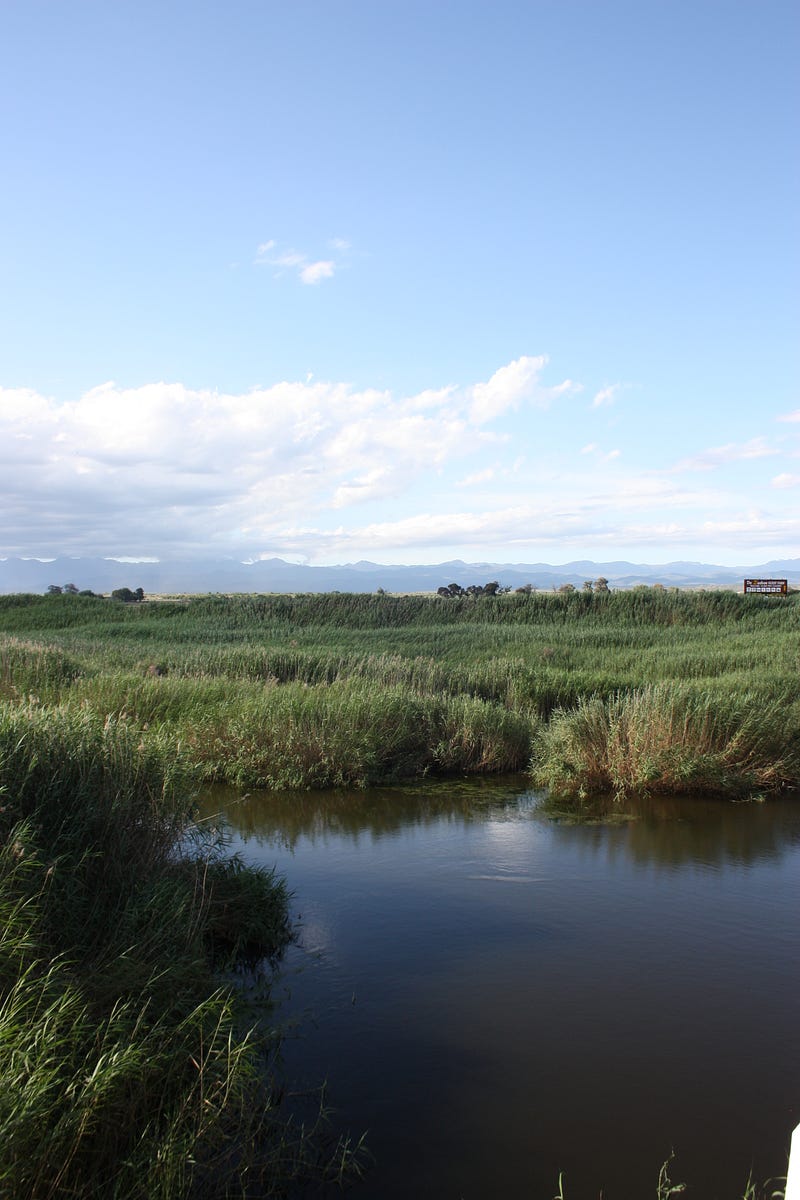
Coming from the north, we wound our way through spectral black mountains to enter the ancient valley. It lay inert with the violence of its own creation, a theatre of faulted bedrock with a mountain range on either side, reaching back and up ahead as far as I could see.
Overhead, roiling skies of all tempers.
And to the south, in the foothills along a darkened river, a narrow seam of fertile meadows and deep red limestone hills.
My grandparents had made their lives here, producing modest tobacco and lucerne crops on Hare Hill Farm, persevering until the winter rains became too scarce.
Now my mother had returned to this essential country, to work as a florist. I have memories of her preparing freesias before daybreak on Saturday mornings — cutting and binding them, filling buckets for sale at the district market, making floral arrangements for my aunt’s shop in the town. On a shimmering dawn run I saw what might have been a field full of them in the first dew, or a truck bed, or market tables laden with the immaculately fashioned flowers, vivid and extravagantly scented.
I was seven then, a December child, the eldest of my year group and having a late second start to my first school year.
The June mornings stung my nostrils as we rose before dawn. My ouma, appearing in a white night gown, dim-eyed and vulnerable without her glasses, trailing a heavy odour of candle wax. ‘Morning, my sweetheart,’ she’d say, smiling as though nothing had happened and we’d always just lived there.
Handing me rooibos tea in an enamelled tin mug before breakfast. Next to my porridge bowl on the kitchen table, a packed lunch of one orange and two slices of brown farm bread, spread with farm butter and apricot jam and wrapped in brown paper.
And it would still be dark when Oupa, wearing a brown cardigan, herringbone jacket and hat, drove us to the roadside bus stop a mile away. He kept his 1963 Toyota bakkie in a work shed behind huge padlocked double doors — each set high with a single glassless diamond-shaped window through which spilled overnight evocations of wood and straw.
The old man, revered by my mother and grandmother, was quiet and seemed indifferent to my presence. I dreaded being with him in the pre-dawn night. If he spoke, I’d have to speak. Even if I’d known him, I wouldn’t be able to relax around him. He’d soon see that I was slow and tire of my silence. Thrash me, like my father.
He hadn’t said anything to me since our arrival when he hooked the curved end of his walking stick around my neck, pulled me onto his knee and spoke gruffly, though probably kindly, in forgotten words. The smell of the treated wood, the hard crook of the cane around my throat, made it hard to answer and I recoiled, frozen with fright.
I wanted to go around the farm with him, visit his big-odoured barns and see what he did with the mysterious tools of his trade. Learn his secrets of the soil and seasons and animals. Meet his gaze, unafraid, speak when spoken to.
And more still. My need of him was regressive and entire. More than anything I needed to re-enter the cocoon of a much smaller child; skirt for a while the fringes of the inviolate orb that my sisters and mother inhabited; play at their feet in the safety of the cool, high-ceilinged house, where people were soft and friendly.
Such hopes.
At first, he merely discouraged it. And why would he indulge such fancies, and how would he know? I was a moody seven-year-old child in need of fresh air, if not a wallop. What was I doing in the kitchen, the lounge, hanging around with servants?
But it was where I felt at home, among the women and servants and girlchildren.
Years of orbiting my father’s iron-fisted rule had closed me off to the big, imperious voices of men. Their constant campaigning for dominance. The merest hint of disapproval or threat of punishment from any of their kind. The entire male repertoire, in short, of control and endeavour. To say nothing of the dark arts I’d encounter later, practised by the ones in authority; the craven incitement of peer violence, the favouritism and exclusion, the othering and shaming and all the rest of the tools of mass coercion, grouped under the banner of “leadership”. It was with them that I felt out of place. It was they who had to know better than a secretive, standoffish child, and yet they never did.
Perhaps it wasn’t my grandfather who insisted on getting me out of the house. Perhaps it was my mom, hoping it would toughen me up. Perhaps pairing an unsocialised, spooked boy with a taciturn, unsympathetic-seeming man was her only choice.
On rides around the farm when I was meant to help him, he’d be quiet for long periods, then issue a cursory command.
But by then I’d be lost in thought, slow to process his strange new spoken rhythms, needing things repeated. Unsure of making even just the proto-verbal responses I could otherwise manage.
I made mistakes, countless foolish ones — opening and not shutting a gate, slamming a finger in one, sobbing about it all the way home and then bawling on seeing my mother.
I was a wretched draw as a sidekick and grandson; it would be futile to pretend otherwise. Shy, thin-skinned, miserable.
And in the end, he stopped inviting me to help.
It wasn’t his fault. I was deaf to the even timbre of his slow, calm, chronicling tones. A fair rebuke from him was the same as the abuse my father had meted out to me; it was all the end of the world to me, and I shut it all out.
This novel serialisation is exclusive to The Pro Files on Medium.
To be notified of new chapters, subscribe on my profile page. To read all my stories, join Medium using my referral link. I will get a small commission at no extra cost to you.
Or, if you’d like to own a copy, buy my book here! Thanks for reading.