
I LOVE YOU, WE SAID
Chapter 7: Hare Hill Farm
A serialised novel
Luckily my baby brother Simon had arrived two years prior, and everyone could move on.
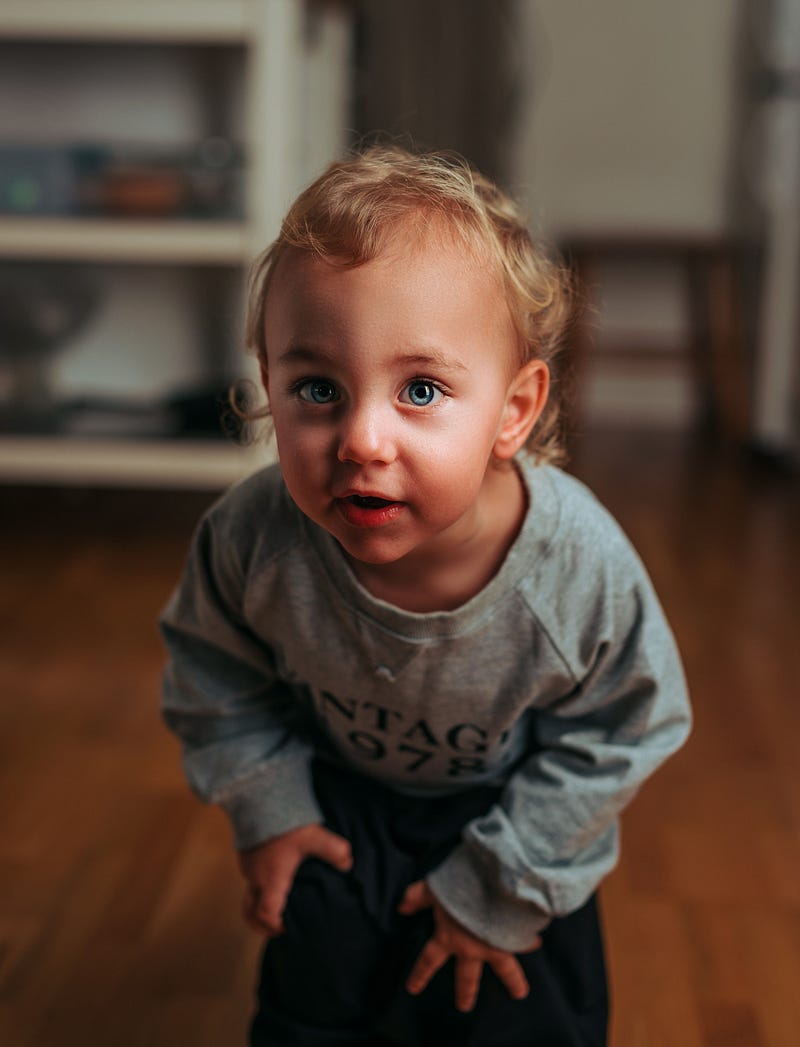
Beautiful, blond, blue-eyed Simon, inscrutably mild with his spaced-out baby look and translucent blue eyes, almost foreign in aspect. It was only natural that we should all take a special liking to him, my grandfather included. He was a symbol of our freedom, the one unharmed character among us.
They began going everywhere together, Simon standing on the front seat of the slow-moving bakkie next to his oupa, a childish arm around his neck. So sufficient they seemed unto each other, so filial their bond.
I was glad for my baby brother. He’d never known a father, and all things considered, I was happy he hadn’t. Also for my grandfather, by all accounts a good man. As for me, it was a long time ago.
I took to wandering from the homestead and found a few haunts of blissful solitude — a prickly pear copse whose fleshy leaves I shot to shreds with a catty (catapult); a lemon tree grove on the other side of it; the farm dam beyond that; the tobacco sheds along from the barns; a car wreck down by the eucalyptus trees past the cement dam.
Who cared, who cared about any of what you felt and remembered, when you could press a cheek into a large afternoon-cooled lemon or aerated tobacco shed, or dredge up water plants with scores of twisty tadpoles from a dam, or sit unseen in an ancient car wreck on a forest bed of fragrant eucalyptus leaves?
On my way to these places of refuge I would pass farm women carrying out their dreamy duties — washing, baking or roasting coffee. I didn’t understand their formal Afrikaans and gave the wrong answers to their questions, and they laughed and spoke in the throes of their manifold passions and probably understood me best of all.
It was a time to learn to be grounded, to be left alone to ramble past the concrete fish dam to the mud-walled irrigation dam and the tractors beyond that, if Oupa would let me. To leave the confines of the yard and walk along the sandy white dirt road off the main road to Coltrane. Or the other way, towards the hill with its treacherous rabbit warrens, winding a way along the furrow passing the house with rainwater from the black mountains.
The fields were dry and dust-tramped with ostrich nesting shelters opening northward and south in half-hectare breeding paddocks to keep the mid-day summer sun out. The birds were charged with physical power but came, candidly and helplessly drawn by curiosity, when you stood by their fence long enough, even pecking at a closed hand. I saw that I loved and respected animals after all, and assumed no dominion over them. They gave nothing and took nothing.
My happiest memories: fishing tadpoles out of the dam that my grandfather had built; a fattened carp sucking on my finger; being taught by a farm boy to fling a stone so hard and true that it rang on the ironstone-ridged farm road. Or holding an ice cream stick flat against its own trajectory and hurling it so it droned on the air. Riding the sweetly whirring chopper bike my father had bought me in the Free State and falling hard on the unforgiving road surface. Being given a lift by my 28-year-old mother on the same road on the same bicycle, again falling, her riding into a ditch and laughing…
Sensing that the coloured boy was unsuitable from the adults’ steadfast refusal to acknowledge him or ever talk of him, I gave up trying to befriend him and do not recall his name now, even though he could throw stones high over the eucalyptuses, much higher than anyone.
Many times, many years hence, I would drive past the turn-off to Hare Hill Farm, not once turning onto the old farm road, knowing what I would find. The house, its yellowwood floors and doors and ceilings, its white enamel water pail with the icy water and metal ladle in the kitchen, the stained glass and yellowwood door separating kitchen from corridor, the reservoir with winter rain, the fish dam and bluegum trees and old car wreck — all of it would be gone.
Some things would be the same. Over the first hill, after stopping for the disused train track out of deference for things past, I would continue, and the road would fork. The left would lead to puddles on the bend on some winter’s days, the air bracing, temperate and fragrant from the lucerne fields around. But the house would be gone.
A haunting memory from that time, lost in the mists of time: A box of yellowed pictures, including one of three men and a woman, hanging by their feet from a girder, a mass of onlookers standing by. I didn’t ask about it and no explanation was offered.
Nothing in it suggested that the crowd was distraught by what they were seeing. Nothing in my mother’s manner said there was anything untoward about us having such photos. But taking and keeping them felt like a monstrous, callous act, evidence of something wild and unreasonable and disgusting in people.
I didn’t know how anyone could be killed and not mourned.
How unspeakable had their lives been? I had killed animals and seen them killed, and it repulsed me — yet I had done it. I didn’t know if it was because of something in me, or if killing animals didn’t count, somehow. Would I, one day, be as accepting as my mother about humans being killed, just because our blood was up in some foul sliver of history?
Also, we could kill or be killed, if someone though it was OK. And what would make it so? And would our mothers turn away and forget us?
Later on, I learned that the pictures were of Mussolini and his mistress, killed for their role in the Second World War, which opened up a more mature set of questions altogether. Had my grandfather been a fascist? Or the opposite? What good was either, to condone murder?
One day, Riekie and I were sitting on the fence in front of the house, watching the older farm boys play rugby on the hard road. The Luiperds (Leopards) and Leeus (Lions) were playing listlessly and without score when my sister fell off the fence. We grabbed at each other and landed on a pile of dried, spiky date palm fronds. Hobbling away bawling our eyes out, her bottom bled and I couldn’t walk for days, waiting for the thorn in my heel to fester and come out, as my mother said it would.
Then, keeping close to my sister at school, I noticed her friend Loekie, who in her third year of school ran with colourless cheeks and flashing black bob between two lines of classmates in a break-time game, drawing me in with a strong and improper fascination. I dared not speak to an older girl. But her skirt was tucked into her gym pants and she was big and beautiful.
She came to me, chattering and asking me to play too. The players in the middle had to touch the runners and could then switch places. I hobbled happily and reached only for her. If her hand had touched mine — just once — I thought, I might come in from the outer fringes I found myself on.
Instead, my sisters taught me to read and write before my first school year.
I knew in the instant of forming my first letter that it was going to be my entire life. I loved it, all of it: the touch of the paper; the plain majesty of the tools; the smell of pencil filings spilling from the sharpener; the quickening of the pulse on hitting upon the right word; the mysterious up and down strokes carried out by a roomful of children or a stranger in a library or coffee shop, each potentially scratching out an account of naked folly or impossible power…
I had found something I could love and understand and maybe even do — something all my own, unlike woodworking or fishing. It was only ever going to be a question of living up to it.
This novel serialisation is exclusive to The Pro Files on Medium.
To be notified of new chapters, subscribe on my profile page. To read all my stories, join Medium using my referral link. I will get a small commission at no extra cost to you.
Or, if you’d like to own a copy, buy my book here! Thanks for reading.