
I LOVE YOU, WE SAID
Chapter 5: Every Son of Every Man
A serialised novel
My sister Riekie was beautiful and strong.
On a bleak and dirty winter’s morning, my stomach churning with anxiety, our mother made us pose for a photograph, absurdly telling us to kiss and embrace.
The image of the taller girl and her little brother pose-kissing for posterity was duly immortalised in a five-by-four black-and-white print with crimped edges. When we relaxed our hold, blood gushed from her nose.
Late one afternoon, Riekie and I were playing on a corner of our street that had been sectioned off for roadworks.
I hung around the open end of a half-buried concrete pipe, finally creeping inside. The disc of daylight at the other end, maybe 100 metres away, also not filled in, drew me in, and once in, I kept going.
My breath rang off the smooth, cavernous length of the walls. After an eternity I was no closer. The walls were weighing in on me. Heart thumping, I averted my eyes and a length of barbed wire hanging from the roof of the tunnel slashed the side of my head open in a quick mess. I let out a yelp and lay down, trying to get an arm up in the closeness.
The blood streamed and pulsed down the side of my face. My breath bubbled out of my nose, slick with blood. Someone shouted behind me. I couldn’t turn my head and began to back out of the tunnel again, tilting my head to raise the gash behind my temple, which was starting to hurt like hell.
Ahead, it had become dark as workers began to fill up the ditch. The wire bit again, then rested on the flap of rent scalp. My knees buckled and my head throbbed, my face tight with tears and blood.
I lay down, feeling tired, and probed the porous cement with my tongue. It was dusty. I thought I might like a glass of milk then. I thought my mother would let me have one if I was hurt. If not, I’d ask for water.
Riekie screamed at me to come back. To the workmen it must have seemed peculiar; an eight-year- old girl child waiting and shouting, having lost something, maybe, as they continued to work — first filling up the furthest end of the tunnel, then along the trench whose banks she stood on, shouting and politely waiting for a response, even in deathly fear, as the bulldozers came closer.
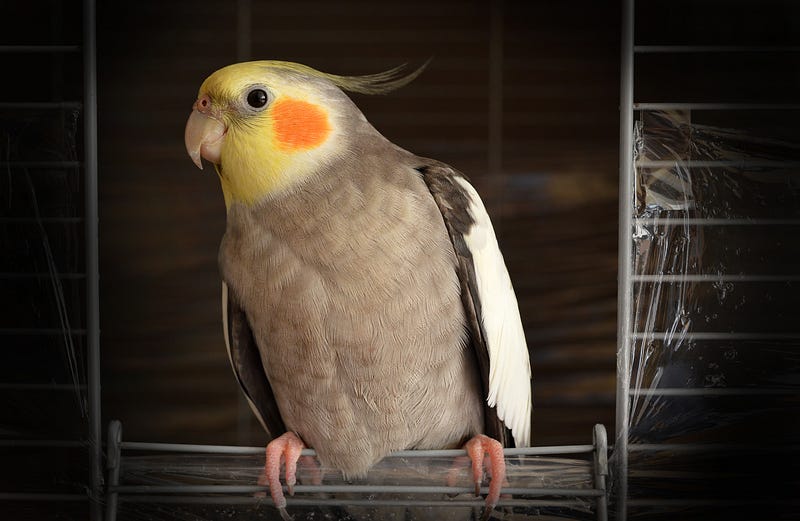
But I got out. My father brought home a cockatiel that evening and a packet of Simba chips, Salt ‘n’ Vinegar flavour. The bird became very tame, but not tame enough, and got away in the end.
Then one day, a blue Valiant pulled into our driveway.
An old woman with white hair and a man with steel grey hair and a set face and toothbrush moustache got out: our grandparents. Oupa lifted a box with toys out of the boot and messed up my hair. They stayed two nights — as long as it took my mother to pack our clothes, hand in her notice, leave the keys in someone’s care, brush our hair and gather us up into the back seat. Demurely answering her mother’s questions, without looking back once.
In the backseat my mother’s face was bound and swollen, but it wasn’t until what had happened to me that she had finally made her decision. And it wasn’t until thirty years later, on visiting my eldest sister Annie, that I was reminded of what had happened to bring about the move.
We sat alone, Annie and I, revisiting our childhood for a kind of clarity, wondering how the ordeal had affected us in our different ways. ‘He hit you,’ Annie said. ‘So hard. Mammie had to take you out of school.’
I tried to square her memory with my own broken set of recollections.
‘The whole side of your face was blue. You were just a little boy.’
I remembered. Receiving a deafening slap, the sort you don’t get up from, even if you can. The buckle of my father’s belt curling round my back. My drunken father sitting in front of the stove, rifle across his lap, vowing to shoot the fokken thing.
I also remembered Annie, pulling my ears till they bled or pinching Riekie, but never our little brother Simon. What pain, what guilt and dissociation drove her to participate?
She was the eldest, the favourite. The one who looked most like him, dark and clear-eyed, and perhaps escaped punishment because of it, but wanted its absolution more than any of us. The only one of us who understood the scale of the crime, and like me with the burbot and pigeon, driven to emulate its excesses (and who’s to say why, or that it’s wrong in a patriarchy that avenges dissent)? The one who, when driven by misplaced guilt to help, helped the rest of us for many years, carrying her burden until she no longer could, and put it down and broke.
Reminded of these things, I felt a huge, crushing sadness; for Annie, forever burdened by love and sorrow. For my mother, who had been powerless to protect us, but saved us. For Riekie, so unlike us, thrust into an alien, dark world of hereditary hurt.
For myself, the little boy of our childhood pictures. I recognised him behind that serious, absent little face. The man, I knew, had survived. It was the boy I had to find again, to connect the two.
Thinking of my mother now, I feel a vast need to ask her about our history and her life and memories. But first I need to remember her face from so long before. Instead her face from years hence, amid the worst of our poverty and her solitary battle with it, has become all-representative of her in my mind’s eye for all the years that I’ve known her.
Now even that version of her is vanishing. I cannot look at her terrible angel’s face anymore. She has become silent and acquiescent, and I, my heart petrified like every son of every man, cannot speak to her nor look at her without a door shutting on the inside.
What I want to say most is “I love you and honour you. You’ve been an immense influence on me. I want to become the person you are, if I can”.
But I don’t.
This novel serialisation is exclusive to The Pro Files on Medium.
To be notified of new chapters, subscribe on my profile page. To read all my stories, join Medium using my referral link. I will get a small commission at no extra cost to you.
Or, if you’d like to own a copy, buy my book here! Thanks for reading.