
I LOVE YOU, WE SAID
Chapter 4: Something Hateful in Us
A serialised novel
I suppose there’s a lot you don’t know.
I was born in mining country in the Free State province of the old South Africa, and named Ben after my mother’s father.
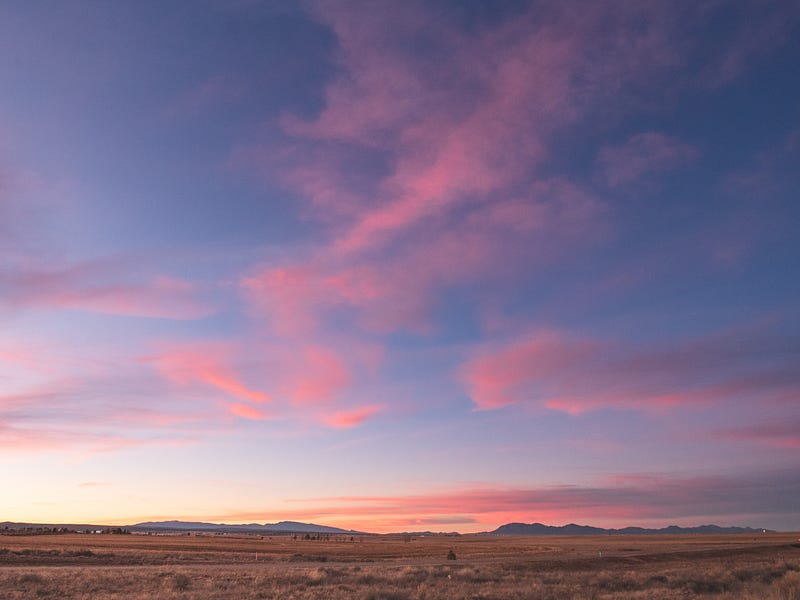
Towering cumulus or torn fleece seemed to always be passing overhead in the soaring summer skies of my childhood, the breeze soft and warm on my cheeks, wheat and soil on the air. In winter, the land was elemental and raw, the heavens pale, our lips and hands chapped and sore.
Afternoons I’d be out in the fields bordering our street — head down, observing stones, insects and leaves, guessing at the workings of the world.
Looking up, remembering, my heart hammering: horror in my head.
My father was an engineer. When I was five, he broke my mother’s jaw with morbid ease, fluently backhanding her with the heavy leather sheath of his hunting knife.
Another time he threw me into a wall.
Waiting for him to fly into a rage clawed at my belly, even when he wasn’t there, even at night.
It was us; I knew it. Something hateful in us. Shame, like nausea, came over me to think of it.
When he hit me, my heart emptied and I welcomed the pain, glad of its currency. In time, it emptied completely. I no longer forgave myself or my mother or sisters or wondered why. Our punishment would keep coming, again and again, until one day it wouldn’t stop. And on that day, it finally would.
But on this day in August 1972 my mother was in hospital with my new baby brother, and we were alone, my father and I, doing what I supposed fathers and sons did. I on a high stool at his workbench, breathing the fantastic odours of wood shavings and gun oil; he under a car, motioning for me to hand him a spanner.
Unlike me he was right-handed and had a quick, sure touch, smelting lead or calmly pouring the rapidly slopping molten metal into moulds to make sinkers; drawing shapes and lengths on hardwood with flat, hard-leaded pencils; cutting the wood away to reveal intricate designs that stood around against the wall.
I didn’t know what any of it was for and didn’t ask. Something in me had made me stupid; I would guess wrong, and he wouldn’t answer or be angry. But he touched the bone-fine yellowwood or stinkwood or jelutong in a way that made me see the meaning and promise it held. My father’s mastery over materials hinted at what was possible in the world by one’s hand, though not, I supposed, by mine.
I remember too, sitting next to him in a fast-moving car on a lonely open road somewhere; my father genial, my heart filled to bursting with love for him, the windows wide open, and an ABBA song exuberantly blaring I love you… I do I do I do I do I do… We had grapes and stopped along the way and he let me fish with him, the riotous saxophone and sweet, towering voice of the beautiful blonde singer with me forever…
On that dazzling summer’s day, I found myself alone with two fishing rods, mine and my father’s, side by side, when a fish struck. I began to reel it in, my first, and by the time it lay thrashing in the shallows my father was at my side, hands on hips, smiling broadly and telling me how to land the fish and unhook it.
I felt something of him in me then, a sense of the nascent abilities and behaviours that contained the code to the future me, master of things and animals — if only I could find the key. He showed me how to unhook the burbot and helped me tend to it. Alien in its black sliminess it lay twisting on the cracked, brackish shore; beautiful and ugly, insensible and vital, holy and all wrong.
My father handed me a strange-looking hammer, its tiny, balled head openly conveying its corrupt purpose. I looked at him and he nodded. It was crudely made but had the travesty of spindly beauty. I felt ashamed for wanting such a foul thing to be more elegantly proportioned and finished, with more sweeping arcs, finer textures. I tentatively tapped at the fish’s head, so stupid and useless it couldn’t move its eyes, and found the cold resentment of defenceless things to do as my father wanted. I swung down hard, yet not hard enough. The job, I saw from the way the fish’s head gave, was best done with swift and pitiless blows, so final that the ignominy of it enfolded your heart in stone.
The fish flapped and its head, mashed, half-disappeared into the muddy ground. It was dead — irreversibly, unforgivably dead by my hand.
My ears rang. I had killed and could be killed.
My father took the fish, bleeding human-looking blood, and made a show of raising it up to show it off to nearby anglers. I did not feel its death, only smelled it.
At six, my education as preparatory man was over.
André van Niekerk, the eighteen-year-old boy who lived across the street, showed me how to make a kite. The frame was made from a single river reed, split lengthwise and whittled down to two flexible slats, one two-thirds the length of the other and tied crosswise to it, two-thirds of the way up, forming a Christian cross. One side of a plastic bag did duty as the cover, pinned to the frame and into shape with spiky camel thorns cut from Acacia trees. That something so makeshift could leave the ground was a fantastic conceit, but when I tried it, I found that mine was too poorly made and you needed two to fly a kite — one to hold the body and another to run, holding the line.
I couldn’t ask him to show me again after visiting him the once, as arranged by my mother. I wanted to be his friend more than anything, but even if he’d let me hang around I was in no fit state to go there again.
André’s lawn heaved with violent, primitive life.
To one side of the lawn was a pond with large river crabs, and there a grotesque, sacred-looking thing revealed itself to me: A mother crab, Egyptian-looking in the engineering of her aged-yellow hard underbelly. When André flipped her tail plate open, protectively folded over her underside, underneath it was quick with life. I felt sick with watching such monstrous beauty as God creates, her stomach awash with translucent young and her legs helplessly slicing the air, turned away from André’s unbearably pale, soft hand.
Then he took me past the pond and around the back, past the willow tree and beyond to the cages where he kept his pigeons.
He showed me the pellet gun. ‘This is how you open it,’ he said, and cocked the barrel. ‘Then you put the pellet in, like that, and close it again, and you look over the end of it, like this, at the thing you’re aiming to hit. And you curl your finger, and squeeze — don’t pull — squeeze with just the first two joints of your pointing finger. Moving only those joints on only that finger. To do it right you have to grip the stock — here, the stock — you have to grip it tight with your other fingers and thumb. Like this.’ He was serious and tall, and I put my heart into listening.
‘Now you do it.’ But the rifle was too heavy and the spring too hard to force at my age, and I felt bitterly disappointed as André took over. He aimed at the largest, the proudest pigeon, the one in the back of the cage with the heaving breast and angry eye. The pigeon didn’t move as he took aim. It fixed him with its red eye and, appallingly, looked away.
As the pellet hit, the pigeon flopped over and looked small, its neck twisted and its head gory, beak opening and closing, tongue passing in and out and the side of its head gone. It cried long and wretchedly, and André asked if I thought it was beautiful.
‘Yes,’ I answered.
‘Well, it isn’t.’
But I knew it was a kind of beauty, as beautiful as a woman crying and your throat tightening with the pain of it. I knew it to be the most beautiful and awful thing possible, to see beauty in death, and I felt queasy with the knowledge of my own cruelty, the cruelty André had revealed to me, passed on to me like a message, forever changing me. Making me complicit, with familiar horror, to the filth in my blood or circumstance, the blood or circumstance of my father.
This novel serialisation is exclusive to The Pro Files on Medium.
To be notified of new chapters, subscribe on my profile page. To read all my stories, join Medium using my referral link. I will get a small commission at no extra cost to you.
Or, if you’d like to own a copy, buy my book here! Thanks for reading.


