
Distributed to Psychedelics
Canada Has Now Allowed Dying Patients To Do Magic Mushrooms
What this means for the future of psychedelics-assisted treatment
As in most places in the world, consuming and growing Magic Mushrooms is illegal in Canada. The substance is being controlled under Schedule III of the Controlled Drugs and Substances Act in the country.
However, there’s a set of regulations, called Part J of the Food and Drug Regulations, that may authorize the usage of such psychedelics if it’s related to clinical trials or research purposes.
Anyhow, this time it was Patty Hajdu, Canada’s Minister of Health, that granted permission to four people diagnosed with terminal cancer — the one that is considered to be untreatable and incurable. These four patients, according to sources, will be able to consume magic mushrooms during their end-of-life care.
Thomas Hartle, who is suffering from Stage IV colon cancer, is one of the people granted legal access to the drug. In a video for CBC, Hartle discussed psilocybin-assisted therapy and argued that such practice would greatly help him in his battle with anxiety associated with his illness.
“There isn’t anything available that can treat existential dread” — T. Hartle
He also added that the possibility of trying something that could make a difference was a hopeful moment for him. One other patient, Laurie Brooks, told CNN:
“The acknowledgement of the pain and anxiety that I have been suffering from means a lot to me, and I am feeling quite emotional today as a result. I hope this is just the beginning and that soon all Canadians will be able to access psilocybin, for therapeutic use, to help with the pain they are experiencing.”
What This Means For The Future Of Psychedelic-Assisted Therapies
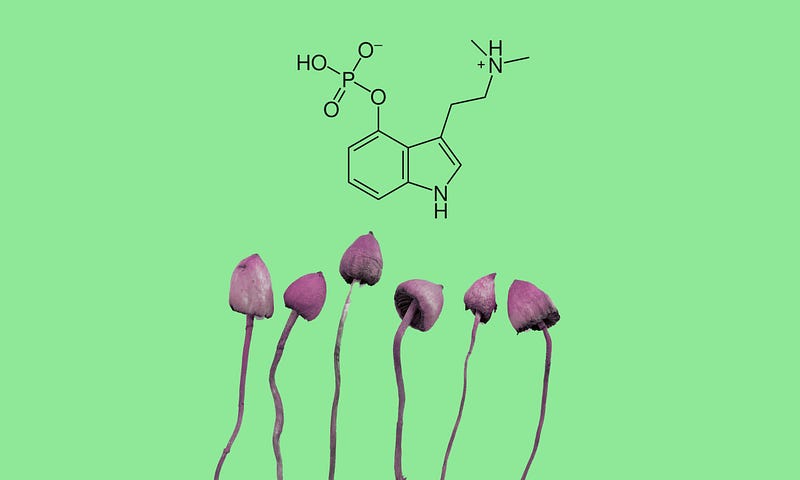
Magic Mushrooms’ usage has changed in the past couple of years. If the hallucinogen, just a decade ago, was associated with something rather “bad,” today, more and more people seem to be acknowledging the psychedelic’s treatment properties.
Several studies so far have argued that psilocybin may become the key to treating depressive and anxiety disorders in patients. Dr Robin Carhart-Harris, the head of psychedelic research at the Imperial College in London (ICL), regarding one of his trials, said:
“We have shown for the first time clear changes in brain activity in depressed people treated with psilocybin after failing to respond to conventional treatments.”
In a recent article about Magic Mushrooms’ (and psilocybin, more specifically), I presented several studies that have researched the matter of psychedelic-assisted therapies associated with the hallucinogen. One research by Compass Pathways — a mental health-care corporation — argued that depression treatment could be “a substantial improvement over currently available therapies.” Same goes for anxiety, as they are closely associated.
Not to mention some of the feedback given by patients and researchers that have undergone such treatment:
“People on antidepressants long-term say they feel blunted, with psychedelic therapy it’s the opposite, they talk about an emotional release, a re-connection”
The data so far concerns mostly patients with depression, however, I think that this is also highly applicable and relevant to people who also suffer from anxiety. Especially anxiety from a possible imminent death.
It would be an understatement to say that what just happened in Canada was remarkable. The consumption of Magic Mushrooms in the country has been officially restricted since the mid-70s.
Even though only four people, all terminal cancer conditions, have been allowed to do the drug, this shows that we are not too far from viewing psilocybin as something rather beneficial in the treatment of mental health issues, such as severe anxiety.
At the end of the day who cares whether these people use hallucinogens as a way of treatment if this is actually going to help them cope with their severe illnesses? Nobody should, really. I think we all should be looking forward to the outcome of these patients’ new treatment process.
Thank you for reading! If you’re further interested in mental health & psychedelics, you can follow me on Medium:
Also, if you’re interested in the topics mentioned above, you can check two of my previous articles on LSD-assisted therapy and whether being high makes you more productive & creative:


