
CLIMATE CHANGE
Can We Live on the New Plastic Continent? Yes. Why not?
We live in interesting times…
Sometimes, we just have to connect dots that nobody seems to see clearly. I’m a Dutch woman convinced that we are a toddler species on our planet. We have not designed our systems very cleverly and now we have to do it better. That’s our task.
We are born for our times.
So, let’s stop whining and get on with it.
Today I want to connect two dots that nobody seems to put together (yet).
- Climate change will make sea levels rise and make many islands uninhabitable in the future. When exactly we don’t know. But researchers such as the Deltares Institute are very busy finding out
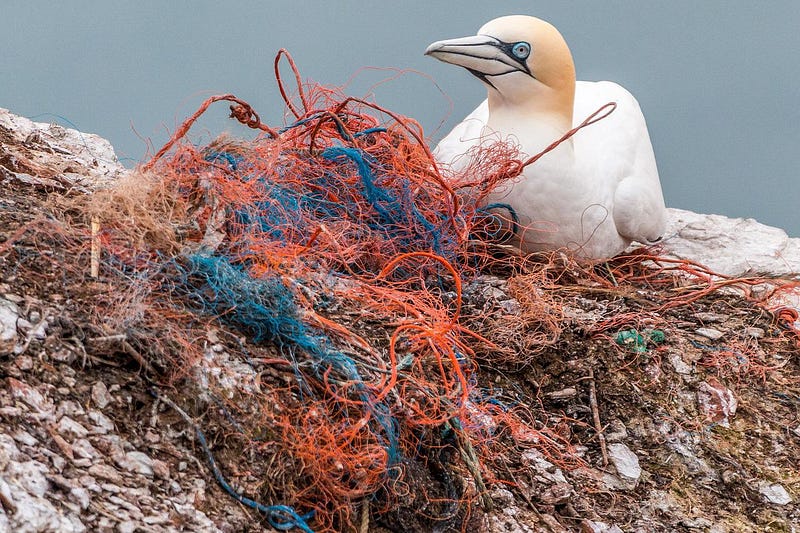
- A non-degradable plastic island the size of a whole continent is floating in the pacific ocean. 1.6 million square kilometers. The Great Pacific Garbage Patch.
The Ocean Cleanup is trying to clean it all up, this trash. And I applaud them for it!
But if it’s there now anyway, maybe we can use it?
Can we combine the dots please and have a look if we can live on the Great Pacific Garbage Patch as humans? It’s land, isn’t it? We need land, don’t we?
A huge element in the decision is if it’s a good plan healthwise. Is it healthy for people to live there? Apparently, birds can adapt to living in these places. But humans? We have been so stupid to make everything super poisonous in our world.
And then there’s the matter of ownership issues. Who may live there in our stupidly divided world of land ownership?
Of course, land and sea need to be owned by the earth herself. But we are not there yet. There are too many bloated egos in the world to understand this little shift in thinking.
Let’s stop whining, connect some dots, and get on with it
What Do We Need to Know?
There are a few questions that are very important for us as a human species to research and act upon as governments and institutional leaders.
- How soon will the sea levels rise?
- Where exactly will the sea level rise occur? What countries, what areas, will be affected at what time?
- Will it be a gradual rise so we can prepare our cities and villages? Or a sudden rise to 6 meters with a lot of drownings?
Then we need to find out:
- How to deal in our human systems with nomadic living. People will be shifting to higher-up areas
- Can we live healthily on this new continent?
- How can we provide for our basic needs there? Drinking water? Food? Shelter?
No Ownership
The first step is to get rid of this stupid idea of ownership. It’s old-fashioned. In the old days, we needed land value taxes and all of our economies are now based on land, labor, and capital.
Now, with all these digital opportunities and changed ideas about economic value creation, there are infinite possibilities. So why stick to wanting to own land?
Governments of the future will make sure everything you have acquired during your lifetime will be redistributed after your death anyway.
We are born naked. We will die naked.
So why hand over anything to kids who are perfectly capable of making their own future in their own ways? In any place where they want to live?
Inheritance is a real colonial notion. European? American?
In 2014, an American man claimed land on the border of Sudan and Egypt for his daughter who wanted to be a princess. So silly…
Land is land is land and it belongs to… Gaia… our planet…
Sea is sea is sea and the waves belong to… Gaia… our planet…
Withdrawal to Higher Ground
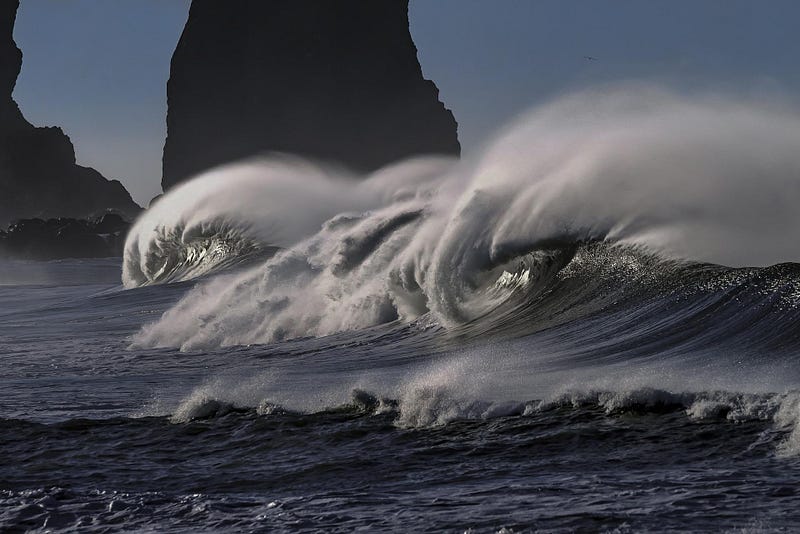
Most probably, my own country, the Netherlands, will be the first nomadic tribe in Europe. We will lose our land to the sea and the rivers. Not immediately. But perhaps in 20–50–100 years?
We might face controlled withdrawal to Germany. This option is already seriously discussed in our press.
In 100 years’ time, I predict that we will not live near the sea and rivers anymore in any country but higher up in the mountains.
Also, we will finally understand freshwater cycles again. The big water cycle of rain, snow, groundwater, clouds, etc. And the small water cycle: evaporation. This one needs 3D landscapes. Agroforestry. Tiny forests in cities. Green walls and roofs.
3D ecological intensification in 7 layers.
Or we will have managed to build our houses on the water. We will be living on a liquid planet as an adaptive human species…
Happily. And thriving.
Can we face this unthinkable possibility? And prepare for it with human design of systems?
Nomadic Living
There are so many mixed-race people nowadays. Just saying — go back to your own country — is silly, isn’t it? Can we introduce a ritual for 18-year-olds? They can choose one tribe. One nationality. Their father’s, mother’s, or the country they are born in.
And then they live their lives in whatever place they choose. And if they want to switch, it must be mutually agreed between the tribe and them. What do they contribute?
We have to think about taxes. As a Dutch person, I might pay something for belonging to my tribe. And also pay Germany for allowing me to use their infrastructure, health care, etc. The commons.
And all governments will tax assets and capital someone doesn’t work for with higher tariffs than the assets acquired with blood, sweat, and tears.
Everything will be cheap in the redesigned systems because we will have stopped micromanagement. We design with general flows. And we give all citizens full autonomy and full responsibility. Just like entrepreneurs. They won’t pollute or poison anymore. They won’t create waste.
They will have transitioned to the cluster economies of the future…
We just have to redesign systems. For our (grand)children…
Some old-school credibility for my writing can be found LinkedIn. You can also subscribe to my newsletter there. I’m a certified biomimicry and blue economy professional and external expert to the European Commission.
Thank you, Mike, for adding your wise energy to my words on abundance in our think-and do-tank Abundanism. Systemic Design for a good future.
And thanks to Gaia for giving me Wild Writing.
© Désirée Driesenaar, 2022


