
Science in the kitchen
Butter or Margarine? A Doctor Explores What the Science Tells Us
Are you making a healthy choice, or are you shortening your life?
I don’t know about you, but for me, there’s a magic about butter that margarine just can’t replicate.
However, butter scares me. I don’t want to have a heart attack.
Recent findings about the benefits of dairy fats and the hazards of ultra-processed foods, like margarine, have made me wonder if butter might be healthier after all. Confused by all the conflicting information, I decided to dive deep and get to grips with the issues.
Here’s what I found. It’s fascinating.
We’ll look at popular margarine brands, too. So be sure to check out how healthy or otherwise your favourite brand may be.
Saturated fats kill, right?
Like most of us, you’ve likely been convinced by the constant health messaging that saturated fats stalk your kitchen like the Grim Reaper. We’re constantly admonished to eat low-fat foods and avoid saturated fats, particularly from meat and dairy.
Here’s a question for you.
Think back to your school history lessons, where you learned about countless kings, queens, leaders and despots. How many of them died from a heart attack? Now, what about friends and family members? Things have changed, right?
So, what did those kings and queens spread on their bread, bake in the cakes and melt over their vegetables? They didn’t have margarine.
I’m oversimplifying here to make a point, but it’s a fact that the epidemic of cardiovascular disease that claims more lives than any other disease is a modern phenomenon. The incidence of coronary heart disease grew spectacularly from 1900 to the 1960s.
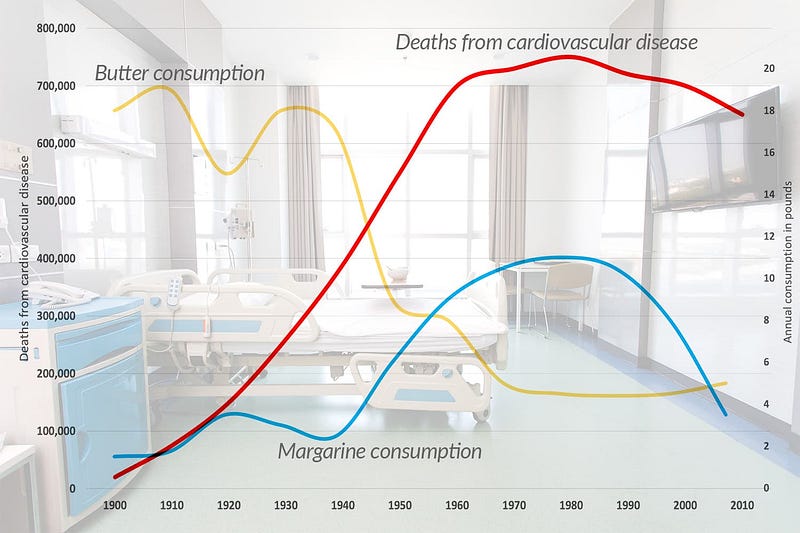
The fall in margarine consumption since the 1980s in this graph surprises me. I suspect it’s because the USDA classifies many of today’s margarines as ‘spreads.’
Many factors likely contributed to the skyrocketing cardiovascular disease; smoking increased from around 5% of Americans in 1900 to 42% by 1965, while the automobile and office jobs made many of us largely sedentary.
But I contend that a significant factor is our reliance on ultra-processed foods, and one of the earliest was margarine.
The rising number of deaths from cardiovascular disease contrasts with falling butter consumption. As we ate less butter, we ate more ultra-processed food, and margarine is a standard-bearer for ultra-processed food.
Before we had margarine and skimmed milk, all we had was butter and full-fat milk. Where were all the heart attacks?
There are some contradictions here, aren’t there?
How bad is butter?

Butter has a bad press.
I love it, but it sits mostly neglected in my fridge. Spreading it on my toast feels like Russian roulette, not worth the risk. I’ll look at it longingly, then reach for the margarine.
Butter is a lump of animal-derived, saturated fat.
We know that eating lots of saturated fat raises your bad (LDL) cholesterol. We also know that if you have a high LDL, you’re more likely to develop cardiovascular disease.
So, eating lots of butter gives you heart disease, right?
You may be surprised to hear that the link between eating saturated fats and developing cardiovascular disease remains elusive.
- Well-conducted studies have shown no consistent evidence that higher intakes of dairy fat are linked to higher rates of cardiovascular disease or stroke.
- In fact, a number of studies have shown that a higher intake of dairy products reduces the risk of cardiovascular disease and stroke.
- In one meta-analysis (a powerful research tool that combines the results of many studies), those with the highest intake of dairy products had an 8% lower risk of coronary heart disease and a 21% lower risk of stroke. This effect was seen with both low-fat and full-fat dairy.
- These findings are consistent across many studies (though one did find butter consumption associated with a higher risk in women who’d previously had a heart attack and people with diabetes and peripheral vascular disease).
- The American College of Cardiology is very clear: “Whole-fat dairy, unprocessed meat, and dark chocolate are [saturated fat]-rich foods with a complex matrix that are not associated with increased risk of CVD. The totality of available evidence does not support further limiting the intake of such foods.”
How can this be?
One hypothesis is that butter contains more than just saturated fat, and those other constituents have favorable effects on health.
Although eating lots of butter does increase bad (LDL) cholesterol, it also increases good (HDL) cholesterol, apoA-1 (which helps remove bad cholesterol from the body) and the total cholesterol:HDL ratio, which some believe is a better marker of cardiovascular risk than LDL levels.
So we should eat more butter, right?
I’d like to run with that but there’s one fact that holds me back: In some studies where saturated fats are replaced with polyunsaturates, the risk of coronary heart disease drops by 19%.
Oh. So we should choose margarine then?
That’s not always a great option, either. As we’ll see, margarines are made from various vegetable oils, and they’re not all the same.
Two big studies that drove the stampede away from saturated fats have recently been re-analysed.
In the Minnesota Coronary Experiment, replacing saturated animal fats with polyunsaturated vegetable fats generally had no effect, but it increased mortality in the over 65s. Also, of those who died during the study, 41% of those on vegetable oils had had a heart attack vs 22% on a regular diet.
In the Sydney Diet Heart Study, participants reduced their saturated fat and cholesterol intake and used safflower oil-derived polyunsaturates instead. Those who switched had a 62% higher all-cause mortality and a 74% higher death rate from cardiovascular disease.
This is scary stuff, and it’s made me change my diet.
Why did switching from saturated animal fats to polyunsaturated vegetable fats increase death rates? It’s down to omega-6 fats. We’ll come back to them in a bit.
The take-home message: There’s no clear link between eating full-fat dairy, including butter, and cardiovascular disease. However, switching to vegetable fats may reduce your risk. Beware, though, if you pick the wrong vegetable fats, you can significantly increase your risk.
Can switching to the ‘right’ margarine be the healthiest choice?
Let’s get a better understanding of margarine.
The making of margarine
The history of margarine is fascinating.
This isn’t the place for that history lesson, but I’d urge you to delve into the story. It starts with Napoleon III needing a butter substitute to feed his army (that margarine was made from beef fat). It goes on to include fortunes made by turning cottonseed oil (a waste product of cotton manufacture) into margarine and Nazi concentration camp prisoners being fed margarine made from coal oil. The Great Depression in the US and the Second World War catapulted margarine into a staple of our diets.
Surely, margarine has to be healthy. After all, it’s made from natural plant oils, and we’re constantly told to eat more plants and less meat, right?
Let me challenge that ‘natural’ idea.
I’m going to argue that margarine is about as far from ‘natural’ as you can get. Let’s look at how those plants are transformed into our margarine.
The process of transforming an oil into a margarine
1. Oil Extraction:
Why: To get the oil out of the seeds or nuts.
How: This depends on the oil source. Sometimes, seeds are simply pressed with or without heat. There may be a first cold pressing (to produce extra virgin olive oil, for example), then subsequent pressing with heat or the use of solvents. Many seed oils are routinely extracted using solvents. Hexane is the one most commonly used, but others include butane, isohexane, heptane, and alcohol/water mixes. Once the oil has been extracted, the solvent/oil mixture is heated to evaporate the solvent.
Effects: Cold pressing likely does not affect the constituents of the oil. Excessive heating could lead to breakdown products, some of which are toxic. However, this may alter the flavour, and so is avoided. The removal of solvents is very efficient due to their low boiling point; however, analysis of commercial vegetable oil shows very low levels of hexane in some samples. Hexane is not thought to be harmful at these low concentrations.
2. Degumming:
Why: To remove ‘impurities’ such as gums, proteins, and phospholipids, which can affect the flavour, stability and clarity.
How: Typically, this is done by mixing the oil with water +/- enzymes and phosphoric or citric acid and then centrifuging to separate the oil.
Effects: Some natural antioxidants are also removed. This means that a) we don’t benefit from eating these nutrients, and b) the oil may be more likely to oxidise. This can produce toxic chemicals such as lipid peroxides, though this is more likely to happen later in the refining process when the oil is heated.
3. Neutralization:
Why: To remove free fatty acids that can affect the taste and smell of the oil and reduce its shelf life.
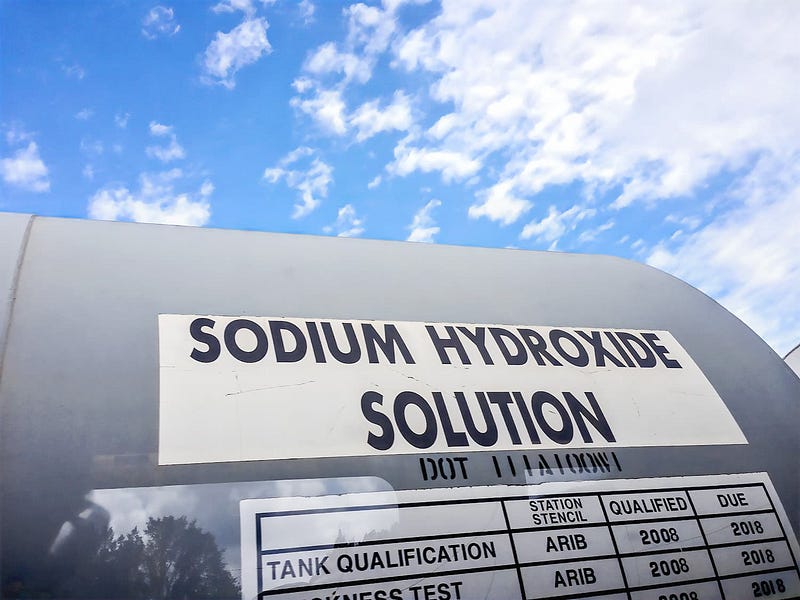
How: Sodium hydroxide (caustic soda — used as an oven cleaner or to unblock drains) is added to the oil. It combines with the fatty acids to produce solid soaps, which are then removed by centrifugation or filtering. The oil is then washed to remove the caustic soda and any remaining soap and then vacuum-dried.
Effects: Beneficial compounds, such as antioxidants and polyphenols, are also removed at this stage.
4. Bleaching:
Why: To remove pigments like chlorophyll and carotenoids and any impurities remaining after the preceding steps. This step also removes toxic impurities such as polycyclic aromatic hydrocarbons.
How: The oil is heated with activated clay (bentonite) and/or activated carbon.
Effects: Once again, beneficial compounds such as polyphenols will be removed.
5. Winterization:
Why: To remove waxes that can solidify at room temperature, causing oils to become cloudy in winter.
How: The oil is cooled so the waxes crystallise. They are then removed by filtering.
Effects: There is probably little happening at this stage that would impact the healthfulness of the final product.
Stick with me; you’re halfway through the process. How natural is margarine sounding at this stage?
6. Deodorization:
Why: To remove volatile compounds that contribute to smell and taste — both good and bad. Success at this stage is an oil that’s odourless and tasteless.
How: High-temperature steam is passed through the oil under high pressure.
Effects: More beneficial molecules like tocopherols, squalene, sterols and polyphenols are removed. The high temperature can also produce harmful chemicals such as trans fats, polymers and esters.
7. Hydrogenation:
Why: To convert liquid oils into solid or spreadable fats.
How: The oil is heated with hydrogen and a catalyst (often palladium) under pressure. This converts double carbon-carbon bonds in unsaturated fats to single carbon-carbon bonds.
Effects: This process converts unsaturated fats to saturated fat, which could be said to defeat the purpose of eating margarine. (I Can’t Believe It’s Not Butter is 14% saturated fat — albeit compared to 50% for butter).
Partial hydrogenation produces trans fats, which can have serious adverse effects on health. Food companies now avoid partial hydrogenation, but full hydrogenation is commonplace.
8. Interesterification:
Why: To convert liquid oils into solid or spreadable fats. It’s an alternative or addition to hydrogenation.
How: The oil is either heated at high temperatures with a catalyst (often sodium methoxide), or it’s treated with enzymes. Often, liquid vegetable oil will be combined with a solid, fully hydrogenated fat to form a spreadable consistency.
Effects: Again, this process produces saturated fats. When well controlled, it makes less saturated fats than hydrogenation, though these two methods are often used in tandem.
9. Blending:
Why: To make the tasteless, odourless, colourless semi-solid fat look and smell like butter. Emulsifying the fat with water produces lower fat blends.
How: Different oils are combined with other ingredients like water, milk solids, flavourings, colourings and emulsifiers to achieve the desired texture and flavour.
Effects: A wide variety of additives can be included at this stage. It’s unlikely any of these pose a health hazard, thought there are one or two exceptions, as we’ll see in a moment.
10. Cooling and Packaging:
Why: To package the margarine in a way that’s appropriate for transportation and domestic use.
How: Margarine is usually packed in polypropylene tubs. Have you noticed how these are usually in greens and yellows, seducing us with promises of health and vitality?
Effects: Polypropylene is generally regarded as one of the safest plastics for food use. However, studies have shown that plastic nanoparticles contaminate food, and chemicals can leach from the plastic into food. The latter is more common with greasy food. Researchers identified 116 chemicals in polypropylene that they felt could leach into food.
It’s quite the process, isn’t it?
I don’t think it’s possible to argue that there’s anything natural about the product that’s squirted out of a stainless steel nozzle into those polypropylene tubs. It’s an edible, industrially mass-produced substance.
The NOVA classification, which groups our food into four classes depending on how much they’ve been processed, puts margarine firmly into group four, that of ultra-processed foods. They have a lengthy definition, but it boils down to an industrially produced formulation with five or more ingredients.
What’s in your margarine?
As you’ll see from the graph below, all margarines contain more than five ingredients.
They have to. If they didn’t, they’d be translucent white, smell and taste of nothing, and they’d separate and go rancid. Yummy!
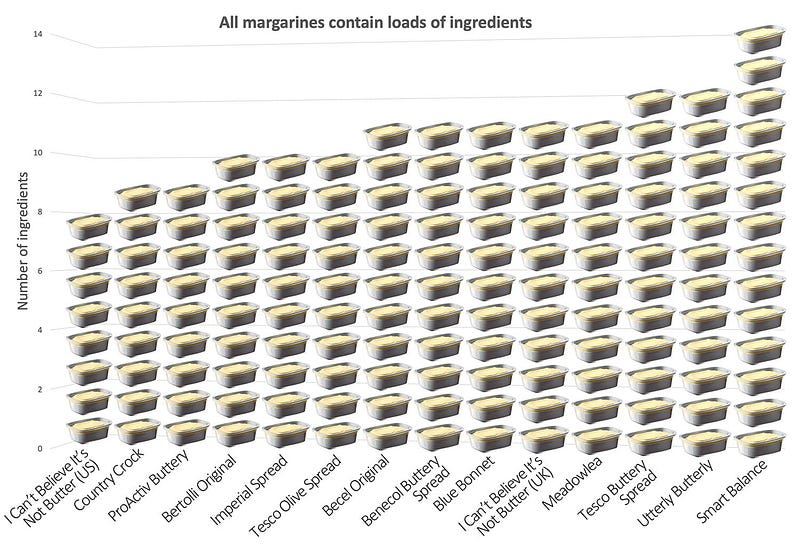
So, is it a case of choosing a brand with the fewest ingredients?
Nope. It’s not that simple.
Let’s start by looking at all those ingredients, though the real danger may lie in something more fundamental. We’ll get to that afterwards.
So what do our favourite margarine manufacturers add to ‘refined’ oils to produce our margarine?
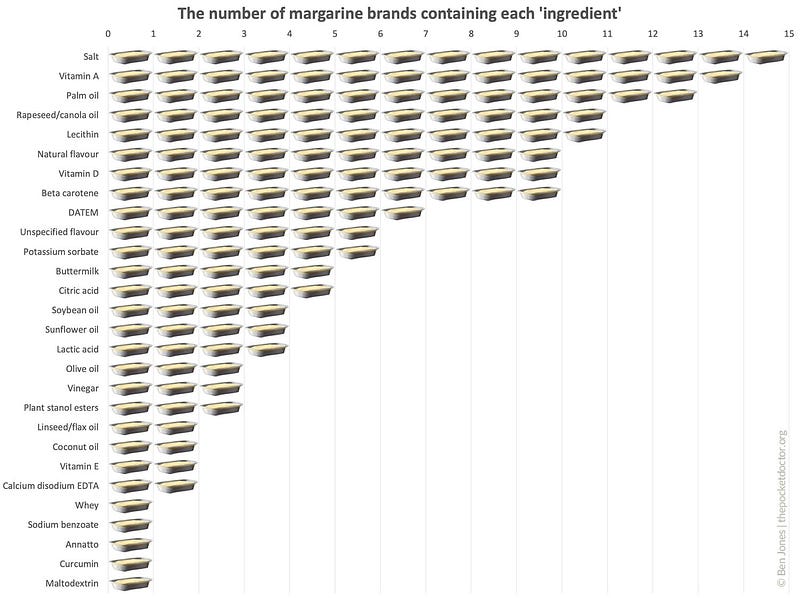
Perhaps the first point to note is the wide variety of different ingredients that go into margarine. There’s no one successful formula.
Is there anything here to be concerned about?
Emulsifiers: They’re in everything these days
It stands to reason that there are emulsifiers in margarine. The reason margarine is lower in fat than butter is that it’s a mixture of oils and water. Without emulsifiers, the two would separate.
Manufacturers use either lecithin or mono and diacetyl tartaric esters of mono and diglycerides of fatty acids. That’s quite the mouthful, so it’s often shortened to DATEM or E472e. You’ll sometimes see DATEM listed as monoglycerides or diglycerides.
Some online have expressed concerns about DATEM, referring to a study in rats conducted by Health Canada in which the rats developed a range of toxic effects, including kidney damage. However, the rats’ diet comprised 10% DATEM for a year. Even though DATEM is in lots of processed foods, it would be a Herculean task to consume that amount of DATEM in a single day, let alone long-term.
Studies in babies who consumed high doses of DATEM in breast milk substitutes have not shown any cause for concern.
Soy lecithin could be a concern for people with soy allergies. However, the amount of soy protein in soy lecithin is very low, so experts don’t believe it’s a problem for any except those with the most severe soy allergies.
Preservatives: Are they preserving your health?
A number of preservatives are used to prevent microbial growth.
The most frequently used preservative in margarine is potassium sorbate. It’s used in a wide variety of foods such that two-thirds of us regularly consume it.
Whilst at very high exposures, it can cause skin irritation in humans and chromosome damage in laboratory experiments, an extensive European Commission report concluded that there was no concern at the levels at which it is used in food.
Calcium disodium EDTA was used in two of our margarines (Blue Bonnet & Becel). EDTA is so widely used in food, cosmetics and pharmaceuticals that it’s found in our drinking water. While standard toxicology testing has shown no cause for concern, it was recently shown that in mice with inflammation of the large bowel, EDTA causes a ‘massive’ increase in gut inflammation at doses equivalent to those seen when we eat EDTA-preserved food.
Given the number of people with inflammatory gut conditions, including irritable bowel syndrome, the study’s authors called for an end to the use of EDTA in food.
Our final preservative is sodium benzoate, found in just one margarine (Blue Bonnet), though it’s widely used in the food industry.
At levels well below the maximum allowed in food, sodium benzoate has been shown to halve sperm counts, reduce sperm motility and reduce sex hormone levels. At higher doses, it can promote inflammation, damage DNA, cause foetal abnormalities and induce hyperactivity in children.
Of particular concern, it can react with vitamin C to produce carcinogenic benzene. This is worrying because sodium benzoate and vitamin C are frequent additives in fizzy drinks and fruit juices (check the ingredients of your favourite beverage).
It should be said that sodium benzoate has been explored for its benefits, too. Experimentally, it’s been used as a treatment for depression, schizophrenia, autism and neurodegenerative diseases.
Nine margarines contain citric acid, four contain lactic acid, and three contain vinegar. That’s because most microbes find it harder to grow in an acidic environment. Citric acid also helps stabilise the droplets in the oil and water emulsion. There aren’t any health concerns with these.
Colours and flavours: Making margarine appear food-like
Since refining vegetable oils renders them colourless, odourless and flavourless, manufacturers must add back colour, flavour and sometimes odour to make the margarine palatable.
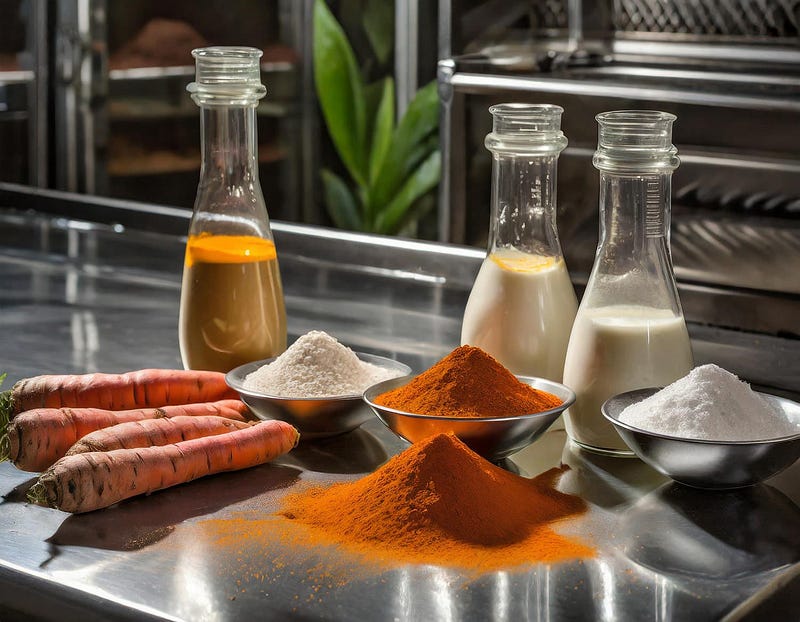
Beta-carotene is the most commonly used colouring. It occurs widely in orange and yellow fruits and vegetables.
When consumed naturally in fruits and vegetables, it’s thought to be beneficial. As a supplement, however, it may increase mortality. This is particularly an issue for smokers, where increased rates of lung cancer have been seen in smokers who take beta-carotene supplements.
Annatto is a seed-derived colourant full of carotenoids, so it’s related to beta-carotene. It’s widely used to colour butter, cheese and margarine.
Though it hasn’t been as widely studied as beta-carotene, it’s generally thought to be beneficial to health, primarily through its antioxidant properties. There have been a few case reports of mild allergies and of it being a cause of irritable bowel syndrome.
Curcumin is our final colourant. It’s a yellow polyphenol from turmeric with a long history of use in food and traditional medicine. It has a well-established safety record. Getting a little from margarine is probably a bonus. (It’s in Utterly Butterly along with annatto).
Buttermilk is found in five of our spreads. It’s there to give that faint echo of a buttery taste.
Natural flavours are defined by the FDA as “a substance extracted, distilled, or similarly derived from natural sources like plants (fruits, herbs, vegetables, barks, roots, etc.) or animals (meat, dairy products, eggs, etc.) via a method of heating, with its primary function in food being flavoring not nutritional.”
While that sounds great, natural flavour mixes can also contain emulsifiers, flavour enhancers, preservatives and solvents. In fact, these other chemicals can make up the vast majority of the flavouring mix.
With so many potential ingredients of ‘natural flavours,’ it’s hard to comment on health concerns. However, the amounts used are likely to be very small, and all are ‘generally regarded as safe.’
Six of our margarines simply said they contained ‘flavouring.’ It’s likely they originated in a chemical factory; after all, wouldn’t they say ‘natural’ if they could?
Added vitamins: It’s the law!
Depending on where you live, manufacturers may be legally obligated to add vitamin D and sometimes vitamin A to margarine. That’s to prevent deficiencies which can have serious consequences.
You’ll see that two of our margarines also contain vitamin E. Is that for the good of your health, too?
Not entirely. While adding vitamin E may be beneficial for health, it’s also because it slows oxidation of the oils, which leads to rancidity.
Maltodextrin — bringing up the rear
The last of our additives is maltodextrin. It’s an industrially produced carbohydrate (technically a polysaccharide) made by heating starchy vegetables with acid and enzymes.
It’s in just one of our margarines where it plays several roles: stabilising the emulsion, improving the texture and giving a creamy mouthfeel.
There aren’t any health risks associated with maltodextrin in the amounts present in margarine.
The take-home message: Most additives in margarines are likely harmless. Calcium disodium EDTA and sodium benzoate may be problematic for some. I’d rather avoid them. They were found in three of our margarines.
Vegetable oils are not all created equal
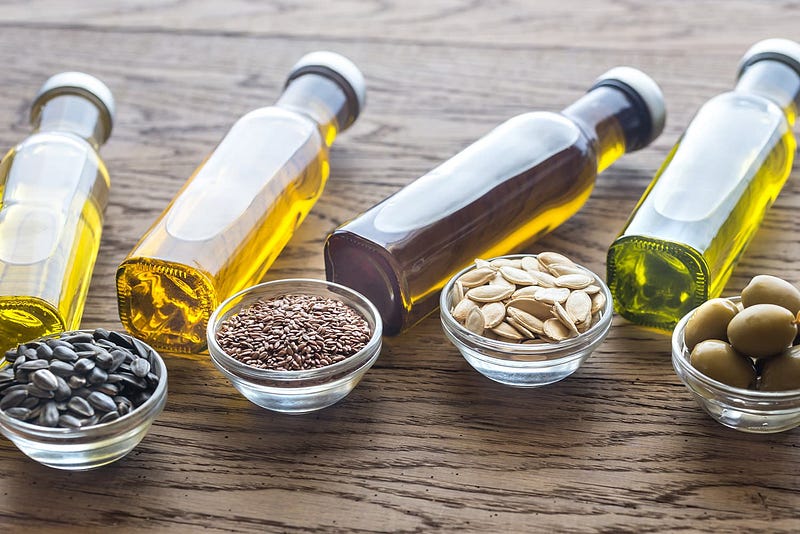
Whilst the number of additives in margarine is unsettling, after thoroughly researching margarine, that’s not what concerns me the most.
It’s not the additives that bother me; it’s the main ingredients.
We tend to think of vegetable oils as being fairly interchangeable, but from a health perspective, that’s just not true.
Vegetable oils (and other dietary fats) are a mix of three groups of fats: saturated, monounsaturated and polyunsaturated. Different oils contain these in various proportions. (How saturated a fat is depends on how many hydrogen atoms are attached to the carbon chain).
I’m guessing what you’ve probably heard is that saturated fats are bad, polyunsaturates are good, and you’ve likely not heard too much either way about monounsaturates.
There’s more to it than that, so let’s dig in a little.
Polyunsaturates: A tale of two very different halves
Earlier, I told you about studies where switching people from saturated to supposedly ‘healthier’ polyunsaturated fat sometimes led to big increases in cardiovascular disease and deaths.
Let’s take a look at those ‘healthy’ polyunsaturates or PUFAs (polyunsaturated fatty acids).
There are a whole load of different fats within the group we call polyunsaturates, but we can usefully divide them into two groups, omega-3 and omega-6. We need both to be healthy, ideally in equal proportions.
The problem with our modern diet is that we eat loads of processed food, and the fat in these comes from the cheapest and most readily available oils. Those oils have a lot more omega-6 than omega-3.
Rather than getting the healthy 1:1 ratio of omega-3 to omega-6, most of us get at least ten times more omega-6 than omega-3. And that has consequences for our health. Serious consequences.
Once the balance has been upset, omega-6 fats can promote inflammation. Inflammation is at the root of very many diseases, including cardiovascular disease and dementia. Omega-6 fats can also promote the development of cancer and its spread around the body.
In contrast, omega-3 fats tend to damp down inflammation and are thought to lower the risk of a variety of cancers.
Once again, we need both omega-3 and omega-6 in our diets, but in equal amounts. The fact that we eat ten times more omega-6 may be one of the key reasons for the epidemics of cardiovascular disease, obesity, diabetes and dementia.
Margarine manufacturers are well aware of the health risks associated with omega-6-rich fats in their products, yet they market them with a magician’s sleight of hand, where illusions of health are created to deceive us, the consumers.
The take-home message: Modern diets are loaded with omega-6 fats with many harmful effects on our health. We need to eat much more omega-3 and far less omega-6.
Monounsaturates: Olive oil’s magical ingredient?
If you’re still reading, I have to assume that a healthy diet is important to you, so you’ll have read of the benefits of a Mediterranean diet.
There are many reasons why a Mediterranean-type diet has incredible health-promoting effects, but one of them is the high consumption of olive oil.
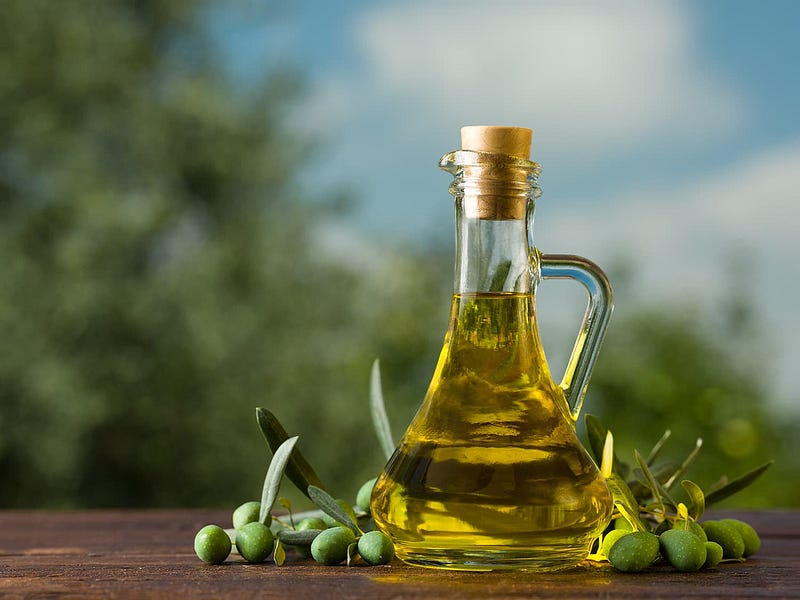
Olive oil is full of monounsaturated fat. For some reason, monounsaturates don’t get the acclaim they deserve. Saturated fats are unfairly deemed irredeemably harmful for us, while polyunsaturated fats are hailed as heroes even though most of those we eat (omega-6) are terrible for our health. In the midst of this, monounsaturates are largely forgotten.
The UK Biobank study is a fascinating piece of work that studied the diets of almost 200,000 Brits and compared these to how likely someone was to die during the study. Those with the lowest mortality consumed two to three times more monounsaturates than polyunsaturates.
The take-home message: It’s likely you already get too many unsaturated fats, especially omega-6, in your diet, so look for margarine rich in monounsaturates.
What about trans fats?
Partial hydrogenation of fats produces trans fats. Hard stick margarines were particularly high in trans fats, but they were ubiquitous in ultra-processed foods.
These industrially-produced trans fats are horrible for health. A 2% increase in energy consumption from trans fats can increase the risk of cardiovascular disease by 23%.
Governments around the world have recognised this and told manufacturers to minimise trans fats in food. The FDA gave US manufacturers until January 2021 to complete the transition.
So, have trans fats been eliminated?
It’s hard to know. Per US regulations, manufacturers can claim a food contains no trans fats if the trans fat content is less than 0.5 g per portion. What’s the portion size for margarine? A measly 14 g. So, US margarine could be 3.6% trans fats and still claim to be trans fat-free.
EU and Indian regulations require trans fat levels in food not to exceed 2% of total fat. The UK government has refused to pass any laws about trans fats, preferring to ask manufacturers to reduce trans fats on a voluntary basis. Australia does not require trans fat levels to be stated on food labels.
The take-home message: You are likely consuming some industrially-produced trans fats when you eat ultra-processed foods, including margarine. It’s very hard to know how much. It’s probably not much, but it’s so toxic that ‘not much’ may not be good enough.
How should you choose a margarine?
Given what we’ve learned, sensible advice seems to be:
- Don’t go crazy with saturated fats.
- You almost certainly consume way too much omega-6 polyunsaturates. Don’t add to that by using margarines loaded with omega-6.
- It’s very unlikely you get enough omega-3 polyunsaturates. Look for a spread with the highest proportion of omega-3.
- If you have gut problems, like inflammatory bowel disease or IBS, try to avoid spreads with calcium disodium EDTA.
- Consider avoiding spreads containing sodium benzoate (though you may be getting much more in other areas of your diet).
Taking that into account, let’s look at how the vegetable oils used to make our margarines stack up.
Just looking at the graph, you can see that these oils are all very different.
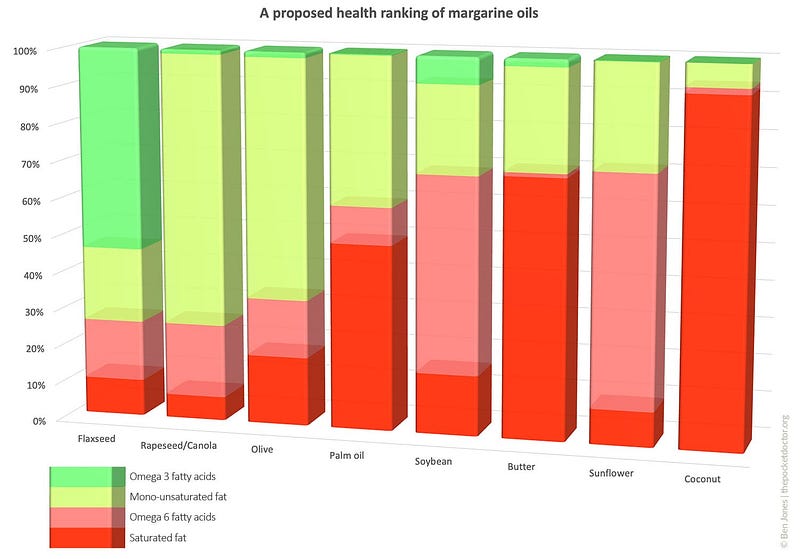
As you move from the left to the right of the graph, the proportion of less healthy saturated and omega-6 fats (in red and pink) increases.
Flaxseed oil looks like a great option, but it’s less stable than other oils, so less suitable for the industrial processes used to make margarine. However, it is added to Flora Original and Smart Balance to boost omega-3.
I’m writing a follow-up article looking more broadly at fats in our diet. Writing that has led me to add flax and chia seeds to my diet every day. Watch out for that article to see why I feel that’s essential.
Rapeseed/canola oil is a great option. It’s low in saturated fat and omega-6. European margarines typically contain rapeseed/canola oil, but it’s less common in the US, where soybean oil is more common.
Compare the profiles of rapeseed/canola and soybean oils in the graph. Soybean oil is mostly saturated and omega-6 fats. It’s worth checking the ingredients box to find rapeseed/canola versions.
Olive oil is another good option.
Extra virgin olive oil is my go-to for almost everything. Extra virgin olive oil is cold pressed and subjected to much less processing. It still contains loads of important micronutrients besides the fats.
Unfortunately, extra virgin olive oil is expensive, and those other nutrients can interfere with margarine production and stability. A number of margarines do claim the ‘olive oil’ label, but they almost all have 10% or less of olive oil. That’s okay if the rest is rapeseed/canola oil, but not so good if it’s soybean or sunflower oil. Check the ingredients.
Now, let’s deal with the elephant in the room: palm oil.

Palm oil is in twelve of our fourteen margarines. I remain baffled as to how it can be cheaper to cut down rainforests and ship palm oil around the world rather than using the vegetable oils we produce locally.
They certainly don’t use it for the good of our health (it’s high in saturated fat) or that of the planet.
For what it’s worth, unrefined palm oil is packed with nutrients and possesses a pronounced taste, though it may be best used in moderation, mindful of the saturated fat content. However, it’s highly refined palm oil that goes into our ultra-processed food.
How do our popular brands stack up?
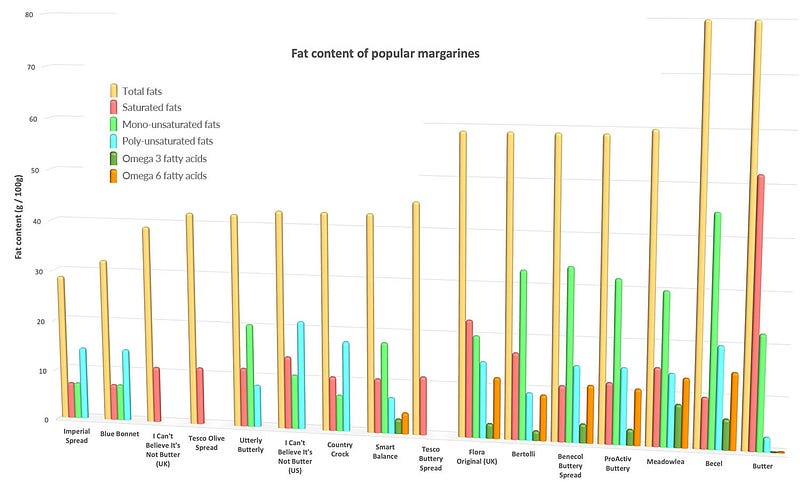
The graph is less comprehensive than I would like. The nutritional information on margarine labels can be scant on details. I suspect that may be because the exact proportion of various vegetable oils they use will change with the seasons and commodity prices.
There’s a lot going on in the graph. To help you pick out some details:
- The spreads are higher in total fat, and thus calories, as you go from left to right.
- Saturated fats are in red. It’s probably worth going easy on these, though the evidence that dairy fat is harmful is weak.
- It’s good to get more of your fat from monounsaturates — here in light green.
- Omega-3 fats are great (dark green), but margarine isn’t a great source. Look elsewhere for these. (Meadowlea isn’t a bad choice if you’re in Australia).
- We get too much omega-6 fats (orange) already, so less is better, though it’s the relative balance of omega-6 to omega-3 that’s important.
Which of these brands should you buy?
I know this is the question you’d like to see answered!
It’s a challenge as there are lots of missing data and all sorts of trade-offs depending on what you choose.
At first, I liked the look of Smart Balance. It’s a relatively low-fat spread. It’s made with rapeseed/canola and palm oils supplemented with olive and flaxseed oils. It’s low in saturates and has a good balance of omega-3 to omega-6. It also contains plant stanol esters, which reduce the absorption of cholesterol (as does Benecol). That sounds good, but we’re back to that lazy assumption that reducing cholesterol prevents heart disease. In fact, there’s some evidence that stanols may increase rates of heart disease and no good evidence that they reduce it. Back to the drawing board.
Meadowlea is the one I’d buy if I could, but it’s an Australian brand, so I can’t. Blue Bonnet I’d avoid with it’s EDTA and sodium benzoate.
These thoughts aside, I’m struggling to pick one to recommend. Look for one based on rapeseed/canola. Avoid those with EDTA and sodium benzoate. There’s no evidence that paying double for spreads with stanols will improve your health, and they may harm it.
So what’s the final answer, butter or margarine?
Trying to get my head around the butter vs margarine question has been fascinating and frustrating.
I’m less worried about butter than I was before. If I’m craving butter on a slice of fresh, homemade bread, I’ll go for it.
However, I’m going to keep butter as a treat.
If you do choose to treat yourself to butter, look for butter made from grass-fed cows. It’s lower in saturated fats and higher in omega-3. Alpine butter is even better — a marketing opportunity for Swiss dairy farmers!
I’m now much more aware of the differences between margarine brands. A margarine loaded with omega-6 from sunflower or soybean oil is certainly not the ‘heart healthy’ option. I’ll only buy grapeseed/canola oil versions now. I’d prefer one without palm oil, but they’re tough to find.
I’ve become utterly convinced of the need to boost my omega-3 fats and cut back on omega-6. I have another article in the works on this, so be sure to watch for it to see if you should do the same.
It’s important to say that your situation may be different to mine. You should talk to your doctor or dietitian, particularly if you have conditions that may need specific dietary advice, such as high cholesterol, diabetes or cardiovascular disease.
I think there’s a bigger question.
Do we really need either?
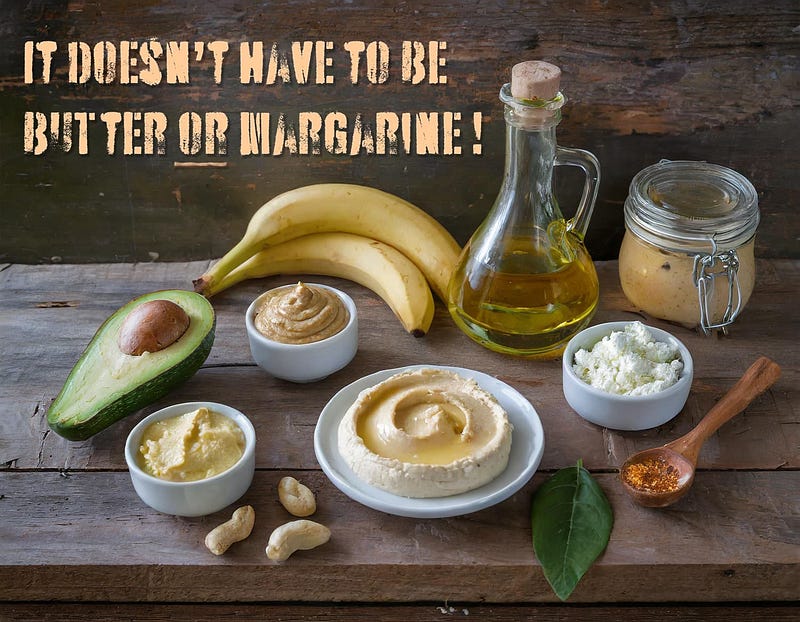
We’re culturally conditioned to believe we’re confined to choosing between butter or margarine, but in reality, our options are considerably broader. How about trying something different?
- Olive oil — it’s the Mediterranean way
- Nut butters
- Greek yogurt
- Apple sauce
- Pumpkin puree
- Banana
- Avocado
- Prune butter (I didn’t know it was a thing, either!)
- Hummus
- Cottage cheese
I’ve no doubt you can think of many more. What extra suggestions do you have?
Are you a butter or margarine fan?
Will that change as a result of reading this?
Our fat choices have turned out to be much more important and impactful than I had anticipated. I’m tweaking my diet as a result, and I’ll be explaining how and why in my next article.
You can read that article right now as I begin a short series of articles examining how simple choices in the fats we eat can have a profound effect on health and longevity.
You may also enjoy these earlier articles:


