
Bullbat
Contrary to what you may think, this creature is neither a bull nor a bat
Today’s New York Times Spelling Bee letters:
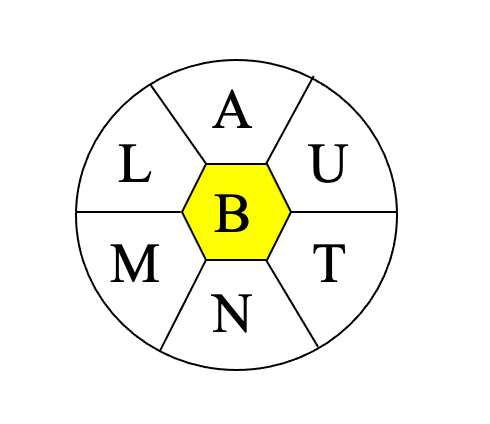
A, L, M, N, T, U, and center B (all words must include B)
Merriam-Webster says…
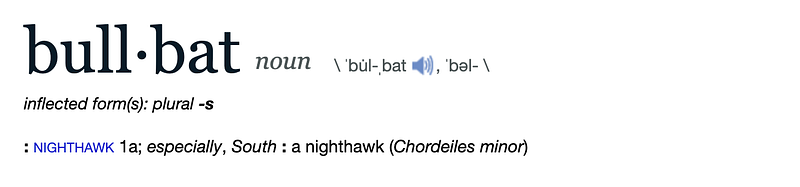
Silly little dictionary! Don’t you know bullbat can’t possibly be a word if the New York Times says it ain’t?
For further fascinating facts, check out the Spelling Bee Master.
What’s your favorite dord* from today’s puzzle?
My Two Cents
Perhaps you, like I did, were expecting something like this when you read or heard the word bullbat:
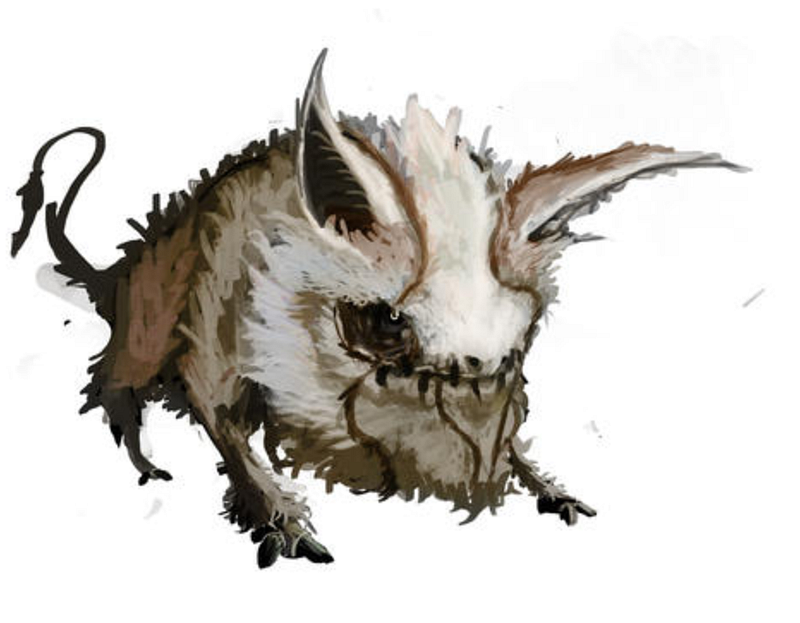
Or, if your mind veers more towards cuteness, maybe it was this image that first popped into it:
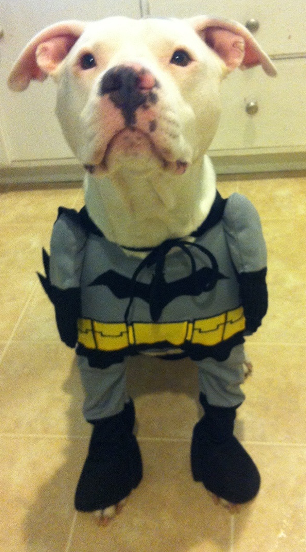
Well, the bullbat is neither a bat, a bull, a bull-bat hybrid or a bulldog dressed as my favorite DC character.
It’s a bird…
…but not a hawk of the evenings
When I clicked on the dictionary’s link for nighthawk, I got this:
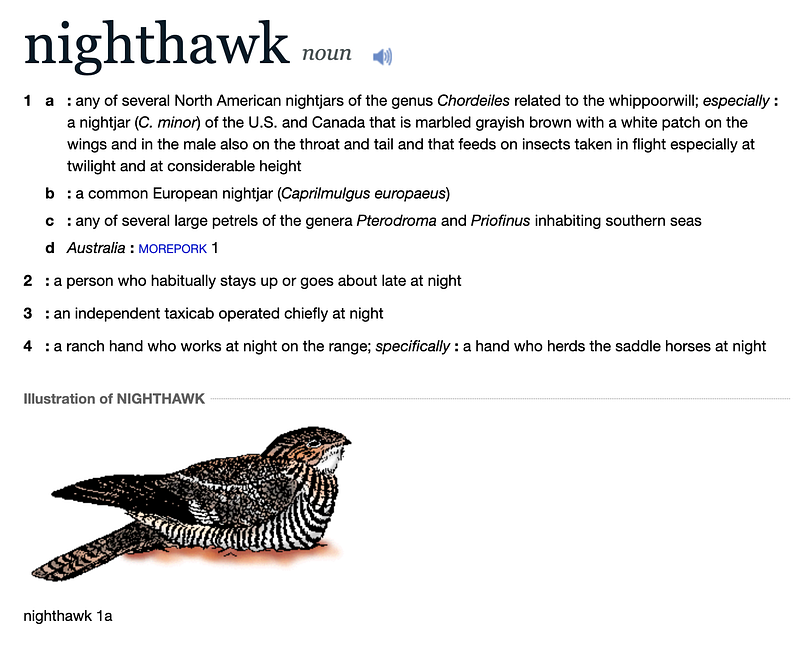
Despite that name, we can add “hawk” to the list of things the bullbat isn’t, along with “jar” (despite it being also known as the North American nightjar) and “pig” (despite the batbull name being used for the morepork in Australia).
The nighthawk, or Chordeiles minor, is called bullbat because of its erratic flight resembling the winged mammal’s, and the fact that the bird’s wings create a boom similar to the sound a bull makes when the nighthawk pulls out of a dive. The bird lives across the Americas:
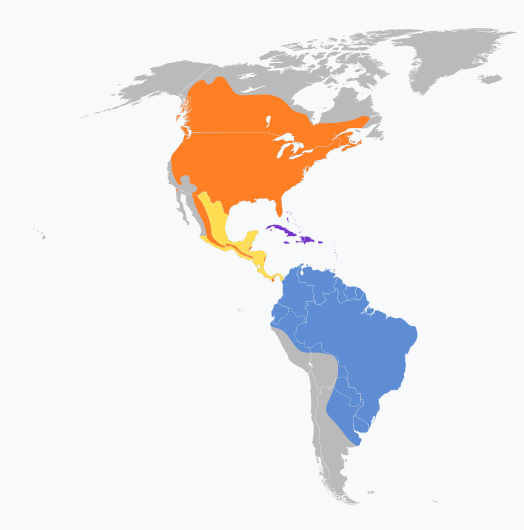
Despite the orange and blue colors of this map, the bullbat is not a Mets fan… as far as I can tell. At least, I’ve never seen any while attending games at Shea and “Newer Shea” (also vulgarly known as CitiField). The orange indicates where the bird usually lives during the spring and summer, while blue shows where it migrates during the colder months.
The current online version of the Encyclopedia Britannica gives this description of the nighthawks:
“Unrelated to true hawks, they are classified with the nightjars, frogmouths, and allies in the order Caprimulgiformes. They are buffy, rufous (reddish), or grayish brown, usually with light spots or patches, and range in length from about 15 to 35 centimetres (6 to 14 inches). They fly about at night, especially at evening and dawn, catching flying insects in their mouths. The common nighthawk (Chordeiles minor), or bullbat, inhabits most of North America, migrating to South America in winter. It is about 20 to 30 centimetres (8 to 12 inches) long, grayish brown, with a white throat and wing patches. It has a sharp nasal call. During courtship it dives swiftly, creating audible whirring sounds.”
You can here that sharp nasal call by clicking below.
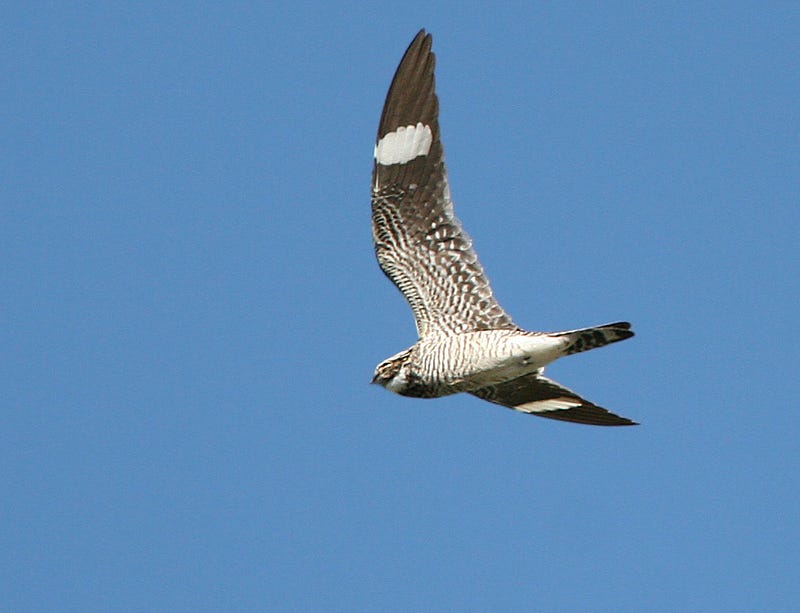
And here is a pretty picture of a bullbat in flight, courtesy of Gary L. Clark and either his camera or phone.
Oh, yeah, suck on that goat!
The bullbat belongs to the same family (Caprimulgidae) as the European nightjar, or Caprimulgus europaeus. Also know as the common goatsucker. Interestingly, the genus Caprimulgus would roughly translate as “goat milker”, so either way for some strange reason people associated the European cousin of the bullbat to goats. And this association went across the Old World continent, as the 1911 Britannica explains:
“GOATSUCKER, a bird from very ancient times absurdly believed to have the habit implied by the common name it bears in many European tongues besides English — as testified by the Gr.αἰγοθήλας, the Lat. caprimulgus, Ital. succiacapre, Span. chotacabras, Fr. tettechèvre, and Ger. Ziegenmelker.”
That old edition also provides its own illustration, very similar to the one Merriam-Webster provided.
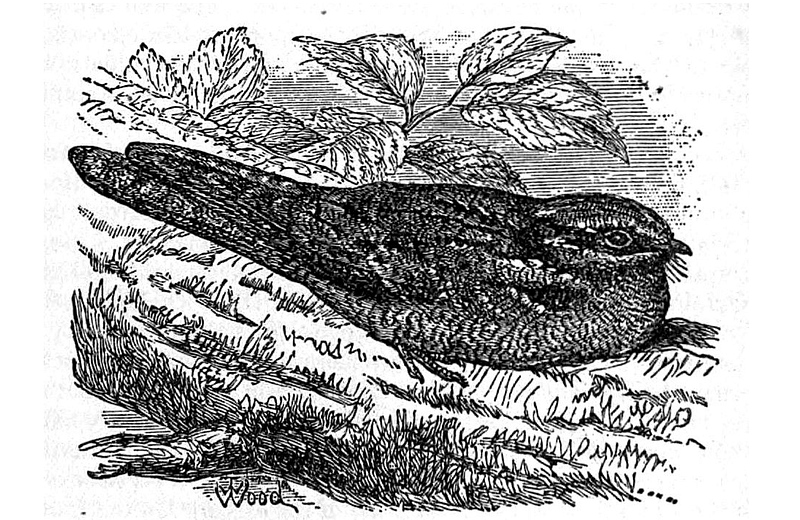
The two images are very similar, except for the fact that the dictionary’s is in color while this one is in black and white… because everything back in 1911 was in black and white. As everyone knows, the world was bleak and colorless until Kodak came along.
The old myth about the nightjar claimed that this nocturnal flyer suckled on goats, emptying their udders and preventing them from giving out any more milk. So when frustrated farmers couldn’t get a drop out of their does they blamed and cursed the poor bird.
The bird simply responded like this:
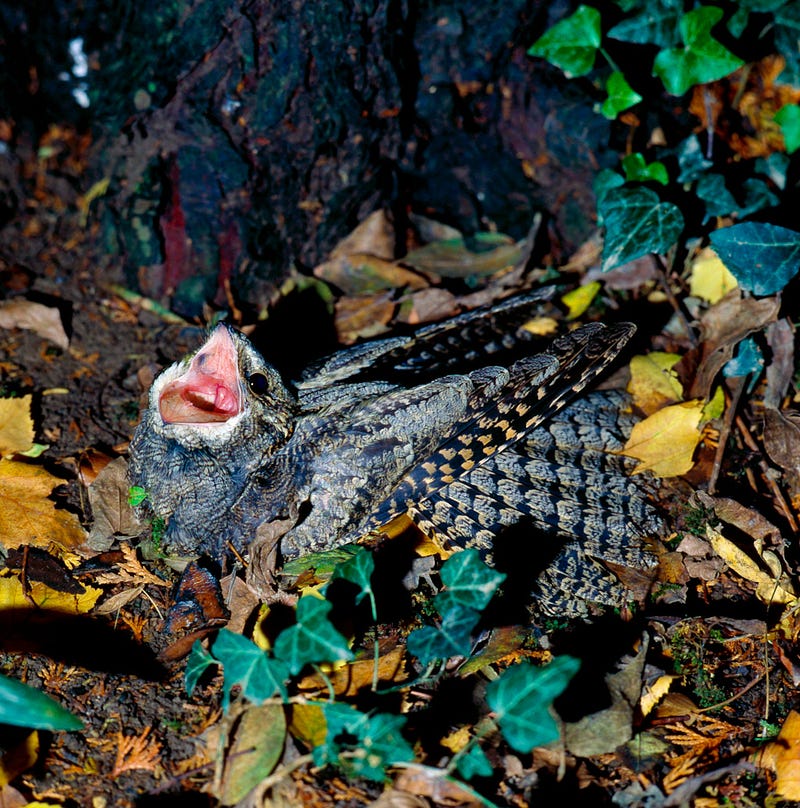
And now you know why nightjars and their bullbat cousins have such an infamous reputation. They don’t, you say? Well, clearly you’re not a suffering goat farmer, then!
Despite the awesome nickname of the nighthawk and the mythical goat-sucking abilities of its European relative, the New York Times decided that the word bullbat is a dord*.
You can check out my previous entry on another dord* here:
*What the heck is a dord, you ask? Here’s the answer: