
Building for World Domination
Monumental architecture as the proclamation of a culture’s wealth and power.
The Great Pyramid at Giza was built between 2580–2560 BCE for the 4th Dynasty Pharaoh, Khufu, and remains the largest building ever constructed (though there is evidence of pyramidal structures in ancient China that may have been even larger). Its volume is vast — great enough to entirely contain St Peter’s Basilica in Vatican City, Rome.
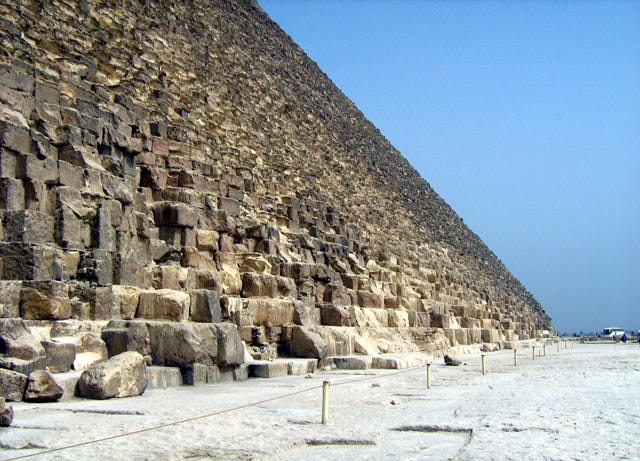
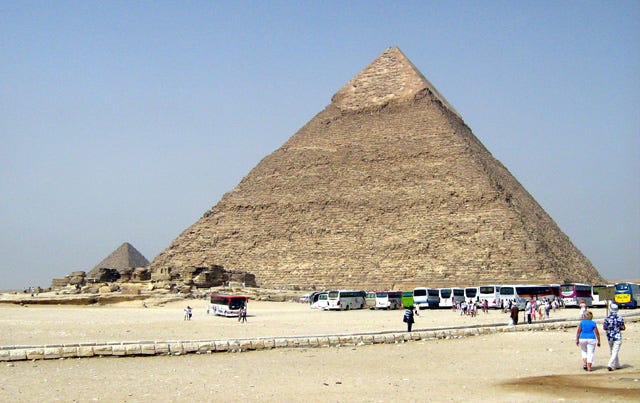
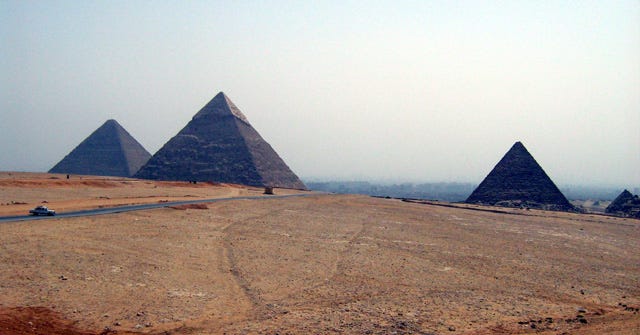
Of course, the pyramids are not hollow. On a recent research visit to Egypt’s archaeological sites, Sharif — our guide on lone from the Cairo Museum — stated that if the pyramids were dissembled, there would be enough stone to build a wall around France that would be two metres high. I haven’t followed-up the math myself, but having walked around the base of the great pyramid, it is easy to believe this otherwise incredible claim.
Archaeologists estimate that for the Great Pyramid to have been built to schedule, around six million tons of material had to be quarried, transported, carved and placed in a time scale of twenty years. This would mean that, on average, twelve of the great blocks would have to be in place every hour, day and night throughout those two decades.
The pyramids were constructed by a large and highly organised labour force, using accurate mathematics, precision stone masonry, earthwork ramps, rollers and ropes. But why spend so much time and effort? We understand that the primary motivation was a genuine and deep religious belief, but there were other factors at play…
Originally, they were clad in limestone, polished to white brilliance, they were probably part-painted, and were capped with electrum — a highly reflective alloy of gold, silver and copper — that would blaze in the bright Egyptian sun. These geometric ‘mountains’ would rise from the luscious greenery of what were then the fertile flood plains of the Nile, far higher than any other buildings anywhere in the world.
Imagine what the pyramids would have looked like ‘back in the day’, to anyone coming into Egypt from neighbouring countries, where most people lived in huts or single storey houses of mud brick… Imagine coming to pay tribute to the Pharaoh and seeing these huge structures. You may not comprehend how such a thing could be built, but it would be very clear that the civilization that built them was very powerful.
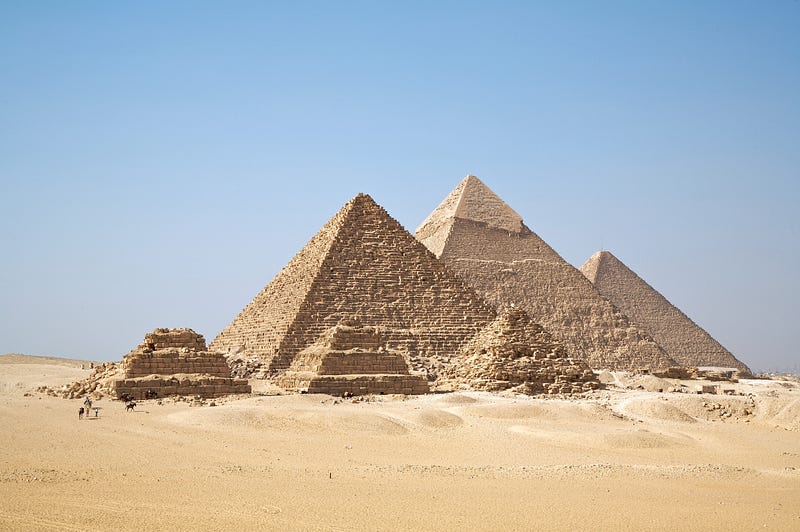
The pyramids clearly proclaimed the superiority of the Kingdom of Egypt. They were blatant signifiers of superior knowledge and engineering skills. They were built by a society with enough time, money and the vast human resources required to construct something that had no obvious function. It wasn’t a shelter, it wasn’t a temple, or any kind of building in which people gathered. It was simply a monument to a great king. A king who was also a god. Politically and psychologically these artificial mountains said, “Don’t mess with us!”
Flash forward three millennia from the heyday of Pyramid building and the template was still being used to shout about a society’s superiority...
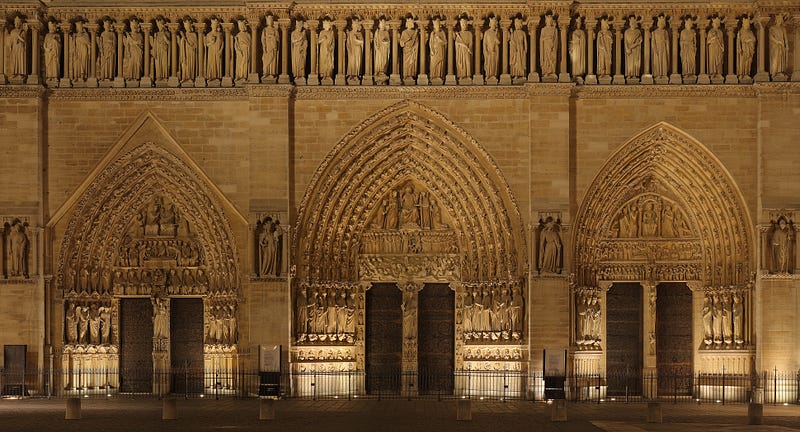
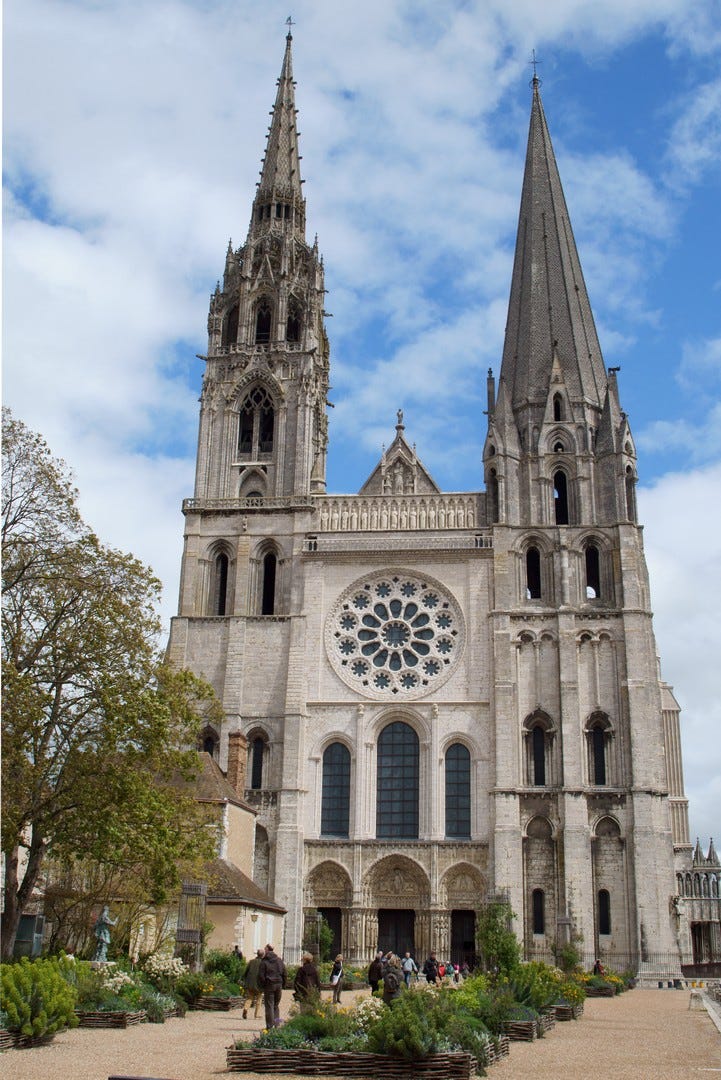
The great Notre Dame Cathedrals of Europe express the ultimate art of the Gothic period. Beginning construction in the Thirteenth Century, they were astounding aesthetic, as well as engineering, achievements. The cathedrals of “Our Lady,” or “Notre Dame” in French, built for Paris, Chartres and Reims are perhaps the most impressive and representative of the medieval Gothic style. At the time this style was known as ‘the French style’ and was not to be referred to as ‘Gothic’ until the Renaissance writer Giorgio Vasari coined the phrase some three centuries later.
Suddenly, architects are once again able to build on a scale not seen since classical Rome. The Church jealously guarded this rediscovered knowledge. The building teams working on these structures were only privy to the plans of the section they were directly involved with, only the master masons understood the overall architectural plan.
The influence of the east may have played a significant part in the development of the Gothic style. The gemstone lapis lazuli also came from the East as its only known source at the time was a mine in what is now Afghanistan. So, in order to obtain this precious substance, required for the sacred blue pigment, trade with the Arab nations was necessary.
Also, the Crusades had pushed into the Islamic Mediterranean during the Eleventh Century, and the Italian mathematician Leonardo Fibonacci of Pisa had studied Arabic number systems, popularising the use of the Arabic figures 1 to 9 over the traditional Roman numerals of I to X. Along with this knowledge came information about the mathematics and mechanics of ancient architecture that had been perpetuated by the Islamic scholars.
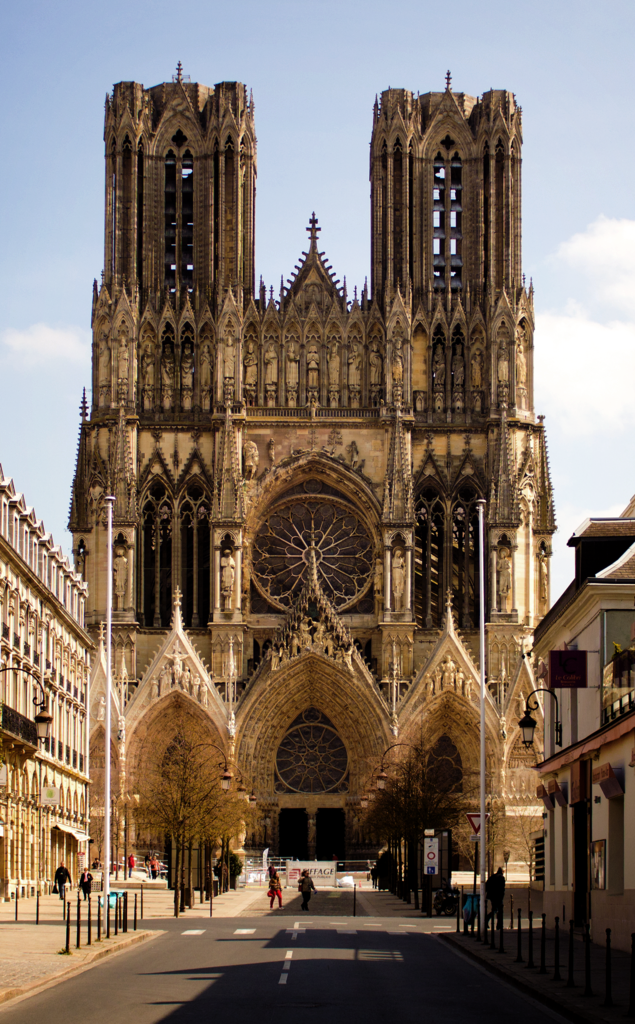
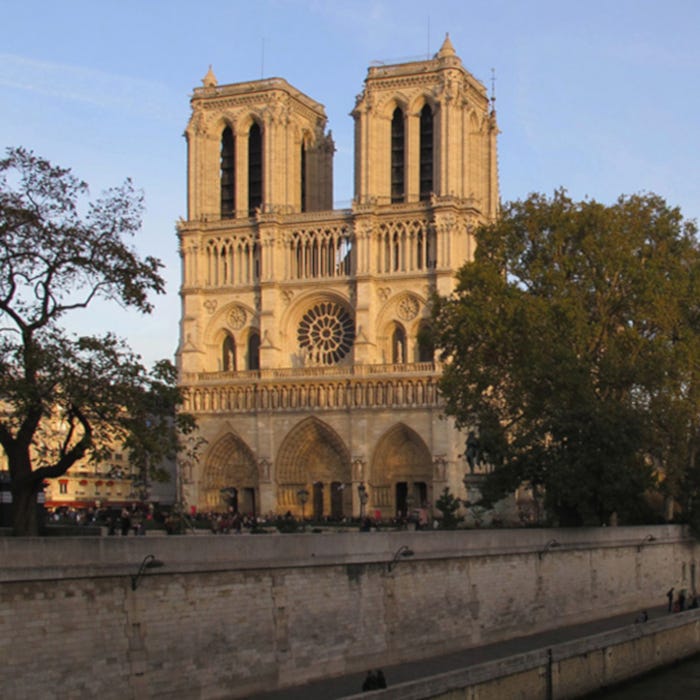
These cathedrals were ambitious construction projects that took centuries and generations to complete, involving huge budgets and highly organised work forces. They were also highly decorated, even in places that would be rarely, if ever, seen. This was because they were monuments to a god who was omnipresent, and so could see everywhere, and there is no doubt that these represent genuine devotional art.
However, like the pyramids of ancient Egypt, they also served another function. They too proclaimed the power and dominance of the society that built them. The Roman Catholic Empire had the resources, knowledge, money, technology and man-power to build these structures that towered above all other buildings, dwarfing even the palaces and castles of Europe’s monarchs. The message was, again, quite clearly, “Don’t mess with us.”
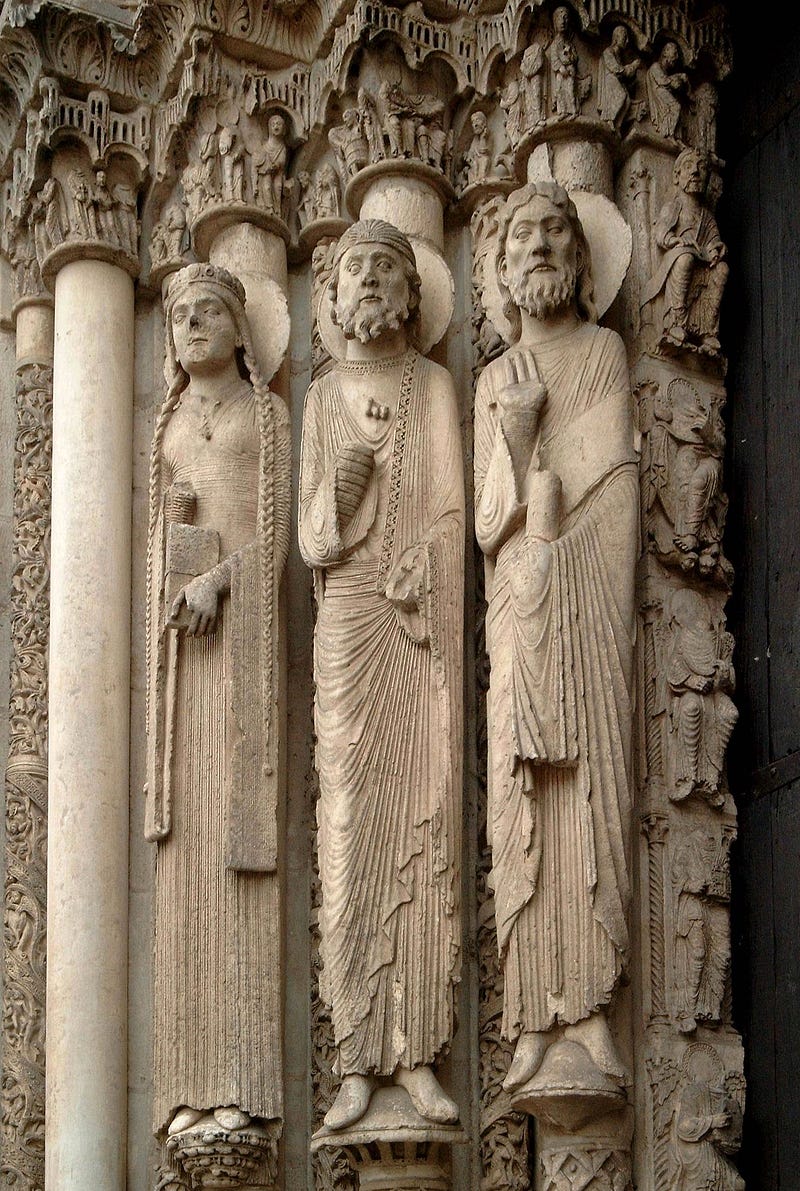
In terms of the visual arts, one interesting innovation can be seen most explicitly in figures found around the doorways of Chartres. If viewed from the same elevated level, the figures appear attenuated, but when viewed from below at a point within the arch, the elongation of these statues begin to counteract the effect of foreshortening. The optical illusion makes the figures appear more humanly proportioned and less distorted. This indicates a return to observation and a growing awareness of how we actually experience the world in visual terms — an approach that seems to have been forgotten since the Classical period and foreshadows the dawn of the Renaissance.
The only ventures in our modern world that compare with the ancient pyramids or Gothic cathedrals could be the big science and space exploration projects, civil engineering works like road building and major megastructures because they have similar demands in terms of budget, workforce, organisation and cultural approval.
Another possible parallel could be drawn with Hollywood style movie-making that uses masses of resources, huge budgets and thousands of people working together. It can, therefore, be accepted that the pyramids and temples of Ancient Egypt along with the great cathedrals, would’ve had comparative importance in their culture as our major civil engineering projects and biggest creative ventures.


