avatarSusie Kearley

Free AI web copilot to create summaries, insights and extended knowledge, download it at here

3768

Abstract

labs marked the spot where the foundations of The Sanctuary would have been. In 1668, according to Samuel Pepys, it was like Stonehenge, but like many of the stones in the Avenue, they vanished in the intervening years. Originally the monument was used as a mortuary, where bodies were taken to hasten decay before burial, but today nothing remains except a memory, kept alive by marker posts and display boards.</p><h1 id="2b0b">Silbury Hill</h1><p id="8f18">Next call, Silbury Hill, the largest prehistoric mound in Europe, measuring 31m high. I waded through the tall grass towards the ancient mound, only to be greeted by a sign reading ‘no entry’. Not that it stopped the lad who lurched over the fence before me…</p><figure id="e21c"><img src="https://cdn-images-1.readmedium.com/v2/resize:fit:800/0*TjwhSqzk7ZeHTnMj.jpeg"><figcaption>Silbury Hill © Susie Kearley</figcaption></figure><p id="f93a">It helps to know a little of the history to appreciate it: The hill is considered to be an ancient burial chamber, plundered for the treasures of the dead centuries later, but reports say that although three tunnels were dug into it, no treasures were ever found. Some say the mound is the UK’s equivalent to the Egyptian pyramids.</p><p id="f16c">Layers of gravel, chalk, turf and stone, have seen the mound grow from small beginnings into the large structure we see today. Different civilisations added to the mound over time and it is thought that the original mound was never intended to get this big!</p><h1 id="0168">West Kennett Long Barrow</h1><p id="8fec">Opposite Silbury Hill is West Kennet Long Barrow. It was starting to get late in the day and I was tired, unsure whether to embark on the one-mile walk up the hill to visit the Long Barrow, but I’m glad I did.</p><figure id="35b5"><img src="https://cdn-images-1.readmedium.com/v2/resize:fit:800/0*u7dMOWdYERpC7x25.jpeg"><figcaption>The entrance to West Kennett Long Barrow © Susie Kearley</figcaption></figure><p id="9fd9">The barrow is a 100m long, ancestral shrine where human bodies were stored inside five chambers. The tomb has been partially excavated, and the body they found inside, which had an arrow still lodged in its neck, was removed. It was quiet and eerie inside, not somewhere you’d want to hang around after dark! But it would be a shame not to take a look if you’re down that way.</p><h1 id="3244">Stonehenge</h1><p id="348d">The following morning, after a night dreaming of pagan rituals, I awoke strangely refreshed and energised, and decided to visit Stonehenge approximately 26 miles away. The sky was threatening rain with a fantastic contrast of dancing sunlight and dark cloud — it was easy to see why people with lively imaginations might associate UFOs with Stonehenge!</p><figure id="69a5"><img src="https://cdn-images-1.readmedium.com/v2/resize:fit:800/0*fLyk7jsT8DEYwrBO.jpeg"><figcaption>Stonehenge © Susie Kearley</figcaption></figure><p id="db6c">As I followed the path listening to my audio-guide, I learnt a little about the history of the henge, and the myths and legends surrounding it. From claims that it was erected by Merlin, to fantastical tales that the devil built it, I preferred the more grounded idea that men dragged the stones to the site, on make-shift wheels over many years.</p><figure id="af34"><img src="https://cdn-images-1.readmedium.com/v2/resize:fit:800/1*kn_QybfaXCBYMH_qydSlgQ.jpeg"><figcaption>Stonehenge © English Heritage (used with permission)</figcaption></figure><p id="991d">You can see where the processional route would have been, linking places and communities to the henge. Whilst there are many theories about exactly what the henge was used for over the years such as a temple, healing centre, or burial site, a few things are

Options

certain: it works as a calendar — and the Druids have worshiped at the site since the 17th century. Modern Druids still celebrate the summer solstice at Stonehenge every year.</p><figure id="8df0"><img src="https://cdn-images-1.readmedium.com/v2/resize:fit:800/0*fagBIub98YHnKcda.jpeg"><figcaption>Me at Stonehenge on a sunnier day © Vic Kearley</figcaption></figure><p id="0745">Find out more: <a href="http://www.english-heritage.org.uk/">www.english-heritage.org.uk</a></p><h1 id="282b">Attractions nearby</h1><p id="d819"><b>Avebury Manor — </b>This National Trust property featured in the BBC television series, The Manor Reborn, and as such, has been refurbished. With a brand new kitchen garden, glorious grounds, and many pleasures to see in the house, there is plenty to enjoy. <a href="https://readmedium.com/to-the-manor-born-at-avebury-346e55067691">I wrote a story about it here</a>.</p><p id="d60a"><b>Lacock Abbey — </b>Lacock Abbey was where the first two Harry Potter films were made. The cloisters just scream Harry Potter, as soon as you walk through the door. On a more historical note, there are state rooms and interesting tales about why the husbands left their wives there in the care of the Nuns whilst they went away.</p><p id="da38"><b>Chedworth Roman Villa — </b>This is the remains of one of the largest Roman villas in the country. There is a water shrine, north Bathhouse, and archeological work being undertaken on site which means part of the experience is by guided tour only.</p><p id="12a7"><b>Old Sarum — </b>This Iron Age hill fort marks the place where Salisbury’s original Cathedral once stood. Explore the site dating back 5000 years and take in the views of the Wiltshire countryside.</p><p id="4540">© Susie Kearley 2022. All Rights Reserved.</p><div id="6f7d" class="link-block"> <a href="https://readmedium.com/britains-prettiest-places-inspired-dracula-the-prisoner-and-harry-potter-6c7b2be2c071"> <div> <div> <h2>Britain’s Prettiest Places Inspired Dracula, The Prisoner, and Harry Potter!</h2> <div><h3>Where would you visit? A tiny island, or a haunted abbey?</h3></div> <div><p>medium.com</p></div> </div> <div> <div style="background-image: url(https://miro.readmedium.com/v2/resize:fit:320/1*LyZqH-cpxMeZjMsXre2K8Q.jpeg)"></div> </div> </div> </a> </div><div id="2a22" class="link-block"> <a href="https://readmedium.com/a-wildlife-tour-of-texas-utah-arizona-42b229a590e2"> <div> <div> <h2>A Wildlife Tour of Texas, Utah & Arizona</h2> <div><h3>An amazing place to see reptiles and other stunning wildlife</h3></div> <div><p>medium.com</p></div> </div> <div> <div style="background-image: url(https://miro.readmedium.com/v2/resize:fit:320/0*G59T78QG0I1yKlE9)"></div> </div> </div> </a> </div><div id="7050" class="link-block"> <a href="https://susiekearley.medium.com/membership"> <div> <div> <h2>Join Medium with my referral link - Susie Kearley</h2> <div><h3>Read every story from Susie Kearley (and thousands of other writers on Medium). Your membership fee directly supports…</h3></div> <div><p>susiekearley.medium.com</p></div> </div> <div> <div style="background-image: url(https://miro.readmedium.com/v2/resize:fit:320/0*IY0YlqxB2rGJ4Jaq)"></div> </div> </div> </a> </div></article></body>

TRAVEL UK

Britain’s Ancient Stone Circles and Burial Mounds

A walk through history, full of spiritual significance and charm
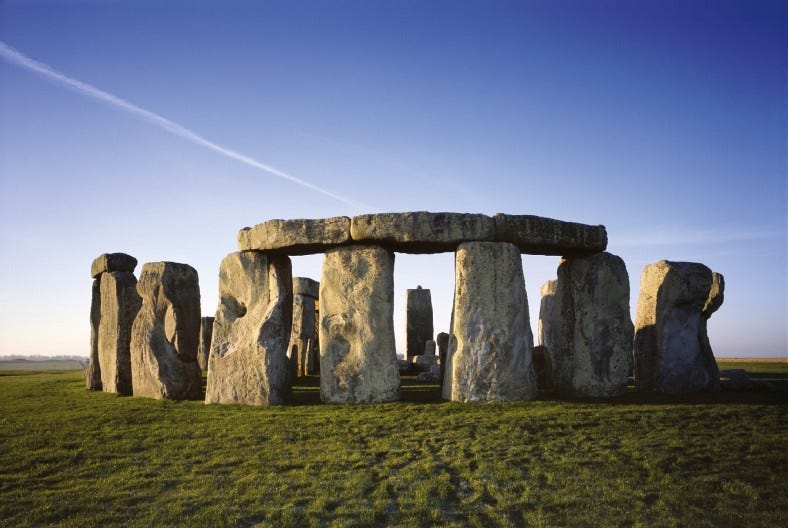
Stonehenge © English Heritage (used with permission)

Avebury Henge

It was early on a bleak October morning when I visited Avebury Stone Circle, with an open mind, and a heart full of anticipation. I’d heard it was a magical place, full of mystery and spiritual enchantment, but as I stood there in the drizzle, it seemed more earthly, than heavenly. All the same, it was an impressive structure with huge pillars standing proudly against the grey skyline.

On the promise of a brighter afternoon, I decided to visit the galleries first, to find out about the history and legend surrounding Avebury Henge, the biggest stone circle in Europe, 500 years older than Stonehenge.
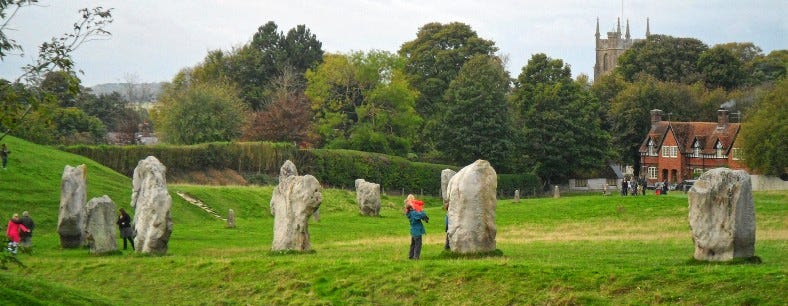
Avebury Henge © Susie Kearley

Construction of the monument began about 4500 years ago with the digging of a deep ditch and chalk bank, which created a strange saucer effect on the landscape. It wasn’t until around 200 years later, that over 170 sarsen stones were hauled to the enclosure and erected in three circles — two smaller ones inside the main arena.

Belief in an underground world and the forces of spirits led Neolithic man to use the site as a place of worship. Archeological digs have uncovered the remains of pots, bones, and tools, indicating considerable human activity nearby.

I peeked outside — the rain had stopped and the sun glimpsed through the clouds, so I followed the route around the henge, experiencing the stone circle in all its glory.
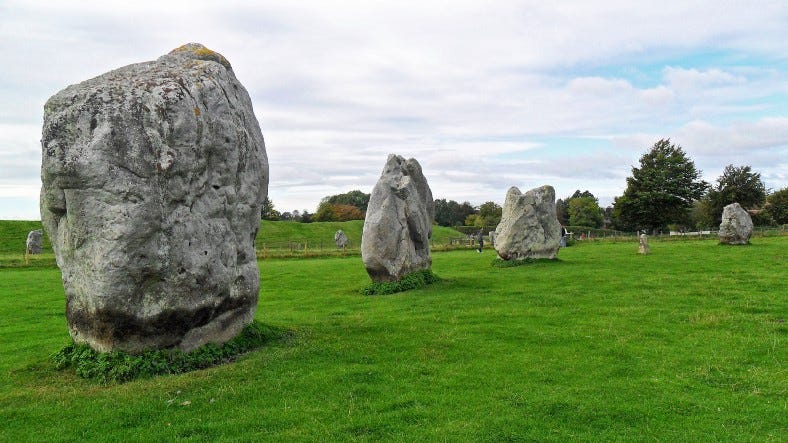
Avebury Henge © Susie Kearley

Some of the boulders are 21 feet tall and impressive structures sporting interesting surface marks, potholes, and other signs of weathering acquired over the past 4300 years. Once used for fertility ceremonies and rituals to do with the changing seasons, it was easy to imagine ancient tribes meeting at the stones, drawing upon the forces of nature. The pagans of the old saw it as a very special place where the dead were as important as the living and it is still regarded as a place of great spiritual importance to modern pagans.

Large stones indicate gateways onto spiritual paths, marked by smaller stones. I followed one such path — a processional route down West Kennett Avenue towards The Sanctuary.

West Kennett Avenue

It was quiet — just me and the cows. The cross-country route, marked by pairs of sarsen stones, was once dubbed ‘the great stone serpent’, due to its snake-like appearance from the air. Now with half the stones missing, and around 100 left, the ancient route vanished altogether after a mile. Landowners removed the sarsen stones years ago, so the route is now redirected to follow a roadside path.
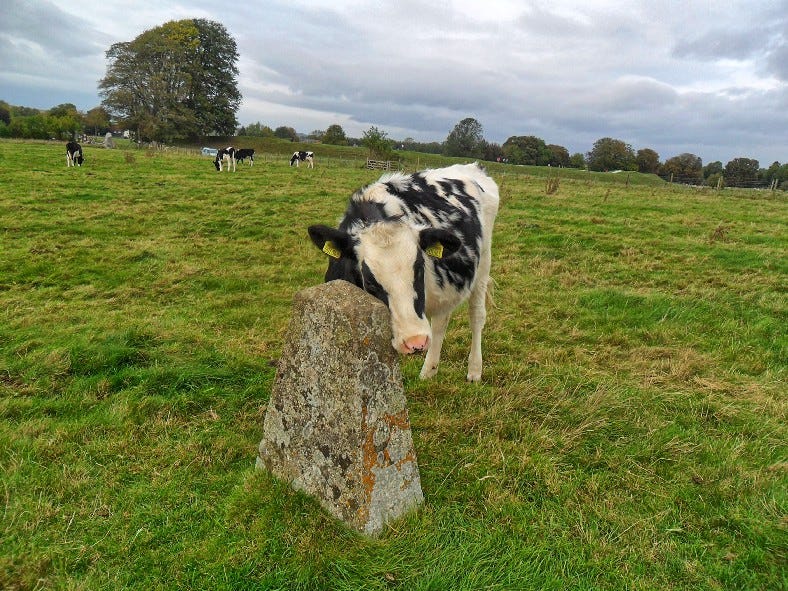
West Kennet Avenue © Susie Kearley

The Sanctuary

With a name like The Sanctuary, I was expecting something tranquil, spectacular, and very peaceful. The reality was a little different.

A number of concrete slabs marked the spot where the foundations of The Sanctuary would have been. In 1668, according to Samuel Pepys, it was like Stonehenge, but like many of the stones in the Avenue, they vanished in the intervening years. Originally the monument was used as a mortuary, where bodies were taken to hasten decay before burial, but today nothing remains except a memory, kept alive by marker posts and display boards.

Silbury Hill

Next call, Silbury Hill, the largest prehistoric mound in Europe, measuring 31m high. I waded through the tall grass towards the ancient mound, only to be greeted by a sign reading ‘no entry’. Not that it stopped the lad who lurched over the fence before me…
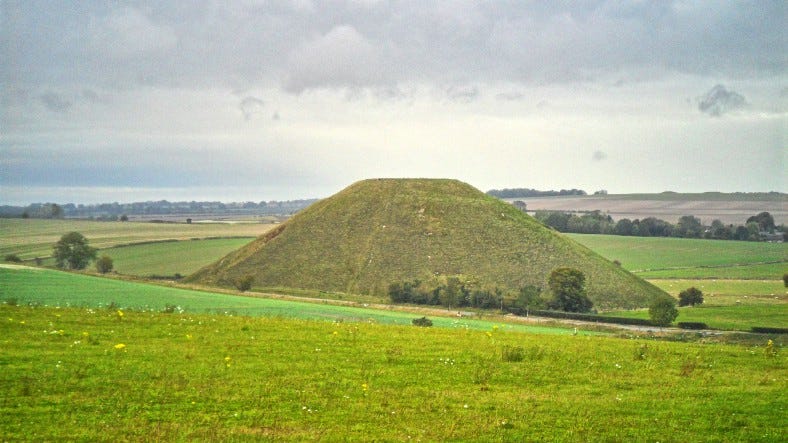
Silbury Hill © Susie Kearley

It helps to know a little of the history to appreciate it: The hill is considered to be an ancient burial chamber, plundered for the treasures of the dead centuries later, but reports say that although three tunnels were dug into it, no treasures were ever found. Some say the mound is the UK’s equivalent to the Egyptian pyramids.

Layers of gravel, chalk, turf and stone, have seen the mound grow from small beginnings into the large structure we see today. Different civilisations added to the mound over time and it is thought that the original mound was never intended to get this big!

West Kennett Long Barrow

Opposite Silbury Hill is West Kennet Long Barrow. It was starting to get late in the day and I was tired, unsure whether to embark on the one-mile walk up the hill to visit the Long Barrow, but I’m glad I did.
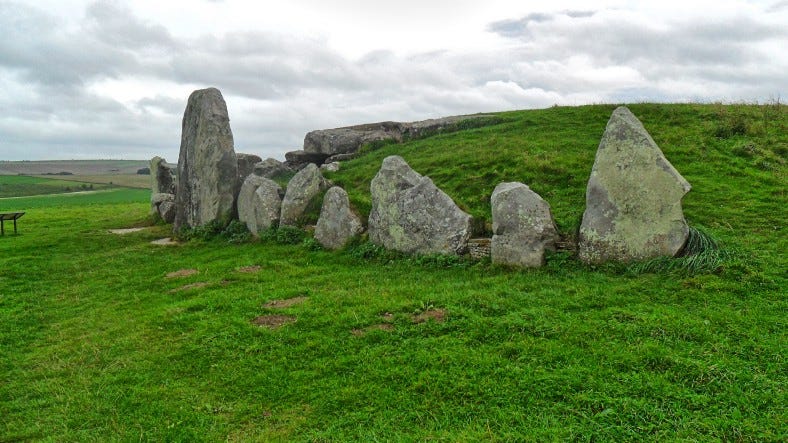
The entrance to West Kennett Long Barrow © Susie Kearley

The barrow is a 100m long, ancestral shrine where human bodies were stored inside five chambers. The tomb has been partially excavated, and the body they found inside, which had an arrow still lodged in its neck, was removed. It was quiet and eerie inside, not somewhere you’d want to hang around after dark! But it would be a shame not to take a look if you’re down that way.

Stonehenge

The following morning, after a night dreaming of pagan rituals, I awoke strangely refreshed and energised, and decided to visit Stonehenge approximately 26 miles away. The sky was threatening rain with a fantastic contrast of dancing sunlight and dark cloud — it was easy to see why people with lively imaginations might associate UFOs with Stonehenge!
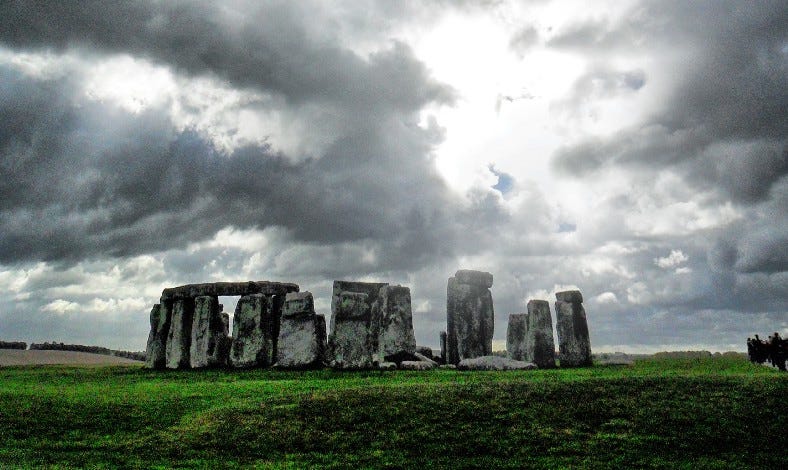
Stonehenge © Susie Kearley

As I followed the path listening to my audio-guide, I learnt a little about the history of the henge, and the myths and legends surrounding it. From claims that it was erected by Merlin, to fantastical tales that the devil built it, I preferred the more grounded idea that men dragged the stones to the site, on make-shift wheels over many years.
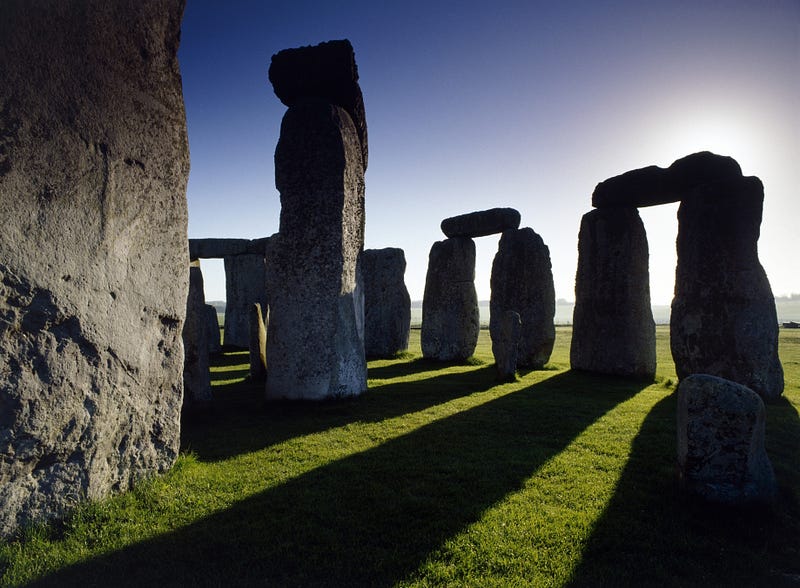
Stonehenge © English Heritage (used with permission)

You can see where the processional route would have been, linking places and communities to the henge. Whilst there are many theories about exactly what the henge was used for over the years such as a temple, healing centre, or burial site, a few things are certain: it works as a calendar — and the Druids have worshiped at the site since the 17th century. Modern Druids still celebrate the summer solstice at Stonehenge every year.
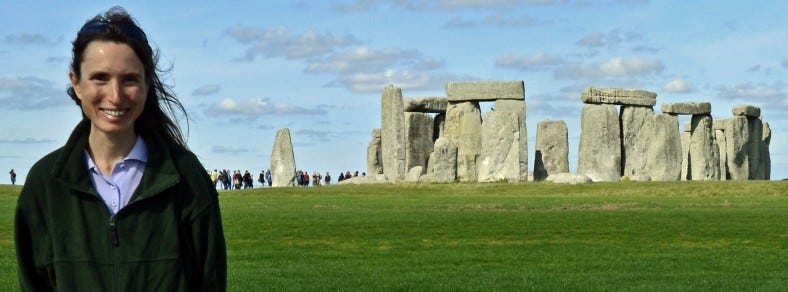
Me at Stonehenge on a sunnier day © Vic Kearley

Find out more: www.english-heritage.org.uk

Attractions nearby

Avebury Manor — This National Trust property featured in the BBC television series, The Manor Reborn, and as such, has been refurbished. With a brand new kitchen garden, glorious grounds, and many pleasures to see in the house, there is plenty to enjoy. I wrote a story about it here.

Lacock Abbey — Lacock Abbey was where the first two Harry Potter films were made. The cloisters just scream Harry Potter, as soon as you walk through the door. On a more historical note, there are state rooms and interesting tales about why the husbands left their wives there in the care of the Nuns whilst they went away.

Chedworth Roman Villa — This is the remains of one of the largest Roman villas in the country. There is a water shrine, north Bathhouse, and archeological work being undertaken on site which means part of the experience is by guided tour only.

Old Sarum — This Iron Age hill fort marks the place where Salisbury’s original Cathedral once stood. Explore the site dating back 5000 years and take in the views of the Wiltshire countryside.

© Susie Kearley 2022. All Rights Reserved.

Travel
Stonehenge
UK
History
Spirituality
Recommended from ReadMedium
avatarJohn Welford
John Welford

1952 to 2024

2 min read