
Breasts and Eggs
The voice of Mieko Kawakami pierces through the reproduction of gender norms
The other night I dreamed about my mother. I could not see her face but I knew that she was working hard. She was preparing for dinner in the kitchen. I guess that was dinner because the oil-stained window allowed the remains of afternoon sunlight in at 6 o’clock. As usual, they were scattered on the kitchen floor, keeping my mother company when she cooked.
I had a tough time thinking about the meaning of that dream. I do not dream often to start with. It was a picture of my mother, who is in her 60s and still continues to care for the family. What else did the dream try to tell me? A few days after I had the dream, I finally realized it could be due to reading Breasts and Eggs.
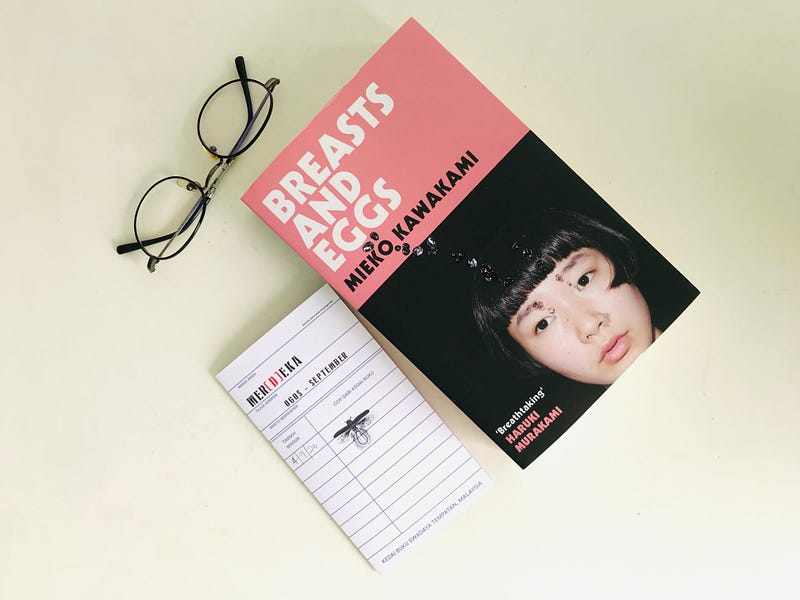
Breasts and Eggs was the first physical book (in English) that I have bought since Malaysia went into waves of movement control orders (our version of lockdown). The book and the story were calling me to own it since it arrived at one of our local indie bookstores (Lit Books). The author, Mieko Kawakami, explores everything to do with being a woman and different in a masculine world. Translated from Japanese into English, her tone is warm and her voice is more powerful than I expected. Maybe it is because in the story she was speaking for “her” (the protagonist — Natsuko). Most of the time, Natsuko was all alone. Maybe that was the reason why her strength was felt empathically. Perhaps that was the reason she needed to be strong.
The right to question what is not right for us
I was sorting the notes taken throughout the reading. A pattern is obvious: the right to be who we are. As much as the title hinted to us about the main issues to be explored, it was the stand of Natsuko compared to her sister’s (Makiko’s) and her niece’s (Midoriko’s) that challenged my own assumptions about being a woman. Why do we accept what was cast to us without questioning its legitimacy? On top of that, the unchallenged rules and norms were conceived by a different gender with the power to make it last for centuries.
Reproductive rights from the lens of a child
I was drawn to the thoughts of Midoriko. As a child, she was quick to judge her mother (Makiko), but each judgment always came with a reason. As the International Safe Abortion Day (28 September) is around the corner, it is timely to look at her angst in the context of reproductive rights. Do children have no right to dictate if they should be born? While her personal experience in school drove her into more internal conflicts, we ought to reflect on how many burdens a child or youth needs to put up with due to some unconscious decision made by the parents. While many would say that having a baby is part of the life process and a big part of a family, have parents thought about why this is normal? If a father or mother says they want to have babies, does the desire justify on its own?
On children. On poverty.
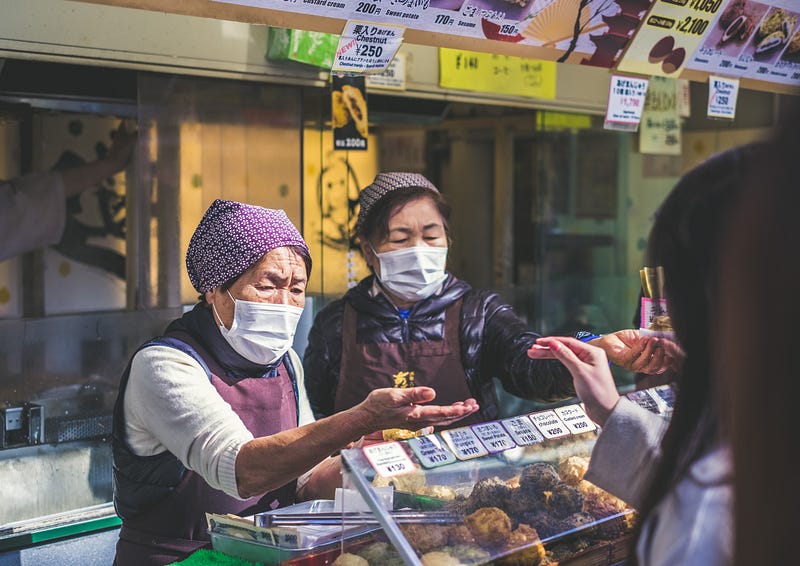
Giving birth to and providing for a newborn is “affordable” for groups in the middle class and above. For people living in poverty, feeding another person is a monumental task, which was evident in the case of Makiko. Without a partner, she had no choice but to juggle multiple low-paid jobs, regardless of how demeaning those jobs were. She might feel it was a noble life goal to work extremely hard to send her daughter to university. From the point of view of the daughter, it was excruciating to witness someone sacrificing for her well-being. Perhaps the most heartbreaking was the reality — that poverty would not stop there. If the mother works hard but still could not provide for the child’s education, the next generation would continue to suffer from the same fate. Working multiple jobs, ruining health and the mother-daughter relationship, and still the daughter repeats the life of her mother. It is a vicious cycle.
I can be a mother without being someone’s wife
The tension between marriage and reproduction is another subject that was heavily debated in the story. It was slowly built up through Part 1 and Part 2 of the book. The second part took place ten years later, but the gender balance had not improved significantly. Through some intricate but purposeful conversations among the main female characters, marriage sounded like a trade-off to achieve “quality of life.” A woman joked about choosing between giving a kidney to her dying husband and losing her husband. “Losing a kidney is not as bad as losing a husband that provides,” she said. While equality is still a utopia, the story zoomed into the positive facets of society in the local context of Japan. As the socioeconomic tide turns, middle-class women in 21st Century Japan remain single till their 30’s to attain career stability. Now, it is the highly-capable women who will question if they need the presence of men in their lives to become mothers.
Unlearning biology and gender equality
In the country I live in, the book title alone can make people roll their eyes. In Breasts and Eggs, the beginning of life (sperm and ova) were being examined in a young girl’s mind. “Why were we taught about sperm before ovum in school?” There were also witty expressions about reproductive rights. It is no one’s fault that we have sperm and eggs. But we can definitely try harder to keep them from meeting each other. It is not too far-fetched to think about the future when destruction is inevitable. At that moment of time, would you choose to keep the sperm away from the eggs so that you will not bring another human being to a dystopia, which he or she does not have the right to choose to be born into?
Is women’s empowerment possible without recognition of personal values?
Natsuko and her sister were close to each other but distanced after the younger sister left for Tokyo. Their conversations led readers to experience cultural differences between a small town in Osaka and metropolitan Tokyo. Both of them had their own doubts and demons. “How can I get those breast implants that can make me more attractive?” versus “How long do I need to wait till my work gets published?” When we rally for women’s empowerment, perhaps we need to pause to think about what makes their needs so different? Will empowerment change their views about themselves and what they seek?
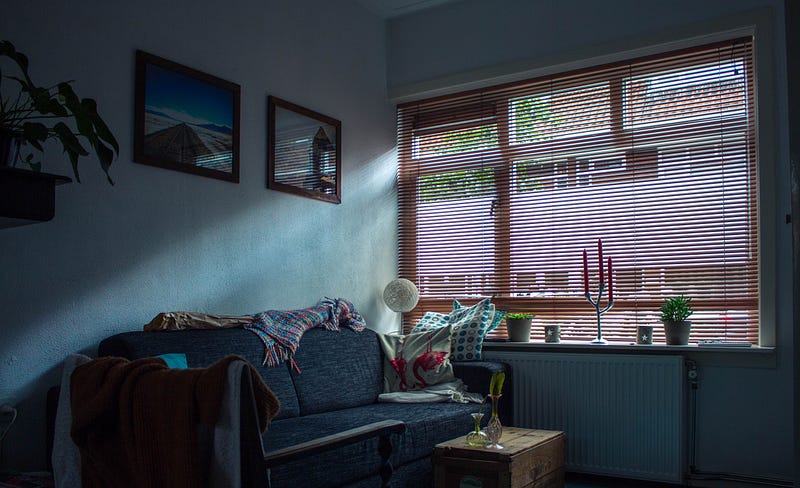
The whole time, the ray of blue-ish sunlight that came in through the window of Natsuko’s house in Tokyo never stopped reminding me of my mother. I need to go home and see her. I might not know or have the urge to ask why I was brought to this world. I believe she has the right to know that I care for her.
You can read a very personal tribute to Mieko and the book from my favorite author Mr. Murakami here.
To get this book online, here are some links: Amazon, Book Depository, or support our Malaysian independent bookstore, Lit Books. (Note: As an Amazon Associate, I earn from qualifying purchases.)
For more stories on women and other disempowered groups, follow Fourth Wave.
For more by this author, try:


