
Born in Blackness Is the One Book Everyone Needs to Read
Seriously, it’ll change your worldview
Our October Readers and Writers Book Club (RaWBC) selection, Born in Blackness: Africa, Africans, and the Making of the Modern World, 1471 to the Second World War by Howard W. French, is one I can’t recommend highly enough. Everything you thought you knew about Europe’s ascent to greatness (and that of the U.S. by extension) falls seriously short of how all of it actually came to be. Let me just state for the record that, without coveting and exploiting Africa’s wealth (first gold and then manpower), places like Portugal, Spain, France and a number of other European destinations would amount to nothing more than shithole countries.
Forget What You Thought You Knew
Most of us were never taught that, long before transatlantic slavery, Europe was thoroughly fascinated with Africa primarily due to its inexhaustible supply of gold. No, instead, we’re told that Africa’s usefulness to Europe begins with the enslavement of Black bodies. Often portrayed as an obstacle “explorers” were forced to navigate around in order to reach China and India, Born in Blackness shatters the outright lies we’ve been taught about Africa’s place in the modern world while using abundant research (including plenty of primary sources) to show that Africa’s Gold Coast was the destination long before Europeans set their sights on India’s spices and other Asian resources. Wars were literally fought between Europeans for Africa’s wealth, which was then used to build and support European economies. Without Africa and Africans, the modern world as we know it wouldn’t exist, period.
Lest you think Europeans just pulled up to the Continent and began raiding its resources and trafficking its citizenry in 1619, French let’s us know this isn’t at all how it went down. Here’s an excerpt from the book describing how business flowed between the two continents and helped establish trade relationships within Europe as far back as the mid 1400s:
Metalwares and textiles for onward export to Africa started to play an important but little heralded role within Europe itself as Portuguese merchants began selling goods acquired in Africa to northern Europeans. These included the prized “grains of paradise,” or malagueta pepper, a type of chili that the Portuguese bought in large quantity near Sierra Leone and in what is modern-day Liberia, a region they called the Pepper Coast. In exchange, northern Europeans sold the Portuguese the textiles and metal goods that were in heavy demand in the newfound African societies. Although little remembered, this merits recognition as the first of the so-called triangle trades, long before the famous transatlantic pattern that goes by this name was established. By virtue of its commerce with Africa, southern Europe now became more economically linked with northern Europe than it had ever been before, particularly with Germanic lands and the Low Countries.
As you can see, Europe’s relationship with Africa began with a respectful trade and one desperately needed by Portugal in order to survive (Portugal had nothing of any real value to trade before its contact with Africa). African kingdoms, on the other hand already had long trading relationships with the Arab world and, seeking to expand their commerce, became trading partners with Europeans, beginning with Portugal.
Why Has This History Been Hidden and Ignored?
A second, separate triangular trade with India also preceded the more popular triangle trade (transatlantic slavery) we all learned about in school, but that’s another story to be shared at another time. Getting back to Africa and how it shaped modernity, I find it interesting how the only so-called “trade” traditionally taught in grade school focuses solely on the trafficking of African bodies. This, despite the fact that this was preceded by hundreds of years of diplomacy and business relationships which had nothing to do with slavery and everything to do with Africa’s unparalleled wealth! We all should question why these things are so seldom taught. Why is there such an insistence on the narrative of Africa being a poor continent and nothing more than a source of human beings to be used and abused?
The official history we’re all familiar with is that Africa was little more than a nuisance Europe struggled to navigate around in order to reach Asia. As French more than illustrates in Born in Blackness, however, Africa was the first love interest Europeans fought each other over in order to woo. From the time word spread about Africa’s gold, it was a rush between European powers as to who would broker the best deal with African rulers in order to establish trading relationships with the continent. It would be 30 years after the thirst for Africa’s gold brought European “explorers” flocking to the Continent until they’d actually begin focusing in earnest on India. West Africa was actually referred to as the New World long before that title was thrust upon the Americas.
French details so much in this book with regards to Africa’s sophistication in business, politics and society that most of us would never truly know otherwise. I mean, we hear mention of great kingdoms and the obscene wealth of men like Mansa Musa, but Born in Blackness takes a deep dive into these topics presenting us with research that brings dates and events to life in a way the world needs to know about… especially CHOSSA and continental Africans.
Africans, Please Know This
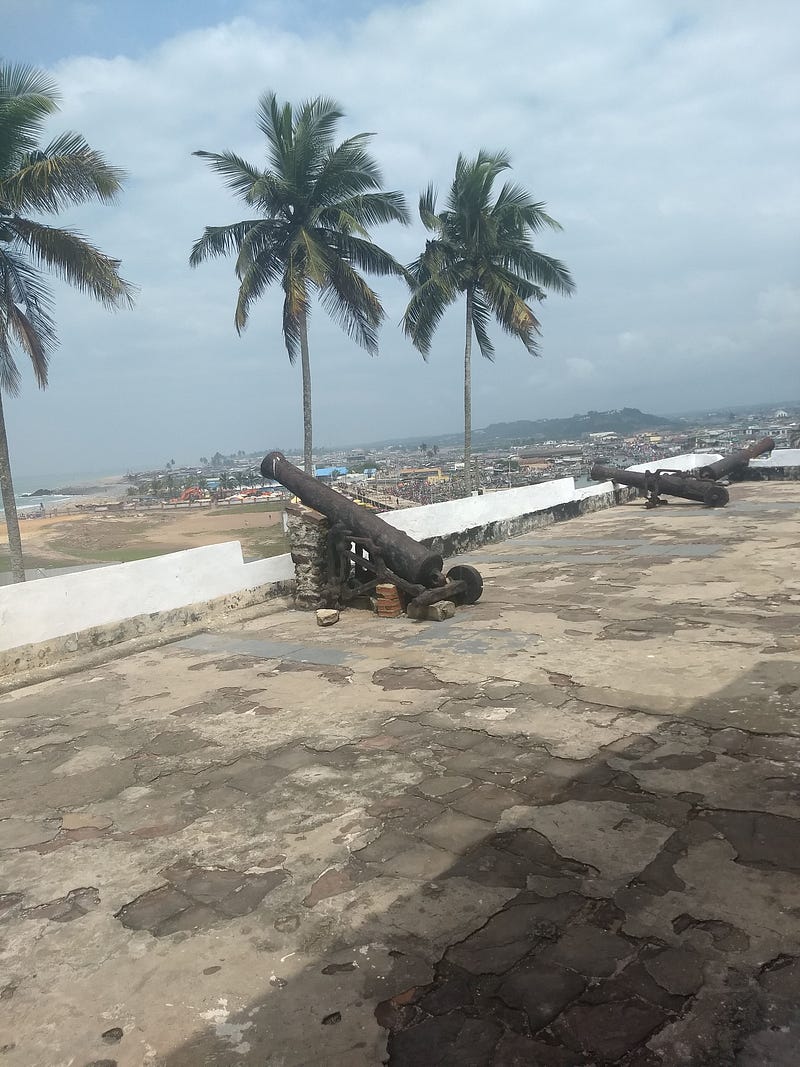
Speaking of continental Africans, I want to take a moment to plead with you to read this book. Yes, I want CHOSSA to read it, too, but this book is important to the Continent and shouldn’t be missed. Among countless examples, French repeatedly points to the history surrounding the fort in Elmina (which most call a castle, but is actually nothing more than a dungeon complete with doors of no return where Africans were forced through and onto ships). I’ve visited the dungeons at Elmina and nowhere during my tour or in any of the literature about the hellish place where our ancestors were held captive was I told that it was originally constructed by Europeans to store and protect gold! Yes, our guide made mention of the war fought between Portugal and Spain for control of Elmina and he told us about the Dutch who once occupied the fort and the surrounding area. But as informed as he seemed to be, he didn’t paint nearly the picture Born in Blackness does in telling the complete history of Elmina and its most famous landmark.
Literally, French describes Elmina as the site and subject of “…history’s first intra-European colonial war at sea…”. Elmina (then known as “La Mina”) is mentioned in Christopher Columbus’s letters after his own visit to the fort in 1482. I knew I was standing on a historical site where my ancestors were held prisoner, but that’s it. I had no idea Columbus had been in that very space or the enormous role it played in the making of the modern world. Looking back at all of the photos we took during our visit, I’m seeing them in a new light now that I know the significance of things like the mote one has to cross to get into the fort, the high walls with tiny peepholes and the cannons pictured below.
I Cannot Tell it All
From Africa’s wealth to the beginnings of slavery to the many, many revolts (by Africans in Africa and enslaved people in the Americas) and even how enslaved Africans in Haiti played a pivotal role in the freedom of all CHOSSA and the building of America, there’s just so much that is covered in this book which corrects the record (and fills in a few very important blanks) that I honestly don’t feel I can do it justice in this essay. Even when it comes to transatlantic slavery, so much attention is given to the Americas when we are taught about it that few even know about the very first, extremely brutal European plantation systems which existed in Africa, itself. Not on the mainland, of course (where French also details how Africans often successfully fought European raiders with strategic force using sophisticated weaponry such as poisonous darts, highly skilled archery, various sea maneuvers — including being highly adept at swimming the likes of which Europeans had never seen before — and so on), but on the formerly unpopulated African island of Sao Tome, which was were Europeans laid the foundation for the system of slavery so many of our ancestors are connected to.
There’s. Just. So. Much. I can’t tell it all. I’ll just end with saying this book is a wealth of information and one every single person in the U.S., Europe, Asia and Africa needs to read in order to truly understand world history and how Africa and Africans have shaped the world as we know it today.
A Difficult and Tedious Read
As much as I enjoyed this book, I will say that it was a hard one to read. I thought it was just me until hearing the same from others who read it (or tried to). Having enjoyed a couple of other books by Howard W. French, I was already familiar with his writing style, but even that couldn’t prepare me for this read. At times a bit stilted, the information packed in this book is a lot to digest… almost too much. This wasn’t my first attempt at reading the book as I’d preordered it months before its debut and tried my best to devour it starting with the day it was released.
Having finally read it, I find myself still going back to reread sections of it and reviewing many of the notes I took. I’m a reader who is easily distracted by words I’ve never heard and footnotes… I simply have to stop and take a detour to dive into definitions and resources offered then and there as I’m reading, so it took me a long while to get through this one. Plus it’s a whopping 512 pages long. Parts of it I read alone (in the ebook version), other parts I read along with the audiobook version (which I checked out from Hoopla) and some parts I listened to without reading along at all. It was an effort, but well worth it if you can stick with it.
Whether you can read Born in Blackness all the way through or not, I highly recommend you check a few of French’s interviews about the book out on YouTube. Here are a few of the many I’ve watched that I think you’ll enjoy:
Other Essays on Born in Blackness Here on Medium
I’d also like to direct you to a couple of other essays written on this book by Andrew Gaertner and Mal Warwick.
Come Join the Club!
Please remember to also follow the RaWBC tag for other essays written by members of the Readers and Writers Book Club here on Medium. An official announcement will drop this week, but the next book we’ll be reading is Caste by Isabel Wilkerson (just a little lagniappe for those of you who’ve read this far). For more information on the book club, read the following essay and just jump in whenever you’re ready!
Thanks for reading and now please go grab or borrow a copy of Born in Blackness: Africa, Africans and the Making of the Modern World 1471 to the Second World War by Howard W. French!
Affiliate Disclosure: This story may contain affiliate links. If you click on these links and make a purchase, I may earn a small commission at no additional cost to you. I do my best to only recommend books, products or services I personally use and that I believe you’ll enjoy, too.