
Biffin
An apple a day… helps us write today’s column
Today’s New York Times Spelling Bee letters:
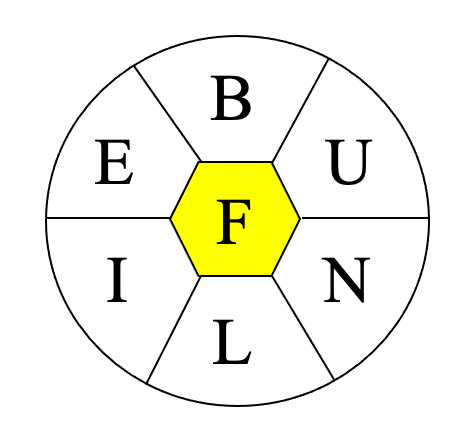
B, E, I, L, N, U, and center F (all words must include F)
Merriam-Webster says…
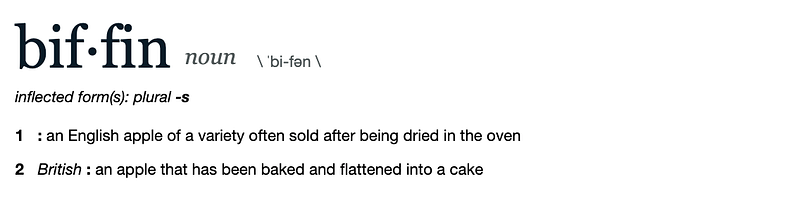
Silly little dictionary! Don’t you know biffin can’t possibly be a word if the New York Times says it ain’t?
For further fascinating facts, check out the Spelling Bee Master.
What’s your favorite dord* from today’s puzzle?
My Two Cents
I have a feeling today’s column will leave many of my readers ––or even all three of them––underwhelmed. And I throw myself upon their gracious mercy, as I was limited in choice for today’s daily dord*. Here is the list supplied by the Spelling Bee Master:
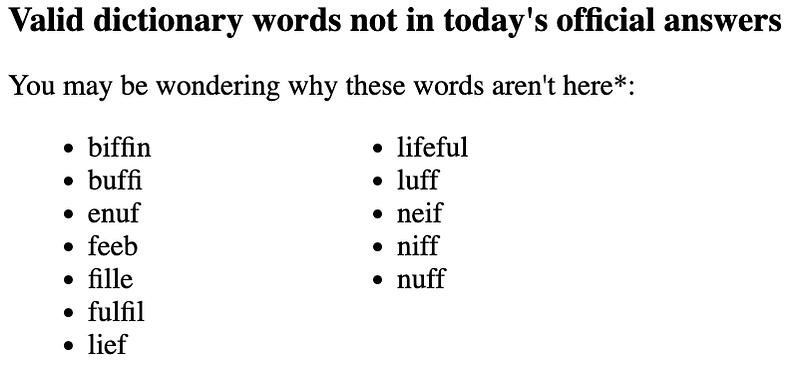
Barely twelve words, of which four (enuf, fille, niff, nuff) aren’t even in the dictionary! How can I tease the dictionary about a word that it doesn’t contain?!? That left me with eight words, but fulfil is just a variant of fulfill, and I already wrote an article about luff in June of last year. So, my dear readers… or reader… you’re stuck with biffin for today.
As a side note… Happy Twosday! Today is 2–22–22, or if you want it in palindromic European form, 22–02–2022. And it happens to fall on a Tuesday. So in honor of that, I’m going to try and publish today’s column at exactly 2:22 pm EST. I would have loved to publish it at 22:22 here in Spain, where I live, but the European time stamp won’t appear on Medium anyway.
Fruit apple
Our friends at Merriam-Webster explain that biffin comes from “beefen, from obsolete beefin ox for slaughter, from Middle English, from (assumed) Middle English beefing, from Middle English beef + -ing one of a (specified) kind; from its deep-red color.”
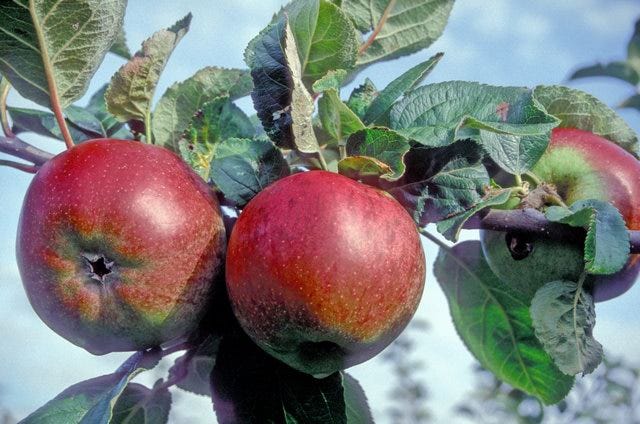
I don’t known about you, but I’ve seen much deeper red color on apples. Or maybe it’s just that biffins don’
The Norfolk Biffin, also spelled Norfolk Beefing, is an apple that originated in… surprise, surprise: the county of Norfolk in England. According to the National Fruit Collection web site in the UK, the biffin “was first recorded in 1807” and the fruit has “very firm, coarse-textured, juicy flesh which is very acid.”
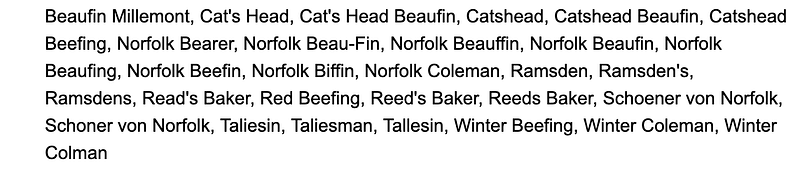
Oh, and it likely suffers from an identity crisis or multiple personalities. These are all the aliases it is known by, according to Scotland Yard. Or a list I found in a yard in Scotland… I forget which.
According to a bunch of sources that Wikipedia lists but that no longer have any articles available about biffins, these apples are round yet slightly flat, about three inches by two and a half inches (or seven by six centimeters, for those of you following in metric units). The skin is yellow-green, but with brown-purple and dark red streaks–– which makes me wonder once again whether the photo I used earlier really shows biffins.
The flesh inside is greenish and crisp; some claim they taste a hint of cinnamon when eating it. These apples get sweeter during storage as they turn a deeper brown in color and their flesh solidifies. That makes them good for cooking and drying. And by drying I suspect they mean the biffins themselves, not for drying ones clothes. By March of the year after harvesting, they are sweet enough to use as dessert apples.
Did you know that Eve gave Adam a biffin apple? And that it was a biffin that landed on Isaac Newton’s head, inspiring him to create gravity? Yep, these are all true things you can verify at Just Made That Up!
Baked apple
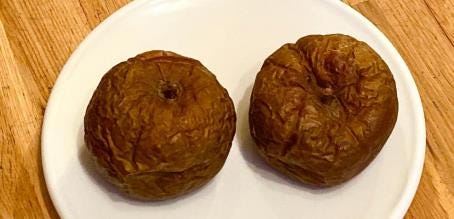
The Norfolk biffins that are dried in the oven are known as… surprise, surprise yet again: biffins. In order to create this treat, the apples are baked very slowly in an oven for a long period of time. In fact, there’s a biffin that’s been bakin’ in Norfolk since the days of Robin Hood. And yes, this is another interesting historical fact you can verify at Just Made That Up!. Congrats! You’re starting to catch on!
According to the Royal Horticultural Society, an 1882 recipe for biffin explains that in order to make the tastiest one, a person should:
…choose Norfolk Biffins with the clearest most blemish free rinds, then lay them on clean straw on baking wire and cover well with more straw. Set them in a very slow oven for four to five hours. Draw them out and press them very gently, otherwise their skins will burst. Return them now to the oven for another hour, then press them again. When cold, rub them over with clarified sugar.
Charles Dickens mentions both biffins as apples and treats in some of his works. In his 1855 story, “Boots at the Holly-tree Inn”, this exchange occurs between Boots and Cobbs:
“Mrs. Harry Walmers, Junior, fatigued, sir?” says Cobbs. “Yes, she is tired, Cobbs; but she is not used to be away from home, and she has been in low spirits again. Cobbs, do you think you could bring a biffin, please?” “I ask your pardon, sir,” says Cobbs. “What was it you — ?” “I think a Norfolk biffin would rouse her, Cobbs. She is very fond of them.”
And in the 1848 novel Dombey and Son, Dickens uses an interesting metaphor to describe the knowledge attained by one of the characters: “The fruit laboriously gathered from the tree of knowledge by this latter young gentleman, in fact, had been subjected to so much pressure, that it had become a kind of intellectual Norfolk Biffin, and had nothing of its original form or flavour remaining.”
Well, was today’s column as thrilling as you expected it to be? Well, at least I didn’t mention Apple the company, not even once. Oh, wait… oops! Anyway, and to quote Will Hunting, “How’d you like them apples?” Just make sure them apples aren’t biffins, though. Because the editors of the Spelling Bee decided that biffin is a dord*.
And now, let’s see if I can press the submit button just in time to publish this at 2:22 on 2–22–22…
You can check out my previous entry on another dord* here:
What the heck is a dord, you ask? Here’s the answer: