
Bible Study Guide Day 002: Genesis 4–7
Then the Lord said, “My Spirit will not contend with humans forever, for they are mortal; their days will be a hundred and twenty years.”
Genesis 6:3
Genesis 4
Cain and Abel
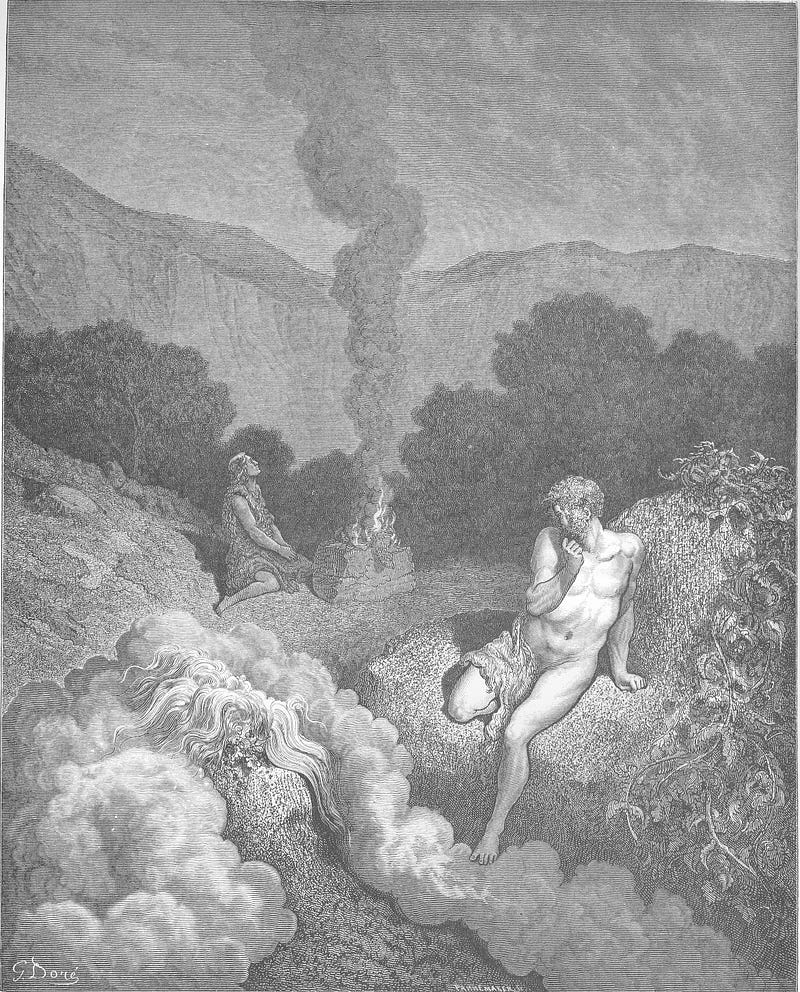
In chapter 4, we see the story of Cain and Abel, the first two sons of Adam and Eve. Cain was a farmer and Abel was a shepherd. They both brought offerings to God, but God only accepted Abel’s offering because it was from the best of his flock while Cain’s offering was not as valuable. This made Cain very angry and jealous towards his brother.
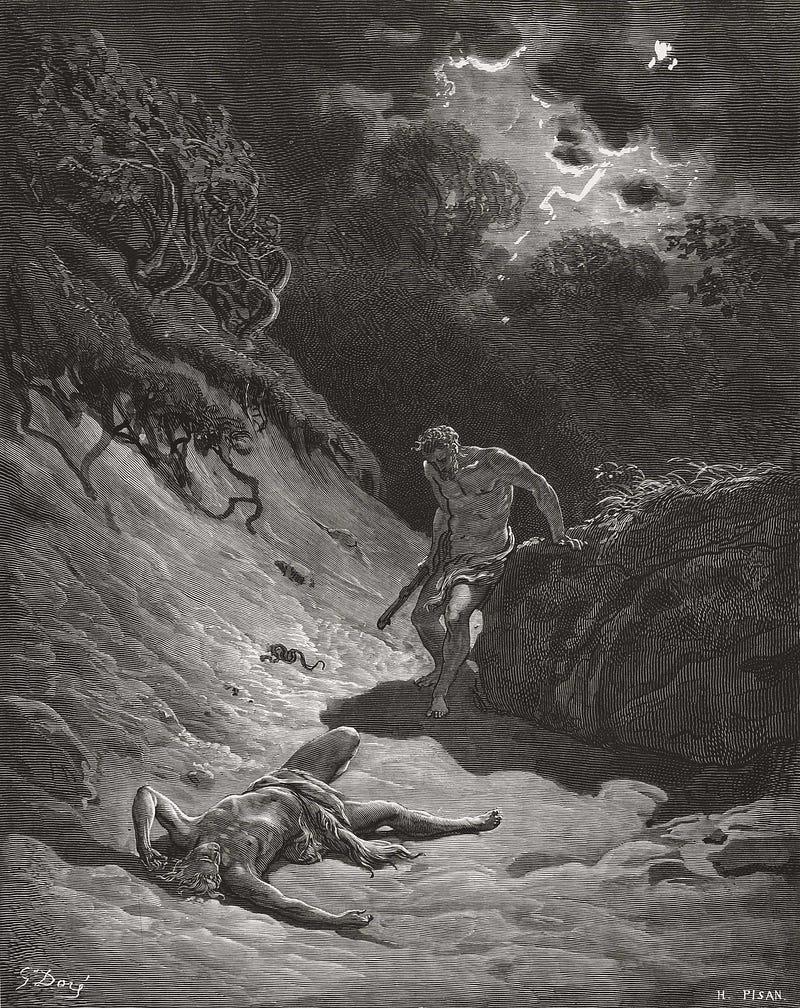
Cain decides to attack and kill Abel out of envy, and when God asks him where his brother is, Cain responds with the infamous question, “Am I my brother’s keeper?” This shows not only Cain’s lack of remorse for his actions but also his defiance towards God. As a consequence, Cain is cursed by God and sent to wander the earth for the rest of his life.
God marks Cain with a sign so that no one will harm him, showing His mercy and protection even towards those who have sinned against Him.
Following this, we are given a detailed account of Cain’s descendants. We see that sin continues to spread throughout the generations with murder, polygamy, and other forms of evil becoming prevalent. The story of Lamech stands out as he boasts about killing a man for hurting him and declares that he will be avenged seventy-seven times, showing the escalation of violence and disregard for human life.
Adam and Eve give birth to another son, Seth, who continues the godly line that was started by Abel. This shows God’s faithfulness and grace in providing a way for redemption even after the first humans had fallen into sin.
Genesis 5
From Adam to Noah
In chapter 5, we are given a genealogy of Adam’s descendants up to Noah. It is interesting to note that Methuselah, the oldest recorded person in the Bible, died the year of the great flood.
The names and ages listed show us the gradual decrease in human lifespan, reflecting God’s judgment on mankind after their disobedience and fall from grace. Despite this, we see a glimmer of hope in Enoch, who walked with God and was taken by Him without experiencing death.

Genesis 6
Wickedness in the World
In chapter 6, we learn about the wickedness that had spread throughout the earth. The sons of God (fallen angels) had married daughters of men and their offspring were called Nephilim, known for their great size and strength. This intermarriage between good and evil corrupted the human race even further.
Noah and the Flood
God sees the wickedness of man and is grieved by it, deciding to wipe out all of humanity with a flood. However, He finds favor in Noah who was righteous and blameless among his generation.
It’s possible that Noah’s family, these particular descendants of Adam and Eve, is the only bloodline not infiltrated by the Nephilim, making them pure in God’s eyes.
God tells Noah to build an ark and bring two of every living creature into it, along with his family. He is going to destroy every living thing on earth except for those in the ark.
Genesis 7
After the ark is built, God tells Noah to take seven pairs of clean animals and one pair of unclean animals into the ark. He also instructs him to to take seven pairs of every kind of bird.
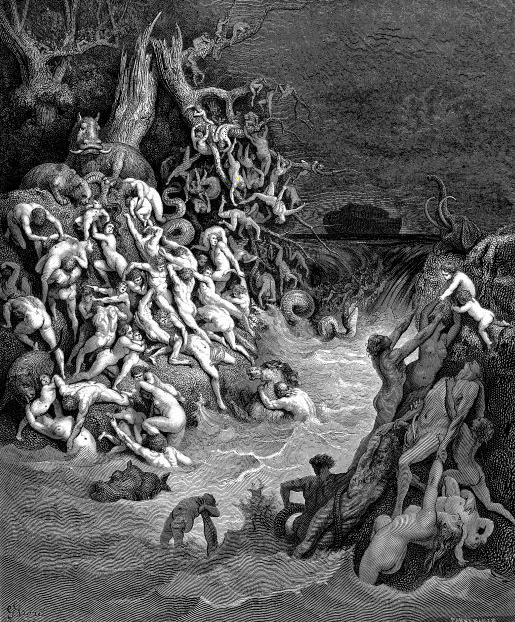
When Noah is six hundred years old, the floodwaters come and cover the earth, destroying all life outside of the ark. The rain continues for forty days and nights, fulfilling God’s judgment on the evil in the world.
The waters rise and lift the ark, carrying it safely through the flood, while every living thing on the face of the earth perishes.


