
FAMILY
Between a Father And His Son
My old man and the late, great Ted Williams
My dad, Roy, and I never got along under the same roof. No matter what, we just got under each other’s skin.
When I enlisted in the Marines, there was a thaw in our icy relationship, but only a slight one. I loved my dad and my mom, of course. We just grated on each other. To this day, I don’t know why. Thankfully, that changed before he passed away.
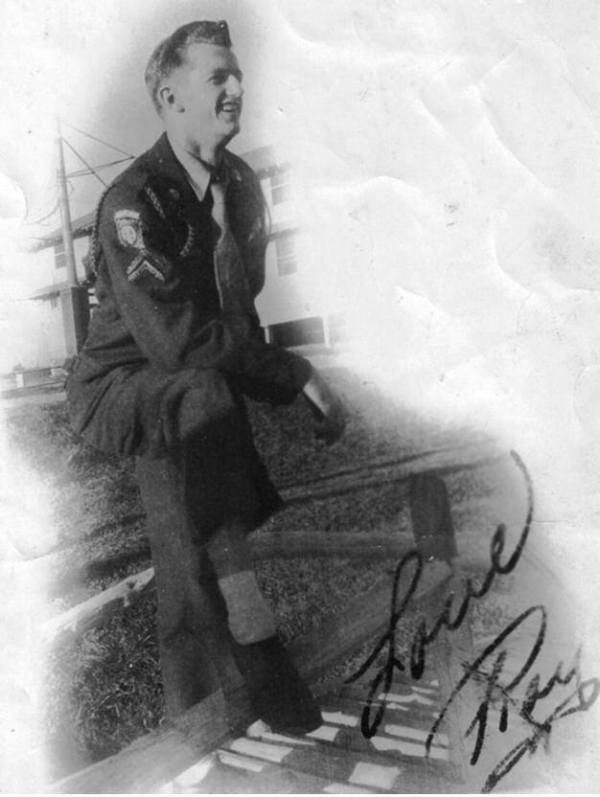
My dad was a veteran of World War II, having served with the 504th Parachute Infantry Regiment, 82nd Airborne Division. He came home with two stars on his jump wings (indicating two jumps into combat), a Bronze Star, and two Purple Heart medals. He never talked about his awards or time in combat.
While stationed at Fort Lewis — I believe it’s called Joint Base Lewis McChord — in Washington State, my folks announced they were flying out to visit. I was stunned. In my mind, it was so out of the ordinary for them to fly across the country. Don’t get me wrong; I was ecstatic over that bit of news.
My then-wife and I prepared for their arrival. The girls — we had two at the time — would sleep in our room, and my parents would camp out for the week in their room.
I took leave so I could spend the entire week with them. I picked them up at Seattle-Tacoma Airport, taking the long way around to give them a tour of the area. At the time, I owned a 1990 Hyundai. I can’t recall the model’s name — it’s been a few years. The only power the car had was the ignition switch. No air conditioning, hand-cranked windows, and a basic AM-FM radio, which, surprisingly, came with a cassette player.
Pop, who was 6'2", wasn’t too keen on such a small car.
“How the hell do you drive this damn thing?
I just chuckled and kept driving.
It was around this time that I’d begun collecting baseball cards. I didn’t have many at the time, perhaps a couple of thousand cards. The pride of my collection was a 1989 Upper Deck Ken Griffey rookie card. It was worth about $200.
I was also setting up at card shows on the post, selling what I didn’t want and trading or buying cards I needed. For some reason, this piqued the old man’s interest. Little did I know how much.
Their visit over, I drove my folks to the airport and said goodbye. I always did tell my mom I loved her — pop, on the other hand, not so much. But I decided it was time to tell him I loved him. He wasn’t sure what to say and didn’t say anything. I laughed, having taken him by surprise.
He called a couple of weeks later, saying he’d bought a box of baseball cards. Before I knew it, we were talking about baseball cards every time we spoke on the phone. They became the thing we had in common.
I left active duty two years later thanks to some injuries. I was able to retire from the National Guard — after they told me I was being retired because of my injuries. No warning. Don’t let the door hit you in the ass. You’re done.
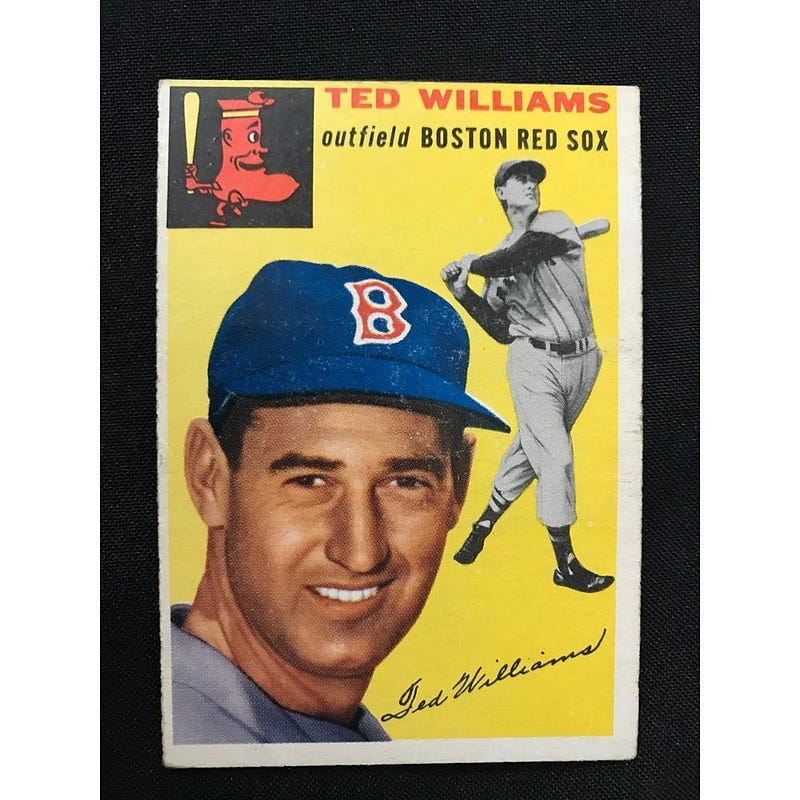
Before I left Fort Lewis, I had some unfinished business. I bought a complete set of 1960 Leaf baseball cards for myself and a 1954 Topps Ted Williams card. For some reason, Williams was the first and last card in the collection. I bought card number 250. It set me back $700, but I had plans for it.
Back in Massachusetts, Pop’s birthday was approaching. By this time, he was all in on baseball cards.
I asked if mom knew how much he spent on them.
“Christ, no, and don’t tell her,” he said.
On his birthday, I gave him the Ted Williams card. He was floored.
“Christ, I can’t take this,” he said.
I looked at him and said, “I’ll get it back sooner or later.”
He knew what I meant and roared with laughter.
We had the same sense of humor.
In 1994, my mom found him on the floor on the porch. He’d had a seizure. After a couple of days in the hospital, he got the news we didn’t want to hear. He had a glioblastoma — a brain tumor — and it was inoperable.
Knowing what baseball meant to him, I reached out to the Red Sox, hoping to get pop into the clubhouse to meet the players. Some pissant PR guy said that would be impossible that year, but it could be arranged after spring training the following year.
If you’re a baseball fan, you already know the players went on strike that summer. It was the first time in 90 years that the World Series was canceled.
I knew Pop wouldn’t make it to spring training. He passed away on March 25, 1995.
I eventually sold the Willams card, and gave up collecting. I gave away more than 10,000 cards to an organization that helps kids with cancer. What better legacy for my dad than to help children with cancer?
When baseball returned, MLB teams did everything possible to bring fans back.
I wrote John Harrington, CEO of the Red Sox at the time, politely explaining what happened to my dad and where Major League Baseball could stick their bats.
I received a handwritten reply from Harrington sometime later. I was grateful for the response. He took no offense at my letter and invited three friends and me to be his guest at a game. I asked a coworker and his dad to go to the game. There was no better way to share a father-son legacy.
I accept tips, which go directly to Dining for Hunger, a recognized 501(c)(3) organization that looks to end food insecurity. If you can spare a dollar or two, I’d be grateful.
Like what you read? Check out more of my stories below.


