
Be Fast When It Matters
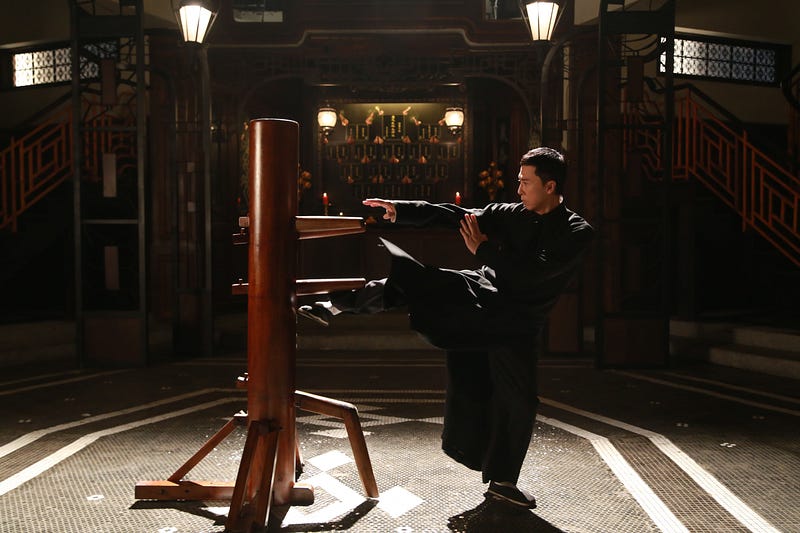
If you’ve ever watched a Kung Fu movie, you’ve witnessed a fascinating relationship: the unity of fast and slow.
Be it Bruce Lee, Ip Man, Mr. Miyagi or Jackie Chan, in day-to-day life, the master is always deliberate. Quiet. Almost lethargic. He walks slowly. He talks slowly. He eats slowly. He’s never in a hurry and no matter who bursts in the front door with exciting or distressing news, he remains unfazed.
But then, suddenly, as soon as the fight begins, he is swift like the wind. Each step lands lightning-fast and with surgical precision. His eyes capture even the tiniest twitch in his opponent’s reactions. He chains together split-second movements, every one of which counts.
And then, as fast as it came, it’s gone. The storm is over. The enemy lies on the ground. And the master folds his hands like a closing flower, retreating back into his zen. Back to unity, where another cycle stands completed.
Meanwhile, we’re not even aware this unity exists. We’re just in fast mode all the time. I mean what do we wake up to? An alarm. If that’s not telling, I don’t know what is. And alarmed we are. Getting ready in the morning feels like rushing to the fire truck, ready to race off, to put out the next inferno, to salvage whatever emergency must have waited for us while we were asleep.
Ding! Wake up! Shower! Get ready! Brush teeth! Faster, faster, faster. Only so we can end up missing the bus, idling in traffic, and forgetting our keys.
That’s the thing: Most of the time, being fast doesn’t matter.
We’re optimizing the wrong things. We raise all hell to drive a little faster, leave the house a little sooner, submit the report a little quicker. And then? Nothing changes. You don’t get a medal for reaching the office parking lot first, no one clocks your front door, and, usually, you don’t get promoted for beating a deadline. These are not the moments that make or break your life.
Of course, feeding the beast is fun. It’s satisfying to fuel the rush, to give in to anxiety. It feels efficient in the moment but, often, won’t make a difference in the end. This is something the Kung Fu master is acutely aware of:
Most of life is better lived slowly.
Everyday chores work better when you’re slower. Washing dishes. Folding laundry. Brushing your teeth. You’ll have to do them just once. You won’t break so many things.
Eating is better when you’re slower. We’re supposed to chew our food, not chug and potentially choke on it. You’ll feel full faster. You’ll enjoy the taste more. You won’t mindlessly gobble up junk.
Sex is better when you’re slower. It’s not a race. Either two people win or both of you lose. It’s about caring, communicating, exploring. Not power-humping to see who can finish first and leave the other in their dust.
Talking is better when you’re slower. Pauses allow you to think and help the other process what you’ve said. What’s more, they can help you summon the courage to say what you really mean. And, of course, there’s room to listen.
Making decisions is better when you’re slower. Especially the big, life-defining ones. Like what to work on, where to live, who to marry. Our gut really screws us on these things. We jump into them too fast. We tell ourselves it’s “just for now,” and then we wake up five years later, wondering where time went.
Yes, sometimes, it really matters to be fast. But those moments are few and far between. A life-changing opportunity. A physically dangerous threat. These are not everyday situations.
That’s why Bruce Lee’s “be like water” analogy has remained so popular to this day. It perfectly captures this balance, this default slowness we need.
“Be like water making its way through cracks. Do not be assertive, but adjust to the object, and you shall find a way around or through it. If nothing within you stays rigid, outward things will disclose themselves.”
Water is a slow judge. It presents itself like a blank sheet of gift wrap, asking: “To what surface should I conform?” As if slowly feeling the shape of an object in the dark. One touch, one brush, one tap at a time. Then, it adapts. But if we want to do this, adapt like water, we must question each situation anew.
“Empty your mind. Be formless. Shapeless. Like water. Now you put water into a cup, it becomes the cup. You put water into a bottle, it becomes the bottle. You put it in a teapot, it becomes the teapot. Now water can flow, or it can crash.”
Despite having no form and being infinitely soft, water is one of, if not the strongest element on earth. When there’s even a tiny path, water will trickle along. When there’s no path, it’ll silently, almost immovably wear away the stone. And if the terrain is wide open, it can transform into a raging torrent. Thanks to this never-ending balancing act, water always finds its way home.
“Water may seem to move in contradiction, even uphill, but it chooses any way open to it so that it may reach the sea. It may flow swiftly or it may flow slowly, but its purpose is inexorable, its destiny sure. Be water, my friend.”
Like water, the Kung Fu master is fast when it matters. And when it doesn’t, which is most of the time, his default is to stay calm. To move slowly.
The words ‘early’ and ‘late’ only affect us in extremes. Too early, too late, these can make all the difference. What falls in between barely registers. There’s always another bus coming, another task waiting, another deal to be made.
Be fast when it matters. When you are, be swift like the wind. But don’t spend life quicker than it already runs out. It passes fast for all of us. When there’s no need to rush, to fight, to struggle, to crash, be calm like a pond.
Remember that life is balance. Unity. And every spectrum has two ends.
If you practice it long enough, maybe, we’ll call you master one day.


