avatarNiklas Göke

Summary

The article suggests that silence and mindful listening are key to becoming smarter, as they allow for observation, learning, and the avoidance of unnecessary speech.

Abstract

The article, titled "The Fastest Way To Become Smarter," uses a parable of four monks who vow to meditate silently but end up speaking, illustrating how unnecessary talk can distract from personal growth. It argues that most conversations revolve around the speaker or matters beyond control, and it encourages readers to filter their words, listen more, and speak only when it can significantly contribute to the situation. The narrative of the monks serves to highlight that wisdom is often found in silence, and by reducing idle chatter, one can become wiser and more intelligent.

Opinions

  • The article conveys that talking without purpose, especially about external events or oneself, is unproductive and common.
  • It suggests that the first monk's reaction to the candle going out was unnecessary and could have been resolved with action rather than commentary.
  • The second monk's reminder of the silence rule after it was broken is seen as unhelpful and distracting from the meditation practice.
  • The third monk's anger at the others for speaking is criticized as a missed opportunity for maintaining calm and focus.
  • The fourth monk's pride in not speaking is portrayed as an ego-driven mistake, as true wisdom would have involved silent meditation without the need for self-congratulation.
  • The hypothetical fifth monk is presented as an ideal, exemplifying the virtues of silence, observation, and speaking only when it can make a positive impact.
  • The article emphasizes that excessive talking increases the likelihood of saying something unwise, while listening and observing lead to greater understanding and intelligence.
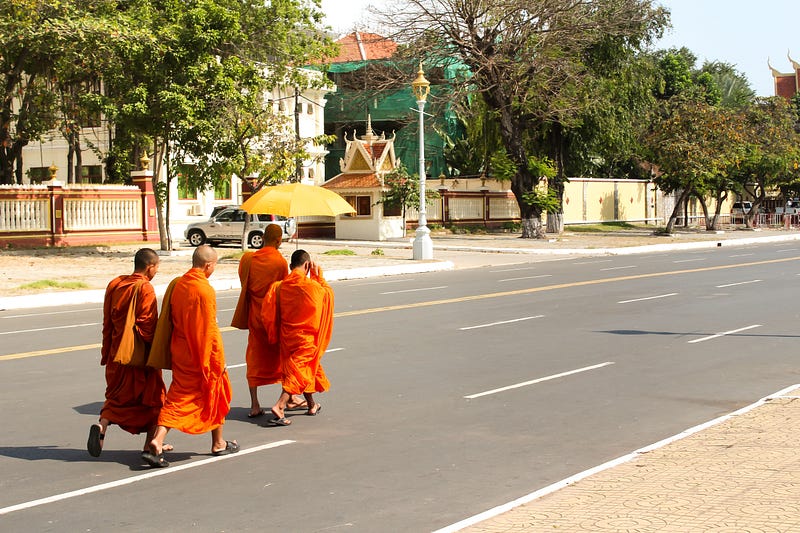
Photo by Marcus Löfvenberg on Unsplash

The Fastest Way To Become Smarter

Four monks decided to meditate silently without speaking for two weeks. They lit a candle as a symbol of their practice and began. By nightfall on the first day, the candle flickered and then went out.

The first monk said: “Oh, no! The candle is out.”

The second monk said: “We’re not supposed to talk!”

The third monk said: “Why must you two break the silence?”

The fourth monk laughed and said: “Ha! I’m the only one who didn’t speak.”

95% of all talking covers only two topics:

  • The person whose mouth is open.
  • Stuff that’s outside our control.

The first monk got distracted by an outside event and felt compelled to point it out. He could’ve just re-lit the candle.

The second monk reminded everyone of a rule that had already been broken. He could’ve just kept meditating.

The third monk vented his anger. He could’ve just stayed calm.

The fourth monk got carried away with his ego. He could’ve just enjoyed his success in silence.

What all four have in common is that they shared their thoughts without filtering them, none of which added anything to improve the situation. If there had been a fifth, wiser monk, here’s what he would have done: Remain silent and keep meditating.

In doing so, he would’ve shown each of the other four monks their shortcomings without a single word. The more you talk, the more likely you are to say something stupid. The less you talk, the more you can listen.

Listening leads to learning.

What’s more, when you’re not talking, you have time to observe the situation until you spot the moment when it’s actually important to say something. Only speak when what you say is likely to have a significant, positive impact, for wisdom is cultivated in silence.

The less you speak, the smarter you get. And, maybe not quite coincidentally, the smarter you get, the less you speak.

Life
Learning
Self Improvement
Mindfulness
Spirituality
Recommended from ReadMedium