
Barong
Let’s dress up this knife
Today’s New York Times Spelling Bee letters:
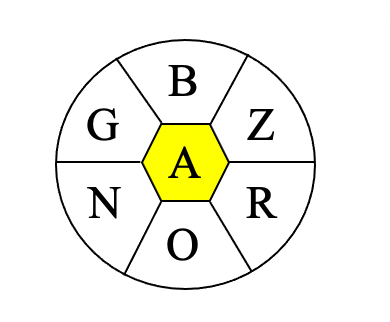
B, G, N, O, R, Z, and center A (all words must include A).
Merriam-Webster says…
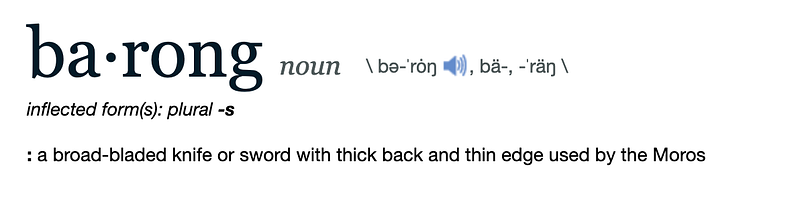
Silly little dictionary! Don’t you know barong can’t possibly be a word if the New York Times says it ain’t?
For further fascinating facts, check out the Spelling Bee Master.
What’s your favorite dord* from today’s puzzle?
My Two Cents
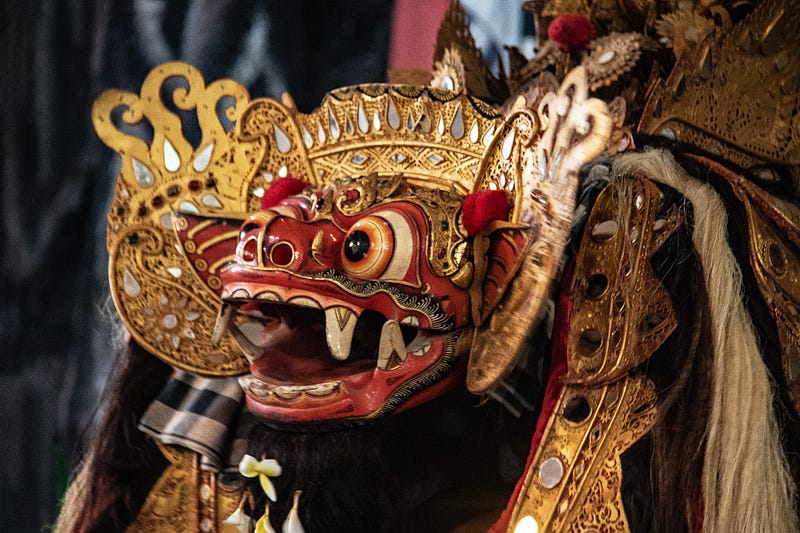
You might be wondering what the photo has to do with today’s article. After all, it’s neither a knife nor a dress shirt (both barongs). True. It’s actually the face the editors of the Spelling Bee make every time they reject a word for the puzzle.
Just kidding. I think…
Actually, the photo is a barong, too. We have two more definitions to add to Merriam-Webster’s frugal offering.
Don’t be a such a pussuk
The barong knives were traditionally used by Muslim Filipino groups, also known as Moros. (Interestingly, the word moro in Spanish also refers to Muslim ethnic groups, but is more commonly used for those in North Africa.) According to an expert I found online named Federico, the barong “is an amazingly effective slicer and despite its diminutive size it has been known to have the ability to cleave a man in two.”
Ouch.
Barong blades measured anywhere between eight and twenty-two inches (20 to 56 cm), and some were made in China and imported. Yes! Even back then! And when the swords went out of style, those Chinese factories were converted into iPhone sweatshops.
Below are three examples of barongs, along with a detail of one of their hilts.
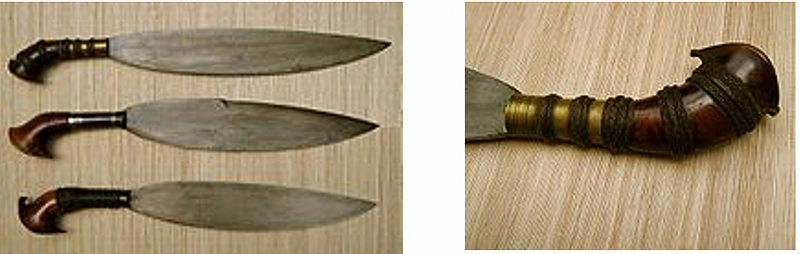
That handle, or puhan, was usually made of banati wood encased in a metal shank, or bungbung, near the blade. The puhans were wrapped in lacquered fibers known as baykaskas. The one-percenters from that time, as one-percenters are wont to do, commissioned their puhans to be made from horns of water buffalo or ebony.
The dalig is the back edge of the barong, and the tip is called a pussuk. What? You thought I crafted that teasing section header gratuitously?
Barongs came with scabbards, which makes sense. You wanted to avoid accidentally cleaving anything in two when you thrust them in your waistband.
Time to dress up
The barong tagalog is one of the national outfits of the Philippines worn by men. Although it’s often shortened to just barong, this is technically incorrect, as the barong in this case has nothing to do with the sword we just discussed. The root word baro (meaning outfit) is modified by the enclitic -ng, and Filipino grammar rules don’t allow for such words to stand alone.
Barong tagalog therefore translates as “Tagalog outfit”, although the dress was used by many ethnic groups in the Philippines, not just the Tagalogs.
The barong was a hybrid shirt that mixed native Filipino and colonial Spanish styles. Traditionally, it was made from woven pineapple or banana fibers. So, in addition to looking sharp, you automatically smelled nice, which helped you attract “the babes”. Bow chicka wow wow!
Today the barong is made from silk or even polyester. Filipino men have Tinder now, just like everyone else, and don’t need to smell like sweet fruit to get dates.
The barong is considered semi-formal and in modern times is worn on the outside with an undershirt, dress shoes and belted pants. I don’t know if anyone is tucking a barong in that belt. That would be pretty badass, though.
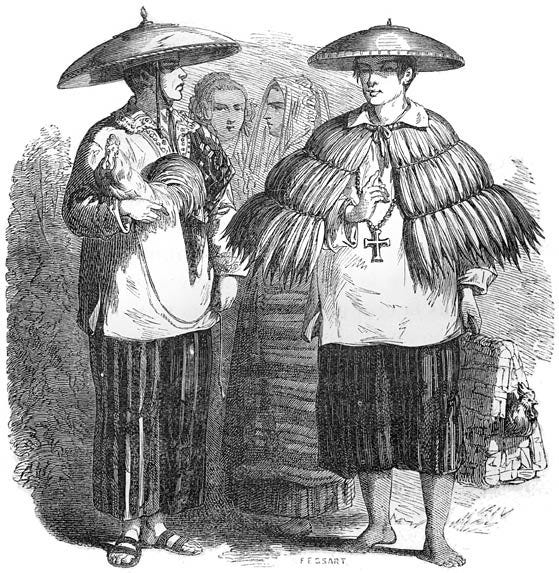
The above illustration shows two men in Tagalog attire, including the barong, rain capes (called esclavinas) and the salakot headwear.
Let’s dance
In Balinese mythology, the barong is the king of the spirits and enemy of Rangda, the demon queen and mother of all spirit guardians. The barong is a feline-like creature, usually portrayed as a lion with a red head, thick white fur, and gilded jewelry adorned with tiny mirrors. Like so:
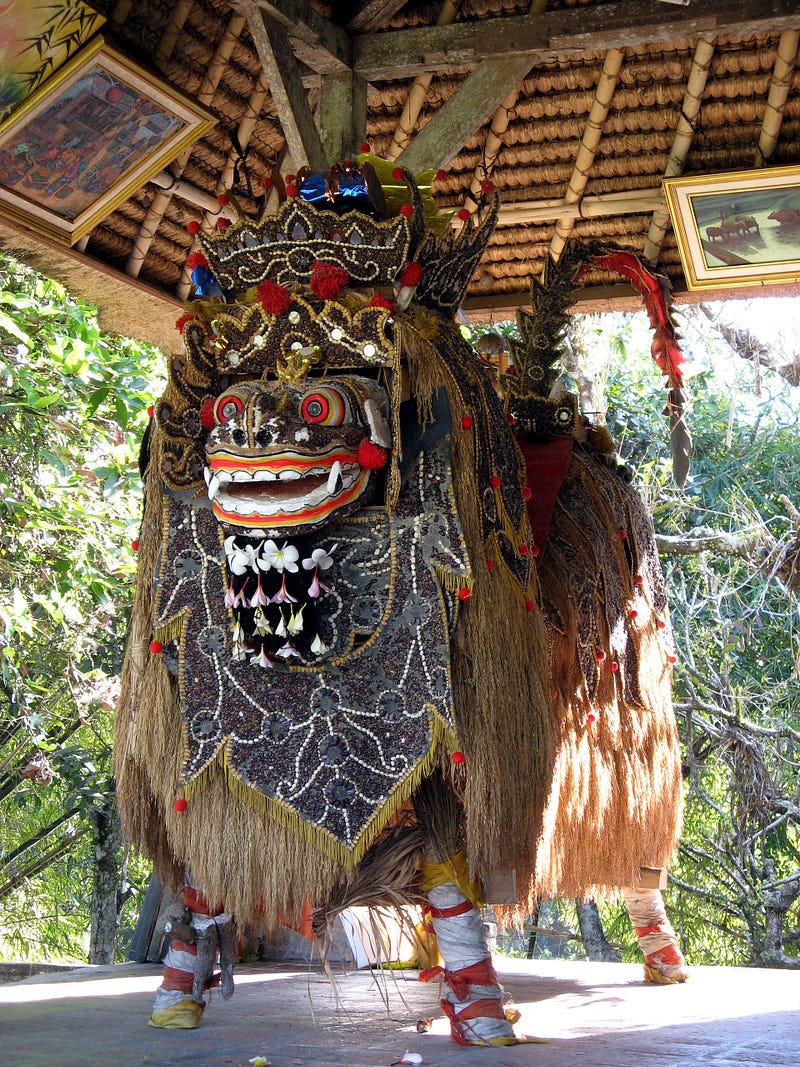
The barong dance, depicting animals that have supernatural powers and could protect humans, features a battle between Barong and Rangda as a symbolic representation of the eternal battle between good and evil.
The equivalent in the States would be a Yankees vs Red Sox ballgame.

See the resemblance?
In any case, whether you want to discuss cleaving swords, traditional clothing, or mythological creatures and their dances, you can’t use the word barong. And that’s because the editors of the Spelling Bee puzzle decided that barong is a dord.*
Please check out my previous entry on another dord*:
*What the heck is a dord, you ask? Here’s the answer: