
Bako Nature Park, Kuching, Sarawak
Sea Stacks, Monkeys, Bearded Pigs, and more
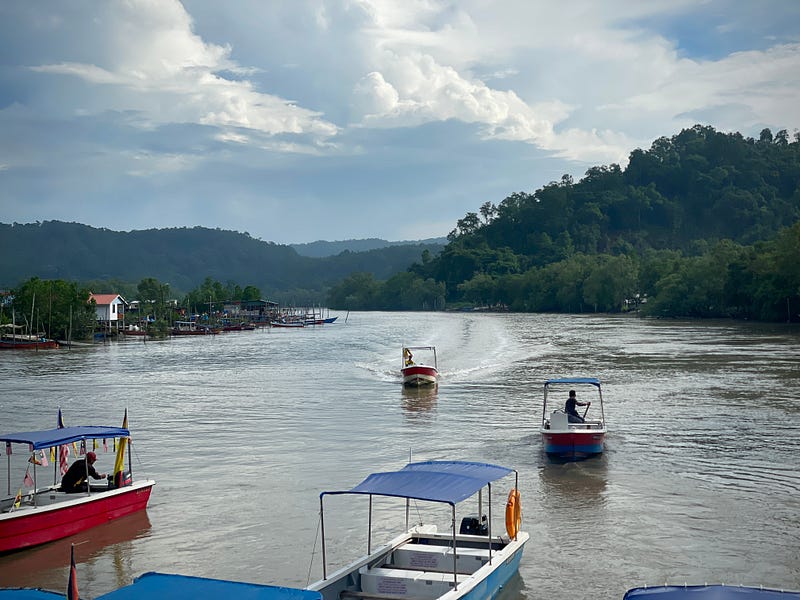
We spent a week in the city of Kuching in Sarawak, a state in Malaysia, on the island of Borneo.
Bako National Park — One of the tours we did was to Bako National Park. It was a 45-minute drive from Kuching to the Bako Park office and then a 25-minute boat ride along the coast to the hiking center.
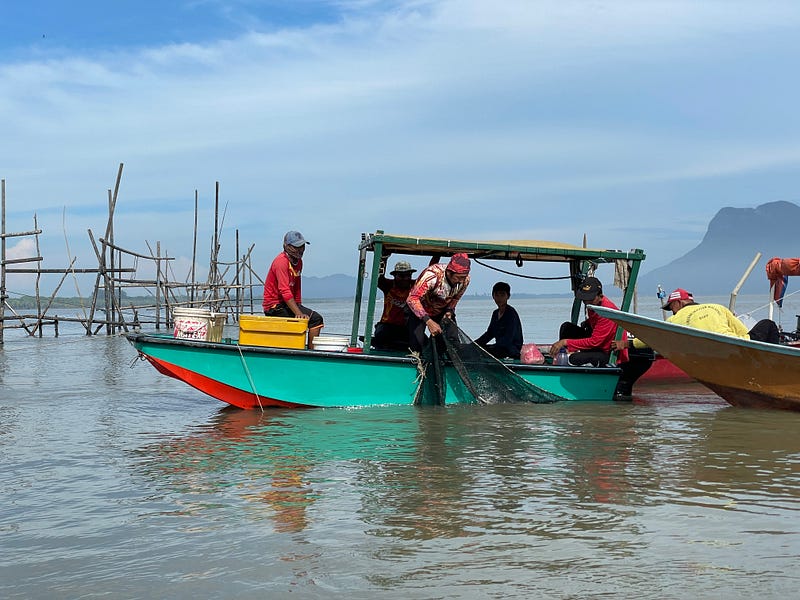
On the boat ride along the coast we spotted fisherman pulling in their haul of pomfret fish. Our boatman stopped so we could watch the process.
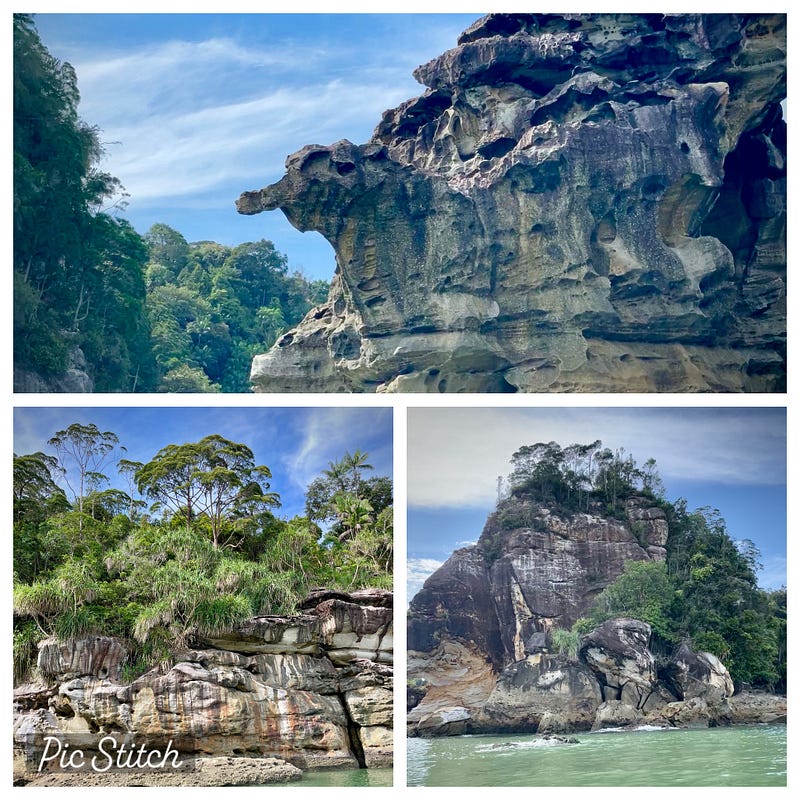
We continued on. The scenery along the coast was spectacular. “Millions of years of erosion have sculpted the rocky headlands into splendidly shaped sea stacks and sea arches.” Two of the beautiful and famous sea stacks we saw were the seahorse and the serpent head.
In the next photo note what seems to be the head of the seahorse sculpted by nature from the sea stack. The photos in the cluster with the seahorse were also viewed along the coast.
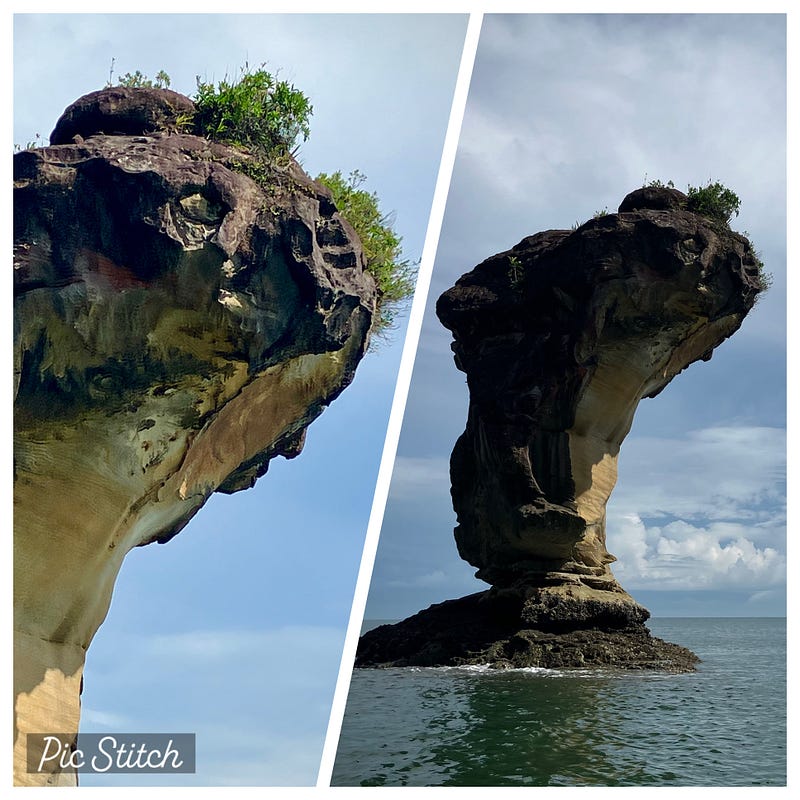
I thought the most amazing view was the sea stack shown in the photos below. As you approach, you get the sense that you are viewing a huge serpent rising out of the water. The image of a serpent is reinforced as you ride around to view the face of the rocky serpent. What a fierce face.
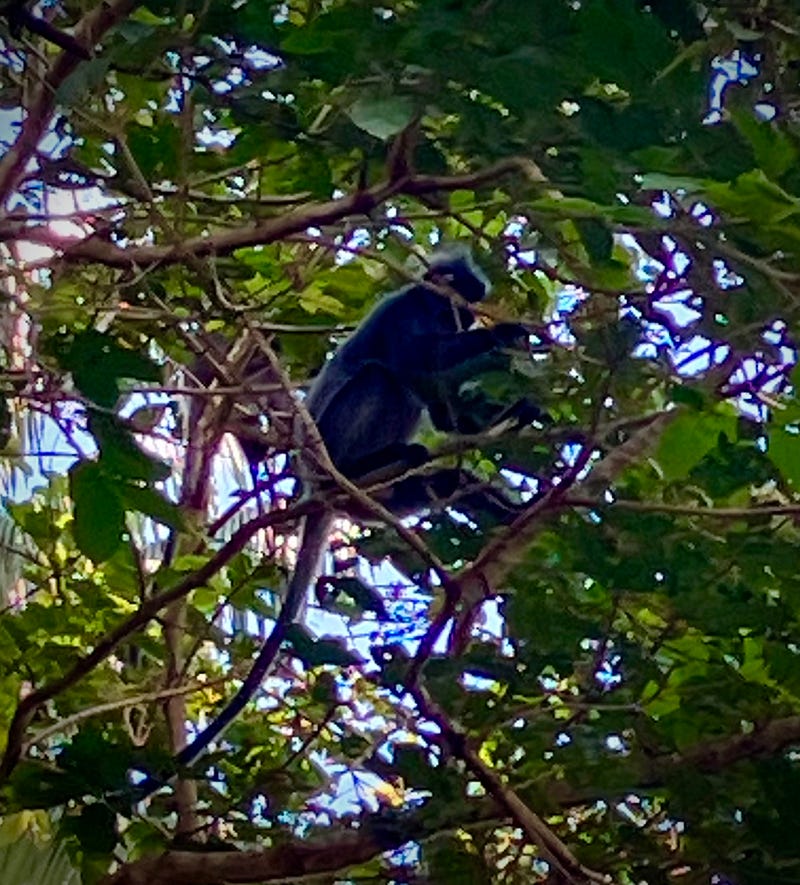
We soon reached our destination, a series of cleared hiking trails, with some huts that could be rented for the night, and a research center. Our goal was to see a proboscis monkey and a silvered langur monkey. We did see the monkeys — sort of. Actually, the shy sleeping monkeys of both types stayed high in the treetops. The people who had spent the night in one of the huts had good views of the monkeys at dawn since that is when the monkeys usually forage for food. Still, it was a successful trip because we were there and they were there, so it counted in my book of successes.
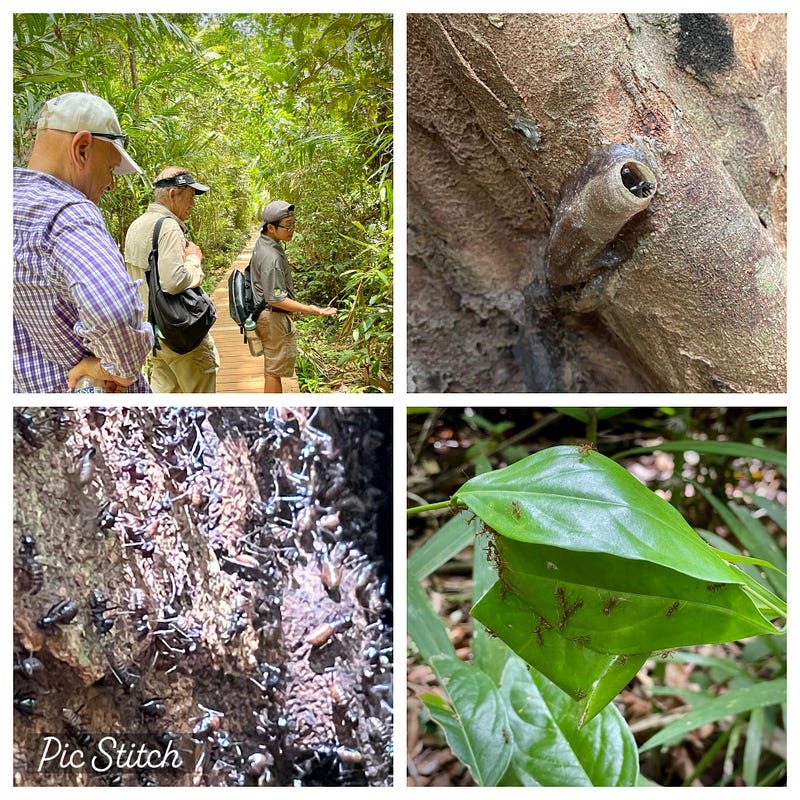
Our tour guide, Carol, was very knowledgeable about vegetation and all the animals and insects. On our hike, she was amazing as she pointed out various types of leaves and insects, and told us which insects we were hearing in the distance.
One of the interesting insects she pointed out was the tube-shaped hive of stingless bees. We watched the bees swiftly flying in and out for a few minutes.
The bottom left photo below is a swarm of termites. I wouldn’t want to find that happening in my house at any time.
Next, she showed us weaver ants weaving leaves together to make a nest.
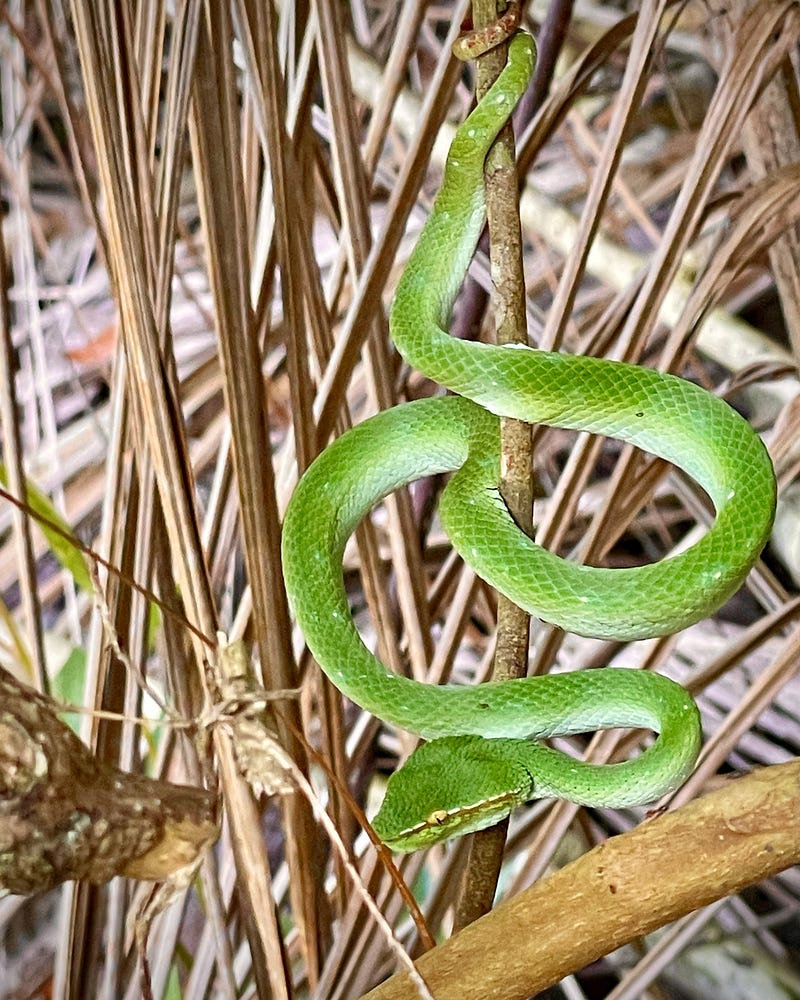
We also saw a small viper resting on a branch. It didn’t move while I slowly crept in to get a close-up shot. It looks large because I was so close, but it was actually only about 10 inches long. The striped area on its head is its heat sensor which helps it to find its next meal.
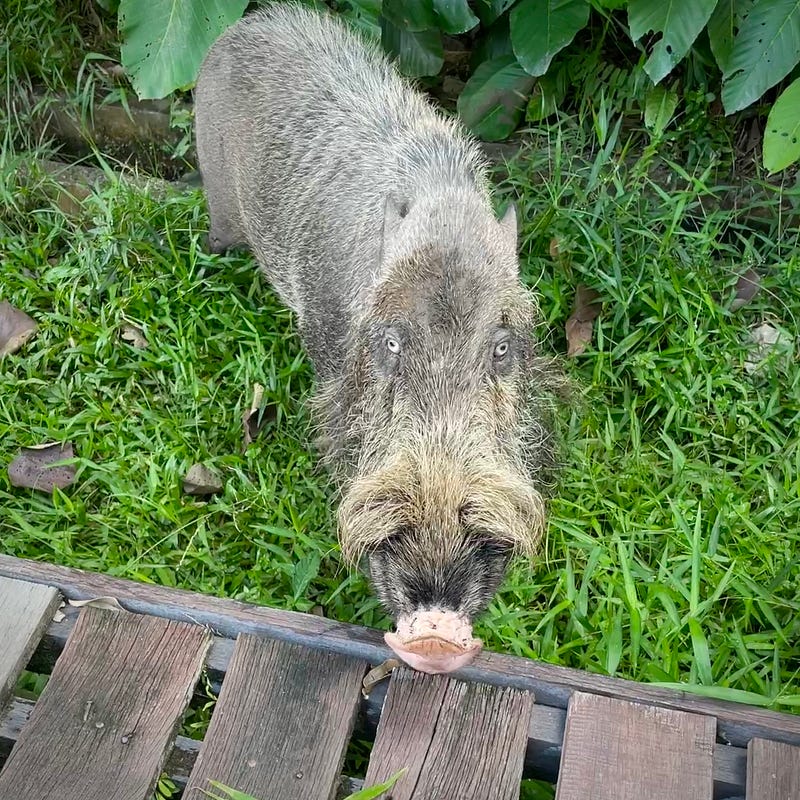
A much larger beast was present at Bako the day we were there. There were 3 Borneo bearded pigs wandering around. They are also known as the Sunda bearded pig (Sus barbatus). When I first saw them I thought the tufts on the snout were ears but the ears and eyes are a long way back from the tufted bearded snout.
They were not aggressive. They ignored us as they slowly moved along digging up the soil with their tufted snout. Carol said they mainly eat slugs and earthworms and anything else they find in the soil. They have a very efficient way of digging up the soil. The grassy areas where they dug ended up a mess of churned-up soil.
They live in social families. The pigs grubbing in the soil when we left for our hike were sprawled on the grass taking their afternoon naps when we returned.
While we had hiked the tide had gone out, so we had to take off our shoes to head across the sandy beach to reach the boat. After the ride back to the National Park office, we climbed out of the boat to head to the car to return to Kuching. As we left the parking lot, we saw that the fishermen from earlier in the day were selling their fish to the researchers and the tourists. Carol stopped to buy some and then we drove back to Kuching.
I Am Noticing a Trend: My Vacations are Becoming Centered Around Wildlife by Michele Maize — beautiful photography
What We Can Learn From Urban Wildlife by George J. Ziogas — Relationships between animals and humans and what we can learn
Wildlife on a Singapore Nature Hike by Rhonda Carrier — I got to see monkeys up close on a hike in Singapore.
Wildlife in Lion City by Luda Zueva — I’m not the only one seeing monkeys in Singapore
The Scariest Wildlife in Australia are the Kangaroos by Bell Dae — But so are crocs and sharks and others


