
Backspin: Whodini — Escape (1984)
Whodini wrote the songs that made the “new school” sing. (81.5/100)
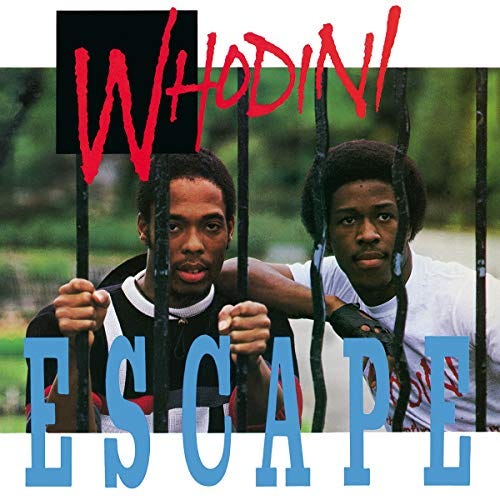
The class of 1983–84 represents the coronation of hip-hop’s first “new school”. While Run-DMC and LL Cool J scored their well earned spots on the honor roll for stripping away the theatrical varnish of the first generation with their sonic reductionism and blunt force deliveries, the evolution of rap songcraft spearheaded by Whodini is equally important in the genre’s maturation.
First generation rap singles generally strived to capture the freewheeling energy of the park jams in which the music took form, often extending upwards of seven minutes as MC’s unleashed verse upon verse of braggadocio atop recreated disco or funk breaks. The unabridged version of Sugar Hill Gang’s seminal “Rapper’s Delight” clocks in at a gobsmacking 15 minutes!
For a new genre largely defining itself by its disregard for the rules of traditional music, the irreverence was exciting. In a world where dogmatic radio programmers slotted no more than three and a half minutes per song, it was also limiting.
With their sophomore album, Escape, the Brooklyn trio of rappers Jalil and Ecstasy and DJ Grandmaster Dee melded the youthful boldness of hip-hop with the discipline of pop craftsmanship to create a set of songs that broadened rap’s reach, and can still rock a party to this day. Where their new school peers built their reps on relentless mic rocking, Whodini built theirs in the way of pop icons from generations past: through songwriting.
From the opening drum kicks of “Five Minutes of Funk”, Whodini begin staking out their territory at the center of New York’s popular culture zeitgeist, not just its hip-hop subculture. Producer Larry Smith’s synth driven sonic template owes more to the digital excursions of Afrika Bambaataa than the barebones drum breaks Smith was simultaneously serving up on Run-DMC’s debut.
But where Bambaata’s production is jittery and frenetic, “Five Minutes of Funk” settles into a mid-tempo grind, giving its thick bassline and slapping snares room to breath. It’s a sound as at home amid the early electro funk and new wave dominating the post-disco club scene as it was in the hip-hop underworld. For their part, Jalil and Ecstasy forego the “hard” aesthetic that landed Run-DMC and LL in boomboxes citywide in favor of calibrated precision, exactingly evoking scenes of after hours revelry in three tightly structured verses. There’s even a simple, but effective, bridge (a rarity in early hip-hop), in which Ecstasy deviates from his rhyme scheme to rock the crowd and build anticipation rounding into the final verse.
Now iconic party rocker “Freaks Come Out at Night” grabs the baton and builds upon the crisp pace set by the opener. Where “Five Minutes of Funk” meticulously set a scene, “Freaks Come Out at Night” evoked a world, an experience, and our universal fascination with the taboo. Smith’s synths are as foreboding as they are funky, mounting tension during the 20 second instrumental build up. It only escalates with an infectious Vocoder-distorted chorus preceding the first verse.
When Ecstasy finally takes the mic, his avuncular baritone delivers the resolution we didn’t know were craving. He exactingly paints a provocative picture, while placing himself (and us) on the outside looking in, making the imagined debauchery seem all the more tantalizing:
Discos don’t open till after dark And it ain’t ‘til twelve ‘til the party really starts And I always had to be home by ten Right before the fun was about to begin Crowds of people lined up inside and out Just one reason, to rock the house But in the day time the streets were clear You couldn’t find a good freak anywhere
Jalil uses his verse to wax poetic on the “freaks” themselves, succinctly capturing the zeitgeist of the early ’80s alternative club scene, where party goers “like to wear leather jackets, chains and spikes.” A more seasoned Ecstasy closes the track with a world weary coda. Having experienced the thrill of the scene, he warns “if you want to live a nice quiet life, do yourself a favor, don’t go out at night.” Not only might the creatures of the night prove a little too freaky for the uninitiated, Whodini seems to be warning, the night’s seductive rhythms might just lure out the freak lurking in you!
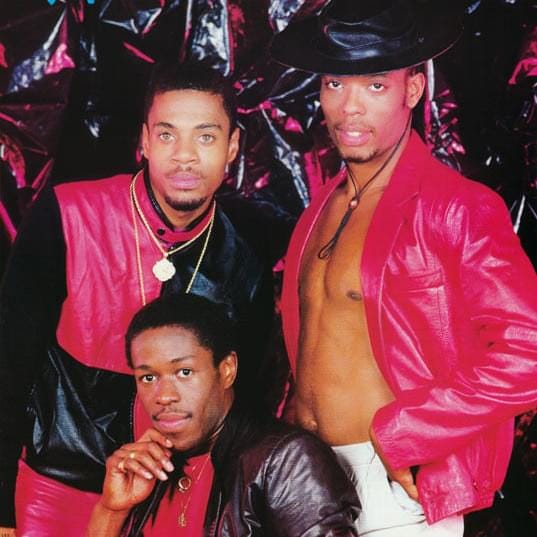
The third in Escape’s trifecta of classics may be Whodini’s definitive moment. The oft-sample “Friends” highlights Jalil’s gift (he penned the majority of the lyrics for both MCs) for capturing universal human experiences and providing insight and big brother wisdom within the comforting familiarity of a tightly bound song. Over a deceptively spare digital arrangement, the rappers deliver a mature meditation on friendship tinged with a vulnerability commonplace today, but virtually unheard in hip-hop’s early iterations.
“Friends” is a word we use everyday Most the time we use it in the wrong way Now you can look the word up, again and again But the dictionary doesn’t know the meaning of friends And if you ask me, you know, I couldn’t be much help Because a friend’s somebody you judge for yourself Some are ok, and they treat you real cool But some mistake your kindness for bein’ a fool We like to be with some, because they’re funny Others come around when they need some money Some you grew up with around the way And you’re still real close to this very day Homeboys through the Summer, Winter, Spring and Fall And then there’s some we wish we never knew at all And this list goes on, again and again But these are the people that we call friends
Jalil and Ecstasy trade couplets back and forth on two of the three verses, highlighting the subtle chemistry between the two. Ecstasy’s electric charisma and performative enunciation bring color, while Jalil’s conversational ease adds a mature gravitas to the life lessons he passes down. Between the ethereal synth progressions and the rappers’ melodic rendering of the ear worm chorus, “Friends” feels decades ahead of its time. Drake could drop essentially the same song today (with a requisite dose of lethargically crooned self-pity) and top the charts.
“Big Mouth” adds a dash of humor into the mix, with Whodini dressing down a neighborhood gossip over a propulsive 808 beat. While the moral of the story, “don’t let your mouth write a check your behind can’t cash”, is hardly profound, it’s timelessly applicable. In the wake of the countless rebukes of gossips and snitches that hip-hop has delivered in the ensuing years, “Big Mouth”’s use of wit rather than menace feels as refreshing as it does quaint.
That everyman relatability helped Whodini standout among the grandiosity of early ’80s rap almost as much as the sheen of their production and the discipline of their song structure. “Escape (I Need a Break)” may well be the first recorded “struggle rap”, with the group lamenting not the nihilism of the streets rued in Grandmaster Flash & the Furious 5’s “The Message”, but of the average working stiff grappling with a dead end job and a toxic relationship.
While Ecstasy’s caustic take on entry level corporate work was undoubtedly cathartic for junior associates the world over, it’s Jalil’s uncharacteristically frantic delivery that truly captures the corrosiveness of stress. True to form, Whodini provides resolution at song’s end. Ecstasy “escapes” into his music, implicitly extolling listeners to find their own forms of escape from life’s ever present struggles.
As high as Escape soars, it’s not without moments of turbulence. As with many first generation hip-hop albums, the standout singles are padded with three obvious filler tracks, marring its effectiveness as a full listening experience. “Featuring Grandmaster Dee” is essentially the instrumental of “Five Minutes of Funk”. It appears third on the track list, only one song removed from the original. The repetition all but stalls the momentum built by the opening one-two punch. “Control” is a clunkily percussive instrumental that maintains the album’s sonic motifs, but fails to build on them. The closer, “We Are Whodini,” feels like table scraps from the group’s tentative debut.
It’s a testament to the timelessness of the album’s peaks that it withstands such low valleys to stand alongside Run-DMC’s debut as 1984’s definitive and transformative rap albums. While Run-DMC’s impact shook the world, Whodini’s was as subtle as Smith’s chord progressions and Jalil’s vocal inflections. Escape’s release wasn’t followed by a sudden barrage of danceable synthesizer tracks or radio friendly hooks. Over time, as its hits became fixtures both inside and outside of hip-hop, the Whodini formula quietly morphed with each subsequent generation, birthing a lineage of radio friendly rap hits. Truth be told, the through line from Whodini to Drake is far straighter than the one from Run-DMC to Kendrick Lamar.
Even if history ultimately ranks them cum laude in the inaugural class of the first new school, behind Run-DMC and LL, it’s still a high honor from a time when plaudits for hip-hop were hard to come by. Nearly 40 years later, their classics can still bring the freaks out, even on a work night. Perhaps that’s the highest honor of all.
By the Numbers
Production: 8.5 Lyrics (how the words are put together): 8.5 Delivery & Flow: 9 Content (Substance): 9.5 Cohesiveness: 5 Consistency: 5 Originality: 9.5 Listenability: 8 Impact/Influence: 9 Longevity: 9.5
Total — 81.5
Next
Previous
SEE ALL..

Backspin is a look back at the albums that shaped and defined hip-hop. It explores what made them resonate, the impact they had on the culture, and where they fit in today’s ever-expanding hip-hop canon.