
Backspin: Run-DMC — Run-DMC (1984)
Run-DMC solidified hip-hop’s cultural place by delivering its first classic album. Does it hold up today? (86.5/100)
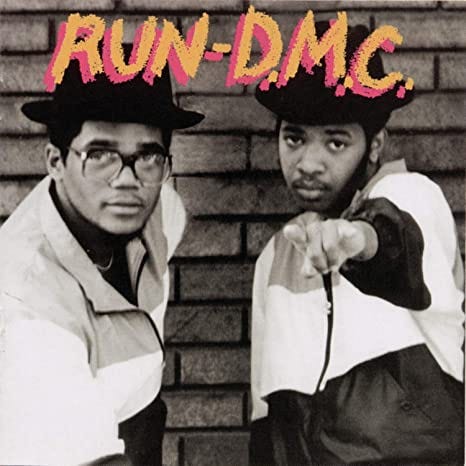
Run-DMC’s self-titled debut was not the first collection of rap songs to be released as an album. It was, however, the first true rap album. While earlier long players from the likes of Kurtis Blow and The Sugar Hill Gang were essentially compilations of previously released singles bound together by forgettable filler tracks, Run-DMC was clearly constructed as a unified body of work; a musical and stylistic statement. That proclamation was as thunderous as the kick drum on “Hollis Crew (Krush Groove 2)” and as clear as the wailing guitars on “Rock Box”: “the game done changed and we’re the coach, commissioner, and lead official.”
Not only did the three teens from Hollis, Queens lay down the template for future rap albums, they provided the blueprint for the growth and survival of rap music, and they did it by stripping it down to its essence. Gone were the record label house bands of Enjoy and Sugar Hill replaying loops from disco hits, and with them the avuncular “announcer” deliveries of first generation microphone masters. Run-DMC was built around a drum machine, a turn table, and two electric MCs with the explosive chemistry of a backyard meth lab.
“Hard Times” opens the album with a slow burning build up. An emphatic keyboard flourish from the group’s DJ, the late Jam Master Jay, gives way to a pulsating kick drum, which is soon accompanied by a smacking snare. The keyboard hits again, this time giving way to a rhythmic heavy breathing sound, signaling the track is aimed straight at the dance floor, like a stripped and slowed down cousin to the pioneering 808 driven jams of Afrikka Bambaataa. But when the voices of Run and D finally burst into the mix, it’s instantly clear that if they’re taking it to the club, it’s by way of the boulevard.
“Hard times,” they intone together, before settling into the effortless trading of lines that would become one of their hallmarks. “…are spreading just like the flu/watch out homeboy, don’t let it catch you/p-prices go up, don’t let your pocket go down/when you got short money you’re stuck on the ground.”
It’s a commentary as urgent as the track, and unmistakably of its moment, as the optimism and upward mobility of the 70s was giving way to the chokehold with which Reaganomics was beginning to strangle urban communities. The terrain was not untrodden. Grandmaster Flash and the Furious 5 had immortalized inner city frustrations two years earlier with the timeless “The Message.” Where Flash’s masterpiece was profound and poetic, “Hard Times” is catchy and digestible, an early indicator of the pop sensibility that would ultimately make Run-DMC the most important group in the history of hip-hop. But that’s just the appetizer.
“Rock Box” is the bone rattling uppercut in the one-two combination that opens the album. Its hard rock guitars defiantly wail atop pounding drums and shimmying keys for a sonic mash up so deliciously dissonant that it instantly birthed a new sub genre (rock rap) that, for better and worse (and there’s been a lot of worse) has steadfastly refused to die in the 36 ensuing years. While countless MCs have since rocked over guitar riffs, none have done it like Run-DMC. Run’s sharp tones cuts through the blare of the guitars, while D’s throaty baritone wrestles it into submission. The MC’s disparate vocal textures compliment each other like scrambled eggs and bacon, adding another layer of sonic interplay to the track.
Always cognizant of not letting their rock forays pull them too far from their Hollis roots, Queens’ finest follow “Rock Box” with one of their most “hip hop” moments. While the typical “DJ cut” of the early and mid 80s jettisoned the MCs to showcase the DJ’s turntable theatrics, “Jam Master Jay” features Run and D paying clever homage to their DJ. The tight structure, in which Jay’s precise cuts serve as the chorus makes his mastery all the more impactful. During the second verse, Jay (who also produced the track), pulls the bass drum out of the mix and lets his rhythmic scratches serve as percussion. Listening to the song today, it’s a vibrant and bittersweet reminder that Jay, who was murdered in 2002, was every bit as integral to the group’s once in a generation chemistry as the two MCs.
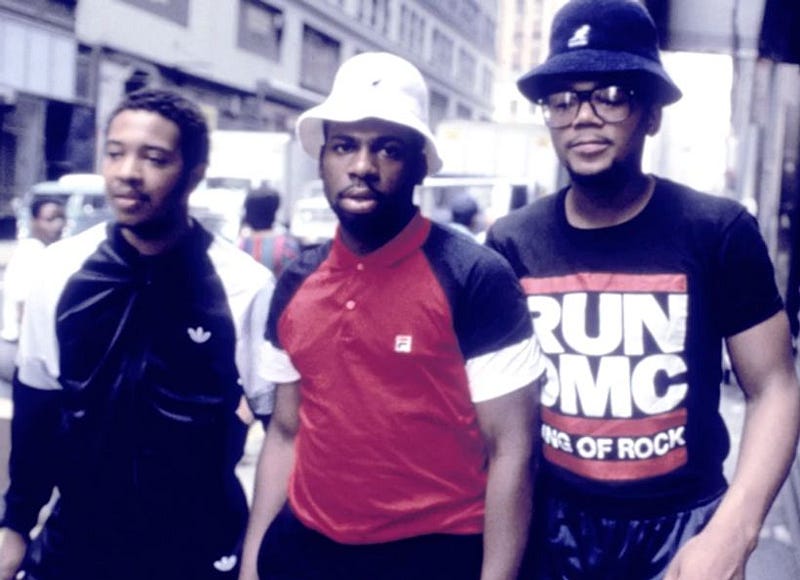
But the true game changer sits inconspicuously tucked away at the end of the album’s A-side. “Sucker MCs” is a masterful exercise in reduction; an aural representation of the album’s cover shot of the two young b-boys, clad in simple warm up jackets and black hats, in front of a brick wall. Initially released as the B-Side to the group’s first single, “It’s Like That,” “Sucker MCs” stripped away all of the ornamentation and affectation that colored first generation rap hits. What’s left is the foundational essence of the music: beats, rhymes, and life. Over a deceptively simple stuttering drum track, Run and D spit straight forward bars reflecting every day existence for them and their listeners. By embodying that often overlooked experience and infusing it with aspirational braggadocio, they took the first step toward building themselves into rap superheroes. Run sets it off with one of the most iconic verses in rap history:
Two years ago, a friend of mine Asked me to say some MC rhymes So I said this rhyme I’m about to say The rhyme was Def and then it went this way Took a test to become an MC And Orange Krush became amazed at me So Larry put me inside, his Cad-illac The chauffeur drove off and we never came back Dave cut the record down to the bone And now they got me rockin on the microphone And then we talkin autographs, and cheers and laughs Champagne caviar, and bubble baths But see, that’s the life, that I lead And you sucker MC’s is who I please So take that and move back catch a heart attack Because there’s nothin’ in the world, that Run’ll ever lack I cold chill at a party in a be -boy stance And rock on the mic and make the girls want to dance Fly like a Dove, that come from up above I’m rockin on the mic and you can call me Run-Love
The B Side begins as a mirror image of Side A, with the dance floor electronica-meets-timely social commentary of “It’s Like That” serving as a less than subtle reminder of the well from which “Hard Times” was drawn. The choice to follow the “that’s the way it is” stoicism of “It’s Like That” with the utopian dreamscape of “Wake Up” serves as a surprising reminder that Run-DMC came out of the gate far more “woke,” than they are given credit for. It makes it hard not to wonder if they would have been more successful in surviving the suddenly-conscious era sparked by Public Enemy and Boogie Down Productions in the late ’80s had they kept social commentary in their arsenal, and allowed it to mature as they grew as men and traveled the world.
Run-DMC is not quite the end to end burner that 1986’s Raising Hell would be. “30 Days” probably plays as cheesy to the modern ear (though I will admit to enjoying it in spite of myself), and the instrumental DJ cut, “Jay’s Game” is wholly unnecessary, given that the Jam Master was given an infinitely better showcase on “Jam Master Jay.” While little outside of the singles managed to stick in the canon of the genre, or even the group, I found the album to be a surprisingly easy listen in 2020. Is it “dated”? Of course. It’s nearly 40 years old. Being of a particular moment doesn’t, in and of itself, make a work of art less enjoyable or well made.
Producer Larry Smith deserves credit for milking incredible sophistication and precision out of comparatively primitive drum machines. One can’t help but wonder what Smith could have done with more modern equipment. Had he emerged in a later era, it isn’t hard to imagine him giving Pharrell and Timbaland a run for their money. Yet, he was gifted to hip-hop when the genre needed him most, along with Run, DMC, and Jam Master Jay to create an album that would ultimately represent the first step in establishing rap music as more than a mere novelty, but a force that would ultimately shape music, culture, and society for generations to come.
By the Numbers
Production: 8 Lyrics (how the words are put together): 7 Delivery & Flow: 9 Content (Substance): 8.5 Cohesiveness: 9 Consistency: 8 Originality: 10 Listenability: 8.5 Impact/Influence: 10 Longevity: 8.5
Total — 86.5
Backspin is a look back at the albums that shaped and defined hip-hop. It explores what made them resonate, the impact they had on the culture, and where they fit in today’s ever-expanding hip-hop canon.


