
Backspin: Goodie Mob — Soul Food (1995)
Goodie Mob embodied the substance and sustenance of America’s Dirty South. (91/100)
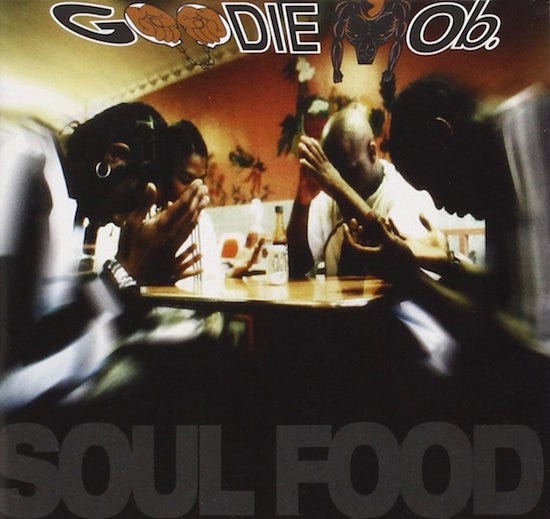
Soul food isn’t simply a meal, it’s a seance. Each divinely seasoned bite channels the ancestors who languished on slaves ships and toiled in cotton fields. Those very ancestors took discarded food scraps and crafted ingenious concoctions that nourished the body, mind, and spirit through the most trying of times. Soul food also represents an inherent paradox. The same platters that fed the beleaguered soul also weighed heavy on it, planting the seeds of high blood pressure, hypertension, and other ailments that still claim black lives at disproportionate rates. Goodie Mob’s 1995 debut plays like the aural equivalent of a down home Sunday feast, encapsulating all of the struggle and resilience, the tragedy and triumph into a musical plate every bit as sumptuous as the home cooking to which it owes its name.
“Lord it’s so hard living this life, a constant struggle each and every day” croons Cee-Lo (yes kids, that Cee-Lo) to open the album. “Some wonder why I’d rather die than to continue living this way.”
Clocking in at a mere one minute and twenty four seconds, “Free” isn’t simply an album intro, it’s a portal transporting the listener through time and space. It’s no accident that the somber harmonies set against pensive piano keys are as reminiscent of a 19th Century slave hymn as a 20th Century blues dirge. It’s Goodie Mob’s deft and efficient way of rooting the lineage of Black American struggle in the south’s original sin, while simultaneously placing the pain and trauma it wrought at the center of time’s flat circle.
“I want to be free, completely free, Lord won’t you please come and save me,” the song concludes, setting the tone for a musical meal that balances fatalism’s paralyzing weight with the nourishing spirit of hope.
It leads organically into “Thought Process,” an airy meditation on the every day struggles of life in the south. The four MC’s free themselves from the shackles of the physical world by escaping into the infinite terrain of the mind. T-Mo, Khujo, Big Gipp, and Cee-Lo all deliver poignant verses establishing the album’s lyrical formula: a rope-a-dope one-two punch of leisurely rendered vignettes punctuated with jarringly emphatic calls to action. It makes the track a surprisingly effective table setter given the laconic bounce of the mid-tempo production. A characteristically masterful closing verse from Outkast’s Andre Benjamin makes for a mesmerizing coda, but the Mob are the heart and soul of the track, proving off the rip that they’ll have no problem carrying the album on their own.
The menacing bass line of “Dirty South” brings us crashing back to the red clay firmament, providing a place setting for what can best be described as the prototype for the first iteration of trap music. Over neck snapping drums, Big Gipp, Outkast’s Big Boi, and Dungeon Family affiliate Cool Breeze spit vivid bars about the perils of life in the dope game. It’s actually Cool Breeze who steals the show with his blunt force flow, linking the limiting self-image that lands too many kids in the trap to the slave trade and the educational system’s persistence in defining blackness by it. The inseparability of past and present is one of several motifs that recur throughout Soul Food.
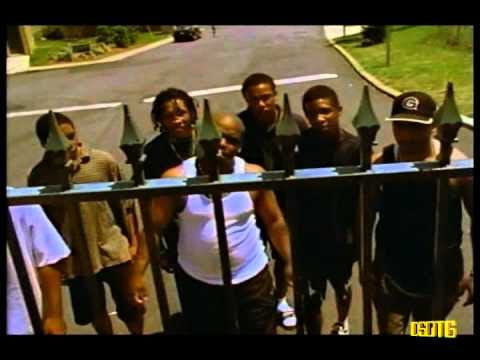
Another is confinement, be it physical, mental, or institutional. It’s first introduced on “Thought Process,” but receives a deep fried dissertation on the first of the album’s two iconic singles. “Cell Therapy” is a masterpiece of controlled rage and caustic defiance. It’s anchored by a sobering analysis of the implications of government controlled public housing, given the long history of minority groups being used as unwitting Guinea pigs in clandestine experiments. Khujo sets the stage with ominous imagery of “concentration camps laced with gas pipe lines” and “outdoor infernos,” and Cee-Lo expounds with one of hip-hop’s most chilling verses:
Me and my family moved in our apartment complex A gate with a serial code was put up next They claim that this community is so drug free But it don’t look that way to me, ’cause I can see The young bloods hanging out at the store, 24/7 Junkies looking for a hit of the blow, it’s powerful Oh, you know what else they tryin to do? Make a curfew, especially for me and you The traces of the new world order, time is getting shorter If we don’t get prepared, people, it’s gon’ be a slaughter My mind won’t allow me to not be curious My folk don’t understand so they don’t take it serious But every now and then I wonder if the gate was put up to keep crime out or keep our ass in
The song’s unforgettable hook (“Who’s that peekin’ in my window? Pow! Nobody now.”) embodies a uniquely southern brand of militance in which Second Amendment rights are embraced as a last line of defense against a system responsible for a grab bag of atrocities as varied as Jim Crow, the prison industrial complex, and the Tuskegee Experiment. Like much of the album, “Cell Therapy” is far more conceptually complex than it gets credit for. The four MCs seamlessly execute an extended triple entendre, with the “cell” of the title referring to biology, prison, and the brain. All three cell types are recalled through out the course of the album.
The next two tracks take an extended detour through childhood memories, as tends to happen at some point during every family meal. “Sesame Street” borrows its title from the popular children’s TV show to draw sharp contrast between its idyllic portrayal of childhood and the formative years of the group members, colored by burglaries, suicides, and incarceration.
Hypnotic keys atop a driving drum track make “Guess Who” one of the most urgent and earnest tributes to black motherhood that hip hop has produced. Each member shares vividly personal memories that are in turns, beautiful, inspiring, and heartbreaking. Cee-Lo’s singing is deployed sparingly on Soul Food, making his angelic vocals all the more moving when they ascend, in multi-tracked harmony, to close the timeless testament to the nourishment matriarchs have brought to generations of black families in the most dire of circumstances.
In one of many examples of Soul Food’s near flawless sequencing, it’s hard not to feel as though it’s the strength derived from those familial bonds that has prepared these men for the struggle championed in “Fighting,” and instilled the resilience displayed in “Live at the O.M.N.I.” The latter’s titular acronym stands for “One Million N****s Inside,” and while Khujo’s guttural opening verse paints a vivid picture of “plenty n****s sittin’ in jail just to eat a decent meal,” the song quickly expands far beyond the simple prison lament you might expect. Ultimately, it’s a call for unity and a call to arms, extolling the power that could be harnessed from “one million n****s inside a state of mind” to rise above the psychological constraints passed down in the southern lineage of oppression, and still prevalent in the murders of Ahmaud Arbery and Rayshard Brooks 25 years after the album’s release.
The title track lightens the mood with atmospheric production that feels like smoke from a grill wafting into thick summer air, and rhymes celebrating the restorative powers of “a heaping helping of fried chicken, macaroni and cheese, and collard greens.” But, as anyone who’s attended a cookout at their country cousin’s crib knows, beneath the joviality, some serious knowledge will be dropped. From Khujo calling out Optima Staffing for “pimpin’” him to Cee-Lo’s scathing critique of the poisons peddled by the fast food industry, Goodie Mob deliver with the irreverence of your favorite uncle after two Budweisers too many.
“I Didn’t Ask to Come” is a natural chaser to “Soul Food,” its stream of consciousness meditations on life and what comes after flowing freely like the post-cook out conversation when the moon lights the clear country sky and the hard liquor starts flowing. It also brings the album’s recurring theme of death to the forefront, positioning it not as an end, but an escape from the struggles of the life detailed throughout the album. “I struggle and fight to stay alive,” they rap in unison on the haunting hook, “hoping that one day I earn the chance to die.”
It’s a theme that’s further realized on the show stopping closer, “The Day After.” “My grand be gone after 103 years,” begins Big Gipp, “of blood, sweat, and pain, and never complained/The last words the nurse heard was the song she sang/Died tired of this living thang.”
His verse draws its power not only from the vivid personal account, but by harkening back to the album’s established themes: the death of his grandmother representing a loss of the lineage that has seasoned the family’s food and fed its souls for generations. The other MCs use it as a spring board for explorations of their own place in this world and the next one, all resolving to truly earn what comes next by fighting with all they have to weather the storms of the physical world.
It’s an outlook rooted in region and religion, and its presence throughout makes Soul Food perhaps the most thoroughly southern album hip-hop has produced to date. Its influence is apparent in the political and spiritual intersection at which subsequent artists like David Banner, Big K.R.I.T., and Nappy Roots thrived, but Soul Food remains a singular album both sonically and thematically. While not as catchy or dynamic as the southern fried bangers they served up for Outkast’s Southernplaylisticadillacmuzkik, Organized Noize’s atmospheric production proves at once sprawling and intimate, making it the perfect backdrop for an album informed by both 300 years of pathos and the intensely personal experiences of four insightful and passionate young griots.
Like the rich cooking from which it draws its name Soul Food might be difficult for the uninitiated to digest. But it’s hard to experience it and not feel something profound that will draw you back to the table again and again, until all the textures and seasonings feel like home.
By the Numbers
Production: 8.5 Lyrics (how the words are put together): 8 Delivery & Flow: 9 Content (Substance): 10 Cohesiveness: 10 Consistency: 9.5 Originality: 10 Listenability: 8.5 Impact/Influence: 9 Longevity: 8.5
Total — 91
Next
Previous

Backspin is a look back at the albums that shaped and defined hip-hop. It explores what made them resonate, the impact they had on the culture, and where they fit in today’s ever-expanding hip-hop canon.