
Backspin: De La Soul — Stakes is High (1996)
De La Soul’s fiery rebuke of hip-hop’s excesses raised the stakes higher than 3 feet. (92/100)
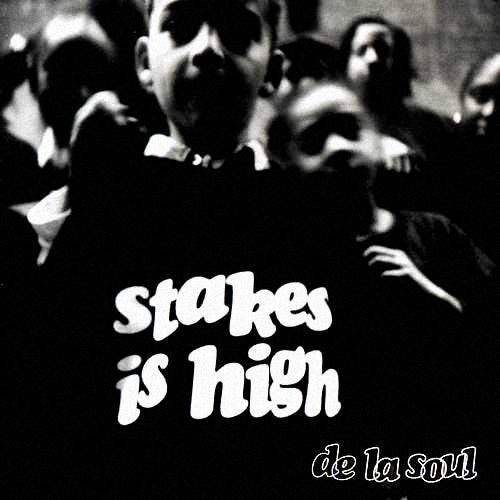
De La Soul is the only hip-hop group to ignite two separate paradigm shifts in the genre. With their exuberantly imaginative 1989 debut, 3 Feet High and Rising, the Long Island, NY trio introduced a much needed counterpoint to the strident intensity of the political and gangsta rap that dominated the moment. Their boundary busting excursion jump started an alternative rap scene that thrived in the early 90s. Quixotic eclectics from Digable Planets to The Pharcyde to De La’s Native Tongue brethren A Tribe Called Quest followed the trail 3 Feet High blazed to the forefront of the culture.
By 1996 the movement had faded. Corporate backed G-Funk dominated the hip-hop landscape with larger than life characters and over the top narratives of urban violence and decay. Once again, De La Soul emerged offering an alternative. But while their debut album expanded the landscape of hip-hop with its youthful spirit and boundless imagination, Stakes is High, their fourth offering, changed the state of play with its laser focused exercise in distillation. Rooted firmly in the stark realities of adulthood in a genre increasingly suspended in adolescent fantasy, Stakes is High set out to purify the muddied waters of hip-hop, re-emphasizing the core elements of its legacy en route to a healthier future.
In stark contrast to the highly conceptual introductory skits that christened early De La Soul albums, Stakes is High’s “Intro” gets straight to the point. A brief montage of hip-hoppers remembering their first listen to Boogie Down Productions’ Criminal Minded album followed by two minutes of the most urgent rhyming Posdnuos and Dove (Plugs 1 & 2) have ever unleashed sets the album’s no-nonsense tone.
The choice of Criminal Minded as the flashpoint is telling in regards to which elements of Golden Era hip-hop’s rich tapestry that Pos and Trugoy felt had been disproportionately lionized. Pos’s torrid verse squanders little time laying waste to the hyper-stylization threatening to reduce the culture to caricature. Instead, he places the emphasis squarely on the renewing power of the art form to nourish hearts and minds in the tradition of previous Black culture movers like Ella Fitzgerald, James Brown, and even heroes of scripture:
Channeling, in sync so my what brings that testament To cover twelve inches of funk Flip, like as if I was the Dalek himself Specializing in cleansing like the hits of Ella Fitz Dove hits bibles out the park, man Don’t even try to toss bleach, I’m too dark and Major more soul than James’ “Escapism” De La Soul is here to stay like racism Patrick know, and I’mma pull the pillow off the bed As I lurk up on your thoughts while phones on your head
The intro’s hard driving beat quickly gives way to the bouncier rhythms of “Supa Emcees,” but the missive doesn’t let up. The MCs push their trademark abstraction to the back burner to deliver a full frontal assault on pretenders and paper chasers. Dove uses the hook to put the suckers on notice that “emceeing ain’t for you.”
“The Bizness” and “Wonce Again (Long Island)” draw inspiration from the genre’s rich history to pave a path forward. The former features a hungry Common trading signifying boasts with the Plugs, juxtaposing the improvisational energy of an early ’80s routine with the intricate lyricism of the ’90s Renaissance era. The latter intersperses call and response chants worthy of the Cold Crush Brothers throughout hard hitting bars from Pos, who charts his rocky road through the music industry as a cautionary tale for a new generation being even more cynically exploited.
Out of the heavens August one-seven, sixty-nine Born I, Wonder Why, with the thoughts to rhyme Til there was no longer thoughts to dream When an unpolished demo led to limos at the age of eighteen Accompanied by the screams, Plug One Shot up with fame, like novacaine it made me numb So numb I wouldn’ta been able to feel N****s diggin’ in my pockets for my currency reels
The next couple of tracks offer a brief moment of respite with a nod to the happy-go-luck De La of old. Though never released as a single, “Dinnit,” with its ear worm call and response hook and breezy spring groove, has all the makings of a cookout classic. “Brakes” pays homage to Kurtis Blow’s classic over a warm mid-tempo bounce. While the lyrics touch on many of the same societal ills that dominated the gangsta rap of the era, the track’s playful tone suggests rolling with the bad breaks rather than wallowing in them.
That optimism gives way to somber reflection. “Dog Eat Dog” offers a stark warning about greed and cynicism robbing artists of their joy and purpose as they become indoctrinated into the ways of the business.
So no longer stand erect ’cause your thoughts are drained Walkin’ round, manifesting attributes of shame Used to squabble for the mic, but now accordingly We act, unless a club can’t afford the fee
“Baby Baby Baby Baby Ooh Baby” unleashes biting sarcasm in its parody of the formulaic R&B fare dominating radio and clubs at the time, with the Jazzyfatnastees belting overwrought vocals over an ’80s loop. Lest there was any doubt which then-ubiquitous record label was in the crosshairs, Pos punctuates the track with the obligatory rap verse delivered in the cadence and inflection of a notorious Brooklyn rapper who featured on an array of similar tracks. That rapper is referenced even more directly on the deceptively mellow “Long Island Degrees,” with Pos lamenting “I got questions ‘bout your life if you so ready to die.”
If the album’s first half plays like a hip-hop State of the Union, laying out the challenges faced by the culture and calling out its most visible offenders, the flip side offers a road map forward. Pos and Dove step down from the soapbox for several tracks to simply show and prove, deploying their considerable skill and veteran savvy to deliver hip-hop as it should be.
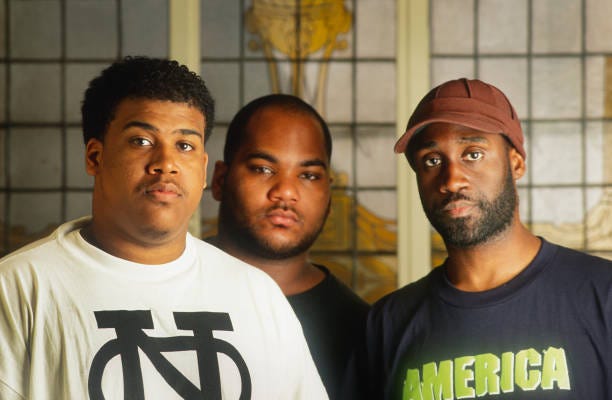
The easy jazz groove and playful lyrics of “Betta Listen” place iteasily into the long standing Native Tongue tradition of idiosyncratic “girl” songs. Without sacrificing the vibe, Pos and Dove use their stories of seduction to highlight the schism between Black men and women inflamed by commercial hip-hop. In the end, the Plugs get the girl by showing respect, and the listener gets the message without feeling lectured.
R&B duo Zhané lend their sultry vocals to “4 More,” De La’s imaging of a crossover record done right. DJ Ogee’s production is funky, soulful, and playful, as fitting for a club or lounge as for the headphones. Pos and Dove offer accessible rhymes without sacrificing flow or wit. Given the heat surrounding Zhané at the time, it’s a wonder “4 More,” released as the album’s third and final single in early ’97, didn’t garner more spins. It could even make a cynic wonder if certain power brokers didn’t want to thrust too much attention upon an album that laid their industry as bare as the curvaceous models omnipresent in its videos.
Leveraging their OG status to elevate the next generation of “supa emcees,” the Plugs use “Big Brother Beat” and “Pony Ride” to spotlight Mos Def and Truth Enola respectively. While both newcomers deliver memorable performances, the explosive energy of “Big Brother Beat” provides Mos with the more dynamic showcase. The future underground icon puts every ounce of his considerable charisma to work.
Enola, despite a unique voice and passionate delivery, is ultimately outshined by Pos who evokes his own rocky journey into adulthood to illustrate the real life consequences of the deteriorating black family structure often glorified in commercial hip-hop:
I recall kissin’ on my lady, talkin’ bout makin’ babies Now we made the baby, but cannot connect as legal spouses Now me and my daughter reside in different houses What louses up the structure, is leavin’ things up to A child lesser, than a child runnin’ wild from mild pressure Mega nega-tive To live a master plan when that plan has no master You stare at false tongues, leadin’ the young’un to disaster
The confessional specificity of the verse inadvertently highlights a largely missed opportunity for the second half of the record to more explicitly explore the real world impact of the corrosive forces described in the first.
Thankfully there are no such deficiencies to be found in the climatic title track. “Stakes is High” is a rousing treatise on all that plagued (and is stilling plaguing) the hip-hop community and modern society at large. In one of the album’s few appearances from an outside producer, Jay Dee deploys the regal horn stabs from Ahmad Jamal’s “Swahililand” in a manner equal parts ominous, defiant, and inspirational. While Dove sets the ante with a laundry list of ills, it’s Pos’s closing verse that elevates the track into truly rarified air, detailing the impact of cumulative negligence, while building to a closing note of hope and spiritual salvation.
Neighborhoods are now hoods cause nobody’s neighbors Just animals surviving with that animal behavior Under I who be rhyming from dark to light sky Experiments when needles and skin connect No wonder where we live is called the projects When them stakes is high you damn sure try to do Anything to get a piece of the pie Electrify Even die for the cash But at last you be out even though you wantin’ more This issue is closed like an elevator door But soon re-opened once we get to the next floor
Stakes is High didn’t reach a large audience, but it reached the right audience. It struck a live chord with a subset of hip-hop heads for whom hip-hop was a guiding force through childhood and adolescence.They were now entering adulthood along with De La Soul. They had bills and responsibilities.
They weren’t gangsters or thugs, they were teachers, computer programmers, and civil servants. Many were now parents. They still loved hip-hop, but found it increasingly difficult to square its gangsta excesses with their emerging sense of responsibility to family and community. Stakes is High resounded like the come to Jesus moment they hadn’t known they needed.
Lines were drawn in the sand. Mainstream vs. Underground. Gangsta vs. Conscious. Players vs. Prophets.
Both sides would ultimately suffer for the worse as audiences fractured, and artists were forced to pick a side. Creativity stagnated as narrowing lanes led artists to become one dimensional, playing exclusively to their niche. Its hardly coincidence that 1996 is seen as the final year of the Renaissance period.
That’s not to say the divides that exist in hip-hop to this day are De La Soul’s fault. The fissures were inevitable as the genre continued to grow, just as similar schisms emerged in rock and jazz. Jeru the Damaja, OC, and Common (Sense) had all delivered iconic broadsides in years prior. But while those singles felt like essays, Stakes is High, over the course of a focused, fiery 70 minutes felt like a thesis.
Even if the ultimate legacy of Stakes is High is as a harbinger of the beginning of the end, the sheer passion, urgency, and artistry make it as timelessly vibrant as it is significant. That it’s still as relevant today as it was in 1996 is both a sad commentary on the culture and a resounding confirmation of the project’s power and prescience.
By the Numbers
Production: 8.5 Lyrics (how the words are put together): 9.5 Delivery & Flow: 9 Content (Substance): 9.5 Cohesiveness: 9.5 Consistency: 9 Originality: 9 Listenability: 9 Impact/Influence: 10 Longevity: 9
Total — 92
Related
Next
Previous
Backspin is a look back at the albums that shaped and defined hip-hop. It explores what made them resonate, the impact they had on the culture, and where they fit in today’s ever-expanding hip-hop canon.