
38 Fascinating Facts about the Mongol Empire That You Probably Didn’t Know
They wiped out up to 10 percent of the population at the time, the women were kick-ass, their postal system was unrivalled, they invented the composite bow, they were multicultural and believed in religious freedom, and much more
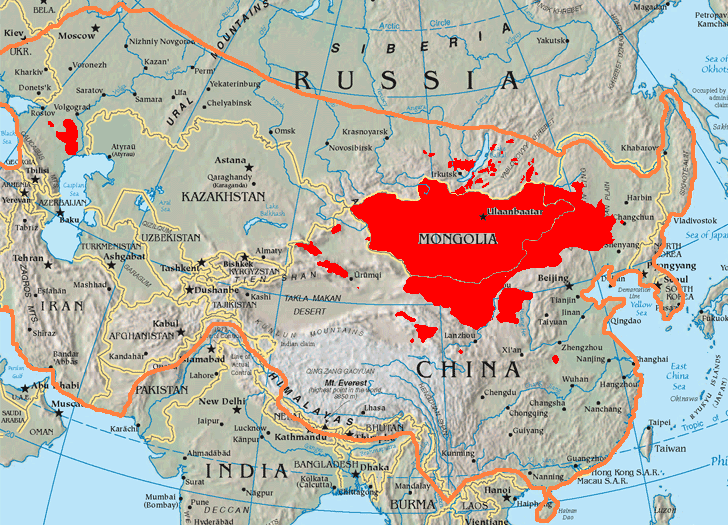
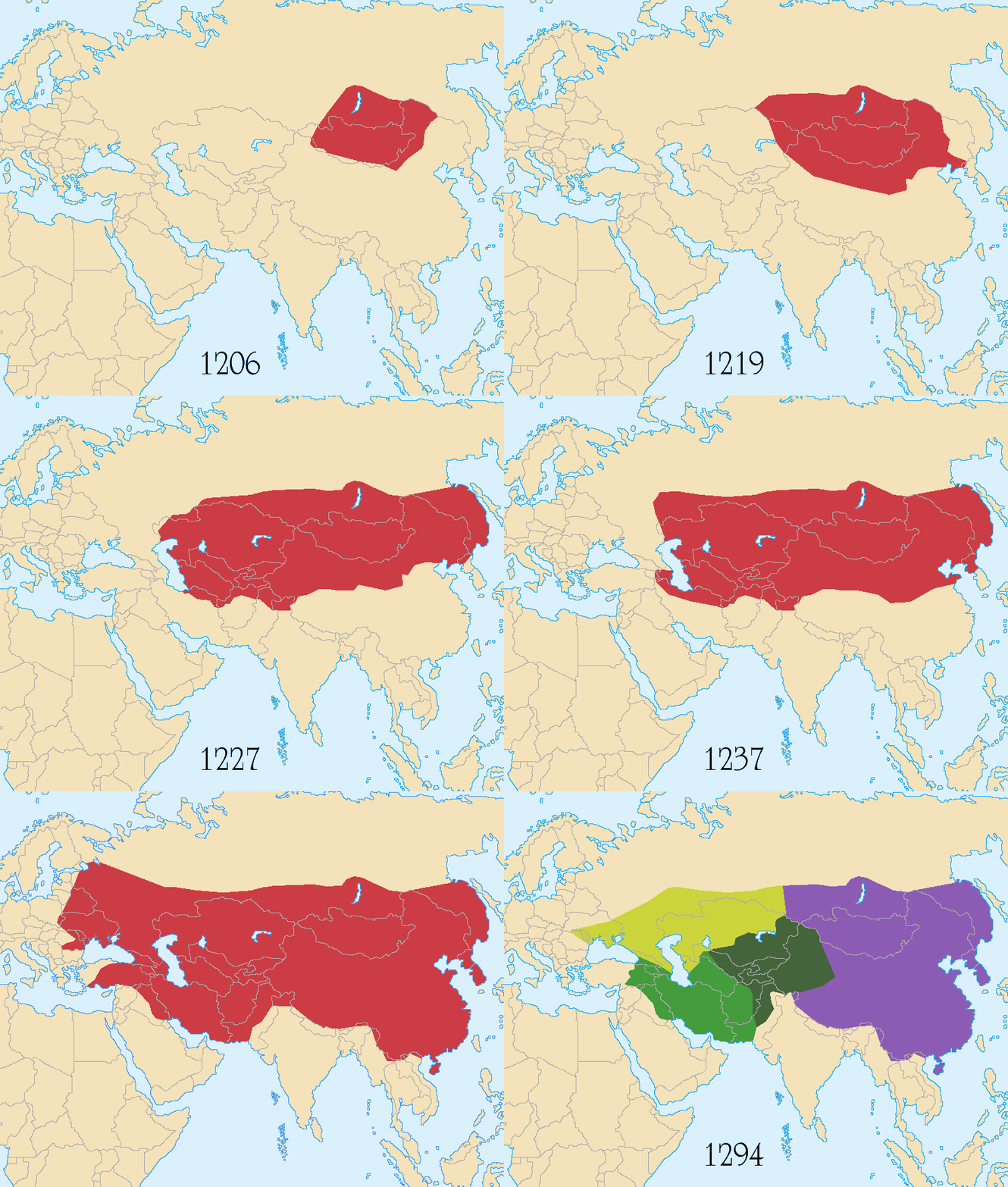
The Mongol Empire is as legendary for being as innovative as it was brutal. It lasted from 1206 until 1368, and at its peak, it covered 16 percent of the world’s landmass and contained 25 percent of the world’s population — at the time, approximately 100 million people — making it the second biggest empire in history after the British Empire.
Here are 38 facts about the Mongols that you probably didn’t know.
The Mongol Empire was the second biggest empire overall and the biggest continuous land empire in history, at its peak, covering 9.27 million square miles. The craziest thing about it, these lands were accumulated in just 86 years.
The Mongol horde was as formidable as they were feared, and the best example of their might was when they invaded China. At the time of the invasion, the Jin Dynasty had an army of 1 million. It should be noted that the army was spread out across China at the time, but the Mongol horde — which amounted to just 90,000 soldiers — is believed to have killed as many as half a million of them en route to conquering the North.
When people think of the Mongol Empire, they always think of Genghis Khan and his fearsome horde of warriors. However, Mongol women were equally big a driving factor behind the rise of the Mongols. Not only were they just as fierce, but they were also highly intelligent and exceptionally hard workers. They are even in some circles credited with being the driving force behind the Mongol Empire, mainly because they were the ones who kept society running while the men focused on training and warfare. The legendary explorer of the time Marco Polo even famously wrote that the women got on with the Lion’s share of the work, with the men not bothering themselves with anything “but hunting, warfare and falconry.”
Given the chance to run the businesses, the women did a great job, not only did they keep them going, but they also helped the economy to thrive. They also, on the back of their successes, took up some of the highest roles in their shamanistic religion.
One of the greatest strengths of the Mongol Empire was how it vastly increased trade between different regions. Through the silk Road — which the Mongols gained control of by massacring everyone along its 4,000-mile length — trade massively increased. This led to great prosperity. The massive expansion of trade also led to big jumps in innovation, effects which were amplified through Genghis Khan’s advocacy for the sciences and the arts.
Genghis Khan’s mother and wife were two of his most trusted advisers, and his mother was the one who taught him about politics, including the reasons why the tribes were always fighting. She also was a respected warrior and is believed to have played a large part in teaching him how to fight and fend for himself. It is even postulated that his beliefs around meritocracy being a far better system than the aristocratic system came from his mother. Many even argued that his mother was the woman that defined the man.
Even though the Mongol Empire was a patriarchal culture — all cultures with high child mortality rates tend to be — if a woman’s husband died, the head of the family did not become one of her sons, it became her. She would inherit the property and become head of the family.
In Mongol culture, men and women were typically given similar educations as both required a shared knowledge i.e. the women couldn’t teach the men nor keep society running when the men were away if they weren’t taught themselves how to.
When women found themselves head of the family, they were not afraid to exercise their power. The best example of this and of women’s influence on Mongol history and culture is the wife of Genghis Khan’s son, Tolui. Tolui married a woman called Sorkhaqtani, and on his death, she became head of their family of four sons. In her new position, she made sure that all of them became educated in politics and in all the languages they would need to know as leaders of the Empire. She also acted as an adviser to another of Genghis Khan’s sons, Ogodai, when he was Khan. On Ogodai’s death, it is believed that she was the one who through diplomacy kept the Empire together. She also is believed to have worked to help further open up trade and to further advance intellectual exchanges throughout the Empire to boost innovation. She also was a big proponent of the Mongol belief of religious freedom and that conquered people should not be exploited, all factors that she ensured her children — one of whom, Mongke, became Great Khan — also became proponents of. It’s believed that the majority of women in Mongol culture exercised a similar influence over their men i.e. it is postulated that, whereas the men were the Warriors who built the Empire, the women were the diplomats working behind the scenes to keep it together.
Before the rule of Genghis Khan, Mongolia was very much a culture of nomadic farmers and as such, the majority were heavily dependent upon access to large amounts of grass and water, which meant that much travelling was needed to find new pastures for livestock. However, frequent droughts and diseases often wiped out livestock, trapping the Mongols in a state of permanent poverty and permanently living on the edge of death. Genghis Khan was the one who changed all this by creating a stable tax system along with a network of rural cooperatives — cooperatives owned by members for the benefit of members. These changes, along with others, created a stable food supply by creating a stable trade network.
It’s believed that one of the primary driving forces of the rise of the Mongol Empire was a 15-year-long stretch of mild weather with above-average rainfall. It’s believed that this twist of fate on the weather front created the right conditions for breeding horses and livestock, which took the pressure off the Mongol people and allowed Genghis Khan to bring in all the changes that would unite the tribes and allow him to build his empire.
The Mongols believed they had a divine right through the “Great” Sky God Tengri to conquer the world. They believed anybody who got in the way of that right had to be killed, brutally. This belief system led to them slaughtering any who opposed them, meaning in less than a century, they massacred between 5 and 10 percent of the world’s population at the time — 20 to 40 million people. Only the Nazis can claim to have been accountable for more deaths.
The Mongol military training regime was intense, and they would practice for every possible scenario so that when a battle came, they would be ready for anything. The military training even stretched to hunting — the Mongols would use hunting wild animals to train soldiers in battle tactics. Every winter, a great hunt would be called, Genghis Khan would start it by getting the first kill, and the generals would then use it as a means to teach and hone battle tactics while also experimenting with new strategies.
Mongol children were taught to ride horses at 3. To prevent injury, they would initially be tied to the horses so they could not fall off. Once they had mastered riding the horse, they would then be taught how to use a bow and arrow. They would also be taught about the land they lived on, from the weather to where to find the water and food, and how to hunt. As there were no schools in Mongol culture, it was the parents who would teach them all this.
It was said that a Mongol’s vision was so remarkable that they could distinguish between animals and humans from as far as 18 miles away. It was also said that they were highly skilled at spotting animals and people hiding in vegetation — even at a distance, legend has it even at 4 miles, though this is disputed for obvious reasons. The wide and open steppes are believed to be the factor which helped Mongols to evolve such powerful long-distance sight i.e. in such an environment it pays to have exceptional long-distance eyesight.
The Mongol Empire was a multicultural empire that embraced religious freedom and allowed people to embrace and keep their own cultures and beliefs, this stretched to even allowing people to continue to be led by their own people — so long as they had pledged allegiance to the Empire that was. Genghis Khan laid the foundations for this, and his successors further embraced it.
Loyalty was revered over everything in the Mongol Empire, over social class, ethnicity, the lot. If you showed loyalty and you had talent and skill, then there was a chance you could attain a position of power. That meant anybody in the Mongol Empire, so long as they had talent, skill and loyalty, could succeed. It was difficult to prove you had any of those things, but the Mongol Empire is one of the first examples of a leadership favouring talent, skill and loyalty above social class, faith and culture. It’s believed that Genghis Khan’s ability to pick out the best of the best from all walks of life and surround himself with them was one of the key factors behind his rise to power.
The Mongol Empire may never have happened if not for the mistake of the ruler of Otrar — part of the Khwarezm Empire. After Genghis Khan had united the Mongols, he first moved eastwards and conquered some lands in northern China to eliminate them as threats. He then sacked a few cities in the south, annihilated the Khitans — North Korea — then returned home feeling he had consolidated his position. However, a threat remained to the west. The Khwarezmian Empire. Rather than threaten it with military might, in 1218, Khan decided instead to reach out to its leader, Ala ad-Din Muhammad, by sending a convoy carrying a message which read, “I am master of the lands of the rising sun while you rule those of the setting sun. Let us conclude a firm treaty of friendship and peace.” Ala ad-Din Muhammad agreed to this but then a year later, a Mongol caravan went to the city of Otrar to trade, but the 500 people attached to it were massacred. In response, Genghis Khan launched a military campaign that lasted three years in which he wiped out the entire Khwarezmian Empire, leaving not a trace of its existence behind. However, once they were done, rather than go straight home, on the advice of his general, Subutai, he split his forces into two and they moved on to other places to conquer, and as such, the Mongol Empire was born. If the peace deal had not been reneged on, he may never have gone westwards and as such, the Empire may never have been born.
The Mongol Empire in popular culture is typically related to ruthless brutality and endless massacres. However, as with all great empires, all the conquests ended up in the same place they always seem to, peace. The period — which lasted from 1279 until 1368 — is called Pax Mongolica. The efficient communication systems and the control of the trade routes had led to booming trade both at home and internationally. So because suddenly everybody was connected by a common government who had connected them all by trade routes and had forced them all to accept multiculturalism while allowing them to retain self-identity, the end result, rather than being mass unhappiness, was as it always seems to be, a thriving Empire in which the majority of the people are happy, which leads to peace. The period is one of the most peaceful times in history. The only rivals to it are Pax Britannica and Pax Romana — the periods of peace brought about by the British Empire and the Roman Empire.
Mongol battle tactics were well ahead of the time. They would typically start a fight by showering the enemy with armour-piercing arrows, they would then launch a brutal cavalry charge. The cavalry also had the power to fire arrows so they would fire at the enemy non-stop until they engaged them, and the initial strike could be so devastating it could often win a battle on its own. Even when it did not, their tactics were so advanced that they would use things like fake withdrawals, where a force would pretend to retreat only to lure the enemy towards the archers. They would also use surprise attacks and were even known to engage in psychological warfare with the most common form being tricking the enemy into thinking there were more of them. They were even known to use human shields. Not just that, they had arrows which made a whistling sound that they would use not only for communication and signalling purposes, but to scare the enemy. They also would use arrows that were specifically designed to maim but not kill to leave the enemy wailing on the battlefield. They even had a collection of light and heavy arrows, which they were able to swap between depending on their need i.e. kill or maim. In effect, they were like an army of Hawkeyes (the Marvel character).
Genghis Khan was not the biggest source behind the battlefield success of the Mongol Empire, Subutai was. Subutai was one of Khan’s “Four Dogs of War” and was the chief strategist, he is also rated as one of the greatest military tacticians of all time. He pioneered the use of siege weaponry, along with the gathering of military intelligence. He understood the importance of knowing what the enemy was going to do first and as such created an intelligence network which could answer that question. His spies would infiltrate and collect knowledge about their enemy, they would also plant dissent amongst the leadership and military, and spread propaganda amongst the population to induce fear and panic. He would devise his military plans in response to the intelligence reports from these operations.
The Mongols were the ones who brought the Islamic Golden Age to an end. In 1258, they obliterated Baghdad, dismantling the entire city, slaughtering all in their way and laying waste to its entire knowledge bank and history. It was said that they threw so many books into the Tigris River, that it ran black with ink.
In Mongol culture, there were no soldiers. This was why they did not even have a word for soldier. Everybody was a part of the collective war machine from the moment they were born until the moment they died, as such, everybody — men and women included — was trained so that they would be ready to instantly mobilise should they be needed.
The Mongol military was organised by a system of units. 10,000 men would be classed as one unit, and that 10,000 sized unit would be made up of 10 units of 1,000 men, and each of those 1,000 sized units would be made up of 10 units of 100 men, and each of those 100 sized units would be made up of 10 units of 10 men. Each unit was able to operate on its own or in combination with the other units, each unit had its own leader — that meant the Mongol army had a lot of leaders. This gave the Mongol military a great advantage because it allowed them to easily be able to adapt to what was going on on the battlefield i.e. they could combine into larger units or break off into smaller ones. They also had a steady stream of leaders ready to step up should anyone fall, and because they operated a meritocracy, the best were more often than not in charge — something which give them a great advantage over their rivals, who more often used an aristocratic system.
Unlike most armies of the time, the Mongols did not use chain-mail armour — at least not until much later on. They mainly used leather soaked in horse urine for outer armour, and a silk shirt underneath — the silk fibres were useful for protecting against arrows, mainly because the silk would mesh around the arrowhead, lowering the chance of infection when removing an arrow. They preferred this pairing over chain-mail because it allowed them to travel faster and to be more agile during combat. However, towards the end of the Mongol era, they did start using chain-mail armour, mainly because the armies they were facing had caught up to their tactics, which led to them needing greater protection.
The winter has always been seen as Russia’s best defence from invasion. However, the Mongols twisted this reality on its head and used the bitter winter conditions to their advantage. They first cleared out Ryazan and Suzdal in December 1237, and they reached Kyiv, the centre of the Kievan Rus’ empire, in December 1240. Despite all logic saying that the crippling winters should have crippled the Mongol forces, instead, they handled them better than the Russians, the result being the total annihilation of the Russians. The Mongols only stopped their assault once they ran out of places to ransack. On a side note, the crushing defeat of the Russians laid the foundations for the rise of the Grand Duchy of Moscow — which turned Moscow into the centre of Russia.
Legend has it that once, to celebrate a victory over the Russians, the Mongols arranged for a feast in which the survivors were tossed under a massive wooden gate, on which the feast was placed. The food was so heavy that the survivors slowly suffocated while the Mongols feasted on their victory. However, the Mongols were legendary for spreading propaganda to scare potential foes into submission. But, they were notorious for brutality as well, so it is possible they did this which is likely why, whether they did this or not, the legend did its job.
One of the great advantages the Mongols had was their horses. Mongol Ponies are quite small for a horse, but despite this, they are strong and capable of running at speed for long periods. Even more importantly, they are capable of doing this on small amounts of grazing. That means they do not require as much food and water as bigger horses, do not have to eat and drink as often, and can run faster for longer. To give an idea of how strong and fast the Mongol Ponies used by the Mongols were, the Mongol army could travel close to 100 miles a day at their fastest, which was unheard of at the time. They were so far ahead of their time that it would take until the 20th century before an army would have the capability of going faster.
In the Mongol army, each soldier of the cavalry had 3 to 5 horses, one was to ride, the others were for carrying food and equipment, and also to act as backups — even to be killed and eaten if necessary. This efficient logistical setup added to their brilliant communication network allowed the Mongol army to move across the country at rapid speed, it also allowed them to launch rapid assaults.
The Mongols had a brilliant postal system. It was called Yam, and it consisted of a chain of relay stations that were usually between 20 and 40 miles apart. There would be messengers at each of these stations, when a message was received, a messenger would get on a horse and ride to the next station, the messenger at that station, on receiving the message, would immediately get on their horse and proceed to the next station. This would continue until the message reached its location. In a single day, through the efficiency of the system, up to 200 miles could be covered, meaning at its fastest, a person 1,000 miles away could be reached within a week. Considering this was the 13th century, such a speed of communication was unprecedented, and this system covered the whole of the Mongol Empire. To give an idea of the scale of it, there were believed to be over 1,400 stations in China alone, and these stations between them utilised 50,000 horses and 6,000 boats.
The Mongols were the first people to use dry milk. Marco Polo — the famed historian of the time — wrote on visiting the Mongols that the soldiers carried sun-dried skimmed milk as a kind of paste. It was made by placing fresh milk under the sun and letting it evaporate. This turned it into a low-carb fatty chalk-like substance which some even postulate is the first example of a protein shake — to drink it you had to mix it with water, and it had an appetite suppressant factor to it. It is also postulated that the women were at the forefront of this innovation — they were the ones who made the food and milked the animals.
The Mongols used fermented milk from mares to create an alcoholic drink known as Kumiss. They also produced butter, cheese and yoghurt. It’s believed their nomadic lifestyle, which required them to try to make food last as long as possible, is behind why they focused so much on developing foods from milk i.e. milk was the food product they had the most consistent access to, so it made sense to try to get the most from it by finding ways to make it last longer.
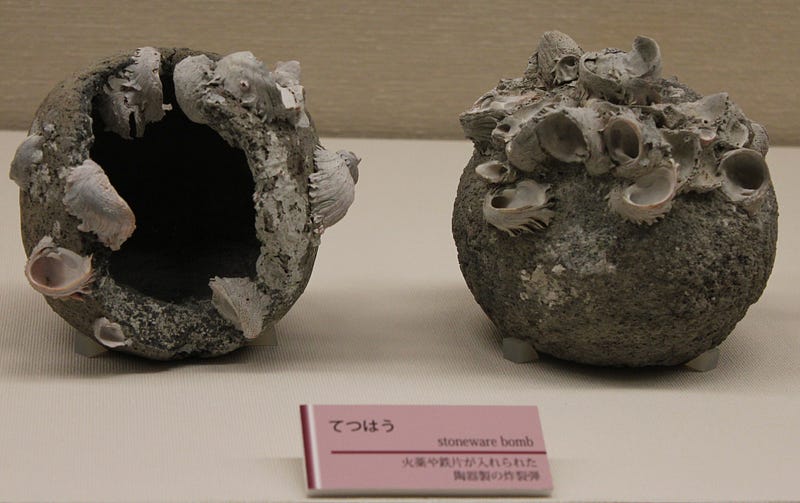
Unlike popular belief, the Mongols did not invent hand grenades, a Chinese inventor and soldier from the 11th century called Tang Fu is believed to have done that. However, the Mongols did greatly advance the use of hand grenades. They created something called the Thunder Crash Bomb. Just like modern hand grenades, the Thunder Crash Bomb had a shell made of cast iron, and was filled with gunpowder. They were lit using a fuse which was adjusted based upon the intended throwing distance.
The Mongol's most famous innovation is the composite bone. These bows were made of wood, horn, and sinew, and were smaller than conventional bows. More importantly than that, they also had a range twice as long as English longbows — 750 feet with 116 lbs of pull. This allowed them to carry them even more easily, and to fire them more easily — especially while riding a horse. All these factors combined allowed the Mongols to become a force to be reckoned with, especially because it allowed them to utilise arrow storms to a level no force prior had been able to.
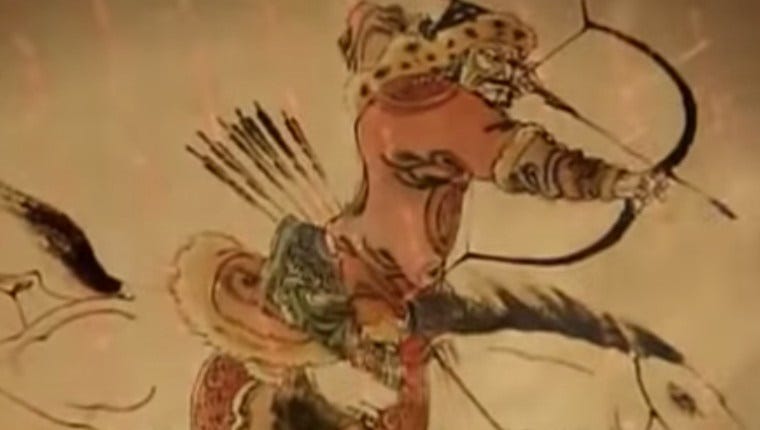
The Mongols popularised the use of stirrups on horses. Before the Mongols' adaptation of them, stirrups were rarely used; however, stirrups — which are the foot handles that help riders gain stability on a horse — are highly beneficial for remaining stable on a horse. The Mongols realised this and when added to their composite bow, it turned them into an unrivalled force i.e. it allowed them to be accurate with their aim even while on a horse, even while moving.
The Mongols never washed themselves, their eating vessels, or their clothes. This was because they believed that powerful spirits lived in all rivers and streams and that if they washed anything in them, they would pollute that water and offend the spirits. Needless to say, it was rumoured they had quite a potent smell. In terms of why they formed an aversion to cleaning, it’s believed that it likely stemmed from the fact that they lived in a region where water was scarce. It’s believed the custom of offending the gods should they wash likely was born through a desire to scare people off from wasting water on things like cleaning.
One of the biggest factors which led to the fall of the Mongol Empire was the increasing rejection of multiculturalism by those within the Empire. This problem became especially pronounced under the reign of Kublai Khan, and the worst culprits were the Mongols themselves, with the level of intolerance toward non-Mongols by Mongols during his reign increasing to a fever pitch.
The loss of the fleet to a typhoon is believed to have been the main driving factor behind the fall of the Mongol Empire. After conquering southern China by defeating the Song dynasty, Kublai Khan — the ruler at the time — decided he wished to conquer Japan. He made his first attempt at doing this in 1274, and the campaign went well with the Mongols pushing the Japanese into a corner. However, as the Japanese retreated, desperately trying to avoid being wiped out, one of the three generals leading the Mongol assault, Liu Fuxiang, got hit in the face by an arrow. This led to a momentary pause in the attack where it was decided that the men needed rest before pursuing the Japanese and finishing them off. This led them to recall the men to their ships. However, a typhoon hit during the night, decimating the Mongols. Of the 30,000 men who went out there, it is estimated that 13,500 did not return, the majority being lost in the typhoon. However, undeterred Kublai Khan decided to try again in 1281, this time he is reported to have amassed a force of between 70,000 and 140,000 (the figures are debated), along with 4,400 ships to be used as transport — a navy of this size would not be seen again until World War II. This turned out to be the biggest mistake he ever made because history repeated itself. The campaign got off to a fairly positive start, even despite one of the generals jumping the gun by attacking too soon, but then disaster hit in the form of another typhoon. The result was devastating, with the estimated casualty rate being between 60 and 90 percent. The story was reported by Marco Polo, who wrote the Mongols noticed a storm was brewing and feared they would lose all their ships, so they hurried back to their ships and set sail. However, once four miles out, the storm hit and with so many ships clustered together, the result was catastrophic. It is believed that this catastrophe weakened the Mongol army to such an extent it never fully recovered.
The idea of a “kamikaze attack”, translating to an attack resulting in definite suicide, derives from the catastrophic Mongol invasion of Japan. The typhoon that struck and wiped out the 1281 Mongol invasion force of Japan was nicknamed kamikaze, which translates to “divine wind.”
That’s all from me, thanks for reading! If you enjoyed this post, you may also enjoy the following:
42 Fascinating Facts about the Roman Empire That You Probably Didn’t Know
27 Fascinating Facts about Ancient Egypt That You Probably Didn’t Know
Henry Tizard — the Man Who’s Second World War Mission Created the Modern World Order
To learn more about me see this link, to support me click the “Give a Tip” link below.


