
Henry Tizard — the Man Whose Second World War Mission Created the Modern World Order
Without Henry Tizard, it is unlikely America would have become the superpower it now is
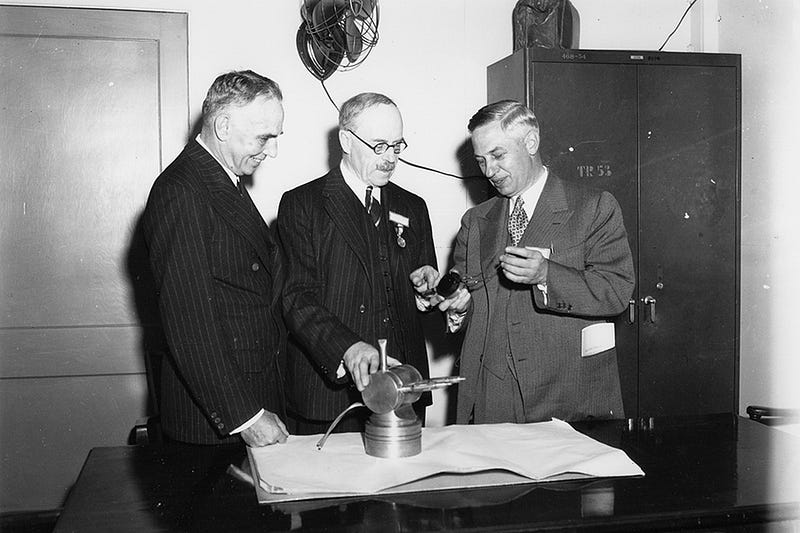
Henry Tizard is one of those men that had a crazy profound effect upon the world and yet pretty much nobody has any idea who he is.
He was born in 1885 and was a renowned chemist and inventor who in 1929 became the Rector of Imperial College London. This role meant he was in effect the president/CEO of Imperial College London. He held this role until 1942.
Imperial College London is a world-renowned public research centre and as head of this research centre Tizard was pretty much head of all the cutting-edge technology of the day, from radar to nuclear and more. Tizard himself played a heavy part in the development of “octane rating” which is used to classify petrol, he also helped develop radar in World War II. He also led the first serious studies of UFOs. He also did a lot more.
But it was not his inventing prowess that defined him, as impressive as it was, they pale in comparison to the profound impact of the Tizard mission, which saw him go to the US in 1940 and change the world forever.
Before getting to the mission, a little bit of context is required in regard to the state of the world of the time, and how the world got to that state.
A brief history of Britain and America’s places in the world from the early 1800s to World War II
After the defeat of Napoleon in the early 1800s, Britain became the first and only hyperpower. The British Navy was so dominant that it could get an army to anywhere on the planet within a day.
It was also powerful enough to rival the might of all the rest of the world’s navies combined — many argue it could have defeated the entire might of all the other navies in the world combined. That means the British Navy could have taken on the navies of all the world at the same time and still been the favourite to win.
Needless to say, they were completely unrivalled for the entirety of the 1800s, and this led to the period being known as Pax Britannica (Latin for British peace). Basically, Britain ruled the world completely and entirely during this period. That is how they became to be known as the global police force.
If Britain decided something, then that was the end of the matter — that was at least if you wished to remain a part of the global order and trade system that Britain was building. This is how slavery came to an end, Britain decided that ending it was the morally right thing to do and so they used their political and naval might to make the world come to the same decision.
However, Britain’s power began to wane in the early 1900s mainly because of the absolute and complete neglect of the British population by the leadership. Poverty in 1800s Britain was so horrific that it is unprecedented in history, even now there is nothing like the level of poverty that was seen in Victorian Britain. It is often said that it was better to be a transatlantic slave than to live in one of the slums in Victorian England.
So, even though there was a lot of good to the British Empire and overall it brought a lot more good than it did bad, the number of former colonies now operating as free and democratic nations is perhaps the ultimate testament to that, part of the downside of the British Empire was not just how it had a detrimental effect on some in its colonies, it was the fact that it extracted a very heavy price on many of its home population.
In his early days, Churchill lamented that the working-class population of Britain had become stunted because of the horrific conditions, it is this which led him to start joining the calls for a social care system to look after the population. He often commented that Britain couldn’t look after an empire and maintain its global hegemony when its home population was suffering from such high levels of malnutrition.
All of these factors were a terrible look for Britain, and led people to begin questioning the strength of Britain, added to other events, the colonies started to question whether it was worth remaining a part of the Empire or whether it was better to go it alone. Rivals also began to circles, one especially. Germany.
On a side note, it is argued by many that the poor state of the home population of Britain allowed Germany, led by Wilhelm II, the grandson of Queen Victoria, to challenge Britain’s might by preying on its one big weakness, its lack of a strong and powerful land-based force. Britain’s land force was in bad shape in the run-up to the First World War — the Boer war had especially damaged it, while also exposing the malnutrition of its troops.
This argument aside, World War I came and Britain and the Allies won at a heavy cost, especially to Britain and France. As a result of the war, Britain began to lose its global hegemony, but by working with France it managed to keep hold of it.
So now there were two great powers, not just one, but Britain remained the main leader with France as the secondary. America though off the back of the war was now showing the signs of being a global force to be reckoned with. But only the early signs.
Then World War II happened. When Hitler launched his invasion of Poland Britain was not ready for war, it had still not recovered from the First World War. Neither had France. Germany had not either, but whereas Britain and France had focused on trying to rebuild their nations, as well as trying to handle the growing unrest in their empires, Hitler had simply rebuilt the German army.
In effect, Hitler had gone for an all-or-nothing move. Conquer everyone and fast or crumble. This inevitably put Britain in a very difficult spot, they yet again, greatly needed the support of American industry. This meant history yet again was repeating itself. Britain, despite the might of its empire, needed help from its former colony.
This reality once again brought into question the point of the British Empire, if it could not keep the peace and would constantly be challenged, what was the point of its existence? It’s often forgotten a large part of the British Empire's strength was that it kept the peace around the globe, that’s why many of the leaders of its colonies were quite happy to be a part of it and remain a part of it.
But things were different this time, Britain was already in a bad way and inevitably this war would weaken them and their ability to keep the peace further. If this happened, then inevitably the Western world would likely lose its hold over the world i.e. no matter what happened in this war, Britain’s hegemony was over.
If Britain lost its hegemony, the question was who would take it over? If no one took it over, who would keep the peace? If no one kept the peace, the global system that had been built up inevitably would likely come crumbling down.
Step forth Henry Tizard and the Tizard mission, a mission that would not save Britain’s hegemony but would lay the foundations for saving its way of life.
The Tizard mission — the most world-changing mission of the 20th century
In September 1940, with the Battle of Britain raging, Henry Tizard travelled to the US intending to offer British technical innovations to the US in an effort to secure US assistance in maintaining the war effort.
What was on offer was unprecedented on a historical front, Britain was basically offering up its vast technological advantages that it had over the world, and the most important ones at that, military ones. Nations just did not do this, least of all the most powerful one — which Britain was.
The reason for Britain doing this is obvious, the belief was that it would be difficult for Britain due to the bombing campaign against it to utilise this knowledge to its full potential, at least not as quickly as the US would be able to. The belief was hurrying up the speed of technological advancement would speed up the end of the war.
Britain did not per se need to do this, it arguably could still have held out and won the war in the end, even without giving up its technological secrets. However, in effect, Britain’s sole hegemony of the world was now over due to the war no matter what, because of this, it made sense to simply do whatever it took to try to bring the war to an end as quickly as possible.
The most famous things that were brought over by the British and given to the US are, firstly, the cavity magnetron, which is a system used in radar and has frequently been called the most valuable cargo ever brought to American shores, mainly because it allowed radar to be installed in planes. Then secondly, the design for Frank Whittle’s jet engine. America already was trying to develop a jet engine but the Whittle engine was well ahead and ready for production, General Electric brought it into production.
Thirdly, they also provided the Frisch–Peierls memorandum — which describes the feasibility of the atomic bomb. This laid the foundation for the Manhattan project by opening communication lines between Britain and America, it also helped the drive for nuclear energy as well for the same reason.
The list does not stop there, other things brought over included designs for rockets, superchargers, gyroscopic gun sites, plastic explosives and so much more. Basically, the Brits gave away all their most advanced technological know-how along with the kitchen sink in the interests of gaining access to American manufacturing with the hopes that the Americans would be able to use that knowledge for production purposes, also in the hopes that they would mix that technology with their own and share it with Britain.
They largely did and the communication lines of that technology sharing remain open to this day, to the significant benefit of both countries, and the world. Yes, the world, this mission also laid the foundation for all the research sharing between research institutions across friendly nations and institutions. The Tizard mission proved just how beneficial research sharing truly was, and so research sharing became widely adopted across nations.
The craziest thing about the Tizard mission — Tizard took a leap of faith
Many of the American leadership of the time were intent on remaining neutral which made Tizard’s mission a difficult one, because of this Tizard decided that the most productive approach to gaining the support of the Americans would be simply to give the information up solely to gain access to America’s productive capacity.
Churchill and others in leadership were initially against these tactics, fearing America would just keep the knowledge for themselves and not share any of their own. When it came to nuclear bombs, this did actually happen in the end, but for the most part, Tizard’s leap of faith worked and brought the Americans fully on board.
More than just that, Tizard’s tactics proved so effective that the union between the UK and US helped not only win the war, but cement the Anglo-American relationship in regard to sharing knowledge.
Some even call this moment in effect the reunification of the Anglo world i.e. it was the moment all the home nations finally become proper friends again. Whatever people wish to call it, it certainly profoundly changed the world.
The lasting effect the Tizard mission had on the world
By the end of the 1950s, with Britain crippled by the war and more focused on building a social care system and rebuilding than policing the world, it was clear that they would not be able to on their own police the world i.e. to protect it from monsters like Hitler and the like. They also were no longer able to protect global trade by policing the seas.
But now due to all that know-how and advancement given to them by the Brits — especially nuclear and radar — America was in a position to take over that role and as such became the new leading Western superpower.
On a side note, this is why those who argue that America took advantage of Britain to replace them as a superpower, are actually incorrect.
Yes, the US did indeed screw Britain over nuclear bombs — mainly due to fears about the USSR having infiltrated the UK, it turned out they had infiltrated the US even more. But other than that, the union benefited both Britain and the US equally, and it did this because in effect it meant that a country with Western ideals of a free world with free trade, had the power to actually ensure that the world remained a free world with free trade.
If it had not been for the Tizard mission and the opening up of communication lines and technology sharing between Britain and the US, there is a chance the US would not have been strong enough to step up when the world needed them to.
Without the might of the US, communism might have won. That’s how important the mission was.
Final words
The Tizard mission in effect united the home nations — Britain, Canada, Australia, New Zealand and the US — in the idea of sharing technological know-how to ensure that the free world would remain free. That’s how important Henry Tizard and his mission in 1940 was, that’s how important his leap of faith in offering the technology up front was.
It laid the foundations for ensuring a continued free world, or at least it laid the foundation for ensuring that a force was powerful enough to try to fight for one. That’s why he and his mission were so important.
That’s all from me, thanks for reading! If you enjoyed this post, you may also enjoy the following:
42 Fascinating Facts about the Roman Empire That You Probably Didn’t Know
27 Fascinating Facts about Ancient Egypt That You Probably Didn’t Know
25 Random but Fascinating Trivia Facts That You Probably Didn’t Know — 3rd ed.
To learn more about me see this link, to support me click the “Give a Tip” link below.