
27 Fascinating Facts about Ancient Egypt That You Probably Didn’t Know
Children drank beer, slaves did not build the pyramids, divorce was legal, prenuptial agreements were a thing, Egyptians signed the first peace accord, and much more
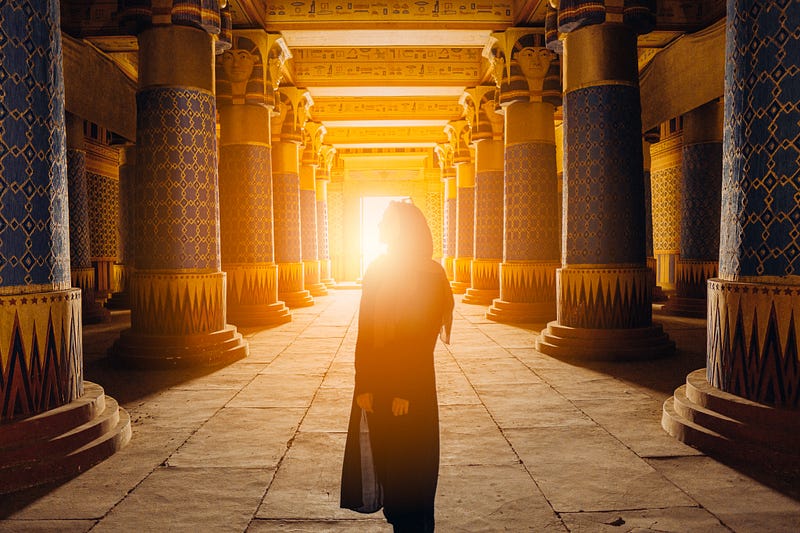
Ancient Egypt is one of the first civilisations in human history, with only the Indus Valley civilisation and the Mesopotamian civilization believed to have come before them.
Here are 27 fascinating facts about this legendary ancient civilisation.
Ancient Egypt existed between the years of 3150 BC and 30 BC, which means it lasted for over 3000 years.
The era of ancient Egypt comprised three primary kingdoms, the Old Kingdom a.k.a. the Age of Pyramids, the Middle Kingdom a.k.a. the Golden Age and the New Kingdom a.k.a. the Imperial Age. The Old Kingdom ran from 2649 to 2130 B.C and is the era which is most famous for characterising Egyptian history — mainly because it was the era of the pyramids and all the technological advancements that came with building them. The Middle Kingdom ran from 2040 to 1782 BC and is most famous for the advances in the arts and irrigation techniques which led to increased harvests. The New Kingdom — also known as the Egyptian Empire — ran from 1570 BC and 1069 BC and is most famous for its expansionism i.e. imperialism. This period is known as the peak of ancient Egypt.
Ancient Egypt was divided into two lands: the desert and the Nile Valley. The vast majority of ancient Egyptians lived in the Nile Valley i.e. along the river banks of the Nile. Also, Upper Egypt is actually in the south whereas Lower Egypt is in the North. This is because the Nile river flows northwards towards the Mediterranean Sea.
Cleopatra is often called the last pharaoh of ancient Egypt, and her death is often seen as the end of ancient Egypt. However, it was not. Ptolemy XV Caesar, her son with Julius Caesar, was the last Egyptian pharaoh. Though he did not rein alone for long — days in fact. Shortly after the death of his mother, he was murdered by his adopted brother, Octavian. Ptolemy was 17 years old at the time. Cleopatra had wanted her son to be the one to replace Caesar. Octavian could not allow this because he — as Caesar’s adopted son — wanted to be that person, and as he had already defeated those who had assassinated his father, and taken full control of Rome — just like Caesar had — he could not allow a threat such as the blood son of Julius Caesar to remain. So, once Cleopatra died, he killed his brother, and with it ended ancient Egypt.
Cleopatra is most often celebrated for her beauty and elegance. However, she was actually extraordinarily intelligent and well-read. She is reported to have spoken over a dozen languages and was educated in mathematics and philosophy. She also is believed to have spent much of her time with scholars — so she was clever and liked to embrace being clever. It’s believed this is likely one reason Julius Caesar found her so attractive and embarked upon an affair with her i.e. it wasn’t just the fact that she was hot and a means to gain more power, it was the fact that she had brains to go with those looks. She proved just how many brains she had after Caesar was assassinated, her manoeuvres to keep power were ruthless and intelligent, many believe she even potentially played a hand in the death of her husband/brother — which came shortly after Caesar’s death. It’s believed she wanted her son — Ptolemy XV Caesar, her love child with Caesar — to rein with her, not her husband/brother, so she poisoned her 15-year-old husband/brother with aconite — a plant poison. She then went on to rule with her son until her death.
One of the earliest recorded peace accords was signed by the Egyptians. The Egyptians fought against the Hittite Empire over control of lands in modern Syria for nearly two centuries. However, it was a continued stalemate and with both the Egyptians and the Hittites facing threats from elsewhere, in 1259 BC Ramses II and the Hittite King Hattusili III negotiated a peace treaty. Once signed, the conflict ended. Not just that, the text contained a clause which decreed that if there was an invasion by a third party, they would come to each other’s aid. So, it wasn’t just a peace treaty, it was a mutual defence treaty.
The Egyptians are known to have been the first to take part in strike action. Under the reign of Ramses III during the 12th century BC, labourers who were building the royal necropolis at Deir el-Medina were not paid their usual payment of grain. Because of this, they organised what is the first recorded strike in history. It was a sit-in. Basically, they entered the nearby mortuary temples and refused to leave until they were given their pay. They were given their pay. Since then strikes have become common across human culture.
It’s popular to say that slaves built the great Pyramids of Giza. However, archaeological discoveries have since led Egyptologists to form a consensus that slaves did not build them, out-of-season farmers and farmworkers built them. So, in the off-season — known as the flood season — farmers and farm hands would take up work on the pyramids. These labourers were housed in purpose-built villages and fed and treated well — archaeologists have found one of these villages. It’s believed that the myth that slaves built the pyramids comes from firstly, the ancient Greek historian Herodotus, who once described the pyramid builders as slaves, and secondly, the Old Testament Book of Exodus which says that Egyptians enslaved the children of Israel with backbreaking labour. But, the Jewish did not exist during the period the pyramids were built. Despite this, the myth was perpetuated by Hollywood along with a famous Jewish historian and a Jewish Prime Minister, hence, why it is in popular culture.
The pyramids used to have a smooth outer surface and shined like a jewel in the sun. No jokes. That Lego block like appearance that all pyramids now have was not the way they were built. A fine white limestone layer was added which gave the pyramids a smooth appearance and made them sparkle like a jewel. Some even believe that the very top of the pyramids had a gold layer. It’s believed that the reason they are no longer smooth is simply that the materials were looted for use elsewhere.
The pyramids of Giza are naturally temperature controlled i.e. they have an ancient form of air conditioning system. For example, the King’s chamber in the Great Pyramid of Khufu maintains a constant temperature of 68 degrees. That means literally, no matter how hot or cold the weather is outside, it remains at near enough 68 degrees. This is because the dry clay walls act like a thermal battery — when cool air hits them, they absorb it, when warm air hits them, they absorb it. Because there are air ventilation ducts attached to the King’s chamber, cool air flows into it. This air mixes with the ground heat to give a consistent temperature of 68 degrees a.k.a. 20°C. All the pyramids have similar type systems in place so maintain similar consistent temperatures.
The Egyptians invented paper, pens, locks, keys, toothpaste, musical instruments, cosmetics, ploughs, clocks, the police, medicine and so much more. Literally so much more. They also were the first to have healers who would specialise. That means they invented the idea of a medical specialist. Also, the first recorded physician, so Doctor, is in ancient Egypt. Surgery was also a thing, but only of the non-invasive kind, and they had drills, pincers, forceps and more to help them perform whatever non-invasive surgery was needed. The way they developed medicine was trial and error, so they would just try things and see if they worked. Inevitably, this made Egyptian medicine very hit and miss.
Doctors in ancient Egypt used mouldy bread to try to heal wounds. They worked out that applying mouldy bread to a wound would help the wound heal quicker and stop infection. This actually does work — sometimes. This is because common mould fungi found in bread are things like Aspergillus, Rhizopus and penicillin. Yep, penicillin. That legendary bacteria-killing substance that gave us antibiotics. Inevitably, because of this, if you applied the mould to the wound, it would kill the bad bacteria. That means there really was method to the Egyptian's apparent madness. Though it only works sometimes because it depends on which mould grows on the bread.
Being the servant of an Egyptian Pharaoh was tough, you could be sent to fight in a war, you had to cook, you had to clean, you had to help dress the Pharaoh, you had to do this, do that, everything. But one of the worst jobs that the servants had to face was that sometimes they would be covered in honey so that the flies would stay away from the pharaohs. Yep, that means one of their jobs was to attract all the flies to keep them away from the Pharaoh.
Some Egyptian tombs have been found to have inbuilt toilets. No jokes.
The earliest known record of make-up comes from the first Egyptian dynasty, which ran from 3100 to 2907 BC. Jars of unguent — a form of skin ointment — were found in tombs dating to this period. Egyptian unguents were believed to have been made up of elements including beeswax, plant oils, and tallow. It is also believed that they later went on to be scented with things like henna, myrrh, and cinnamon. It’s believed that ancient Egyptians would rub them into their skin mainly to combat the skin wrinkling effect caused by the sun, but also to enhance their appearance i.e. to give their skin a glow.
In the early years of ancient Egypt, natural and wild hair was a must-have item. Both men and women sported as much of it as they could, the men would even grow their beards as long as they could, and kings would sprinkle their braided beards with gold powder. However, by the time of the Dynastic Period, the Egyptians had had a change of heart. Hair became seen as a symbol of man’s animalistic tendencies and thus shaving everything became the go-to behaviour — for both men and women. Yep, both men and women would shave all the hair from their bodies, from their heads to their pubic hair. Basically, having hair was seen as uncivilised and so if you had hair you were seen as a low-status person. In terms of where the trend of shaving all their hair came from, it’s believed it started due to the fact that insects and vermin loved human hair, and with agriculture becoming so big in ancient Egypt, there were a lot of insects and vermin. Because of this, it made sense to get rid of all your hair to keep them out. From there, it just became the go-to behaviour.
Affluent Egyptians often hired full-time barbers to live with them, whereas less affluent Egyptians would frequent local barbers to have their faces and heads shaved. Even crazier, the ancient Greek historian Herodotus claimed that in the 6th century BC Egyptian priests would shave their entire bodies every other day, even plucking their eyelashes. Also, ancient Egyptian kings were often buried with their barbers so they could get their daily shaves in the afterlife. That’s how much the Egyptians loved shaving.
Despite natural hair being seen as a symbol of low stasis, Egyptians loved their wigs. They were widely used and were seen as symbols of rank and social status. In terms of why Egyptians went down the route of shaving all their hair and wearing wigs, it’s believed that the wigs not only provided better protection against the sun, but also protected against insects and vermin. So, the likely origin of Egyptians shaving everything and wearing wigs is down to a mixture of a desire to better protect themselves from the sun, along with the fact that it is a lot easier to get insects and vermin out of a wig than it is your real hair. It is likely shaving the pubic hair was done for the same reason, to protect from insects and vermin.
Incest was not taboo in ancient Egypt, quite the opposite, especially amongst royalty. It is well known today why incest is bad, it massively increases the chance of genetic deformities in children. It doesn’t guarantee genetic deformity, but it massively increases the probability of it occurring. However, the Egyptians did not know this and so to “preserve” the royal bloodline i.e. to avoid “weakening” it with non-royal blood, incest was ripe. The most well-known instance of this is King Tut — 1341–1323 BC. King Tut, who was believed to have had scoliosis, bone necrosis and a clubfoot amongst other things and died at 19, was the son of two siblings and married his half-sister. They had two children, both of them died in infancy — the long lineage of inbreeding believed to be the reason. So, rather ironically — rather than keeping it strong — the Egyptian practice of incest amongst royalty actually more often led to bloodlines dying out — or at least strands of it. Though it should be noted that Cleopatra — who came over a thousand years after King Tut — was the child of two siblings, and married two of her brothers. So, it didn’t lead to the complete end of a bloodline and things didn’t always end up badly, but too often they did, hence, why it is not advisable.
In ancient Egypt, gods and goddesses were the celebrities of the time and over the course of ancient Egypt, there were over 2,000 gods. However, just as celebrities fall in and out of fashion today, gods continuously fell in and out of fashion in ancient Egypt. Ra — who later became Amun–Ra, the king of the gods — and Osiris were the most enduring gods, along with Horus and Anubis.
Beer was very popular in ancient Egypt and was favoured by both the wealthy and the poor, even children drank beer regularly. No jokes. It was basically seen as a great source of nutrition and was so popular that it was often used as a form of payment for labour. For example, rations of beer were handed out three times a week to workers at the Giza Plateau in lieu of payment.
The Egyptian year starts in September, and each of the 12 months in the Egyptian calendar — the Egyptians invented the 12-month calendar — is 30 days long. However, because this means that the year only adds up to 360 days, the Egyptians added 5 epagomenal days to the calendar — an epagomenal day is a day added to a calendar to put it back into sync with the sun and moon cycle. Typically, over these days, they would hold a festival and would bring in the New Year with a party called Wepet Renpet. This party would have involved a lot of music, sex, revelry and inevitably alcohol. Yep, that means the Egyptians laid the foundations for the crazy New Year celebrations the world knows.
Cats were highly revered by the ancient Egyptians, so much so that eventually they came to be seen as magical creatures of good luck and had statues built after them. It’s believed that the Egyptian love affair with cats came from agriculture. Agriculture attracted rodents, which attracted wildcats. The ancient Egyptians learned to value those cats as tools for keeping their fields and granaries free of rodents. It’s believed this over time expanded to them being used to protect against venomous snakes, and also to help bird hunters catch birds. So, they became really important to Egyptians and as such became revered.
As with all ancient societies, ancient Egyptians did not live long. The majority of men never made it past their early 20s, whereas the majority of women didn’t make it past their 30s, and very few ever made it to their 40s. Though it was children who had the highest death rate, with between 30 and 50 percent not making it past the first year, and upwards of 60/80 percent not making it past 15. Though again, it was the boys who typically died in the largest number mainly because the boys had to often work hard labour from a young age and so were more likely to die. Some estimate that up to 90 percent of males born were dead before their 30s. Also, the poor died in far larger numbers than the upper classes. The child mortality rate was such that it is likely many amongst the poor would see all their children die. This is why marriage was about procreation in ancient Egypt. For the survival of society, it had to be.
Men and women got married young in ancient Egypt — just as in all ancient societies. Especially the women. Women were typically married between the ages of 12 and 14 — back then girls that young were young women — with men typically married between the ages of 18 and 20. As ever, the reason why men were older is that they had to learn how to both provide for a woman — who would start getting pregnant from the get-go — and had to build up resources to be offer to the woman. The reason the women were so young is that they had to maximise the potential pregnancies, and with such a short expected lifespan that meant they had to start very young. And yes, as insane and horrific as it may seem to us, back then girls that young were truly young women as were boys that young were truly young men. It’s one of the greatest privileges of the modern world that we are now able to say otherwise.
If a husband was unable to have children, then a woman had the right to seek divorce and request compensation. Yep, if a woman couldn’t get pregnant, it was typically the man who was blamed and she had the right as such to demand a divorce and get compensation. And yes, divorce was legal and not frowned upon in Egyptian society, and both men and women could initiate one. In fact, most ancient societies allowed divorce, it was only through the birth of things like Christianity, the Catholic faith and the Muslim faith that marriage started to become for life — no matter what. It’s believed this was done mainly in an effort to increase stability i.e. when men and women are constantly competing over men and women, it creates instability. Stop them from being able to leave a marriage, and that instability is gone. Of course, the downside is, the couples who just cannot find a way to get along get stuck with each other.
Rather crazily, it was known for Egyptian couples to negotiate prenuptial agreements. However, they typically were done to favour women rather than men. Yep, no jokes, Egypt really made divorce work for women — or costly for men, depending on your perspective. The contracts typically listed all the property and wealth the woman had brought into the marriage and guaranteed that she would be compensated to at least this level in the event of divorce. What this means is if a woman brought more into the marriage, in the case of divorce, she would be able to claim back all that she brought in, and more. However, if a wealthy man wanted a divorce, or any man wanted a divorce, he would have to pay his wife compensation, give her her dowry back, pay a fine, and give her one-third of the worth of any property he owned. Though it should be noted that many men simply ignored this and did not give anything to women in the case of divorce. In terms of why the Egyptians gave men such a raw deal, it’s believed the Egyptians made divorce difficult, especially for men, to try to put people off getting divorced i.e. divorces create instability of the kind no old-style society wants. As men were most likely to want a divorce simply because they would be the most capable of surviving on their own and finding a replacement spouse, it made sense to make divorce more costly for men as a deterrent against it.
The Egyptians were famous for riddles, and the most famous riddle is the riddle of the Sphinx: “What goes on four legs in the morning, on two legs afternoon, and on three legs in the evening?”
[
[
[
Answer: a man. He crawls on all fours as a baby, walks on two legs as an adult, and walks with a cane in old age.
That’s all for me, thanks for reading! If you enjoyed this post, you may also enjoy the following:
42 Fascinating Facts about the Roman Empire That You Probably Didn’t Know
18 Fascinating Facts About The Victorian Era That You Probably Didn’t Know
30 Fascinating Facts About Humans That You Probably Didn’t Know
To learn more about me see this link, to support me click the link below:
