
18 Fascinating Facts About The Victorian Era That You Probably Didn’t Know
Women’s underwear was crotchless, the seaside holiday was born, tattoos were fashionable, everywhere stunk, and much more
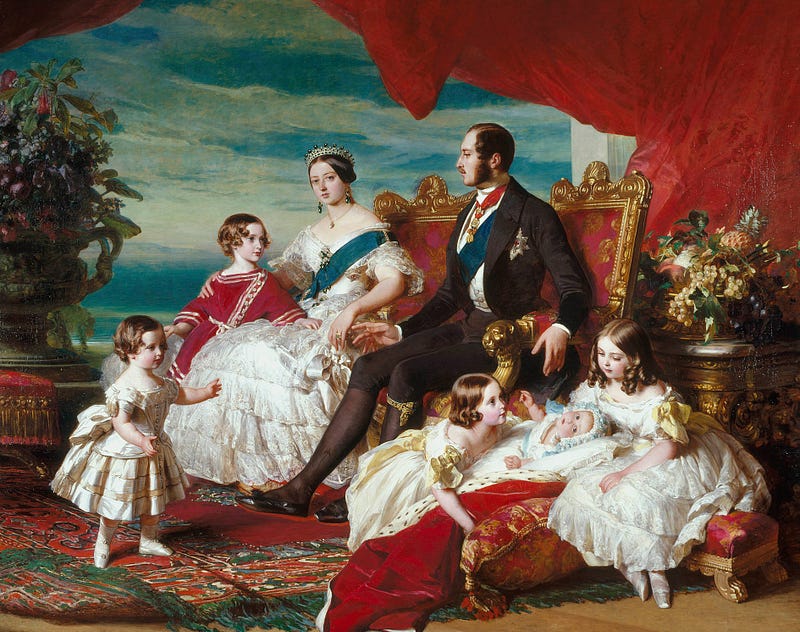
The industrial revolution ran from 1760 to 1840, and the Victorian era came hot on the heels of that, running from 1837 to 1901. The era is called the golden era for innovation, and the rapid nature of the technological, political and social changes that it brought forth are unprecedented in history. Here are 15 fascinating facts about Victorian times.
Women’s underwear was mostly crotchless
Despite the Victorian era being synonymous with sexual prudeness, the majority of women’s underwear was crotchless. Basically, for underwear women mostly wore a pair of long bloomers, but those bloomers, though they stretched to the waist, were only designed to cover the legs, not the crotch.
They were designed this way due to the fact that women’s clothing was so heavy and was often comprised of so many layers, that to try to take them off to go to the bathroom would have been impossible, so the answer was crotchless underwear.
That means yes, women’s vaginas had a clear line of sight to the floor at all times during Victorian times — the most prudish era in human history.
The Victorians were sexual prudes for good reason
The Victorian’s prudish attitudes towards sex is well known, what is not well known is the reason for these attitudes, the answer to which is, the explosive population boom of the 1800s.
To put things into perspective, Britain had a population of 4 million people in the year 1800, by 1900, that had exploded to 40 million people. Yep, a tenfold increase in just one hundred years. At the start of Queen Victoria’s reign in 1837, the population was 16 million.
That means in just the 40 years prior to it, the population had increased 4 fold alone, and during it it nearly tripled again. To say that the rate of population growth was unprecedented would be an understatement and what further exacerbated problems was that Britain was not that big of a nation in terms of landmass.
This meant that Victorian Britain became by far and away the most densely populated landmass on the planet.
This matters because it is well known that sexual attitudes are largely influenced by population density — there is a strong correlation between population density and sexual attitudes i.e. the more densely populated the area, the more non-sex positive the attitudes typically are, the less densely populated, the more sex-positive they typically are.
It’s believed this is linked to our instinctual desire to manage the population size i.e. when we start having too many children, we instinctually start shutting the door on sex, and as such our societal attitudes begin to mimic those instinctual ones so as to reaffirm them.
When the extreme poverty that this explosive population growth brought about is also added to the equation, which made sex unbelievably dangerous, it is not hard to see why the Victorians became so sexually prudish.
Children for the first time in history were expected to live rather than die
Like said the population of Britain exploded in the 1800s, but few understand the reason why, which is not because people were having more sex than ever, they were not, they were having less.
Crazy I know, so what gives? Healthcare is the answer. In the year 1800, 33 percent of children never made it past the age 5, by the year 1900, the number was down to 22 percent. Also, the life expectancy of people greatly increased, from 40 at the beginning of the Victorian age, to over 50 by the end. To really put this into perspective, prior to the 1800s, 35 was the average life expectancy range.
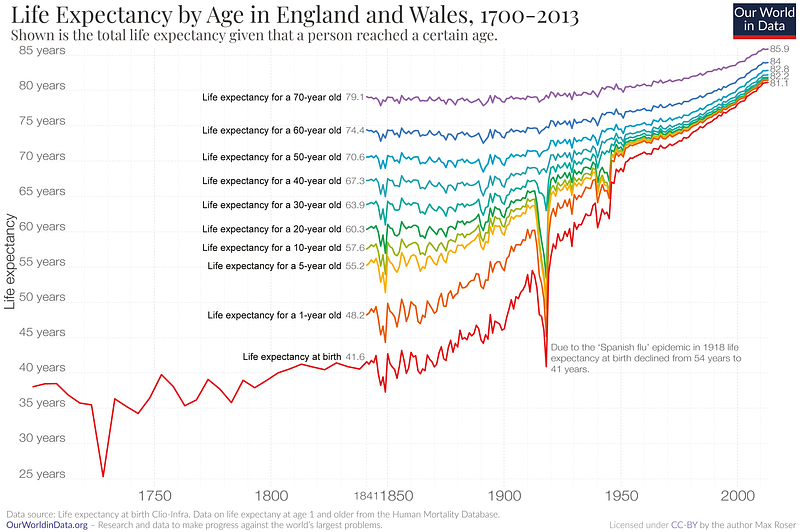
What further helped this rise in life expectancy was that historically, between 60 and 70 percent of children never made it past the age of 15. Now, the majority of children who made it past the age of 5 were making it to adulthood.
Needless to say, prior to the 1800s, the entire culture of Britain was focused on creating as many potential pregnancies as possible — the same as it was everywhere else in the world. This is one of the reasons why homosexuality, singledom, and much more have historically always been frowned upon.
Relationships were for making babies, and if a couple were to make babies, they had to start as soon as possible. It always had been this way, because it needed to be. Suddenly, being this way was causing absolute catastrophe through explosive population growth.
The response was to completely transform the culture, first by becoming prudish, second by inventing contraceptives, and eventually by laying the foundations for the culture we are today, which only exists because of healthcare.
If it wasn’t for that industry, our culture would still be just like it was prior to the 1800s — relationships being all about babies and children being expected to die rather than live.
Note: the Victorians’ achievements in the healthcare industry, sparked by people like Florence Nightingale, the mother of the nursing industry most noted for creating hygiene in hospitals, and from the prior work of Dr Edward Jenner, the founder of vaccines, is billed as the greatest human achievement in modern history mainly because it laid a foundation for a world where children are expected to live rather than die — a reality that changed everything.
The difference in the wealth gap between the poor and everyone else became greater than ever before — this caused profound inequality, especially in child mortality rates
There’s always been a wealth and outcome disparity between those at the top and those at the bottom, but the Victorian era led to an enormous disparity.
This gap would see great differences in life chances even between the middle-class and the working class. On a side note, the Victorians near enough created the middle-class — though they were rising in the years prior to the period.
Returning to the point. The greatest discrepancy caused by the wealth gap could be seen in the child mortality rate, children born to working-class families typically still would see a very high child mortality rate, with some estimating that as many as 60 percent did not make it past the age of 15.
That means even though the child mortality rate was plummeting for the middle classes and above, it remained stubbornly high for the working class. The rich on the other hand would often see virtually all of their children survive, this is how some middle and especially upper-class families had as many as 20 or more children — all of whom made it to adulthood.
Note: things did begin to improve by the end of the 19th century and very much more so into the 20th century once the social care act was brought in. Though it was through the creation of the NHS that the mortality rate disparity was eventually pretty much closed.
The slums were one of the most horrific in history
The slums became so densely populated due to the explosion in population growth, that often there would be thousands of workers living and working in areas of typically no more than one square mile.
The most famous is a Manchester slum called Angel Meadow, it was nicknamed hell on earth and there were over 30,000 workers crammed into a space just one square mile in size.
Needless to say, poverty in Victorian Britain was more severe than anywhere in history either before and arguably since. It’s often even said that slaves lived better lives than those who lived in the slums in Victorian England — it is said slaves had a better chance of escaping as well.
Yep, it was that horrific. And for those in the slums who lost their jobs, all they had waiting for them was either crime — which if they were caught could have seen them shipped to Australia — death on the streets through starvation or disease, or the Victorian workhouses, which were truly hellacious places.
Living space was so cramped and poverty so extreme that many families resorted to chucking their children out in an effort to survive
Families were so densely packed into such tiny living spaces, that children frequently either ran away because it would give them a better chance of surviving, or would be thrown out simply because the parents were so poor that they couldn’t afford to feed them.
As horrific as it sounds, the methodology was sound. They would throw one kid out in the hopes that by having to feed one less child, they would have a better chance of keeping themselves and their other children alive.
Yep, poverty was so bad during Victorian Britain that families would literally abandon their children.
The reason of course for the extreme poverty was like said, the insane population growth which when added to the rapid urbanisation, which could not keep up with the population growth, created hell on earth for those living during that era.
So because so many children were living rather than dying, and because so many were moving into towns and cities, the infrastructure, food networks, and much more needed to cope with all this rapid change could not keep up.
Child labour was a real problem
All preschool children, regardless of gender, dressed in the same way. That would be in a white frilly dress, which would frequently be complemented with bonnets and ribbons.
But once those boys got their trousers the majority likely wished they had not. Child labour was a serious problem in Victorian times, and it was the boys who by far saw the worst of it.
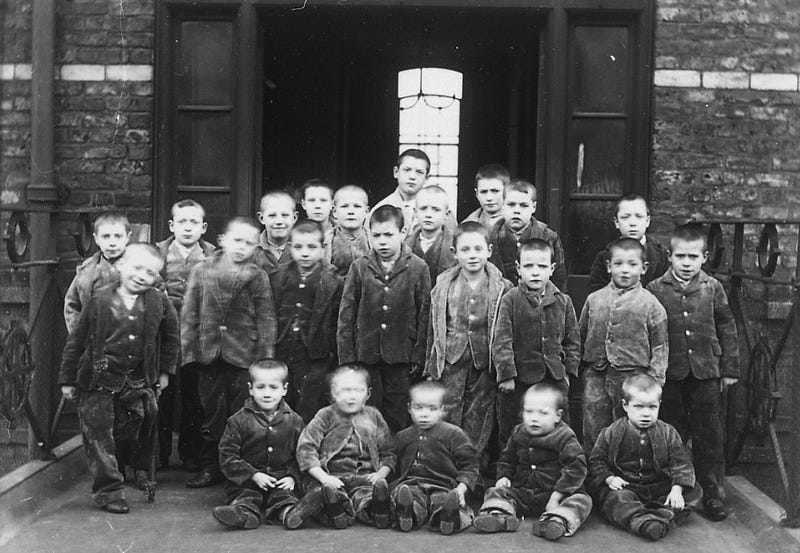
Boys as young as five would work on farms, in factories, as chimney sweeps, down in coal mines and the like, and much more. Girls would also be put to work from a young age but mostly in or around households — a relative utopia compared to the boys' tasks. Though even some girls would find themselves down mines.
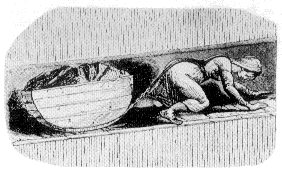
However, it wasn’t as bad during the Victorian times as it had been during the Industrial Revolution — it was still really bad. This is mainly because the Victorians brought in countless acts to try to combat child labour, for example, The Chimney Sweepers and Chimney Regulations Act of 1840, which made it illegal to allow any person under the age of 21 to climb up or into a chimney for the purposes of cleaning it.
Other acts of note were the 1842 mines act, which banned the employment of boys under the age of 10 and all women and girls from mines. The 1850 ten-hour act also set a limit for workers of no more than 10 and a half hours a day — many children had been forced to work upwards of 12 to 18 hours a day.
Also, by end of the century, things became even better as the Victorians pretty much invented compulsory school. By the year 1880, all children from 5 upwards had to go to school. Though they did only have to stay till they were 10.
The Thames River was absolutely disgusting
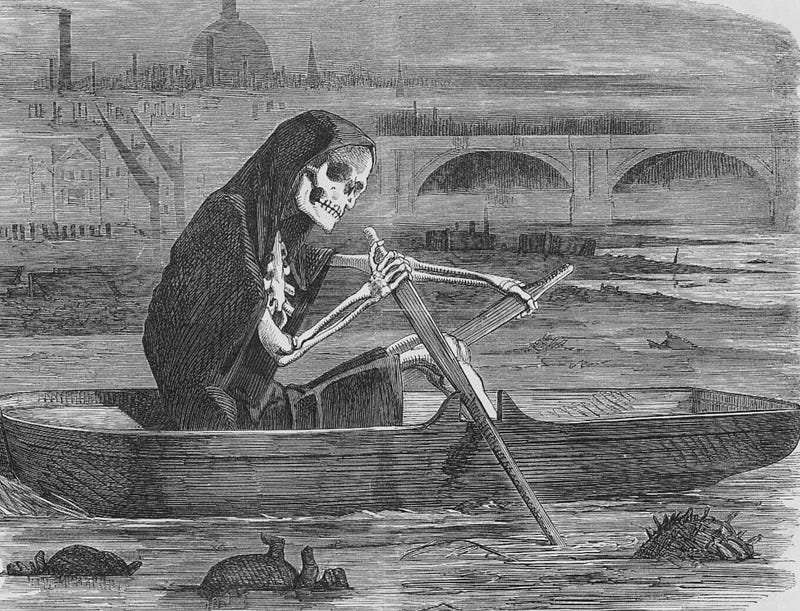
On a daily basis, thousands of tonnes of raw faecal matter would be dumped into the Thames through the sewerage network. The sewerage system had always worked this way, but there had never been anywhere near as many people — which created disaster.
The population boom literally led to the river becoming so full of raw sewage and dead animals and the like, that people claimed you could walk across it. Here is the most horrific thing, the city’s drinking water came from this river. No jokes.
Needless to say, people died in the thousands mostly from typhus, typhoid and Cholera, which were real problems in Victorian times, especially the latter, and which are all mostly caused by drinking dirty water.
The worst thing was that initially, people believed all the deaths were happening because of contaminated air. Meaning it took a long time before it was realised that it was the river that needed cleaning up.
Note: the Victorians did eventually make the connection, with Joseph Bazalgette, a renowned civil engineer, building the famous sewer network in London. But it took until the 20th century before an effective central body was set up to properly deal with the problem.
The streets were disgusting
The cities of Victorian England were just cesspits really, none more so than London. Cigarette ends, rotten food, this, that, everything. Even poop.
For example, by the year 1890 there were approximately 300,000 horses and thus 1000 tons of dung a day in London. Imagine that smell. The only solution the Victorians could come up with was to employ boys between the ages of 12 to 14 to try to run out into the traffic and scoop up the excrement as soon as it hit the ground.
You can imagine the fate many of the boys employed to do this would suffer.
However, it was not just animals pooping or relieving themselves on the street, it was humans.
Yep, the streets really were that disgusting.
The Victorians invented sanitary science
For extremely obvious reasons, the Victorians invented sanitary science, which is the study of public health, dirt and disease. Through this they became obsessed with sewers, sanitation and cleanliness which led them to not only create the famous sewage systems in London, but also to create the first public restrooms with flushing toilets.
George Jennings was the English sanitation engineer who made the invention, installing the public restrooms (which he called retiring rooms) at the great exhibition of London in 1851. Over the next hundred years or so, flushing toilets gradually made it into every place — even homes.
Though it should be noted that flushing toilets first appeared around 4500 years ago, when communities in Scotland, the Indus Valley (present-day Pakistan), and Mesopotamia created systems that used pipes to carry waste from the inside of buildings to the outside.
But around the middle of the first millennia, they were forgotten about, that was until Sir John Harrington invented the design of the flushing toilet that we all know so well today. He installed one in his manor and one for Queen Elizabeth I.
However, she did not like it because it was too loud and as such, it did not take off. It was not until the Victorians and George Jennings with his public restrooms that flushing toilets started to become widespread.
The majority of people’s homes — especially those in London — used to stink
At the start of the 19th century, every house in London had a cesspool. This is a brick chamber that would be about 6 feet deep and about 4 feet wide. The household toilet — or privy as it was called back then — would be above this pool.
These cesspools would fill up quite quickly mainly due to the sheer number of overflowing households. This inevitably created quite a stink. What made matters worse was that once the water closet was added to the equation, which was not a sewage system, but simply a water system that would help flush the waste into the cesspool, the stench became even worse. It also made the cesspits become harbingers for diseases like cholera.
This led to the event known as the Great Stink. It occurred in the summer of 1858, and was caused due to the excessively hot weather exacerbating the mass human waste problem caused by the cesspits and the fact that sewage was dumped into the river.
The stench was so horrific that it led to the Thames being called a cesspool of poisonous gas, it also was so bad that it even affected the business of Parliament and productivity because people could not cope with the horrific smell.
It was actually this event that led Parliament to enlist Joseph Bazalgette to solve the problem of the Thames River, and his work in sorting the sewage problem is believed to have saved more lives than any other Victorian official.
The Victorians pretty much invented mass internal trade and globalisation
Through rail travel, the Victorians pretty much invented the notion of mass trade networks within a country — the precursor to globalisation. Hot on the heels of the industrial revolution, everybody could now connect to everybody else simply by getting on the train.
This meant for the first time in history everyone in Britain pretty much knew that they all existed and what was going on in the rest of the country — and largely in the rest of the world. It also meant for the first time in history a country could build industrial-sized internal trade networks i.e. because one end of the country could now easily trade with the other end, massive internal trade networks could be set up.
On a side note, the mass populace gaining such knowledge of the world and events is believed to be one of the biggest precursors for civil rights around the globe — including workers' rights and ending slavery and the like.
Returning to the point, the Victorians on the back of these ever growing internal trade networks also pretty much invented the notion of globalisation by expanding the internal networks to incorporate the many trade routes of the Empire. In fact, the British Empire is known as the greatest trade empire in history, so it was not as much about conquest as much as it was about setting up trading posts — they just used a heavy dose of conquest to build those trading posts.
The heavily interlinked world that we now have was pretty much born on the idea of the mass internal and global trade that was pushed heavily by the Victorians during Victorian times.
The Victorians supercharged the end of slavery
Though it was Haiti that actually was the first nation to abolish slavery, with them doing it a few years before the British after a successful revolution against the French, the part the British played in ending slavery is well known — as is the part Britain played in the slave trade it should be said.
However, it was especially during the Victorian era that Britain really played its part in drawing an end to slavery. After slavery was fully abolished in the British Empire on 1 August 1834, with the final slaves being released in 1838, there was an acceleration to end slavery across the globe.
The reason it became a British mission to ensure that slavery was ended everywhere was believed to be linked to Britain being the biggest Christian empire at the time, the higher-ups — especially amongst the church — believed it was the moral duty of the British to enforce Christian values.
Though there are some who argue it was because the mass population — due to nationalisation and the invention of the free press — had become aware of the evil nature of the slave trade, and thus the higher-ups to appease them began efforts to try to make themselves look like the good guys i.e. the ones ending it not running it.
Whatever the truth, in all, this led Britain to call to action the entire might of the Royal Navy — by far the largest in the world at the time — and the British Empire to pretty much, through gunboat diplomacy, force the rest of the world to do the same thing and abolish slavery.
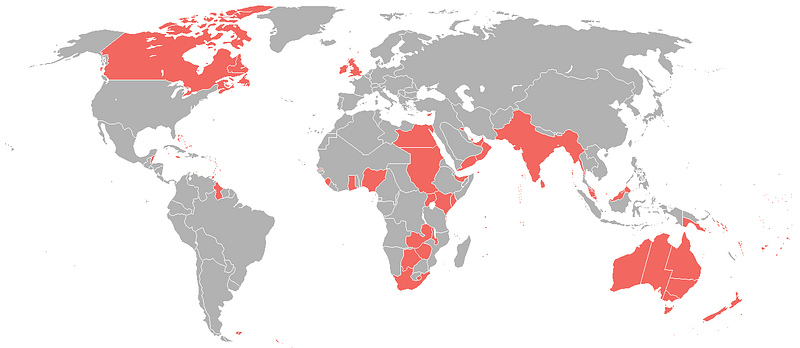
The gunboat diplomacy was highly successful and today, in proportion to global population size, there are fewer slaves by a substantial distance than ever before in history.
However, sadly, there are still a lot of people trapped in slavery. In absolute numbers, more than ever before in history — 25 to 40 million. That means the fight still goes on.
The Victorians revolutionised and some argue near enough invented the women’s fashion industry
Everyone knows about tiger skin rugs and bearskin rugs and lion skin rugs et cetera, also about taxidermy i.e. the popularity of having stuffed animals the decorations. Everyone also knows about animal fur and much more. Such things have been around for millennia.
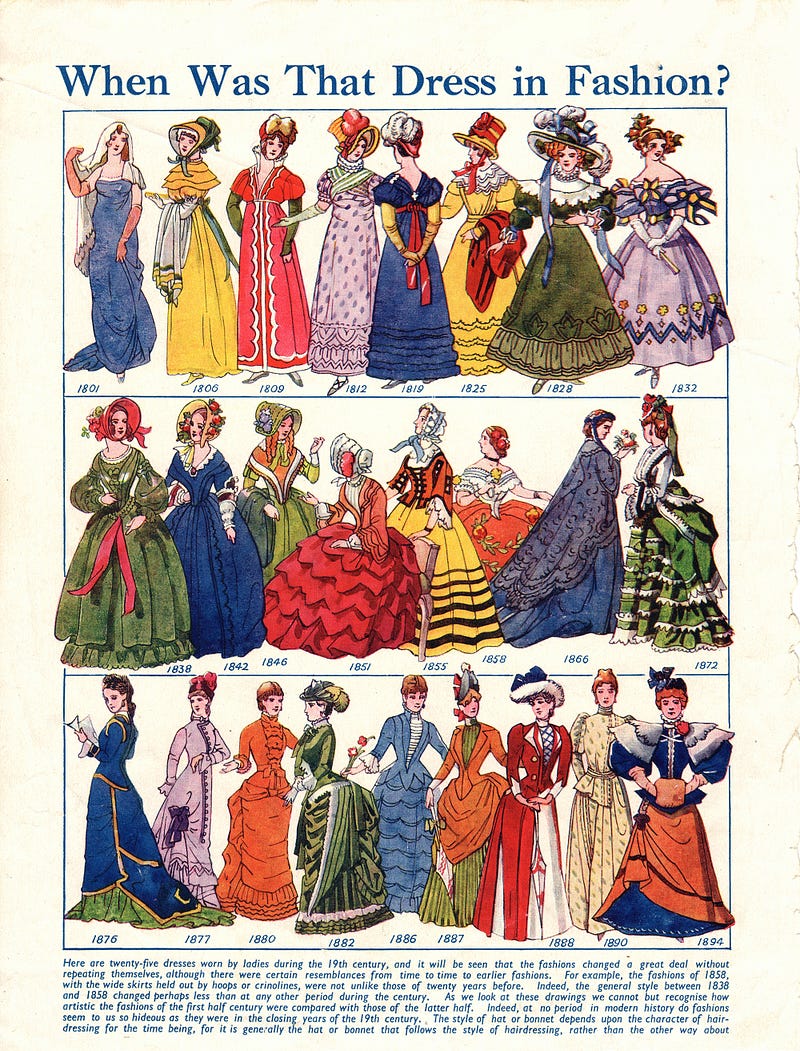
But the women of the Victorian era took fashion to places it had never even dreamt of going previously. Some of the dresses women ended up wearing were so outrageous and so wide that they literally got stuck in doorways.
Not just that, but women literally died for their outfits in the Victorian era. Frequently, the dresses were made with flammable fabrics, and it is estimated that thousands of women died because their dresses caught on fire.
But it wasn’t just women who died for women’s fashion, it was animals and even insects. Women would literally wear dead animals and dead insects, so it wasn’t even just about wearing animal fur, women of the time would literally wear the dead animal or insect or both.
Bird hats, so hats that were literally made with the stuffed remains of a dead bird, and fox and ferret scarves, which were literally the animals stuffed, became especially popular. As did fans made out of stuffed birds.
The industry became so popular that it led to many animals and birds being pushed to the brink of extinction. For example, great crested grebes, a highly attractive bird was especially targeted for the fashion industry, barely surviving the era. Many others — especially birds — suffered the same fate.
Tattoos were popular in the Victorian era
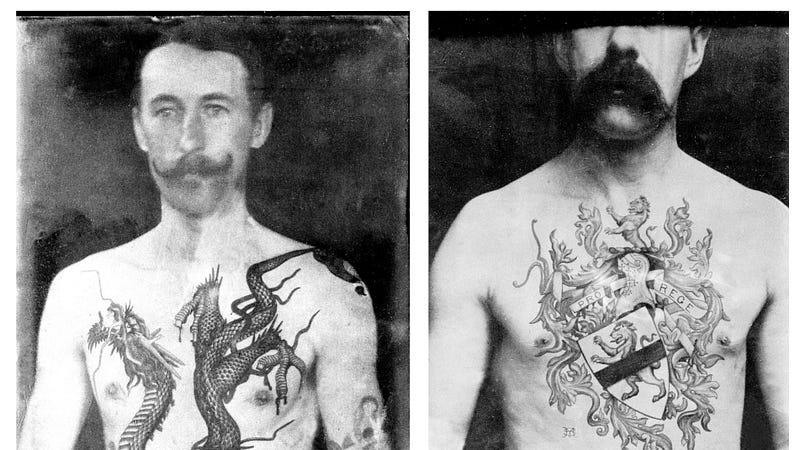
Tattoos became increasingly popular and fashionable in the Victorian era, and Queen Victoria herself even allegedly had tattoos. The most famous rumored one is that of a Bengal tiger fighting a python, but as it has never been proven it should be taken with a pinch of salt mentality.
What is known for sure is that her son, Albert, who would later go on to become King Edward VII, while on an official trip to Jerusalem in 1862, had a Jerusalem cross tattooed on his arm. Also, Albert’s son, who would go on to become George V — while on an official tour to Japan in 1881 — had a red and blue dragon tattooed on one arm and a tiger on the other.
Outside of royalty, tattoos were most popular amongst men. Naval themes, religious symbols and tokens of love were the most popular types. But women were not shy and also got in on the act and would frequently have tattoos of butterflies and birds and the like. Famously, of note, Winston Churchill’s mother, Lady Randolph Churchill, reportedly had a serpent on her wrist.
However, it should be said that tattoos were more of a personal thing during this era, so they were not for show. This is why the majority of the tattoos were always in places where they could be easily concealed.
Note: the trend for tattoos continued in the years after Queen Victoria’s death, with them only beginning to lose their popularity once they became popular amongst prisoners during the 1930s, which led the rich to start denouncing them. The rest of society then followed.
The Victorians built Big Ben
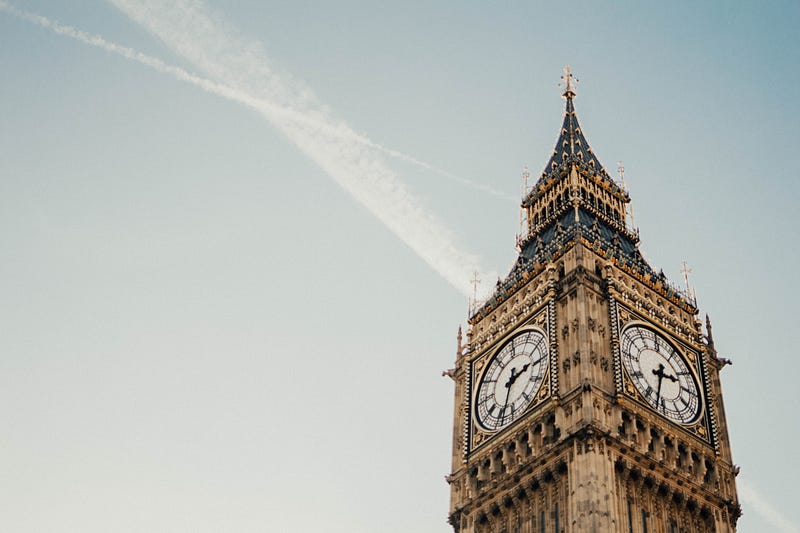
Big Ben is the nickname for the clock tower outside the Palace of Westminster in London — Big Ben was originally the nickname for just the bell inside the clock tower, but through popular use, it became the nickname for the tower as well.
People think that it has been around for a very long time, but this is in fact incorrect. Whereas the Palace of Westminster, which can be dated back to the 11th century, has been around a long time. The Victorians built Big Ben, with construction starting in 1843.
When it was finished back in 1859, it was the largest and most accurate four-faced striking and chiming clock in the world. (A four-faced clock is simply a clock that has a clock on each of its four sides.)
It’s believed that Augustus Pugin, the English architect who designed it, chose a four-faced design rather than a bell design — one where the bell would have been visible from the outside — because then Big Ben would be the biggest four-faced clock in the world.
The Victorians invented Christmas cards and seaside holidays
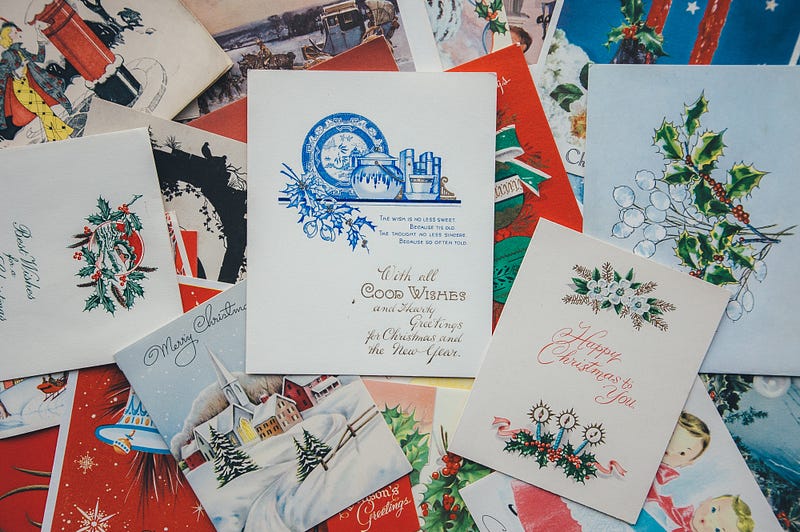
The list of what the Victorians gave to the world is so long that it is ridiculous. The vast majority of technology and cultural practices of the modern world can be traced somewhat through the Victorian period.
That includes the Christmas tree. They did not invent the notion of Christmas trees, with Christmas trees first appearing back in 16th century Germany, but they made them a staple of Christmas.
Prince Albert brought Christmas trees to Victorian England and in doing so turned the Christmas tree into a global Christian tradition. On top of that, it was the Victorians who began the tradition of giving each other Christmas cards.
To top this off, the Victorians also invented postage stamps and post boxes, which allowed people to send each other Christmas cards — and other mail of course.
To go with that, the Victorians pretty much invented the seaside holiday — the source of most postcards. This happened because the seaside created the perfect escape from the dirty air and overcrowded conditions of the cities.

They also pretty much invented the notion of holidays full stop. Holidays had sort of been around since before that, but only really for the superrich. The Victorians popularised them so that the middle classes and eventually even the working classes could go on them. They even created bank holidays so people could go to the seaside.
That’s all from me, thanks for reading! If you enjoyed this post, you may also enjoy the following:
27 Random But Fascinating Historical Facts That You Probably Didn’t Know
Seven Immense Privileges of The Modern World
17 Hilarious Jokes That Will Test Your English Language Skills To The Limits
To learn more about me see this link, to support me click the link below:


