
TRAVEL. ROAD TRIP.
Arriving in Budapest — The Historical Heart of Hungary
The first stop of our road trip through eastern Europe
We’re always looking for new adventures and different ways to explore the world. While I’ve driven countless times through Hungary together with my parents on our way to Romania, we’ve never stopped longer than to fuel our car. Hungary was a drive-through country for us.
But not anymore.
David taught me to see Europe with different eyes again. Growing up in Southern Africa, he has a very different view of landscapes, people, and destinations.
And as we were planning our road trip to Romania, a trip my father has done more often than he can still count, David changed things up a little.
“Let’s stop in Budapest.”
Why not? These were my thoughts about it while my father had suggested driving all the way to Romania in one go. A trip of possibly 20 hours on the road. Yes, he’s done that multiple times. Alone. We were three drivers and surely could have done that but on this trip, my father is going to learn a bit more about
“The journey is the destination.”
Which is the travel mindset of my husband and me. We travel to see places and not to get somewhere. And while Transylvania is surely the main destination we want to see on this road trip through Romania, we’ll explore more along the way.
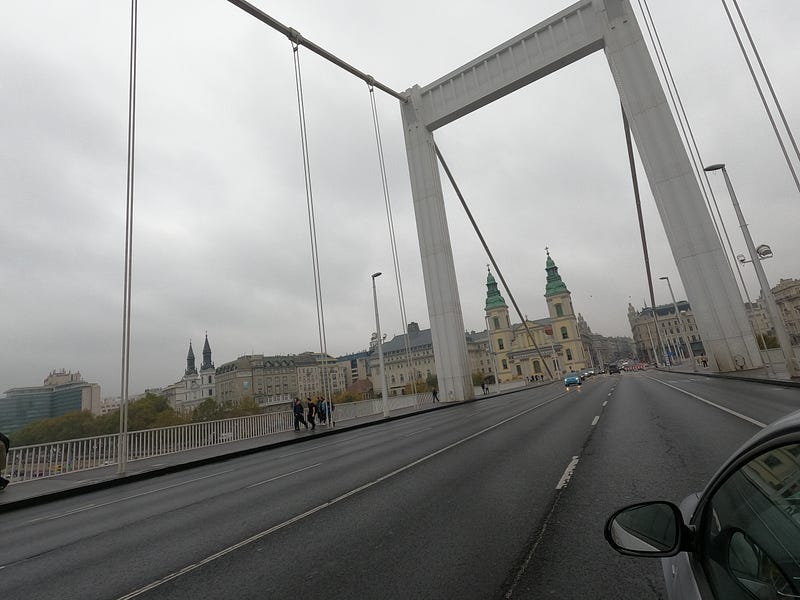
A few days later we were on the way driving into the city of Budapest. After doing a bit of research we booked an apartment in the inner city on the Pest-side, the old center of town.
“Separated by the Danube River, Buda and Pest form the two halves of Hungary’s capital, linked by the famous Chain Bridge since 1849. Their separation runs deeper than the river though, these two regions have their own distinct personalities. Where Buda’s hills offer sweeping panoramas across the city, Pest is entirely flat. While Buda’s Castle District purrs with imperial taste, Pest’s buzzing bar scene is always lively.” — Corinthia
Today, the cities are connected with more than just one bridge of course. The famous Chain Bridge was closed upon our visit due to maintenance work.
Budapest is the ninth-largest city in the European Union and the second-largest city on the Danube River.
“The history of Budapest began when an early Celtic settlement transformed into the Roman town of Aquincum, the capital of Lower Pannonia. The Hungarians arrived in the territory in the late 9th century, but the area was pillaged by the Mongols in 1241–42. Re-established Buda became one of the centres of Renaissance humanist culture by the 15th century.” — Wikipedia
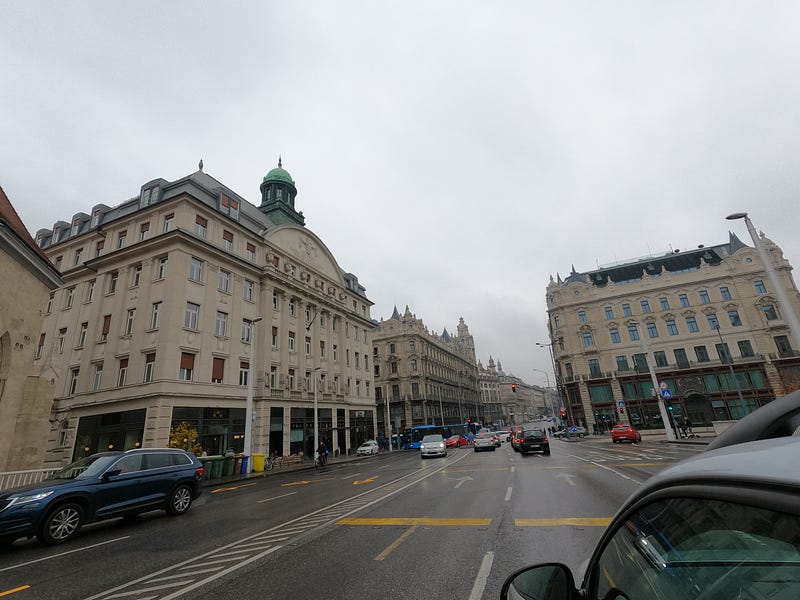
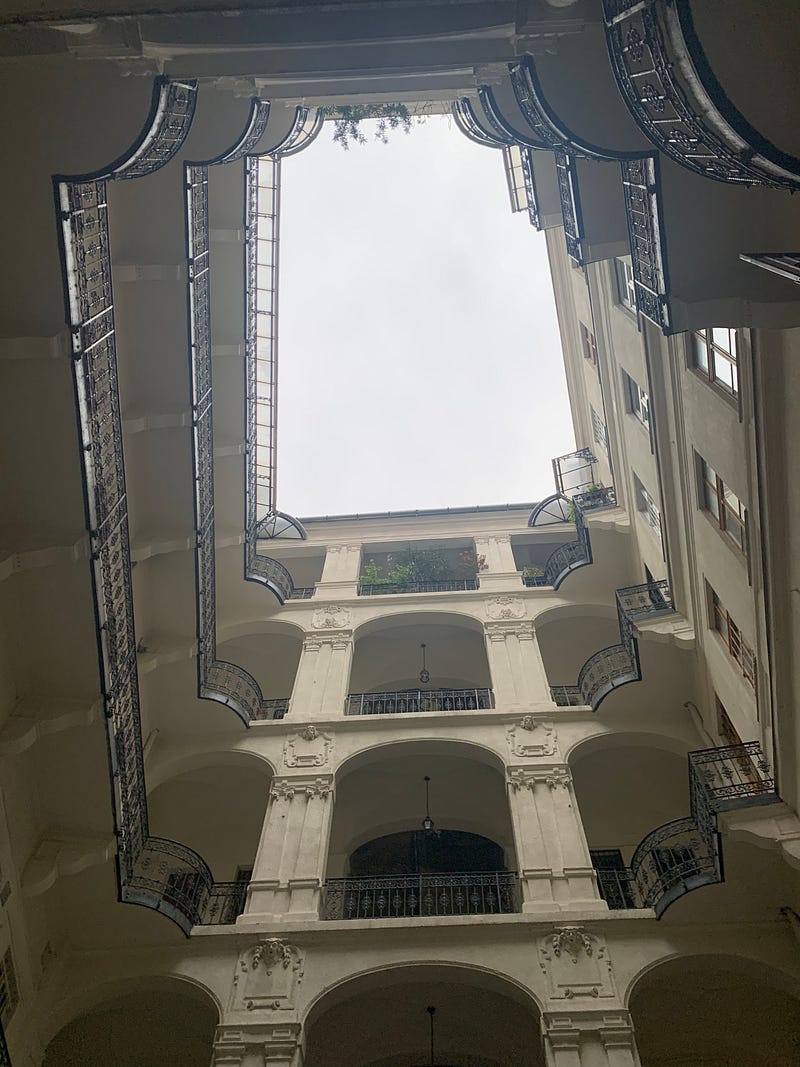
Surprisingly, we easily found our way into the city center and to the underground parking. Only a few steps from there we entered the apartment we had booked for two nights. Located in an old building, we could admire a beautiful old courtyard.
We only dropped off our bags and left the place again. We are here to see things.
“The central area of Budapest along the Danube River is classified as a UNESCO World Heritage Site and has several notable monuments of classical architecture, including the Hungarian Parliament and the Buda Castle.” — Wikipedia
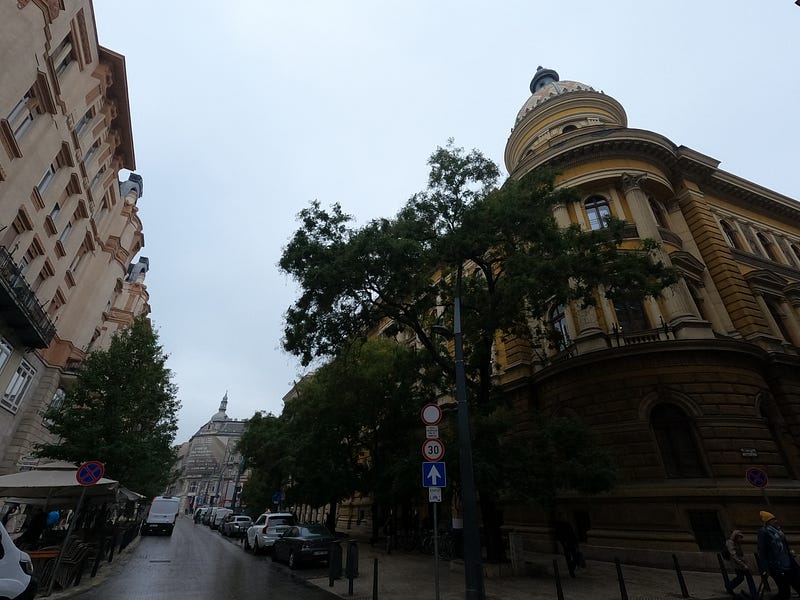
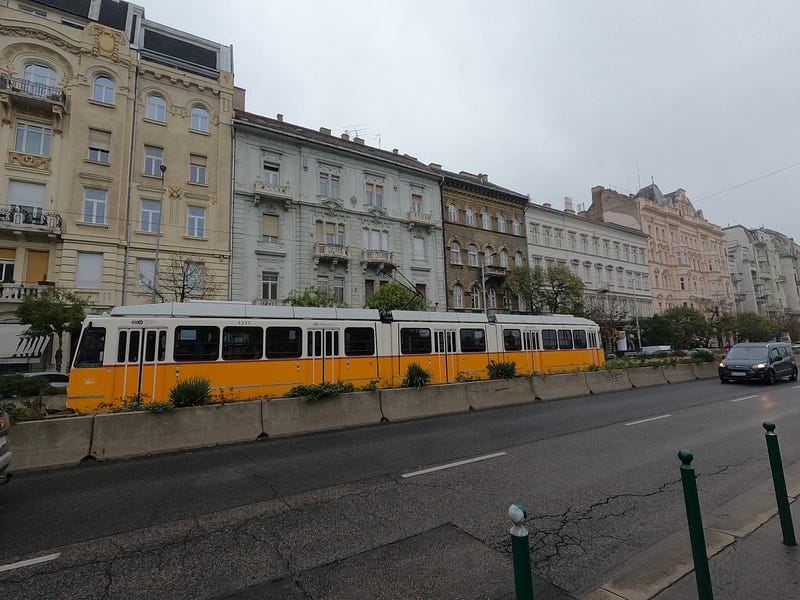
I quickly got used to the lovely charm of old trams driving through the city. Such a beautiful sight.
And as we marveled at those beautiful old buildings we were wondering if the city got spared from the bombings of the second world war but my research tells us differently.
“The assault on Budapest in 1945 left hardly any buildings intact, almost everything was destroyed and in shambles.” — dailynewshungary.com
Reading this I must admit they have done a great job restoring the city.
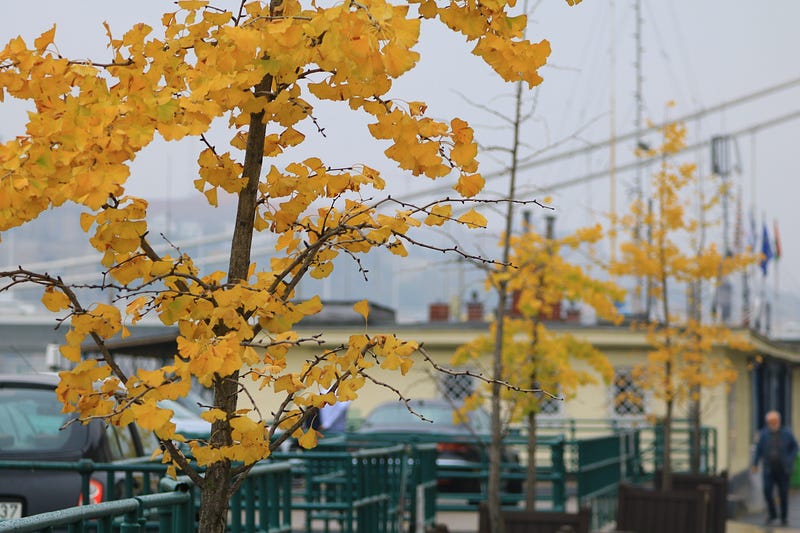
We arrived at the bank of the Danube River and I took the chance of capturing fall’s beauty in Budapest.
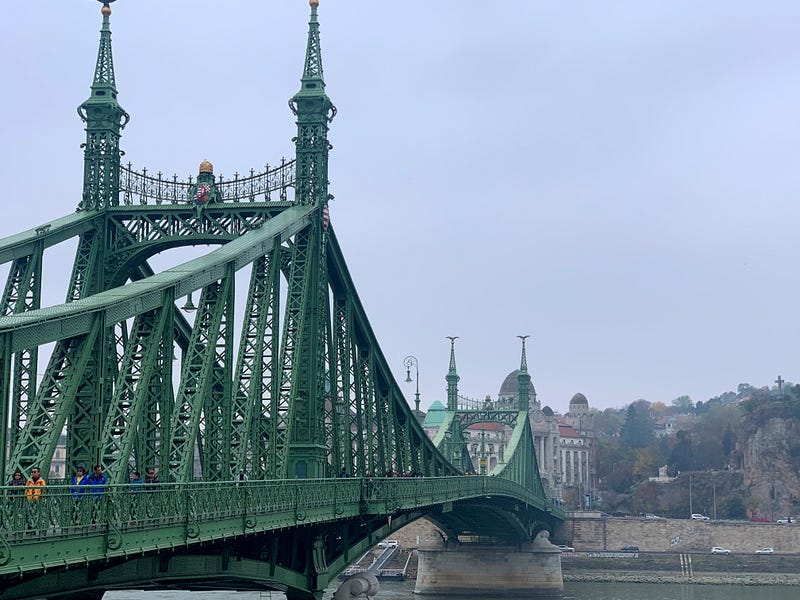
While we first thought we were standing in front of the most famous landmark of the city, the Chain Bridge, a historic stone bridge and the first permanent bridge leading across the Danube, we later found out this was the Liberty Bridge.
The Szabadság híd (in English: Liberty Bridge or Freedom Bridge) was built in the 19th century and is the shortest bridge across the river Danube. The bridge imitates the chain-type style which was considered an aesthetically preferable form at the time of construction (Wikipedia).
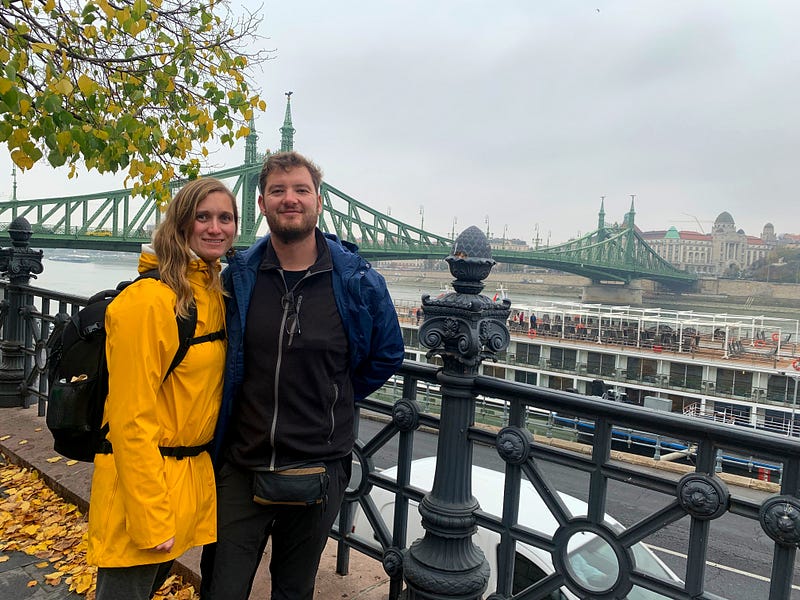
Across the river, we could see several old buildings such as the rock chapel and the Gellért hill cave.
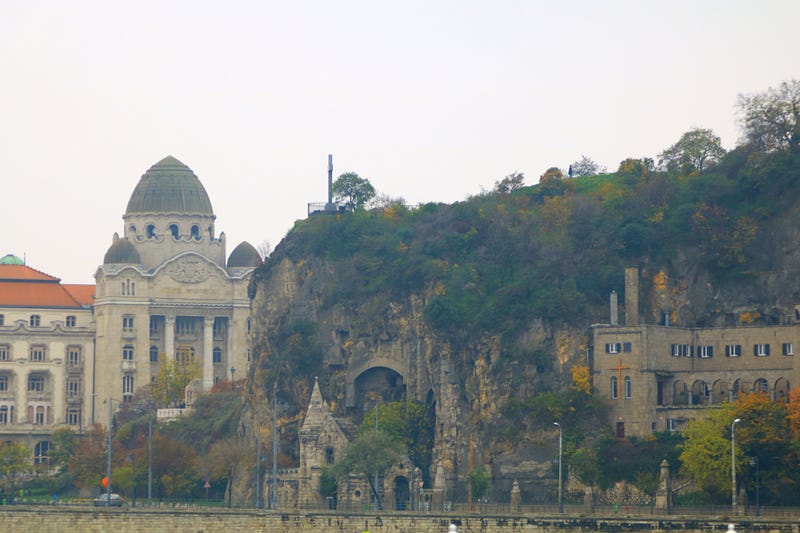
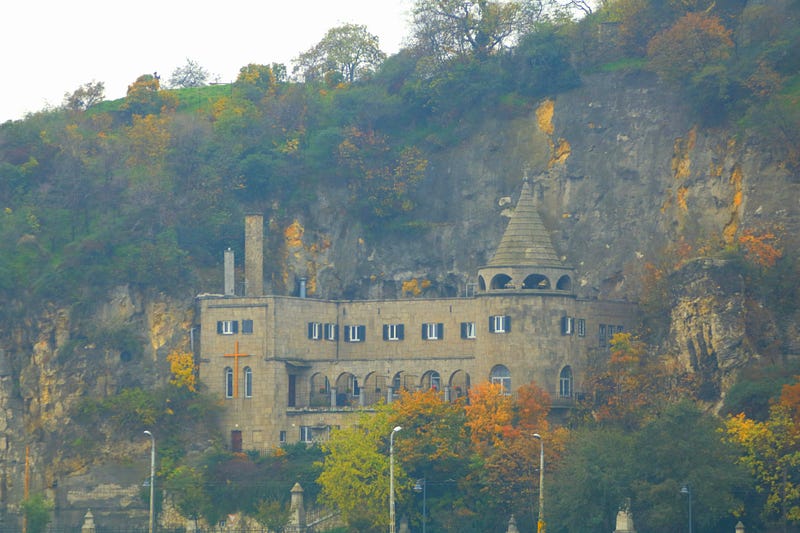
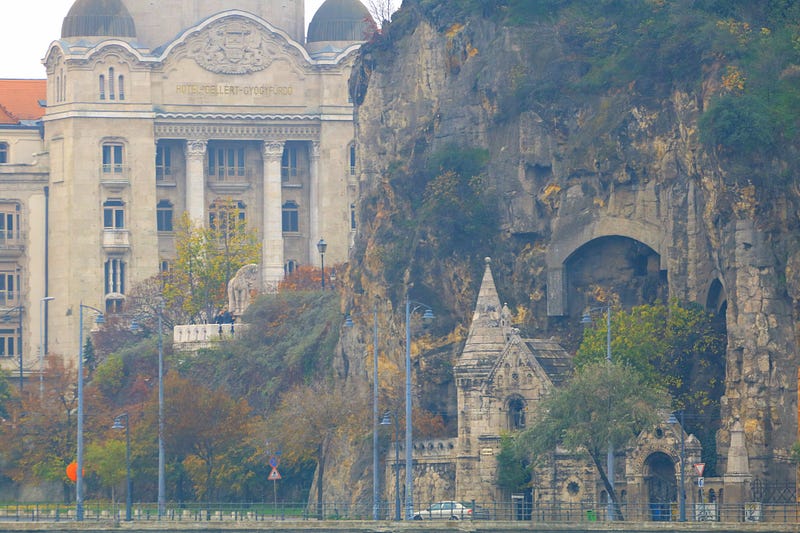
Our stomachs were telling us it was lunchtime and so we headed towards the famous Central Market Hall.
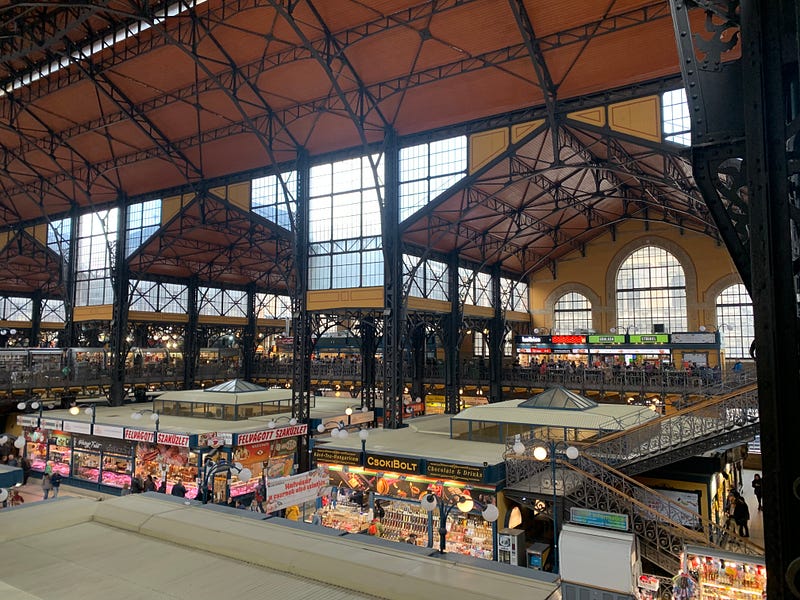
Here you can find everything from traditional clothing and souvenirs to vegetables, meat, dried chilis, and palinka, a traditional fruit spirit.
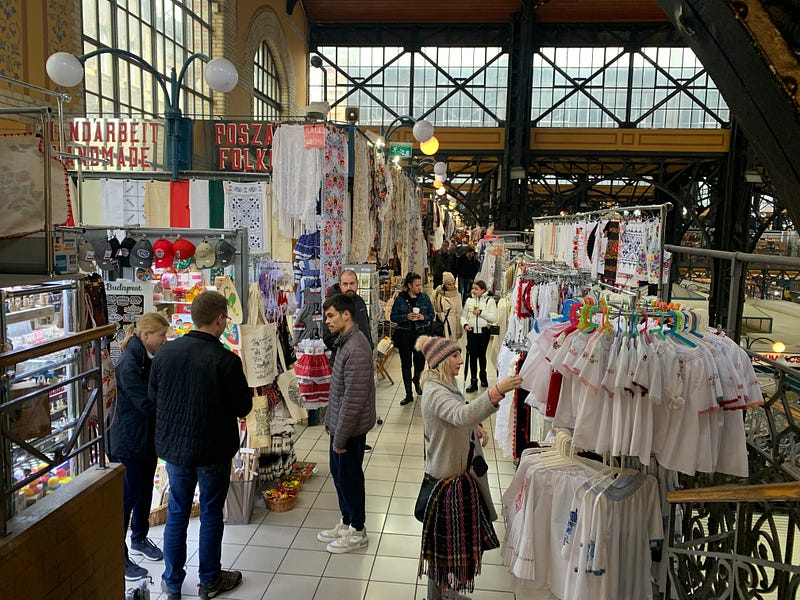
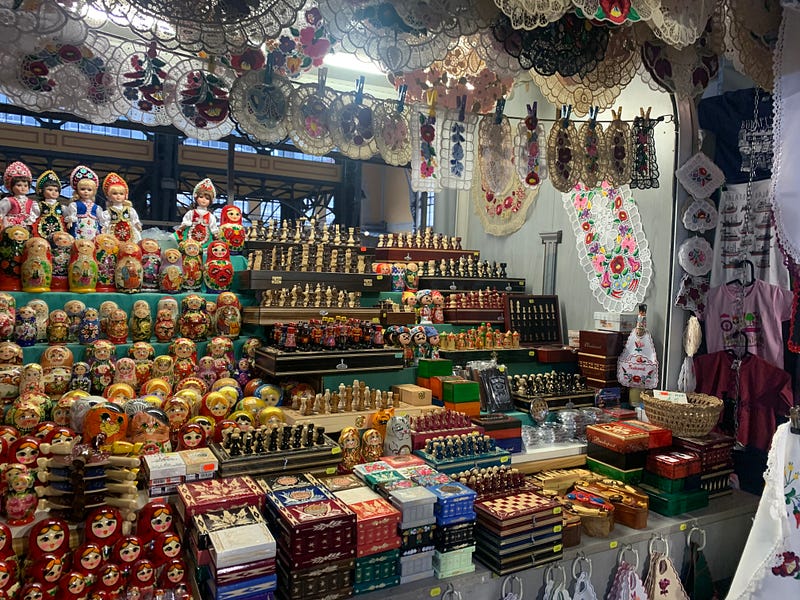
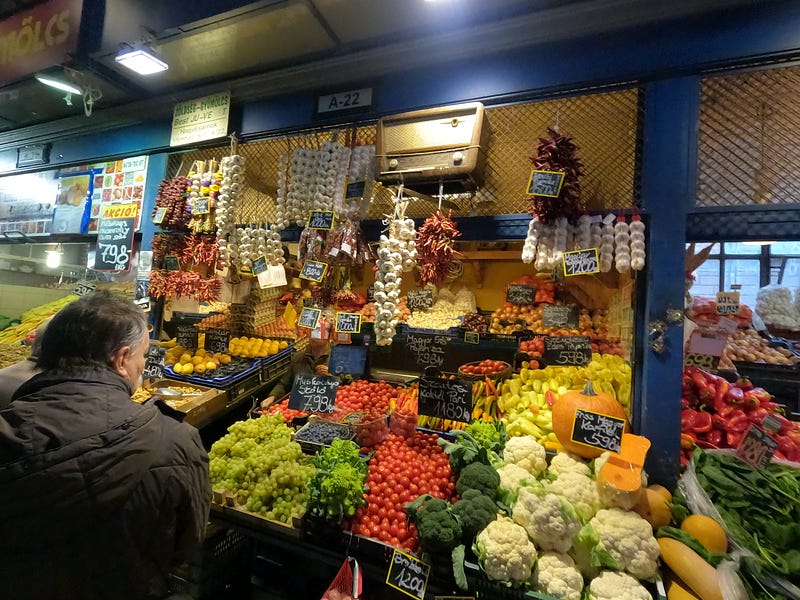
My father and I knew what we wanted to eat since a lot of the traditional Hungarian foods are also to be found in my parents’ home country in Transylvania.
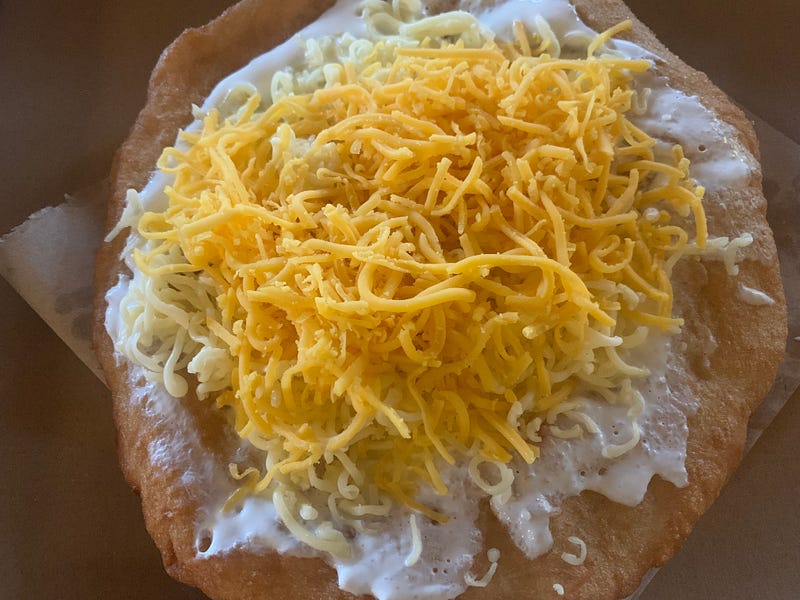
We both ordered a “Lángos”, a traditional Hungarian deep-fried flatbread. While I was surprised to see how many toppings you can order on the Lángos, I went for the classic version with sour cream and cheese.
David wanted something meaty and ordered a dish slightly too big for his hunger but surely delicious. When I asked him what it was he said “something bruschetta”. Well, that doesn’t help. Bruschetta is Italian and refers to a dish with grilled bread. Not really what he had on the plate.
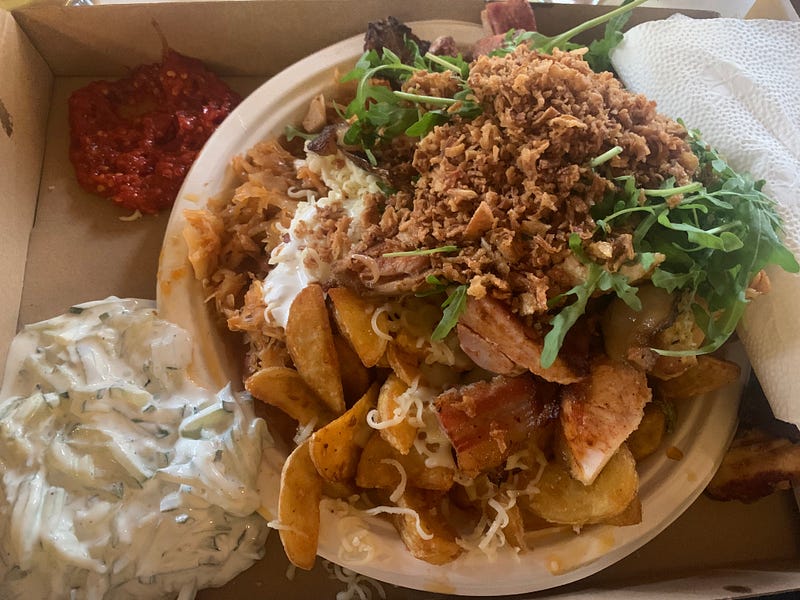
Later in the evening, we ventured out on our own pub crawl. David had read about the famous “ruin bars” and I had written down a handful of them.
“Budapest’s ruin bars were born at the turn of the new millennium from the gentrifying urban decay of the city’s 7th District. These creative and cobbled-together spaces quite literally hijack ruins – abandoned warehouses, empty parking lots, historic buildings – and call them home.” — Corinthia
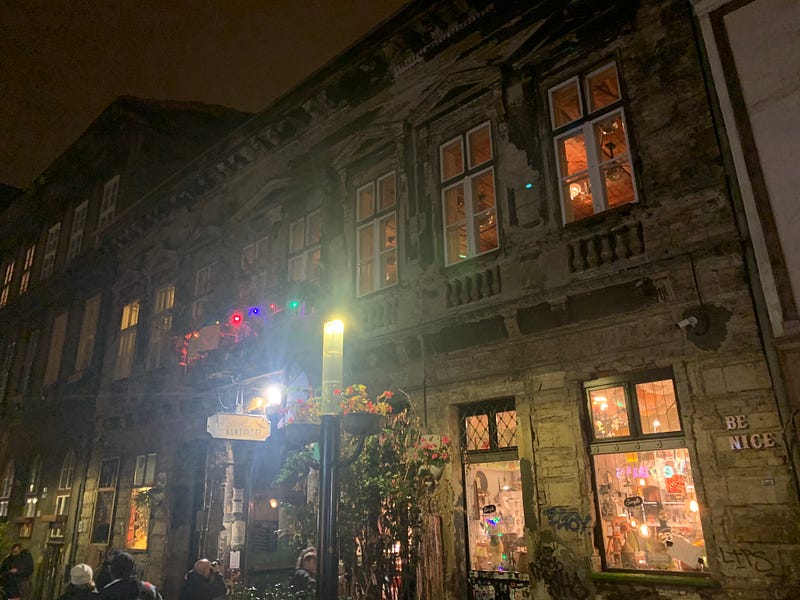
We were excited about getting to know some of the local nightlife and truly enjoyed seeing the different bars. I took enough pictures to fill a separate post where I’ll go more into detail about these aspiring bars.
Szimpla Kert was the first one we went to and definitely the most original ruin bar we visited.
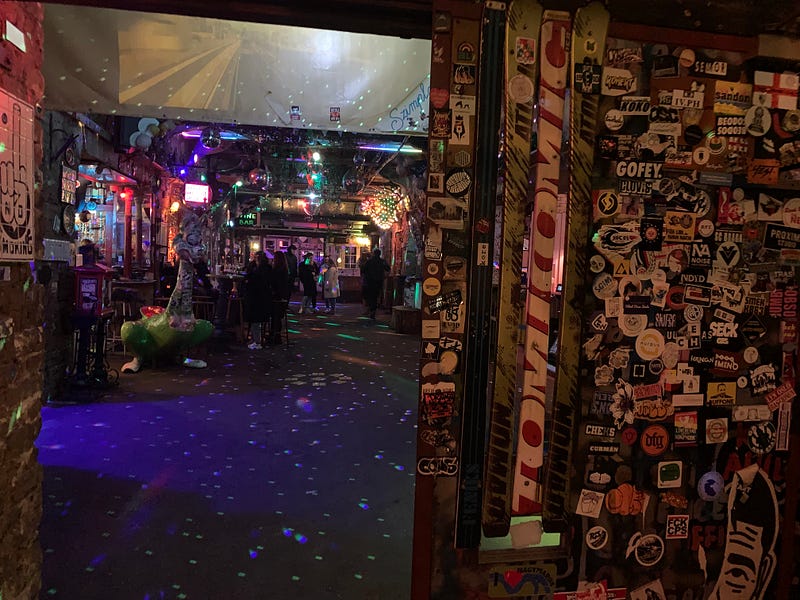
What a day in the heart of Budapest. I can only be excited about what the second day has to offer.
Travel.
Because money returns.
Time does not.
More about our adventures in Eastern Europe:
Join my email list here if you would like to read more travel essays or sign up for the Medium membership to receive unlimited access to my and other writers’ stories out here (I will receive a commission fee in return).


