
TRAVEL. NATURE. EASTERN EUROPE.
Hiking in a Hidden Wilderness on the Baltic Sea
Exploring Słowiński National Park in Poland
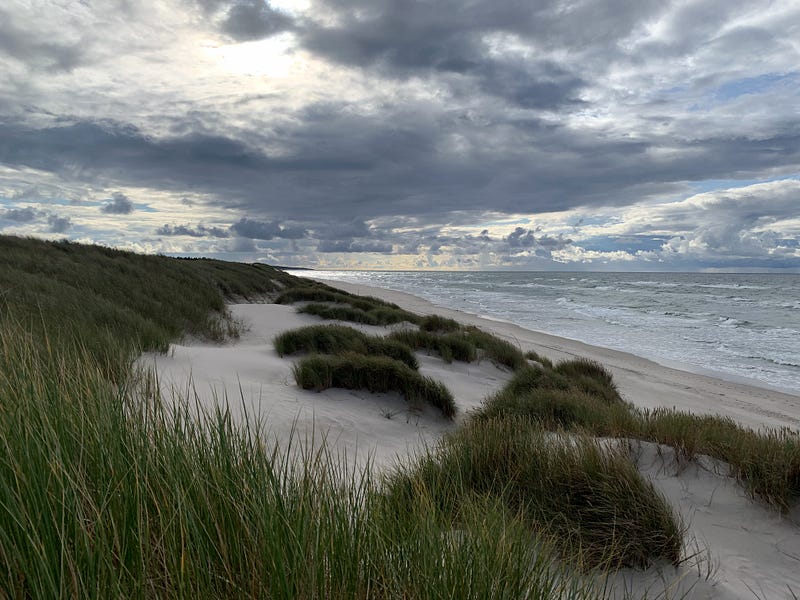
I usually try not to expect too much from a place so I can’t be disappointed if the location doesn’t meet my expectations. But according to what I read about Słowiński National Park, I surely did expect to find a hidden wilderness on the coastline of Poland.
While road-tripping for a few days along the Baltic Sea in Poland I chose this as our destination for the third day. It was spontaneous.
We woke up that morning further west on the baltic sea on a land spit between a lake and the ocean. Overlooking the water from our bed, the car, I quickly decided I wanted to go for a paddle.
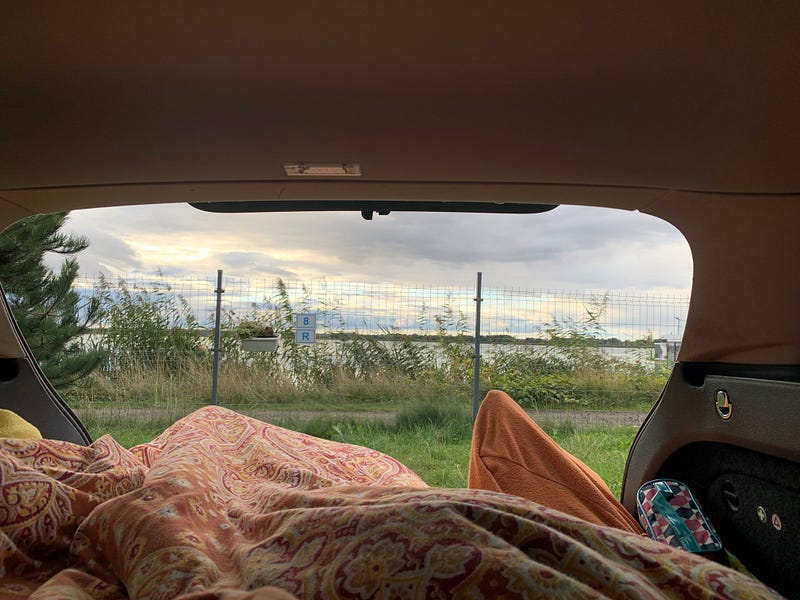
The clouds were dark and I did know I didn’t have more than an hour before the rain would come. But since I wanted to get out on the water so badly, I quickly pumped up my board, put my raincoat on (just in case), and headed out.
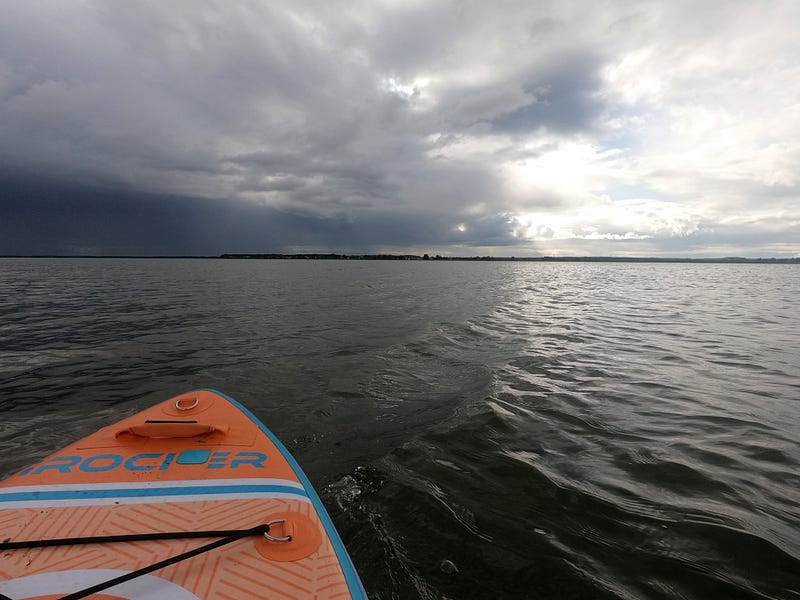
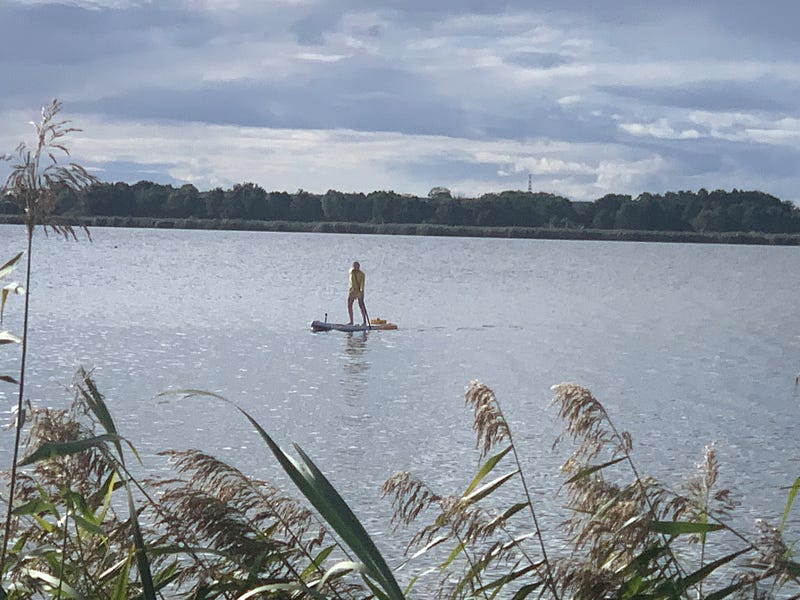
I did make it back dry, however in the process of packing up the rain set in and we then quickly left the campsite.
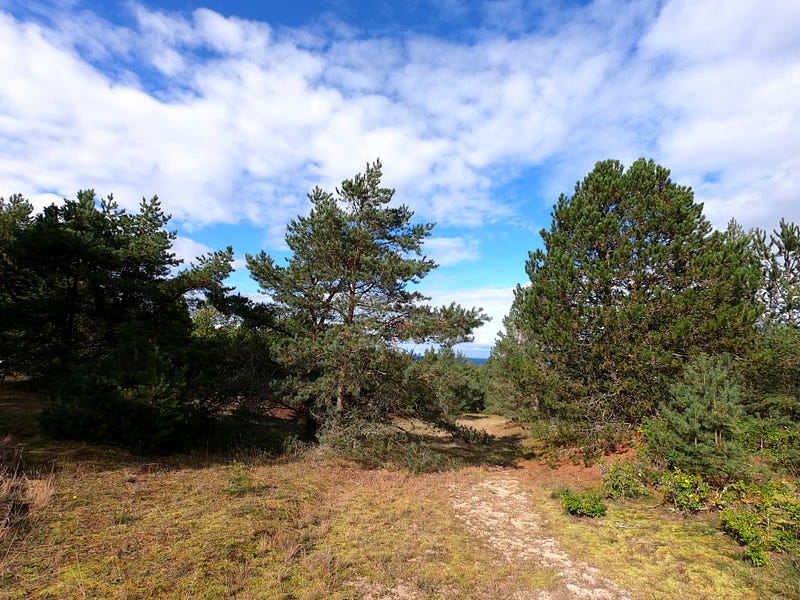
A few hours later we arrived at Słowiński National Park. We drove for a while through the woodlands before getting to a gate with an old guy waiting for us. Speaking only Polish and sharing scribbled notes on a tiny piece of paper he was telling us the price of the parking and the time we were allowed to stay. We paid a few coins but had no idea what he actually said.
While I had hoped to find some kind of map at least at the entrance of the park we headed into the forest with no further clues.
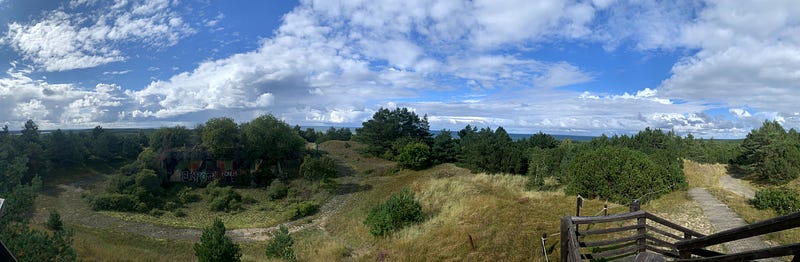
We followed a well-marked trail up to a viewpoint, the highest point inside the park, and then decided to go further despite signs telling us to stay on the trails. I mean, there were trails beyond the viewpoint but barriers were put in front.
We Google translated one polish sign that said: “stay on trails”. We interpreted it as being allowed to continue but not walking off into the coastal forest.
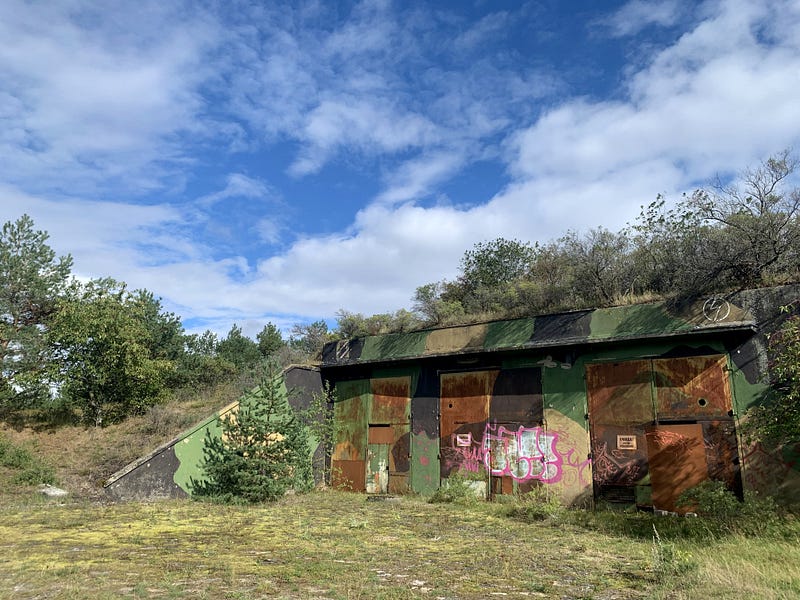
We passed some old bunkers sprayed with graffiti.
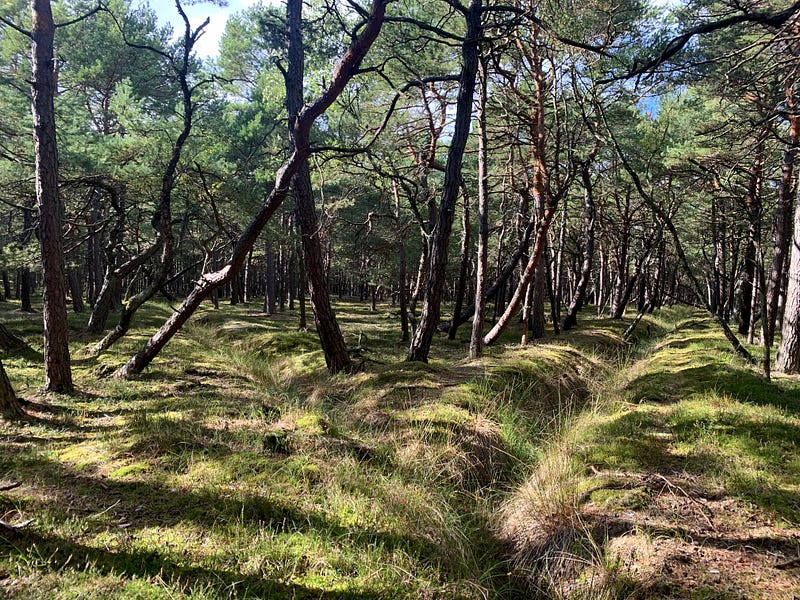
Somewhere we missed the trail (or ventured off into the wilderness in a direction we wanted to go). The pine forest was thick and the sandy soil soft. We walked across squishy moss and felt like criminals walking off the trails in this nature reserve.
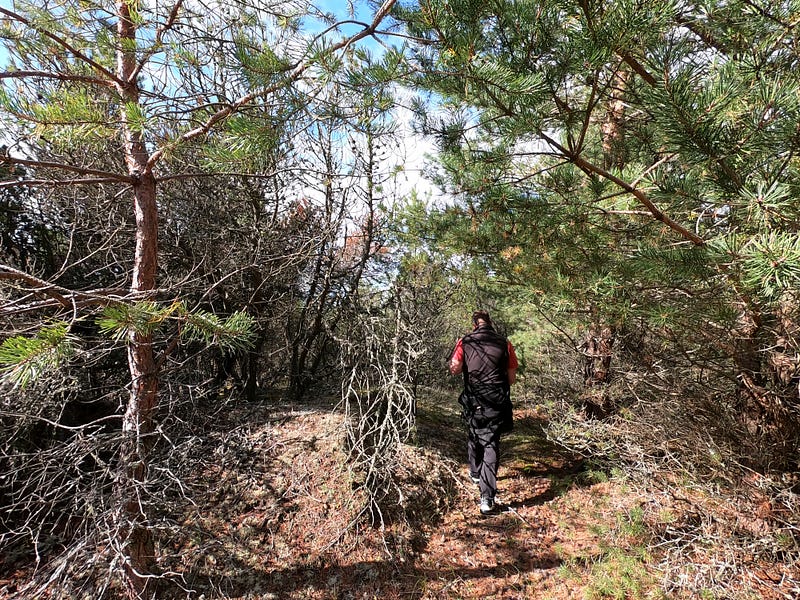
Finally, we made it back to some trail that was leading in the direction we wanted to go.
The beach.
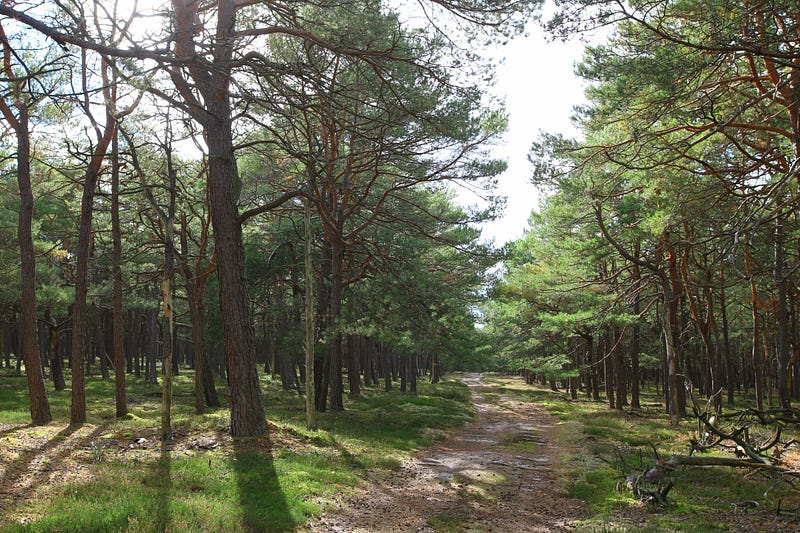
The forest wasn’t very thick but plays a significant role in this ecosystem. In 1977 already this park became a nature reserve declared by the UNESCO and is today one of the largest national parks in the country.
Forests in the park are mainly made of pines. These trees cover 80% of wooded areas, there are also peat bogs of several types. Of animals, the most numerous are birds with 257 species. This is because the park is located on the paths of migrating birds. They feel safe here because human activities are limited. The most interesting species are: erne, eagle owl, crow, swan and various kinds of ducks. Among the mammals, there are deer, wild pigs and hares. — Wikipedia
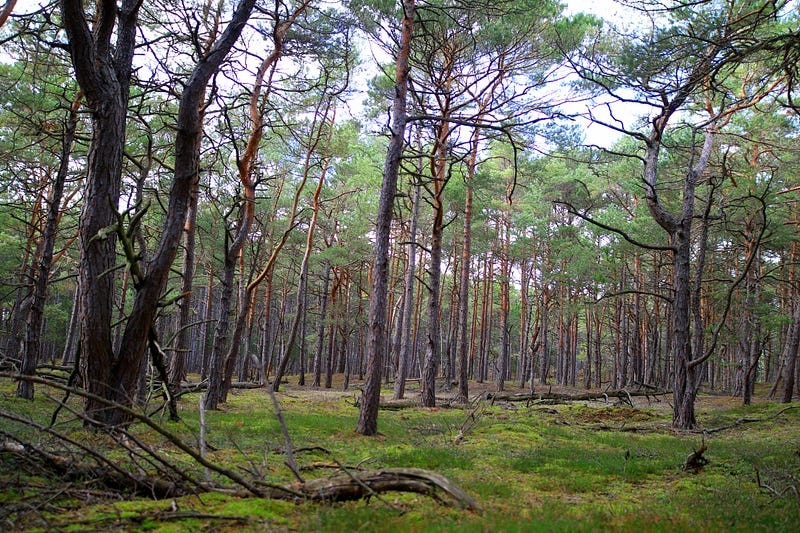
The nature of this park consists of beach and sand dunes, marshland, forest, some pasture and more than half of it is water including two saltwater lakes.
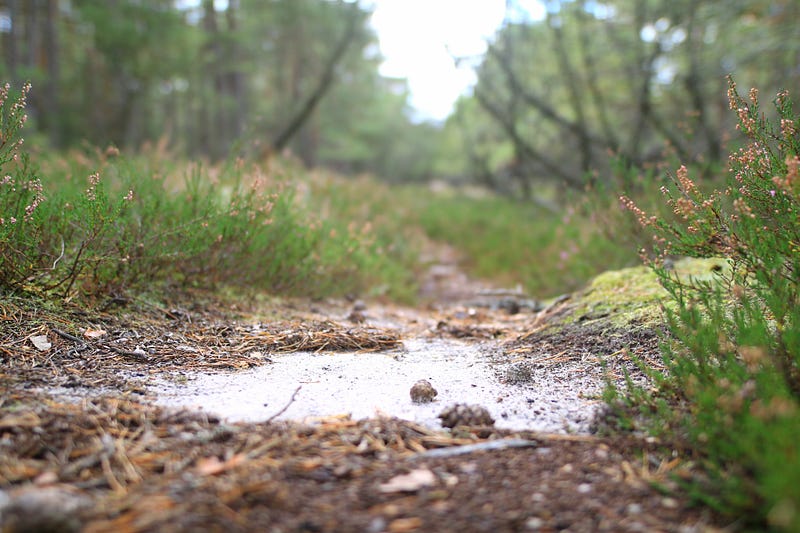
So far we didn’t meet any people and truly enjoyed walking in nature.
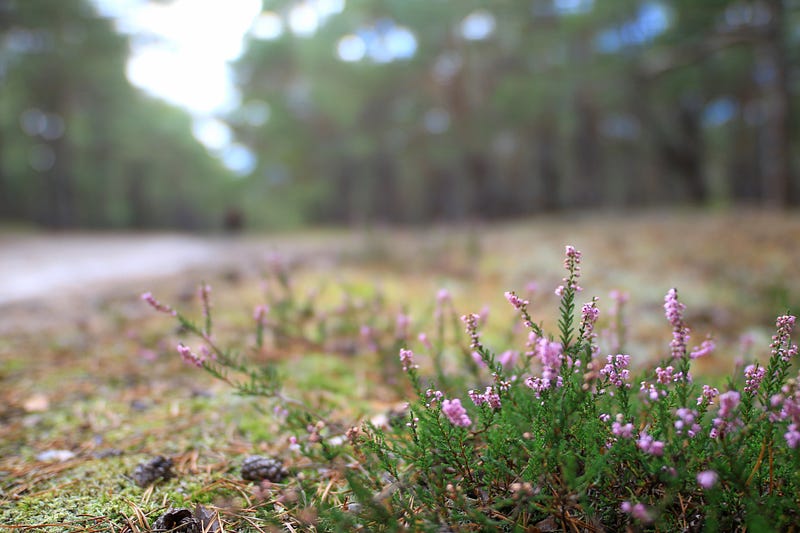
The trail was getting sandier by the minute and we could hear the roaring of the ocean already.
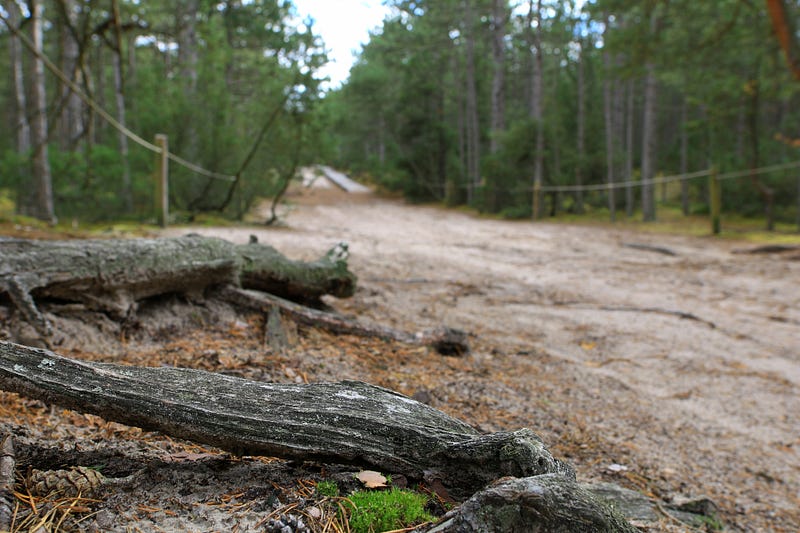
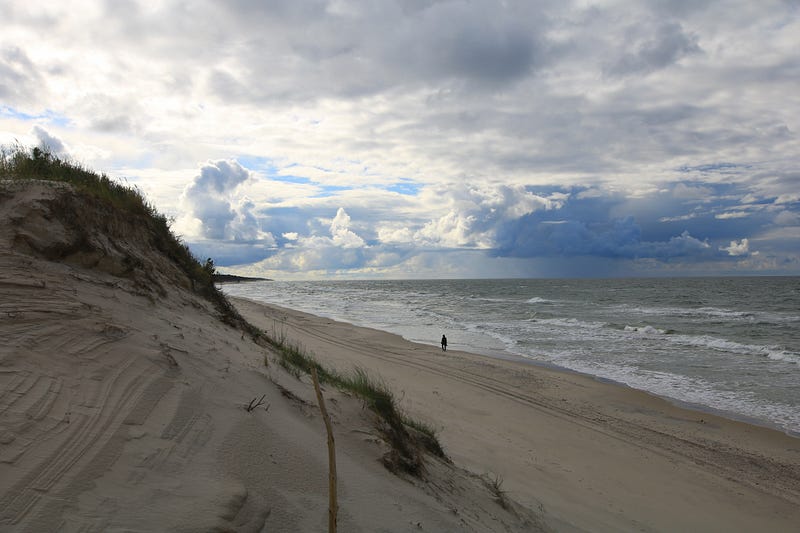
A sand dune declared the end of the coastal forest and blocked the view further. A few steps through the soft sand and we made it.
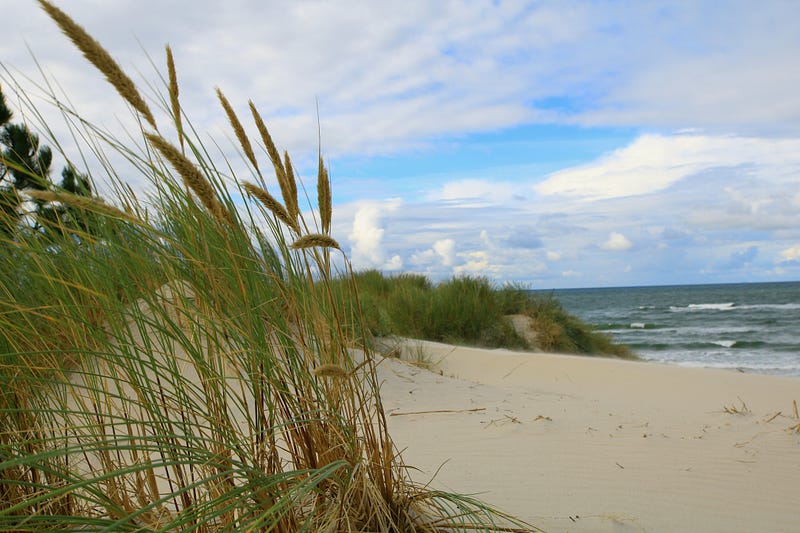
Słowiński National Park (Polish: Słowiński Park Narodowy) is a national park in Pomeranian Voivodeship, northern Poland. It is situated on the Baltic coast, between Łeba and Rowy. The northern boundary of the park consists of 32.5 kilometres (20.2 mi) of coastline.
In the past, the park’s area was a Baltic Sea bay. The sea’s activity, however, created sand dunes which in the course of time separated the bay from the Baltic Sea. As waves and wind carry sand inland the dunes slowly move, at a speed of 3 to 10 metres per year. Some dunes are quite high - up to 30 metres. The highest peak of the park – Rowokol (115 metres (377 ft) above sea level) – is also an excellent observation point. The "moving dunes" are regarded as a curiosity of nature on a European scale.
Source: Wikipedia
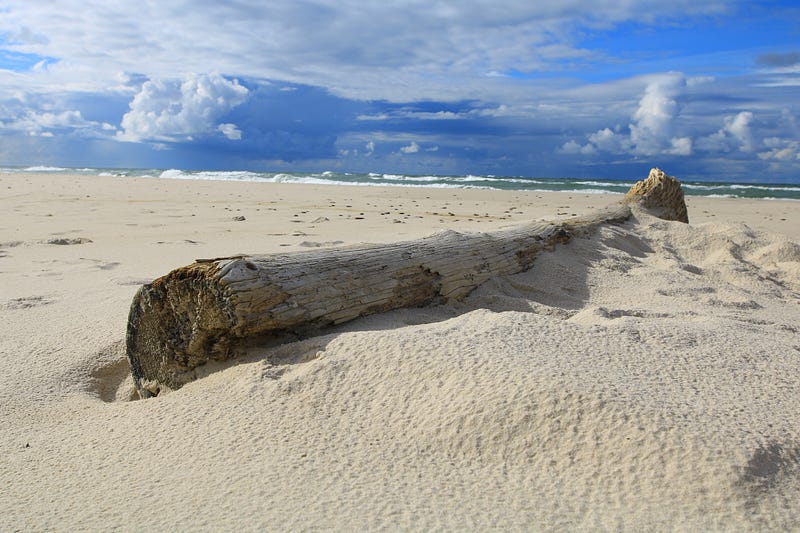
We walked onto this stretch of almost untouched coastline and I was immediately taken by its beauty. The rough waters of the Baltic Sea, the chill in the air of the season of fall, and of course the soft, almost white, sand.
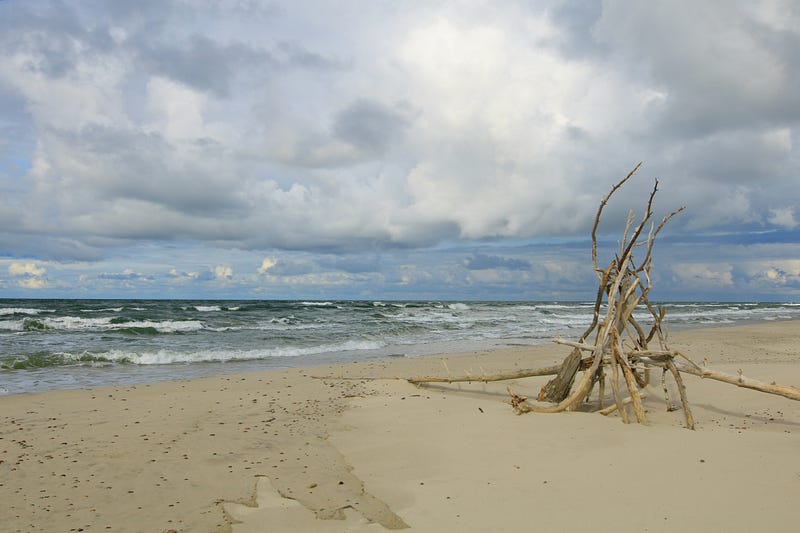
The beach was empty. Not a single soul was to be seen. Several logs were lying around. Some of them stacked up.
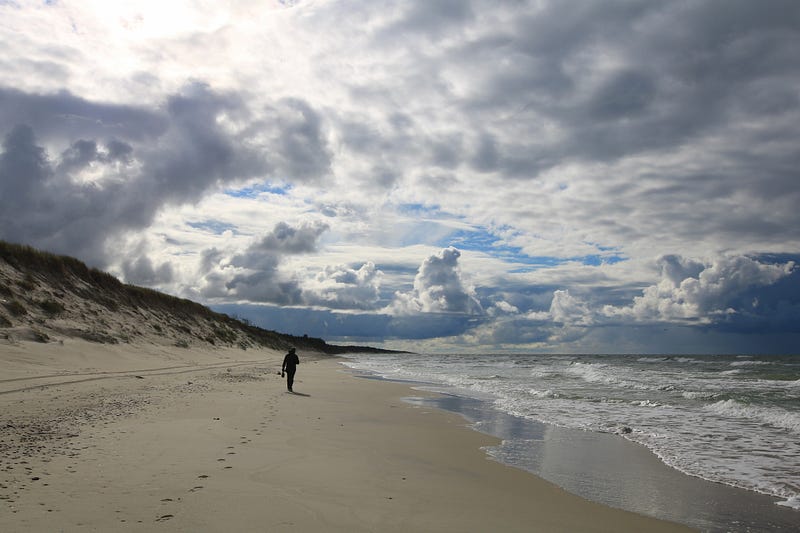
We walked westward with a destination in mind I didn’t know if we’d get to. But that didn’t matter. I simply enjoyed the roughness of this place. The endless beach, the pristine coastline, and few seagulls flying above our heads.
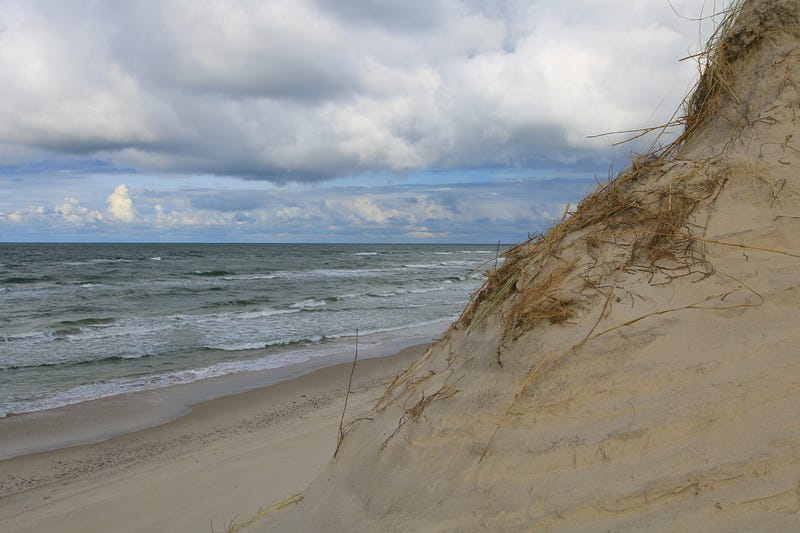
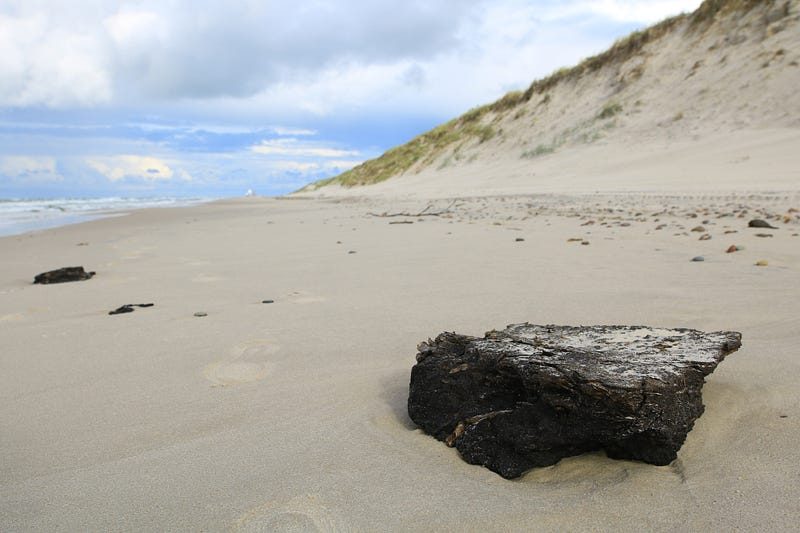
And there was so much detail in every piece of it. The dunes towards the South. Covered in grass. Some less some more. And the pebbles on the beach. In all different kinds of colors and sizes.
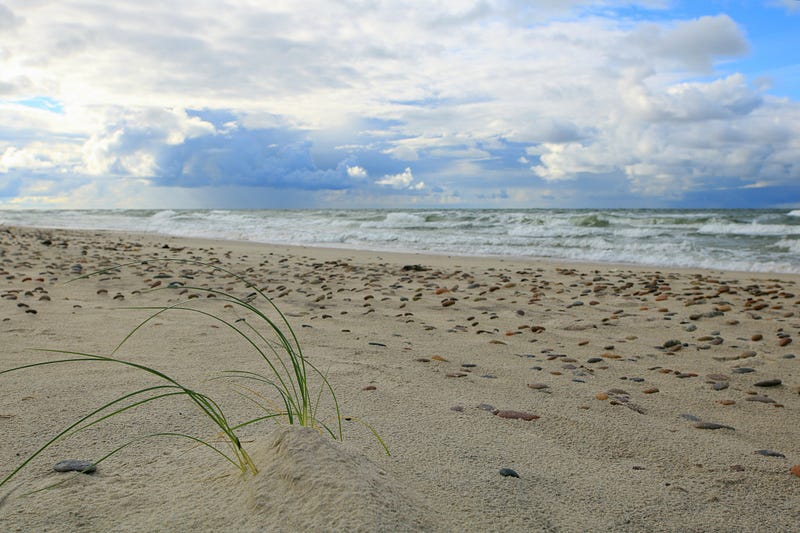
David had set the pace. I lagged behind stopping every few meters to take photographs of all of it. Then I’d pack the camera away and run for a few meters. To catch up and just to stop again to photograph something new.
But it didn’t matter. I was getting my exercise in for the day while embracing all of this.
I had seen already a few of these boulder-like rocks. But only later did I understand they were the first (or last) remains of the petrified forest.
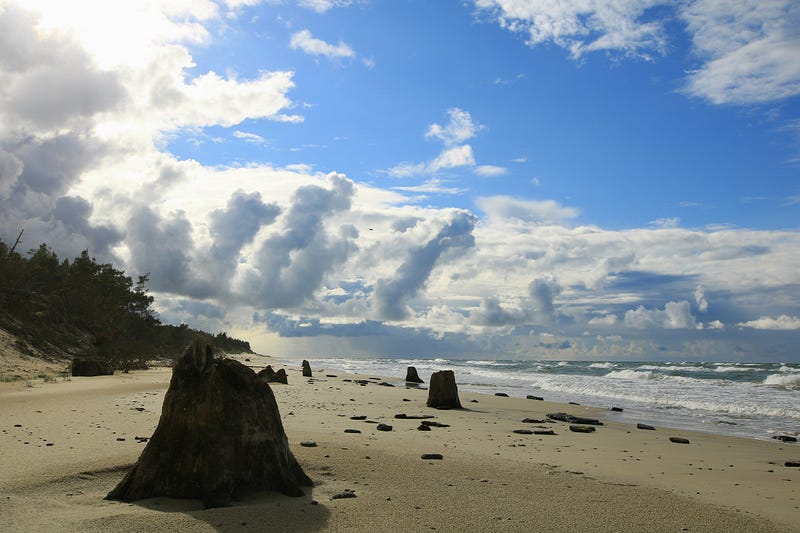
Yes here, somewhere on this stretch of 35 kilometers of coastline was said to be found a petrified forest only a few years ago. Through the moving of dunes (or ocean activity) ancient tree stumps have been uncovered and the fossilized remains of a forest once growing there (source: Poland travel).
I first found pictures of this area and then really wanted to find the place but no exact location points or any information written in German or English was to be found.
The ocean has opened up leftovers of a prehistoric forest. Countless tree stumps appeared on the beach after a few winter storms which soon could be gone again.
Scientists analyzed the leftovers. The tree stumps probably belonged to an ancient beech or oak forest that either got devastated by fire or cut down by our ancestors and are possibly from a time 3000 years ago.
The area in which the forest was located in got moved by the coastline and eventually taken over and conserved by the sea. Thanks to the preserving features of the salt water, the tree stumps appear rather “fresh”.
Today, this landscape feature doesn’t just allow us an insight into history but also lets us understand how materials change between land and sea. Being now exposed to the air and saltwater at the same time, the remains won’t last for long unless they get covered again by another storm.
Source: Podroze
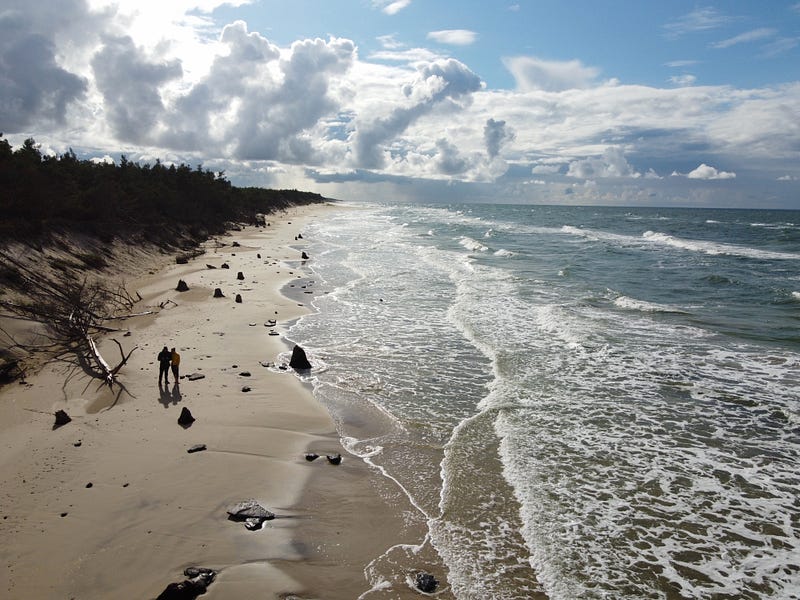
To me, seeing these remains in this hidden wilderness and walking among pieces of ancient history was just beyond words.
What a rugged place this was.
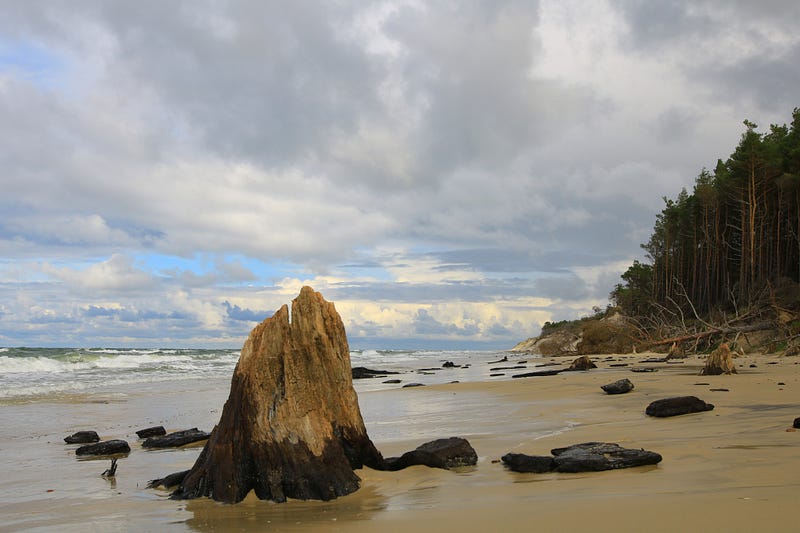
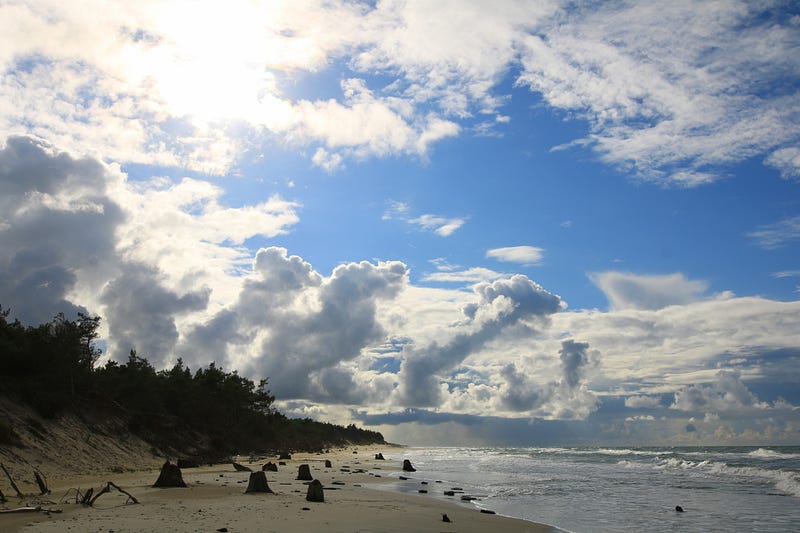
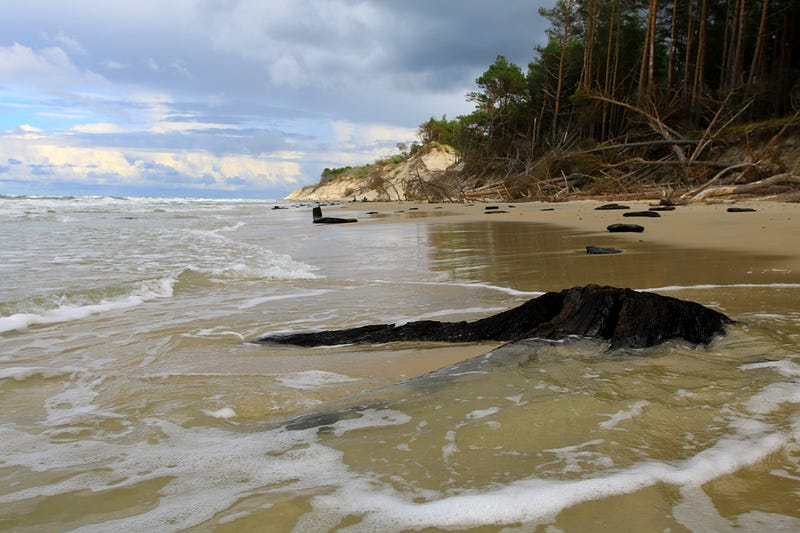
And while seeing parts of an ancient forest, we could also see how quickly things move on this rough coastline. Many trees were fallen on the edge of the pine forest. Branches and logs were lying on the beach from just recently fallen trees.
If they one day also will become fossilized?
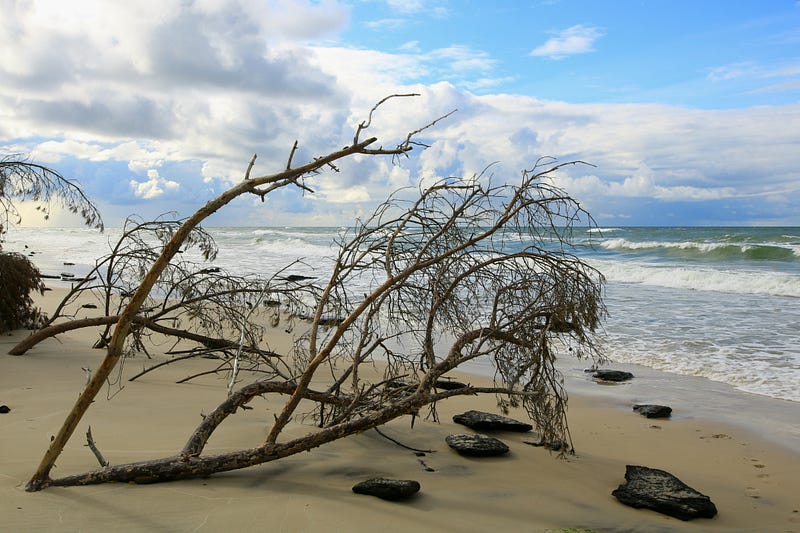
David launched the drone to my surprise since the wind was rather strong. But the small flying object remained strong in the difficult conditions and offered us a different angle of this beautiful place.
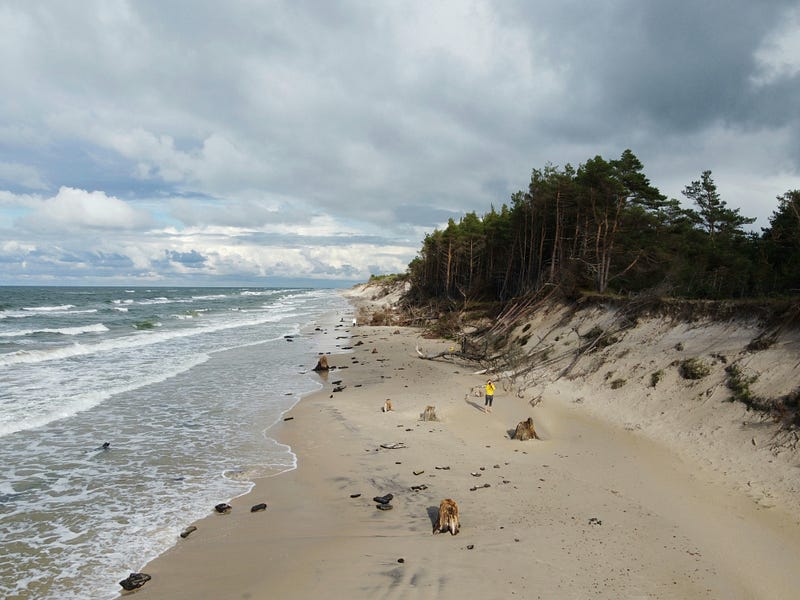
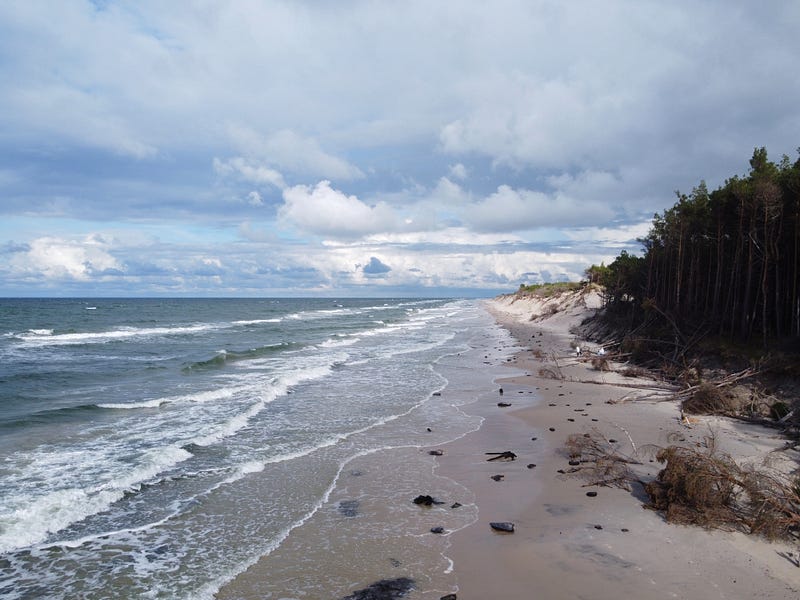
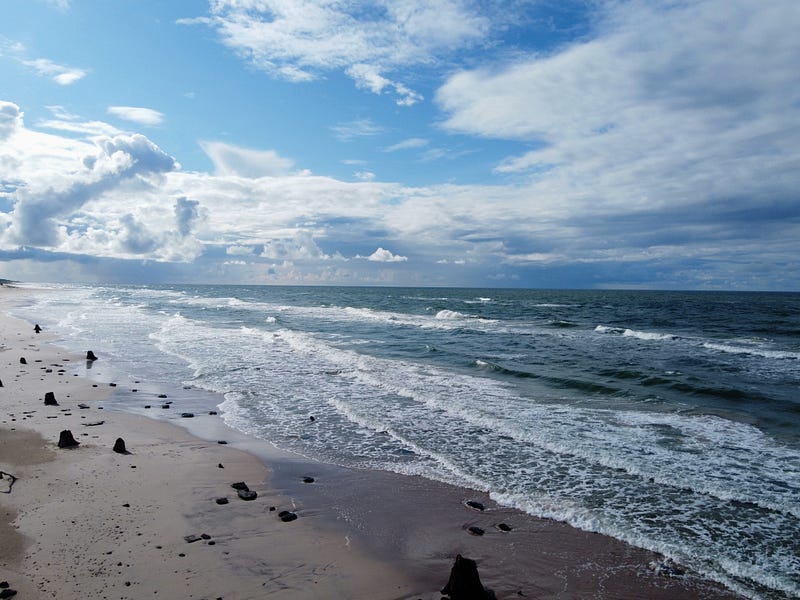
I sat down on a recently fallen tree overlooking the ocean and got lost in my thoughts.
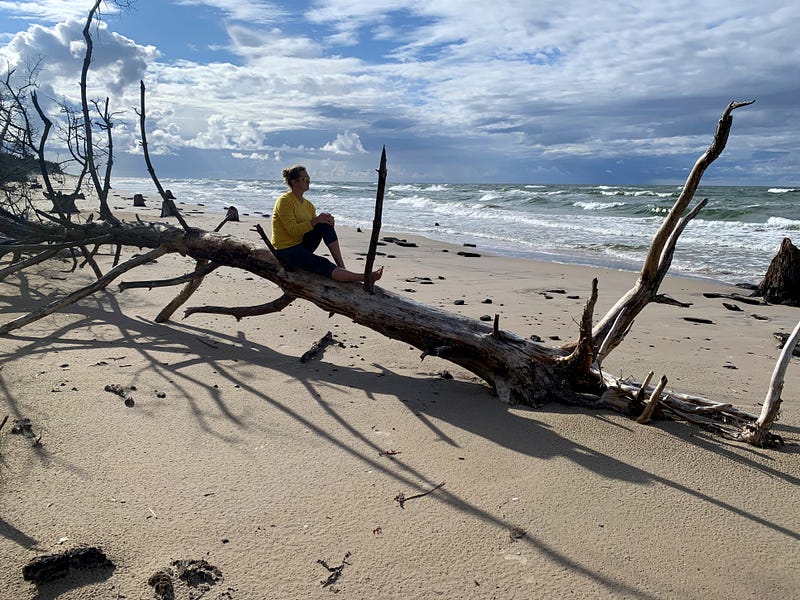
We then headed back again.
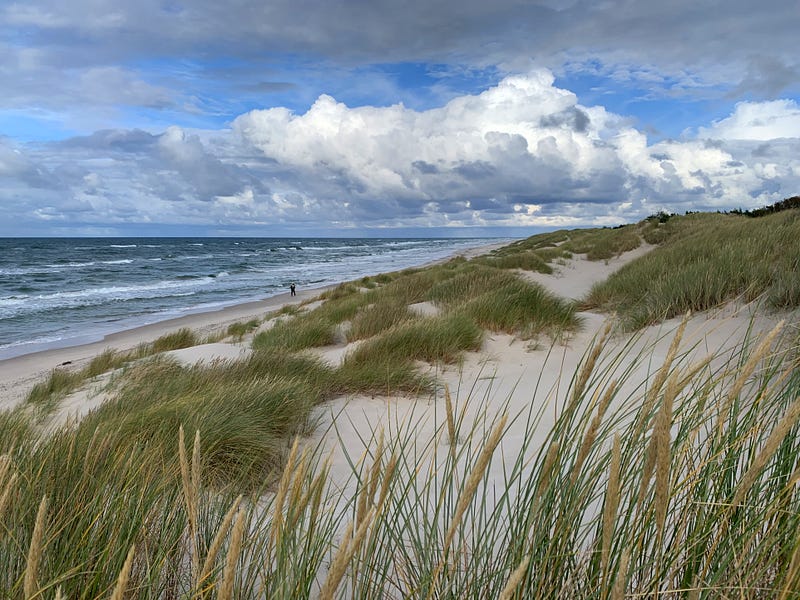
Back along this indescribably beautiful and unique coastline.
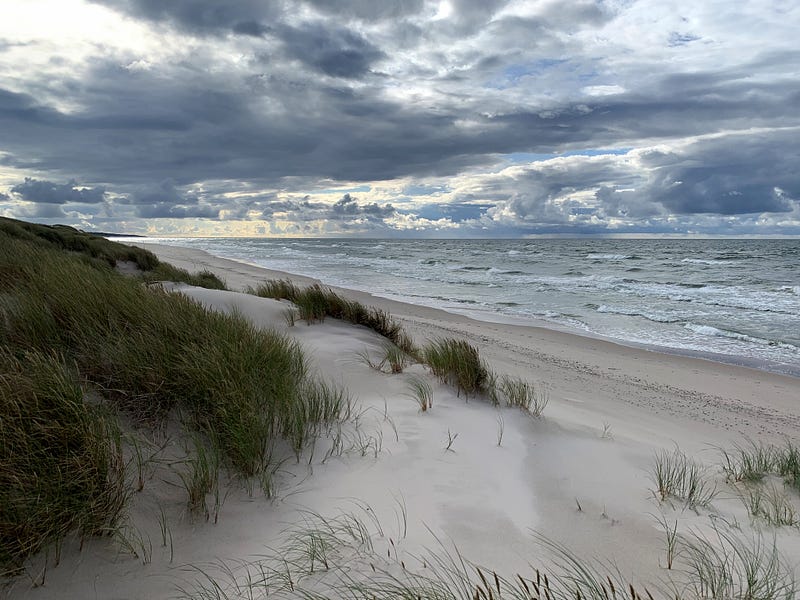
We didn’t cut back into the forest but remained on the beach until what we thought was not far from our parking lot. Google maps helped us determine the point where we had to look for a trail back to the car.
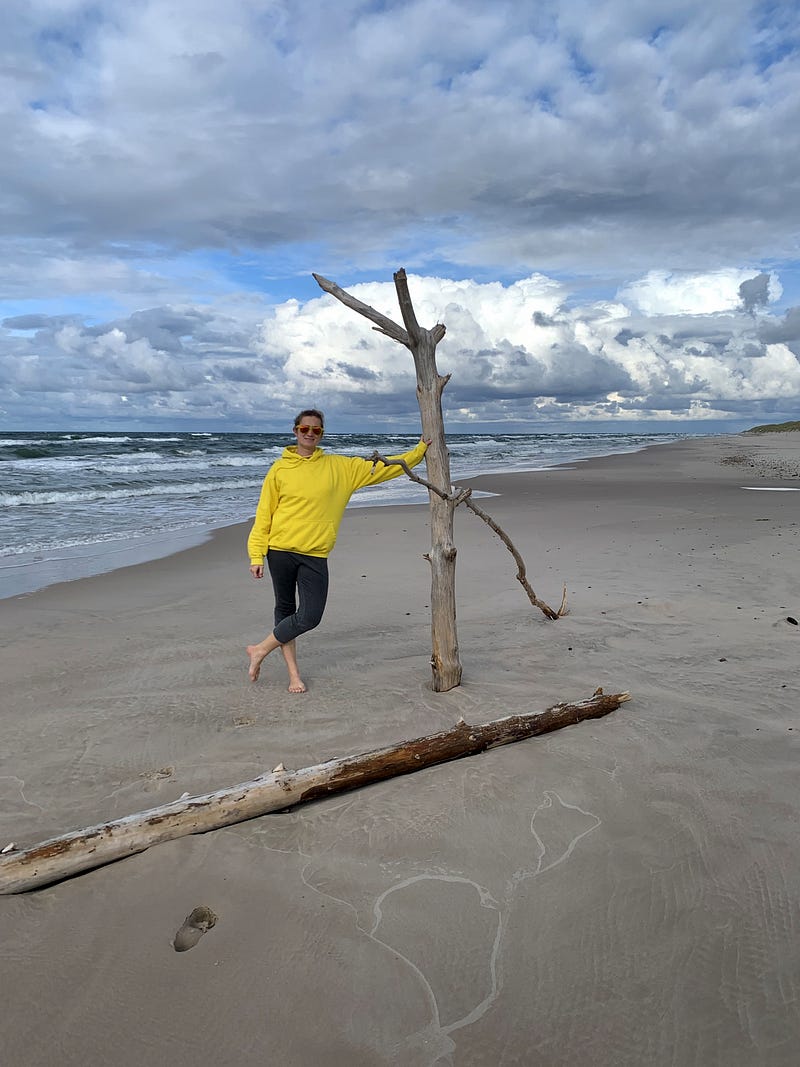
I am so glad we came out here to witness this wonder of nature. I know there is much more to see in the park but with the little time we had, we surely did most of it.
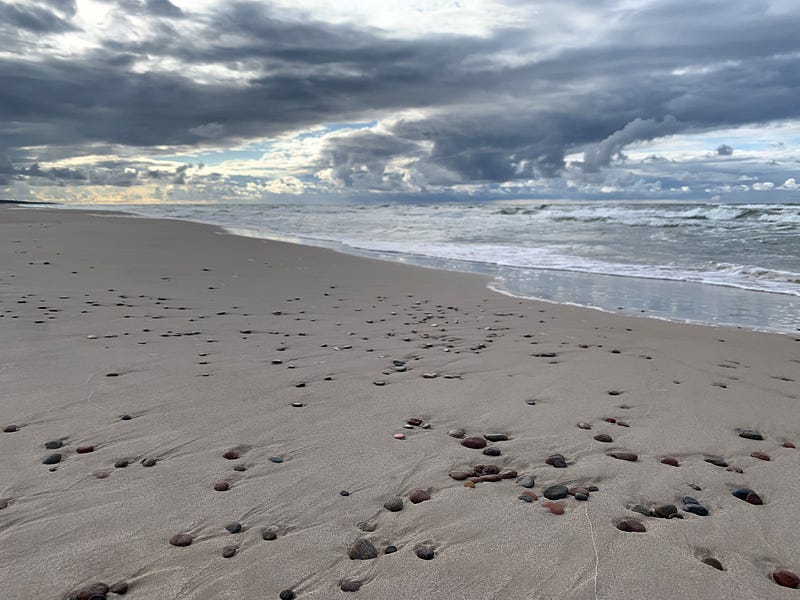
“Once in a while go somewhere that is unspoiled by man.
…
And leave it that way.” — Anonymous
More about our trip to Poland:
Join my email list here if you would like to read more travel essays or sign up for the Medium membership to receive unlimited access to my and other writers’ stories out here (I will receive a commission fee in return).


