Areas Overview: India
An overview of content about India in Areas & Producers
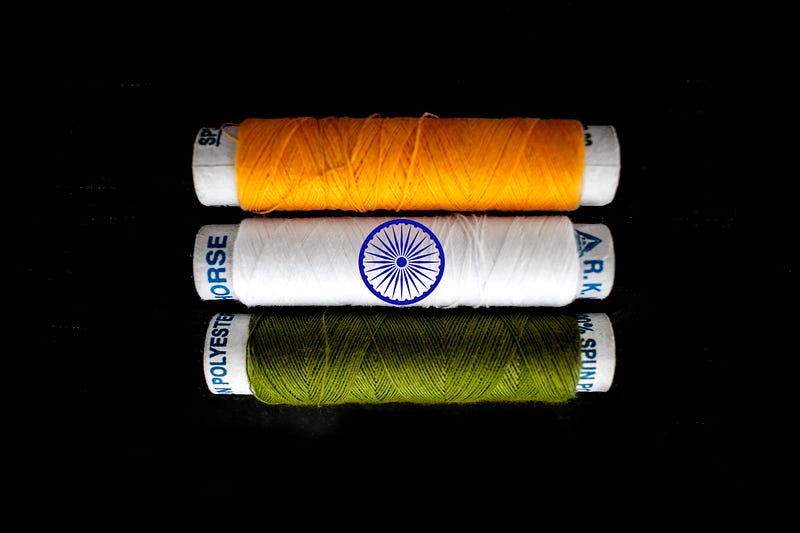
India’s Prime Minister Narendra Modi went to Washington DC during the week of June 19–23. It was a big event for American and Indian relations, and also set the stage for a stronger partnership between the two countries in the Indo-Pacific.
One of the significant announcements about doing business in India during Modi’s visit was the meeting that took place between the Prime Minister and CEO of Applied Materials Gary Dickerson. The company announced that it would be opening a collaborative engineering center in Bangalore, along with $400 in investments at the facility to boost research and development (R&D) and talent training initiatives.
The announcement by Applied Materials coincides with what India’s PM Modi hopes to achieve for the country’s strategy to boost domestic capacity for micro-chip production. CNA
According to a report by The Register, the investments from Applied Materials and Micron Technology could lead to India becoming a “silicon superpower.” Micron will reportedly build a new micro-chip facility serving intentational customers with DRAM and NAND silicon products.
What’s the Indo-Pacific? It’s a maritime region of the world encompassing areas across the Pacific and Indian oceans. It has been heralded by the United States as one of the its latest grand strategies called the Indo-Pacific Strategy.
Germany and India are reportedly in talks to co-develop advanced military submarines, according to a news release on 7 June 2023.
Attending a meeting with Indian leaders, German Defense Minister Boris Pistorius went to Mumbai to discuss a possible deal between German-based Thyssenkrupp Marine Systems and Indian-based Mazagon Dock Shipbuilders for the production of non-nuclear submarines, whereby the two companies signed a memorandum of understanding (MoU) to build the submarines for the Indian naval forces. Anadolu Ajansi
This is definitely a turning point in the Indo-Pacific Strategy being led by the United States to establish closer defense ties with countries such as India, Japan and Australia. The latter form “The Quad “ — the four countries with significant interests in protecting the Indian and Pacific oceans under a quadrilateral framework of military, defense and security cooperation.
The Nord Stream 2 and South China Sea are two examples that explain how energy, commodities and maritime areas will form a synthetic issue-area in determining dispute resolutions within the framework of international conflicts in the future.
Moreover, both of these disputes will continue to face dynamic maritime threats from non-state actors, such as extremists and pirates, who have been given very little attention to maritime law issues due to the significant interstate tensions in international politics.
In fact, these tensions have become so outstanding that two grand strategies have been developed and publicized as a vision for the future of World Order: the Indo-Pacific Strategy (IPS) and the Maritime Silk Road Initiative (MSRI) (part of the Belt and Road Initiative), of which the maritime dimension is the focal point of these strategies.
Like the Nord Stream 2 and South China Sea dispute, both the IPS and the MSRI serve as indicators that the world has entered into a new era of Adversarial Geopolitics. (Ignore the “new/next Cold War” jargon).
For instance, these competing visions for the future of World Order encompass a wide array of areas and actors — like the Nord Stream 2 Pipeline and South China Sea — so it’s worthwhile to analyze how these maritime strategies are driving the future of the global economic activity too.
The Eastern Economic Forum (EEF) is definitely a way for Russian Federation President Vladimir Putin to flaunt the foreign policy goals and bring together a coalition of countries that submit to Russia’s power.
Many people will probably judge this forum as irrelevant due to the actors that are present, but in fact, both Myanmar’s military junta leader and China’s foreign policy minister were in attendance.
However, since Russia’s industrial policies now favor deeper collaboration with China and the Asia-Pacific region, this forum is very important in understanding how Russia’s strategy to combat the sanctions from United States and European Union. Because it is the region with the fastest growing industrial base economies in the world, this means more raw materials are needed for economic development of those countries. Energy security is paramount to these countries’ global domestic product (GDP) growth.

India is also on the radar of consumer demand from some of the United States most well-known companies, such as Starbucks and Wal-Mart, of which these companies have been responsible for carrying out many of the strategic partnerships during a period of transformation in global markets.
A new CEO of Starbucks was announced in September 2022. He joined the company on 1 October 2022, and will assume the leadership as CEO in April 2023. His name is Laxman Narasimhan — a man of Indian descent — with a professional background in London, England, formerly the CEO of Reckitt and global chief commercial officer at PepsiCo.
It will be interesting to see how the company continues on their global pursuit under the executive leadership of Narasimhan going foward. The alliance between Starbucks and India’s TATA Coffe has been a major success in the Indian market, so I expect there will be come changes to the company’s China market strategy.
In some previous content about Wal-Mart and John Deere, I discussed how Wal-Mart’s competition with Amazon revolved around gaining exposure to the Chinese and Indian markets. Interestingly, in the case of Starbucks, the company already has a wide exposure to both the Chinese and Indian markets, so it’s not surprising that the company is coming up with creative ways to expand into other global markets.
Heading into 2023 the world is expecting further volatility in global commodity markets and geopolitical trends. Starbucks has perfected its global footprint by offering customers advantages in price affordability and preferences. But the values and culture of the company mean so much more to the consumers. That’s why founder Howard Schultz admitted to the Harvard Business Review (HBR) in 2010, “We had to own the mistakes.”
I offer this anecdote about the company because it takes us back in time to when the United States was hit with the 2007–2009 Global Financial Recession (GFC). Starbucks was able to bounce back from the GFC, by investing in its brand strategy — i.e., by putting more emphasis on the company’s sustainability goals and environmental stewardship. This movement has been spearheaded by former CEO Kevin Johnson. As early as 2020, Johnson announced a new environmental sustainability program at Starbucks.
How will the complexities of those geographic areas, mixed in with technology investments, affect Starbucks’ environmental, socal, governance (ESG) strategy in the future? I think in order to understand the importance of ESG, we should look to Starbucks as one of the early pioneers. They really hit the ground running on ESG, formulating ideals and incorporating technology investments to reach those sustainability goals through the decades since 2010.
As more and more MNCs hop on board the sustainability drive, eyes will be on Starbucks’ group president of international and channel development, Michael Conway, and CEO at Tata Starbucks, Sushant Dash, to lead the company’s market strategy in India.

Curious About Culture, Intellectual About The World. Discover this publication’s content writers explaining scenarios/shifts related to geopolitics, future industrial policies and advanced technologies.
Sign up for The Weekend Brief (TWB) newsletter to stay on top of what’s happening with publicly-traded companies operating in global markets (including stock markets) at the nexus of tech, industrials and global commodities.


