
Are You Still Searching For A Perfect Cuppa?
If so, know that you’re not the only one on this journey.
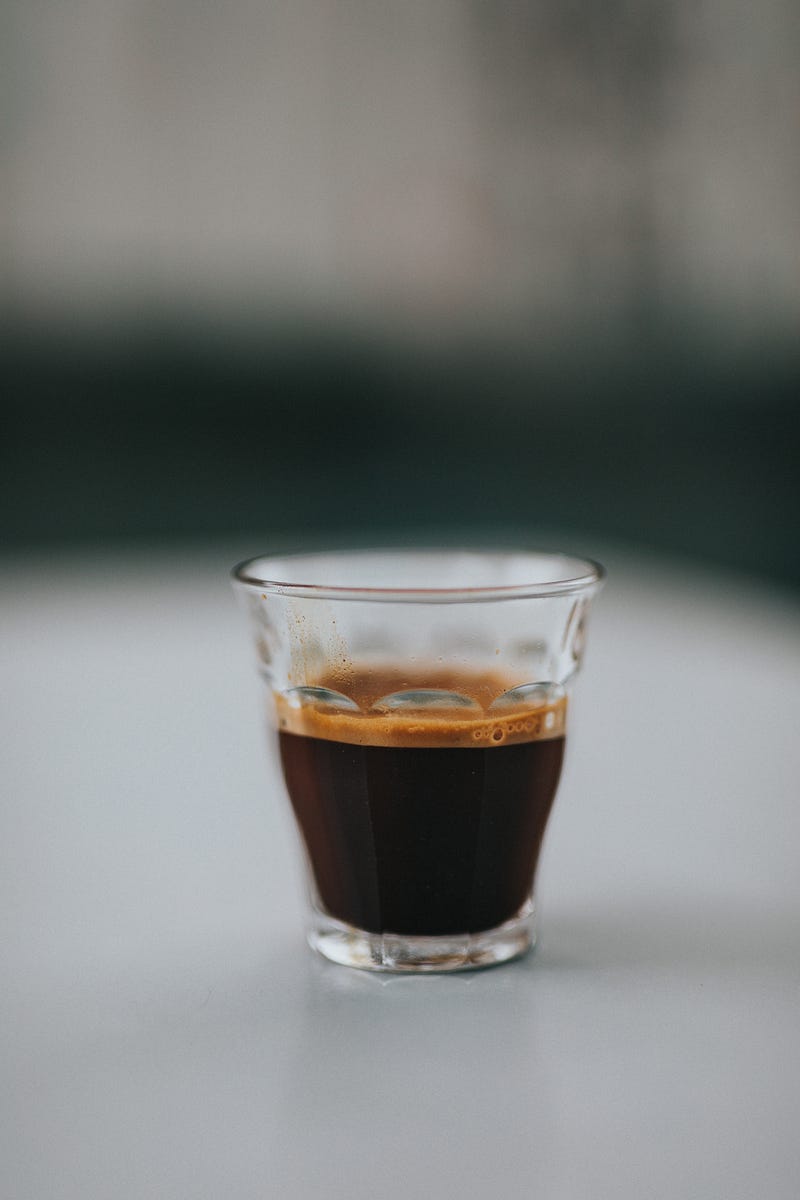
Although I’m not a big coffee drinker I really love coffee and when I do have a cuppa, I don’t want it to be bitter. I want it to have strong, robust flavours without any bitter aftertaste.
One of my favourite K-dramas that I’ve watched over the past few months has been “Would You Like a Cup of Coffee?” It’s a fairly light-hearted series of episodes about a young man who decides to be a barista and wants the owner of an out-of-the-way Cafe to hire and train him.
He does and in the process you get to learn a whole lot about roasting and brewing coffee.
One of the early episodes has him brewing cup after cup after cup of espresso for the owner and a few of his friends until he finally makes one that while not excellent, is as the owner says “drinkable”.

Me and coffee
I have a faux barista experience of my own.
More years ago than I care to remember, a few musician friends and myself decided to organize and present folk music artists at a local hall. We wanted to have the standard folk music coffeehouse atmosphere of the times (the 1970s) and I volunteered to be the person that made and sold the coffee. I had played at a number of these coffeehouses with a band I was in and had a pretty good idea of what was expected.
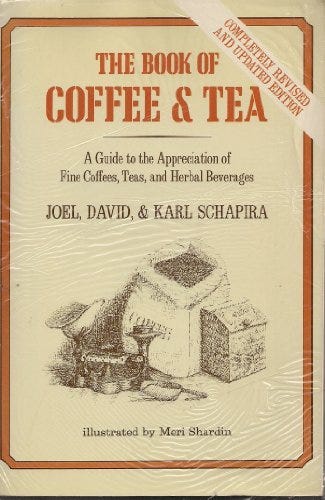
I didn’t know that much about coffee at the time, just that I really liked drinking good coffee while listening to good live music. So I got myself a copy of “The Book of Coffee & Tea: A Guide to the Appreciation of Fine Coffees, Teas and Herbal Beverages” by Joel, David & Karl Schapira and learned all I could about the different kinds of coffees and methods of growing, harvesting, roasting, and brewing etc. It was my coffee bible! And it’s still highly recommended. Mine is the 1975 first edition and is in great condition. You can get the second edition from a number of outlets.
Given that we didn’t own the location, only put on the events once a month or so and weren’t about to obtain an espresso maker, I decided on filter-drip coffee brewing as the way to go. I bought several different kinds of quality coffee beans and an electric grinder so I could grind the beans fresh for each pot and that was that. My coffee was praised for flavour and that it really kept you awake for the shows!
That lasted for almost 2 years before we had to give it up. It was a fun run!
This was WAAAAY before any coffee place was named after the first mate of Captain Ahab’s ship The Pequod in Moby-Dick. A place I currently boycott because of the way it treats employees who want to unionize and because the coffee there is not to my taste. And I‘d much rather support independent local cafés. Coffee is always better in those places, IMHO!
So I have always liked a good cup of coffee — Kona beans from Hawaii have always been my favourite when you can actually get them!
I had one major problem though; drinking coffee gave me angina (chest pains) and it made me feel kinda irritable.
Talkative but irritable at the same time!
So I had to stop drinking so much of it. I settled for decaf coffee only on the weekends and no more than 1–2 cups a day.
That took care of both bad side effects. I still got to smell and drink coffee and have most of the flavour I enjoyed, just in a limited amount on the weekend.
(To give some real context and perspective on my coffee life experience, I grew up when a cup of coffee in a diner was only ten cents and all the coffee we made at home was in a coffee percolator! I remember as a kid drinking coffee my grandmother made for me that she diluted with a lot of milk. I would sit there with my grandfather, take buttered hard rolls, dip them in the coffee, and eat them. That was heavenly! And it put a really nice buttery film on the top of the coffee. I wasn’t even a teenager yet.)
OK, back to my early and later adult years.
I tried making coffee in French presses and I didn’t much like that. Too much of what I call “the dregs” (really fine grounds) got through the plunger screen and made the taste bitter.
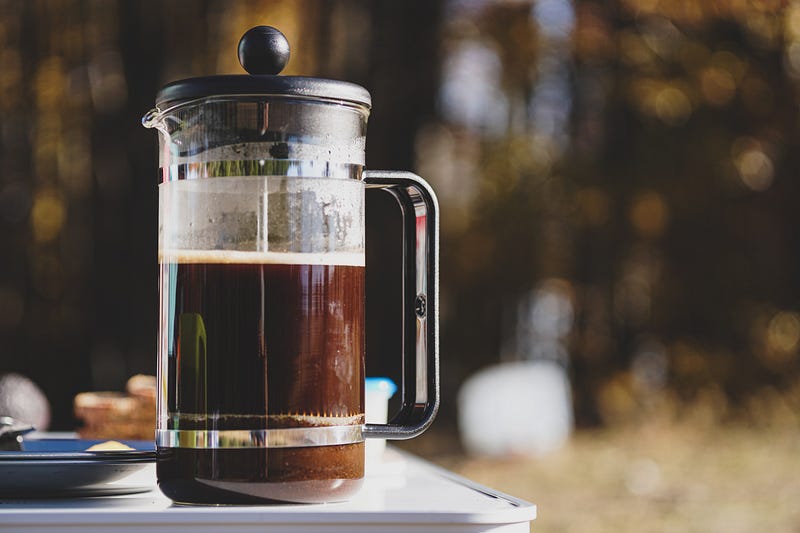
Ok, fast forward from the mid-1970s to the past decade starting in 2012. This is when I met my wife who is a dedicated coffee drinker and makes all her coffee with a French press. And no decaf!
Arrggghhh! I can’t drink that in any kind of quantity and the flavour is not my favourite. And that’s where things stood until about a year or so ago.
We often go on coffee dates in the middle of the week for a bit of “catch up” and to just have time together. We have a couple of favourite places and I’ve discovered that the drinks I most prefer are decaf or half-caf traditional cappuccino or espresso macchiato. And easy on the milk.
But what about making coffee at home? I had always made coffee for myself at home using a filter drip setup but it didn’t have the flavour or cachet of the drinks at the cafés! It was pretty good but I thought I could level up on it.
Putting my science mind to work, I decided to do a bit of “research” and found articles claiming that coffee brewed in an espresso maker actually contains less caffeine than other methods so I decided to give that a try.
In an economic sort of way.
So I bought a stovetop espresso coffee maker made of stainless steel, not aluminum, and it makes pretty darn good coffee. Full-bodied, strong robust flavour and as I’ve aged, some of the side effects I used to experience have abated so I can do half-caf espressos in my pot. But it’s still a tad bitter and there are some fine grounds at the bottom of the cup. What can I do about that?
I could try adjusting my grinder to a coarser setting.
And I know you’re gonna love seeing my grinder. I’ve been using this “puppy” for more years than I can remember!
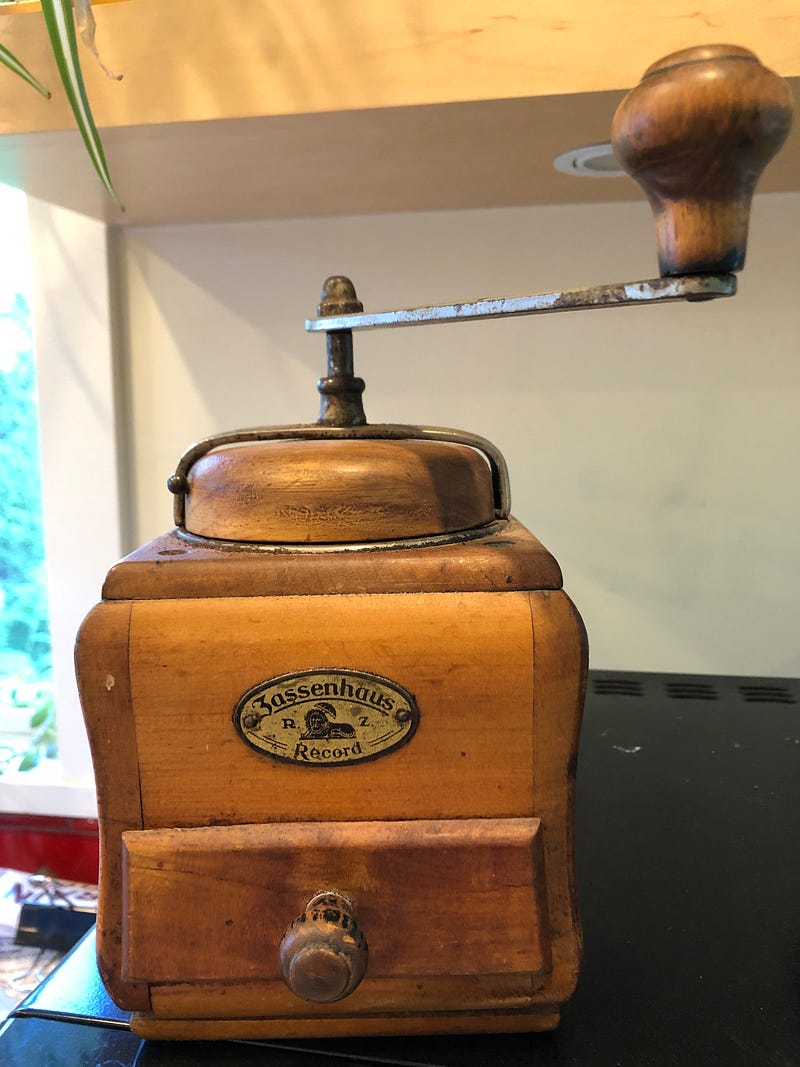
I can grind enough for 2–3 cups of filtered coffee. And what I love most about this grinder is that I can adjust the coarseness or fineness of the grind — there’s an adjustment screw on the inside of the grinding wheel to do that. And all the grounds are exactly the same size. Can’t get any of those features with the little electric countertop ones with 2 little blades that a lot of people use, including my partner!
So why am I telling you all this?!
And that brings me to the real reason for this post.
In this month’s issue of the Physics of Fluids was the article “Uneven extraction in coffee brewing”.
Wow, is this physicists having some serious fun or is it for real?
Well, trust me, it’s science for real! It was one of the articles in a Special Issue on Food Physics.
So let’s see what they did.
The Physics of Coffee Brewing
The first thing you need to know is that there is actually a coffee quality control chart!
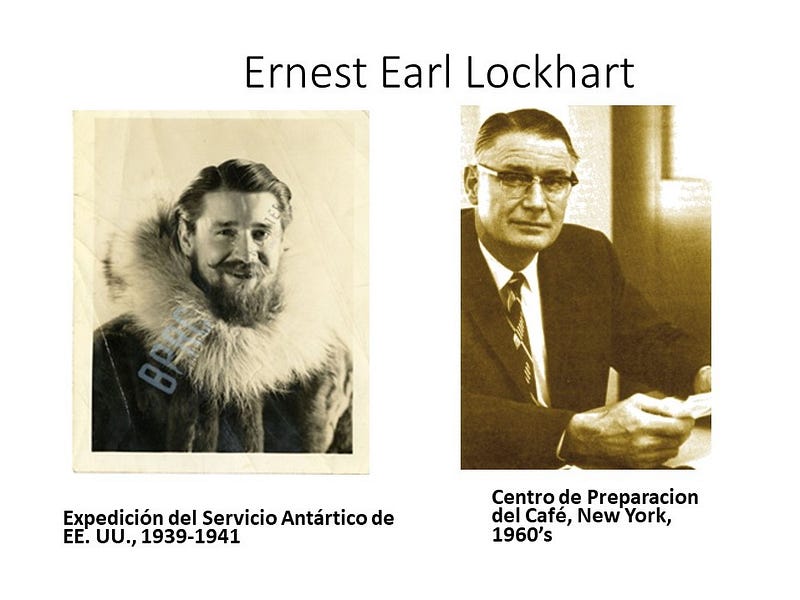
The first one was created and published in 1957 by Earnest Earl Lockhart. Here’s an image which shows Earnest as a young explorer and later in life as a biochemist and Scientific Director of the Coffee Brewing Institute (which no longer exists).
Here’s a graphically updated version of the brewing chart Lockhart developed and published in 1957. They just cleaned it up a bit and added some attractive colours otherwise it’s the same as what Lockhart published.
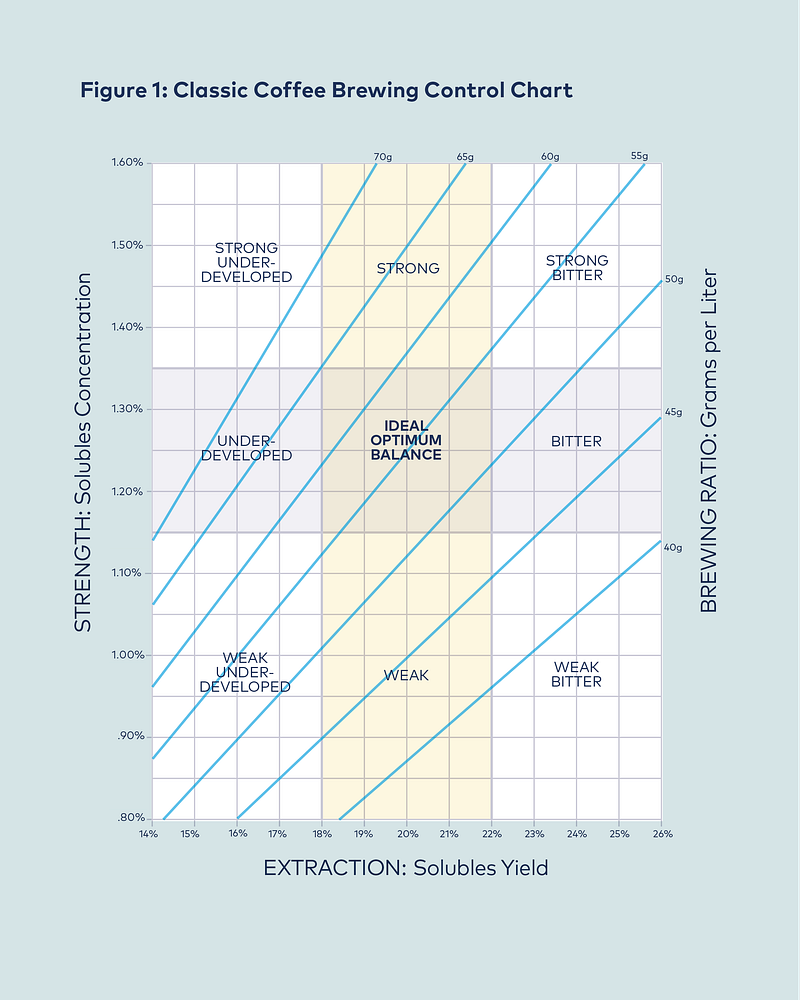
It assigns coffee flavour according to 2 components, its strength and how much of the soluble components of coffee were obtained during the extraction. As you can see, the chart specifies 9 different qualities with the ideal balance being slightly above the middle third of the chart.
If you want a little bit of history, here’s a video produced by the Coffee Brewing Institute in 1961, 4 years after the chart was made public. Be forewarned, it is definitely NOT up to modern-day JEDI (Justice, Equity, Diversity and Inclusion) standards but I did enjoy it in spite of that. And so many ways to make coffee that I never knew about!
What did you think of it?
Back to Lockhart.
A quote from one of Lockhart’s publications:
“The quality or acceptability of coffee beverage… is very difficult to describe or measure. However, a study of this problem by the Coffee Brewing Institute and others has led to the development of material extracted from grounds by water and…provides an objective approach toward beverage evaluation. It also assists in an understanding of what happens during brewing…With it a simple, practical and useful control system for beverage quality is possible.”
And that’s a mouthful, pun intended!
The point I’m trying to make here is simple. Attempts to define what is needed for the best cup of coffee have been going on for a great many years and are still being investigated and discovered.
So back to the article of interest.
In Lee’s article, they are looking only at making espresso. No other methods were assessed.
So what are the baselines or standards that they are testing?
- Hot water (92–95 °C) is used
- High pressure (9–10 atmospheres) forces the water through the grounds
- 15–22g of coffee grounds are used
This results in a cup of espresso weighing 30–60g.
Remember, Lee is measuring coffee quality using two variables in the chart; strength and extraction yield.
Strength is the mass concentration of dissolved coffee solids in the beverage. Extraction yield is the mass fraction of the coffee grains that have dissolved. Coffee grains are only partially soluble so there is a maximum value of the extraction yield which cannot be exceeded.
And here’s where the article starts to get into the physics of it all with complicated mathematical equations, Greek letters for variables being tested and is not for laypersons at all, myself included!
But I struggled through it and here’s what I came up with.
Essentially, what they did was to look only at what happened during extraction in a standard professional espresso machine when they varied the size of the grounds, from finer to coarser.
What they expected was that the finer the grounds, the slower the flow of liquid through them and because there would be more surface area exposed to the water passing through, there would be higher levels of extraction.
But that’s not what happened!
It turns out that less extraction was occurring with finer grounds.
And it was due to clogging.
This is because the water passes through the coffee “bed” in the espresso device not as a single block of water but rather in many distinct individual pathways. And some of these pathways get blocked when the grains are finer.
This can have a direct effect on the flavour of the coffee.
Looking back at the chart, as the extraction values increase, the levels of bitterness also increase (the right-hand third of the chart). These are considered to be over-extracted.
Since the coffee passes through the finer grounds at a slower rate, over-extraction leading to greater bitterness occurs compared to that of the coarser grains even though the extraction yields are the same.
Their data resulted in a model that they propose for future testing:
“that uneven flow between pathways is always present and that the peak in extraction yield is due to dissolution of all soluble coffee from one part of the coffee bed.
This has important implications for the taste of the coffee; the non-uniform extraction suggests that the average extraction yield may not be a good guide to taste particularly at fine grind sizes. This result also has implications for simulations of coffee brewing. These have typically focused on variations with depth but have not considered lateral variations in extraction.” [bolding is mine]
And here’s one of their conclusions that I’m really on board with because it reduces waste!
“This work suggests that if the instability in the flow could be eliminated or reduced then the taste of espresso coffee could be improved and significant financial and environmental costs associated with wasted material could be eliminated.”
If you want to read even more scientific coffee research, there are at least 8 other articles cited in Lee’s paper (see Source #1 below) that also examined various aspects of optimizing and perfecting the coffee brewing process.
And websites galore!
Summary
It never ceases to amaze me the side pathways I end up on when I start one of these articles. I start out thinking it’s going to be a straight shot down a long and narrow highway to my destination but that’s rarely the case.
And that’s kind of how I am when I go hiking. Just part of my nature I guess 😄.
Part of the fun for me in writing is all the side paths that I end up going down! I never heard of the Coffee Brewing Institute or knew about Earnest Earl Lockhart.
Or that there was such a thing as a Coffee Brewing Control Chart.
All the avid baristas know about that chart and more modern versions of it, like this one which looks at other flavours besides strength and bitterness:
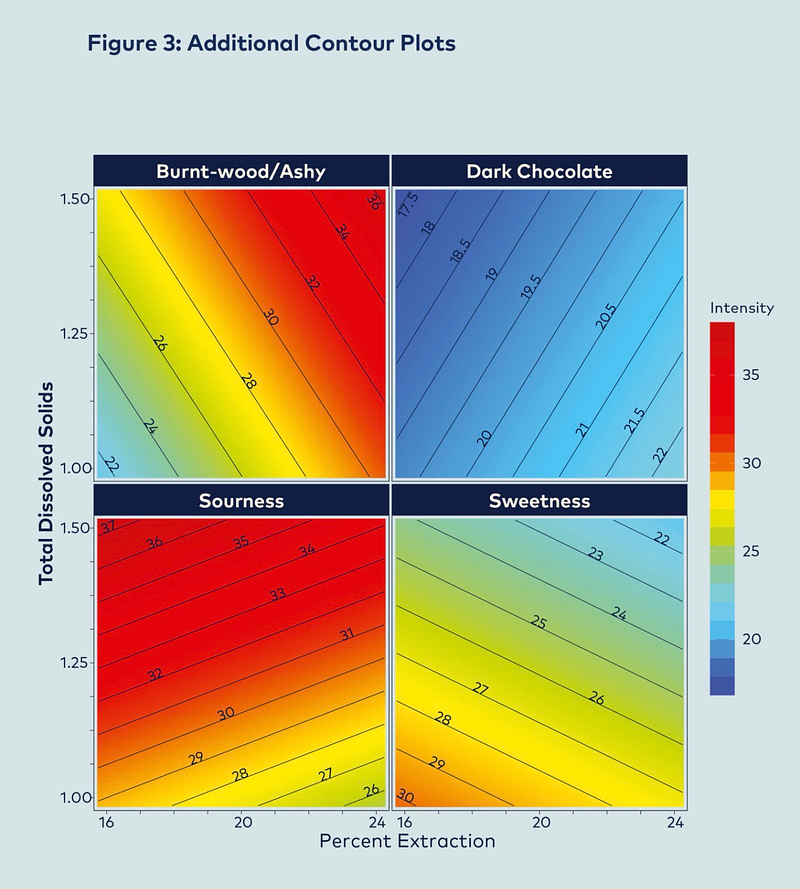
This makes me appreciate even more what a good barista does to make a really good cuppa!
I hope you enjoyed this little trip down espresso lane as much as I did. And it has me wondering if I need to grind my coffee beans just a little bit coarser to eliminate the bitterness and fine grounds in my little espresso maker.
Maybe I’ll mention it in a future post if I actually take the time to do that!
In the meantime, I think I’ll kick back and enjoy a nice cuppa.
Until next time,
Rich
Here’s a few other articles I recently published on Medium.
If you’d like to get my Biology4Everyone updates, sign up here. They come out every few weeks. The newsletter also has short naturalist pieces, photographs and reading suggestions.
Sources:
- Uneven extraction in coffee brewing by W. T. Lee et al., in Physics of Fluids, (May 2023).
- Towards a New Brewing Chart by Scott Frost et al., in the Specialty Coffee Association Newsletter, (Dec 2020).
- Towards a Common Coffee Control Chart, a blog article on the Baristahustle.com website, (Oct 2021).


