
CLIMATE FINANCE
Are You Prepared If Your House Floods?
What to do when the rain doesn’t stop.
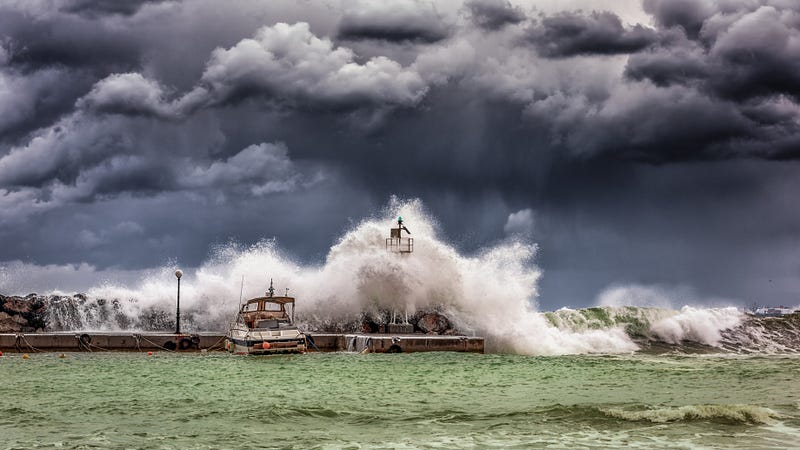
Flooding from across the world has shocked news audiences in both its severity and speed. From Germany to China, intense rain has destroyed homes, business, even entire towns, with most everything destroyed in its path.
- What is causing the extreme flooding?
- Are you prepared for a flood?
- What happens after a flood?
The Cause of Flooding
Since you are reading this article as part of the Climate Finance series at Money. Daily. you can already surmise that climate change has a big part to play in the recent flooding.
A German climate scientist who grew up in the the hardest hit areas had this to say:
“I am surprised by how far it is above the previous record,” Dieter Gerten, professor of global change climatology and hydrology at the Potsdam Institute for Climate Impact Research, said. “We seem to be not just above normal but in domains we didn’t expect in terms of spatial extent and the speed it developed.”
Gerten, who grew up in a village in the affected area, said it occasionally flooded, but not like this week. Previous summer downpours have been as heavy, but have hit a smaller area, and previous winter storms have not raised rivers to such dangerous levels. “This week’s event is totally untypical for that region. It lasted a long time and affected a wide area,” he said.
Weather events have become worse and worse with each passing year, increasing the likelihood of flooding not just by local torrential downpours inland, but also hurricanes along the coast and cresting rivers downstream of the rainstorms.
You might think that “global warming” would just evaporate all the water away, but you would be wrong. Yes, higher temperatures suck out all the water in the ground during non-rain days, but that just leaves a dried out hard pan that cannot easily absorb as water when it does rain.
When the rain does come, it’s coming in more volume, with less volume being absorbed by the ground. It’s a positive feedback loop with devastating consequences.
And the warming planet isn’t stopping anytime soon. Here’s a quote about the historical high temperatures seen in the US Pacific Northwest and Southwestern Canada.
The [temperature] extremes that would have been newsworthy a couple of years ago aren’t, because they pale in comparison to the astonishing rises a few weeks ago.” This was happening in other countries too, he said, though with less media attention. “The US is often in the spotlight, but we have also seen extraordinary heat events in northern Europe and Siberia. This is not a localised freak event, it is definitely part of a coherent global pattern.” (emphasis added)
Okay, so we know that less water absorption by the ground during more frequent and intense storms increases the chance of flooding. So what do we do about it?
Preparing for a Flood
There are three ways to prepare for a flood.
- Prevention
- Resilience
- Escape
Flood Prevention
The easiest way to prevent having your house flood is to live in an area that is not prone to flooding. That may be easier said than done in the age of climate change, but hear me out.
The first thing to do is check the federal flood plain maps. You will probably know if a house is in a flood plain, as it has to be disclosed.
The problem is that flood plain maps are quickly becoming out of date. Make sure you have the most recent map and make your own decision.
The second thing to do is use your common sense. If you are out of a floodplain area by thismuch, does it really make sense to buy that house? Probably not.
Even if the flood plain map is completely current, the climate is changing, and therefore the maps will, too. So steer far away from any areas that are already identified as flood prone.
Flood Resilience
Okay, you’re not in a flood plain, but you’re not out of the clear quite yet. Storms can occur in any part of the country, and the intensity and duration are increasing.
Try to imagine of a foot of water was dumped on your location in two hours. What would happen?
- Would your basement flood?
- Would you garage wash away?
- Would your first floor be submerged?
Being resilient to flooding means adapting to the possibility of a flood occurring in your area and making a plan to mitigate its effects.
One of the best ways to do this is to build or buy your house on high ground. Believe it or not, this advice is being given in standard real estate circles due to climate change, not just to avoid heavy rains but also because higher elevations are cooler.
Next, make sure your basement, crawl space, or whatever has a working sump pump. It might not keep up with the initial influx of water, but it will help stave off the worst effects of flooding.
Lastly, get flood insurance if you can. The federal government is the only provider of flood insurance, and it can be tough to get it if you don’t live in a flood plain. Try anyways.
Escape from the Flood
If the water is just too deep or the forecast is just too scary, it’s time to head out of your house and towards safer ground.
No one likes leaving their house unattended during an emergency, but I would rather still be alive to rebuild my house than to die in the one that is destroyed.
Nothing you own is worth dying for, or worse, putting your family in danger. If the water is going to get too high, head for higher ground and away from your house that may not protect you.
This option isn’t just something you slap together in 5 minutes, grab a few things, and run out the front door. Rather, for you to escape flooding successfully, you need to have a plan already in place that can be executed by memory.
Take the time to make, and practice, an escape plan. And not just for flooding; for all sorts of potential emergencies. You might not ever need them, but I know you’ll sleep better just knowing you have a plan.
The Takeaway
Climate change is altering the way we go about our daily lives. From the big ticket items like buying a home in a cool, flood resistant location to the smaller things like going for a run only during clear days.
You need to incorporate the changes that have already occurred (excess heat, rain, etc.) and the changes that will probably occur (migration to northern, non-coastal states).
It’s a little intimidating, but also necessary. I doubt we will meet any of our climate goals, and we need to be prepared for the worst effects.
The Latest Stories From Money. Daily.
- Mortgage Prepayments
- 5 Reasons Why Aldi is So Goddamned Awesome
- A New Day for the Public Service Loan Forgiveness Program
- Do You Really Need a Savings Account?
- The Simple and Shocking Truth About Climate Change
Don’t miss my next article! Click here to get notified when I publish new material.
If you love the articles published in Money. Daily. become a member of the Medium and get full access to our full archives.
This article is for informational purposes only, it should not be considered Financial or Legal Advice. Not all information will be accurate. Consult a financial professional before making any major financial decisions.


