
Are Lefties More Creative and Intelligent?
Sometimes a new truth is hard to swallow
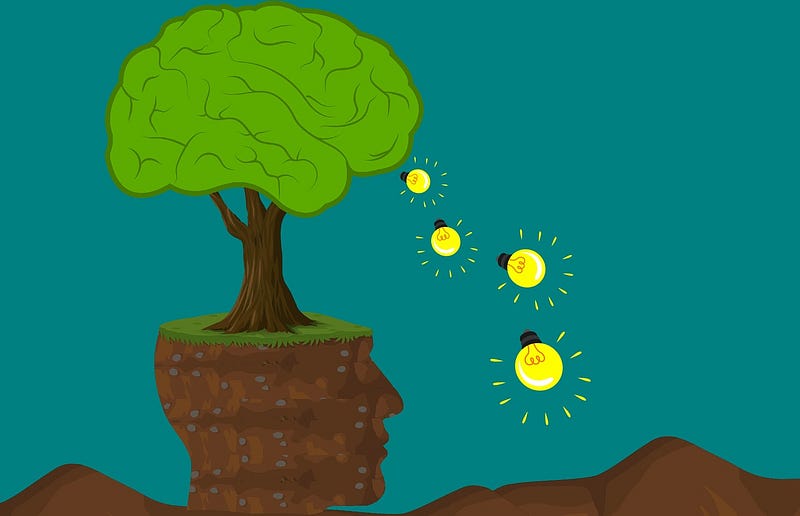
Repetition can make a fact appear true — even if it isn’t.
You heard something somewhere, don’t remember when, or who said it, but it’s come up so often over the years you accept it as fact.
Modern Public Relations and social media tactics highlight how we become caught up in narratives built on shaky foundations.
A prime example is the public relations firm Bell Pottinger debacle.
The late infamous Lord Tim Bell was known for his controversial geopolitical spin-doctoring, and met his professional downfall by masking South African governmental corruption with race-baiting fake news, wherein White Monopoly Capital became the popular phrase invoked by those on the far political Left.
(A lengthy sentence for the sake of brevity! Check out the documentary “Influence” released in January this year.)
“Repeat a lie often enough and it becomes the truth”, is a law of propaganda often attributed to the Nazi Joseph Goebbels.
Psychologists call this the “illusion of truth” effect.
The topic I’m covering is not as extreme as geopolitical shenanigans, but the principle is the same.
Brain boffins may be mistaken
Below is an extract from an article I wrote in 2018:
“Until the early 1970s scientific circles widely accepted that once you reached adulthood, the brain cells (nerve cells or neurons) you possess are finite. That’s it. That’s your ration. In addition, the belief was that our brains are divided into departments, staffed by neurons appointed for their expertise in a particular function, and who may not transfer to another department.”
Whilst conducting an experiment to prove this theory, Professor Michael Merzenich, PhD, a leading pioneer in neuroplasticity in the 1970's, discovered the opposite to be true.
We grow new brain cells until our last breath (provided we exercise our brains!) and can create new neural connections, anywhere, anytime.
(His 2013 book Soft Wired: How the New Science of Brain Plasticity Can Change Your Life, explains this in more detail.)
This is a classic case of a belief with respect to the brain being accepted with no scientific evidence to back up the claim.
Reinforcing falsehoods
The same argument holds for the belief that we are right or left-brain dominant, the dull-witted discourse around gender now doing the rounds that our brains are masculine or feminine and the ultimate insult to mature readers that our brains shrink as we age.
The danger of algorithms when searching a topic online is that the most popular, the most viewed articles on the subject, appear on the first, and even the second or third search results pages.
Most people will stop at the first page and accept the validity of the opinions expressed.
We rely on what psychologists call the familiarity heuristic, our tendency to assume that if something is familiar, it must right and safe.
I don’t make assumptions, but that’s because my nature is to question and seek alternative viewpoints.
As I was writing this story, I stopped to Google “left-handed people”.
Search results presented articles from reputable organisations, loaded with scientific terms — cytoskeletons, C genes and D genes — with the underlying message that the brains of left and right-handed folks differ.
QED.
My focus today is on the left/right brain debate, but let me give a quick synopsis on the other two brain myths doing the rounds before diving deeper into that conversation.
There is no such thing as a male or female brain
Regarding brain gender, this articles in The Guardian will settle the argument.
Our brains shrink as we age
So does our epidermis, but we can retard the shrinkage. The key areas in our brain that contract are the frontal lobe and the hippocampus.
The hippocampus is the processing center which processes new sensory input and sends these memories into our long-term memory banks elsewhere in our brain.
Studies of long-term meditators show that the hippocampus is larger than non-meditators. After 26 years of meditating, I know my hippocampus is healthy at age 70 and new brain cells are born daily. I’ve detected no cognitive decline.
This article explains how 80-year-olds have the brains of 20-somethings.
Breaking through the brain belief barrier
When I began writing on neuroscience from a layperson’s perspective two years ago, the most striking insight for me was that we hold an astounding power to re-wire our brains, by changing our thoughts, words and the images and language we use.
The same holds true for our beliefs.
Our brain has something in common with an algorithm — the ability to produce outcomes from the predominant prompts we feed it. However, we hold the power to rewire our web of neural networks and change our minds.
It was damn hard letting go of a lifetime categorizing people according to their handedness. For years I believed my left-handedness gifted me with more creativity and intelligence.
Because that’s what the elusive “they” said.
My ego shattered when I discovered these “truths” arose from urban legends with no scientific evidence to support them.
Much as I found this hard to swallow — that the left or right-brain dominance was a myth — I chewed on it for a while before my brain could digest it.
Neuroplasticity rocks!
Let’s move on to the nitty gritty.
Left-handed Lies
Left-handers are persecuted, are more creative, introverted and intelligent, die earlier and suffer more immune diseases.
Persecuted?
As a young child in the 1950's I recall teachers’ unsuccessful attempts to force me to write with my right hand, but in the 21st century we can strike off persecution — at least in the West.
But a deep bias still exists in other cultures where right is admirable and left undesirable.
More creative?
For reasons born of over-simplifying how our brains work, the right-brain is considered the seat of creativity, thus if the right hemisphere controls the left, the argument is that a left-handed person (such as me) is more proficient in the arts, music and literature.
Our brains are far more complex than that!
There is no great divide between the left and right hemispheres of our brains — lots of grey areas in our grey matter!
In his book “Right Hand, Left Hand, The Origins of Asymmetry in Brains, Bodies, Atoms and Cultures,” psychologist Chris McManus explains:
“Although there are recurrent claims of increased creativity in left-handers, there is little to support the idea in scientific literature.”
More introverted?
A paper published in 2013 by the School of Psychology at the Victoria University of Wellington, New Zealand, showed no empirical evidence to support the view that left-handed people are any more or less introverted than right-handers.
The study surveyed 662 under-graduates for the Big Five personality traits — extraversion, agreeableness, conscientiousness, emotionality, and openness to experience.
They found no discernible differences in the group except for mixed-handers being more introverted.
More intelligent?
Studies in 2007 and 2012 produced conflicting results, the former concluding that left-handers had a higher IQ and the latter posited the complete opposite.
Statistics in psychological science can be notoriously unreliable and misleading dependent on the methods of evaluation.
For this reason, two researchers from the University of Athens in Greece, performed a so-called meta-analysis of published studies on left-handedness and intelligence (IQ) in 2018.
“A meta-analysis integrates the results of several empirical studies, which has the advantage that the sample size is much larger, increasing statistical power and rendering the analysis less likely to be affected by sample characteristics of individual studies.” — Psychology Today
The data included input from 18 studies and 20,442 individuals and showed no visible variation in IQ!
(Please note IQ is not Emotional Intelligence (EQ). We could do with more of the latter!)
Lefties die earlier?
That used to terrify me until I discovered the truth.
The myth of dying earlier arose from a 1988 Nature paper in which two psychologists (who I shall not name and shame) analyzed death records for baseball players and found that the left-handers had died younger.
I could not read the research papers myself as I couldn’t afford the fees demanded, but cite here the conclusions of Chris McManus:
“This is a statistical artifact due to the fact that left-handedness increased through the 20th century, meaning that left-handers, on average, were born later in that century.”
Another research paper from 1994 in the UK analysed 5940 cricketers born between 1840 and 1960 and found no fundamental correlation between handedness and life expectancy.
Suffer more immune diseases?
This myth was propagated by Norman Geschwind (1926–1984) an American behavioral neurologist, in a book published in 1987, reproducing his research papers on the topic.
With little evidence to support it, the claim was that left-handers are more prone to auto-immune diseases.
McManus and Phil Bryden analyzed data from 89 studies involving over 21,000 patients and an even greater number of controls.
“Left-handers showed no systematic tendency to suffer from disorders of the immune system.” — Chris McManus
Beliefs and expectations
Recognizing the truth is difficult when information bombards and overloads our brains 24/7.
I hope you have left these myths right where they belong.
In the trashcan.
Thank you for reading.
Related Reading: